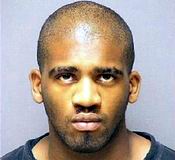
Ronald Kinsman
Murderer Ervil LeBaron
Murderer · USA · 1972
Ervil Morrell LeBaron (1925 to August 16, 1981) was the leader of a polygamous…
35 victims
Ervil LeBaron
Murderer · USA · 1972
Ervil Morrell LeBaron (1925 to August 16, 1981) was the leader of a polygamous…
35 victims
 Brian Kevin Rosenfeld
Murderer · USA · 1985
Brian Kevin Rosenfeld Brian Kevin Rosenfeld was sentenced to three concurrent l…
23 victims
Brian Kevin Rosenfeld
Murderer · USA · 1985
Brian Kevin Rosenfeld Brian Kevin Rosenfeld was sentenced to three concurrent l…
23 victims
 Marvin Gray
Murderer · USA · 1975
Marvin Gray was convicted killer who claimed responsibility for 23 slayings and…
23 victims
Marvin Gray
Murderer · USA · 1975
Marvin Gray was convicted killer who claimed responsibility for 23 slayings and…
23 victims
 Yahweh ben Yahweh
Murderer · USA · 1980
Yahweh ben Yahweh was born and legally named Hulon Mitchell Jr. (October 27, 19…
23 victims
Yahweh ben Yahweh
Murderer · USA · 1980
Yahweh ben Yahweh was born and legally named Hulon Mitchell Jr. (October 27, 19…
23 victims
 Lamar Brooks
Murderer · 1996
Lamar Brooks was indicted in connection with the killings of Rachel Carlson and…
2 victims
Lamar Brooks
Murderer · 1996
Lamar Brooks was indicted in connection with the killings of Rachel Carlson and…
2 victims
 Danny Lee Jones
Murderer · USA · 1992
Danny Lee Jones On March 26, 1992, Jones and Robert Weaver were visiting in Rob…
2 victims
Danny Lee Jones
Murderer · USA · 1992
Danny Lee Jones On March 26, 1992, Jones and Robert Weaver were visiting in Rob…
2 victims
 William Gollehon
Murderer · USA · 1985
William Jay Gollehon was sentenced to death in 1992 after he and Douglas Turner…
7 victims
William Gollehon
Murderer · USA · 1985
William Jay Gollehon was sentenced to death in 1992 after he and Douglas Turner…
7 victims
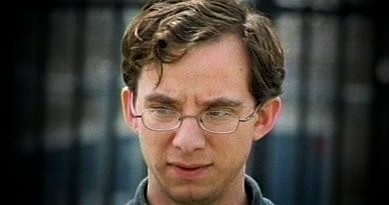 Jonathon Edington
Murderer · USA · 2006
Jonathon Edington (born October 29, 1976) was a patent lawyer in Fairfield, Con…
1 victim
Jonathon Edington
Murderer · USA · 2006
Jonathon Edington (born October 29, 1976) was a patent lawyer in Fairfield, Con…
1 victim
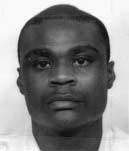 Alva Curry
Murderer · USA · 1991
Alva Curry was executed by lethal injection in Texas on January 28, 2003, and w…
2 victims
Alva Curry
Murderer · USA · 1991
Alva Curry was executed by lethal injection in Texas on January 28, 2003, and w…
2 victims
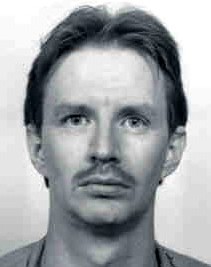 Michael Overstreet
Murderer · USA · 1997
Michael Dean Overstreet was sentenced to death on July 31, 2000. Michael Dean O…
1 victim
Michael Overstreet
Murderer · USA · 1997
Michael Dean Overstreet was sentenced to death on July 31, 2000. Michael Dean O…
1 victim
- Gender
- male
- Country
- USA
- Location
- Muscogee County, Georgia, USA
- Date of birth
- 1957
- Age at first offence
- 18
- Characteristics
- robbery
- Victim profile
- One man / Bruce Keeter, 29 (restaurant manager)
- Method of murder
- Shooting
- Date(s) of murder
- 1975 / September 14, 1986
- Years active
- 1975–1986
- Date of arrest
- December 5, 1986
- Status
-
Sentenced to death
Sentenced to death on April 18, 1987
Case record
Background
Ronald Leroy Kinsman, 39, was sentenced to death on April 18, 1987, in Muscogee County for the robbery and murder of a Hardee's manager.
Bruce Keeter, 29, was found shot to death the morning of Sept. 14, 1986.
In 1976, Ronald Leroy Kinsman had been convicted of another robbery-murder and was paroled not long before Bruce Keeter was murdered.
The offence
Bruce Keeter was an assistant manager of a Hardee's fast-food restaurant in Columbus.
Bruce Keeter was last seen alive at 1:20 a.m. on September 14, 1986, at the restaurant, where he remained by himself to prepare the cash registers for the next business day.
Bruce Keeter was reported missing by his mother when he failed to return home, and his body was discovered inside the restaurant shortly after 6:00 a.m.
About $400 was missing from the safe.
Bruce Keeter’s car was found abandoned next to an interstate highway, with its passenger-side window broken out.
Investigation
Two years later, a friend of Ronald Leroy Kinsman told police Ronald Leroy Kinsman had admitted to the murder.
On December 4, 1986, Columbus police talked to Randy Hubbard, a friend of Kinsman.
Hubbard stated to the police that Kinsman had admitted killing a man at a Hardee's restaurant that Kinsman and two others had robbed of $400.
At the request of the police, Hubbard telephoned Kinsman, and the conversation was recorded.
As the two discussed committing another robbery, Kinsman made incriminating references to the robbery of the Hardee's and the murder of Keeter.
A paperweight recovered from the apartment shared by Kinsman and co-defendant Morgan was identified by its owner as one stolen from his residence along with a .38 caliber pistol that was the likely murder weapon in this case.
Arrest
Ronald Leroy Kinsman and the other two—Patterson and Morgan—were arrested.
Kinsman was interrogated, and, after learning that Morgan had confessed, Kinsman admitted being a party to the murder and armed robbery.
Kinsman claimed that Patterson had killed the victim.
Kinsman admitted driving Keeter’s car to where it was abandoned, explaining that he had broken the window to retrieve the keys he had left in the car, because he remembered his fingerprints were on them.
Trial
Ronald Leroy Kinsman was convicted by a jury in Muscogee County of malice murder, armed robbery and theft by taking.
The trial took place April 13 through April 18, 1987, before Judge McCombs.
The trial court sentenced Ronald Leroy Kinsman to death.
The court’s death-qualification of prospective jurors was addressed on appeal, and it was stated that the trial court’s death-qualification rulings were “within the deference due the trial judge’s determination.”
Ronald Leroy Kinsman’s voir dire examination was not improperly restricted.
The trial court’s reference to “guilt or innocence” could not have misled the jury where clear instructions were given that the defendant was presumed innocent and that unless satisfied of the defendant’s guilt beyond a reasonable doubt, the jury should find the defendant “not guilty.”
The court did not err by admitting photographs of the murder victim.
The court did not err by admitting the paperweight and the .38 caliber pistol as described.
Kinsman testified on direct examination that Patterson forced him to accompany him.
Kinsman said he was afraid of Patterson because Patterson had “killed before” and was “capable of doing anything.”
Kinsman testified that Patterson killed the victim.
Kinsman stated that, as for himself, he did not “have the heart to do nothing like that. . . . I don't even shoot deer, and that's supposed to be a game.”
In rebuttal, the state proved that ten years previously Kinsman had voluntarily accompanied Patterson in the commission of murder and armed robbery, and that Kinsman had admitted shooting “at” the victim.
It was noted that, as in this case, Kinsman shared in the proceeds of the robbery.
Regarding Kinsman’s cross-examination of state’s witness Randy Hubbard:
- Hubbard testified on direct examination that he had talked to “my attorney” before trial. On cross-examination, Kinsman asked if this attorney was “the former district attorney that used to put you in jail?” The state objected on the ground that the defendant’s question was “an improper impeachment, if that's what that's supposed to be.” The court sustained the objection.
- Hubbard had several criminal charges pending against him. The trial court allowed Kinsman to question Hubbard about these charges, but when Hubbard denied that one of the charges was pending, the court refused to allow the defendant to offer in evidence a document allegedly proving the pendency of the charge.
The trial court did not err by admitting over a hearsay objection out-of-court statements made by co-conspirator Morgan during the pendency of the conspiracy.
The trial court did not err by allowing a state's witness to testify even though the witness was not on the list furnished pursuant to OCGA 17-7-110.
It was also stated that Kinsman did not object at trial to the prosecutor's closing argument, and the appellate discussion concluded that the prosecutor’s arguments “did not result in the sentence of death being imposed under the influence of passion, prejudice, or any other arbitrary factor.”
The appellate discussion addressed prosecutor conduct including argument that the victim was just “doing his job” and “trying to earn a living,” and that he was “killed for no other reason than money . . . and not all that much money at that.”
The appellate discussion also addressed the tape-recorded conversation between Kinsman and Hubbard, and stated that references by both persons to their homosexuality merely informed the jury of something it had already been made aware of.
The court’s instructions on mitigating circumstances were stated to be adequate.
Sentencing
The jury found the existence of two statutory aggravating circumstances:
- “The offense of murder was committed while the offender was engaged in the commission of another capital felony, to wit: armed robbery.”
- “The offense of murder was committed by a person with a prior record of conviction for a capital felony, to wit: murder.”
The appellate discussion stated that the evidence supported the jury’s findings and addressed the age of Kinsman’s 1976 murder conviction in the context of aggravation.
The appellate discussion stated that Kinsman was eligible for a death sentence not only because this murder was committed during the course of an armed robbery, but also because it was his second murder.
The sentencing phase included the giving of instructions in terms that:
“I further charge you that the sentence of death shall not, and cannot, be imposed unless you find beyond a reasonable doubt that the defendant either, one, committed the murder himself; two, he, himself, attempted to kill the victim; or, three, intended that deadly force be used by another to accomplish the criminal enterprise. Transcript at p. 1512.”
It was stated that the court did not err by refusing to deliver Kinsman’s requested charge on coercion at the guilt phase of the trial.
It was also stated that the court did not err by failing to instruct the jury as to any lesser-included offenses of murder or armed robbery where the defendant did not request such instructions.
Appeals
On appeal, it was stated that Ronald Leroy Kinsman’s voir dire examination of prospective juror Sanchez was sufficient, and that the prospective juror’s mention of the possibility of parole did not mandate a jury instruction on this issue absent any request for such an instruction.
It was stated that the sentencing verdict form was not inadequate for failure to list possible mitigating circumstances.
The appellate discussion stated that Kinsman’s armed robbery conviction did not merge into his conviction for malice murder.
It was also stated that any error was harmless beyond a reasonable doubt regarding the limitation on Kinsman’s attempt to prove that a disputed charge was still pending against Hubbard.
The appellate discussion addressed the death sentence as neither excessive nor disproportionate in the case.
The appellate decision included: “DECIDED FEBRUARY 15, 1989 -- RECONSIDERATION DENIED MARCH 29, 1989.”
Outcome
Ronald Leroy Kinsman remained sentenced to death.
Timeline
- September 14, 1986 — Bruce Keeter was last seen alive at 1:20 a.m. at the Hardee’s restaurant; his body was discovered inside the restaurant shortly after 6:00 a.m.
- Morning of September 14, 1986 — Bruce Keeter was found shot to death.
- December 4, 1986 — Columbus police talked to Randy Hubbard; Hubbard described Kinsman’s admission and then telephoned Kinsman under police request.
- December 5, 1986 — Kinsman was arrested.
- December 30, 1986 — Kinsman was indicted.
- April 13 through April 18, 1987 — Kinsman was tried.
- April 18, 1987 — Kinsman was sentenced to death.
- May 22, 1987 — A motion for new trial was filed.
- May 4, 1988 — The motion was denied.
- May 16, 1988 — The case was docketed in the appellate court.
- September 13, 1988 — The case was argued orally.
- February 15, 1989 — The appeal was decided.
- March 29, 1989 — Reconsideration was denied.
Other details
In the appellate proceedings, it was stated that “Death qualification” of prospective jurors was not improper, and that the trial court’s “death-qualification” rulings were “within the deference due the trial judge's determination.”
It was stated that the trial court’s sentencing verdict form was not inadequate.
The jury found aggravating circumstances as described and considered the prior record of conviction for a capital felony.
Prosecutors and attorneys listed included William J. Smith (District Attorney), J. Gray Conger (Assistant District Attorney), Michael J. Bowers (Attorney General), and Paula K. Smith (Assistant Attorney General) for appellee.
“HAYWOOD TURNER III, for appellant” appeared in the listed representation.
The appeal decision identified “BELL, Justice.”
Spotted an error, or have more information about this case?