
Gregory Lynn Summers
Murderer Brian Kevin Rosenfeld
Murderer · USA · 1985
Brian Kevin Rosenfeld Brian Kevin Rosenfeld was sentenced to three concurrent l…
23 victims
Brian Kevin Rosenfeld
Murderer · USA · 1985
Brian Kevin Rosenfeld Brian Kevin Rosenfeld was sentenced to three concurrent l…
23 victims
 Yahweh ben Yahweh
Murderer · USA · 1980
Yahweh ben Yahweh was born and legally named Hulon Mitchell Jr. (October 27, 19…
23 victims
Yahweh ben Yahweh
Murderer · USA · 1980
Yahweh ben Yahweh was born and legally named Hulon Mitchell Jr. (October 27, 19…
23 victims
 Russell Ellwood
Murderer · USA · 1991
Russell Ellwood was a former taxi driver. Authorities suspected him of killing…
20 victims
Russell Ellwood
Murderer · USA · 1991
Russell Ellwood was a former taxi driver. Authorities suspected him of killing…
20 victims
 Robert Martines Perez
Murderer · USA · 1994
Name: Robert Martines Perez · Other name used in proceedings: Robert Martinez P…
15 victims
Robert Martines Perez
Murderer · USA · 1994
Name: Robert Martines Perez · Other name used in proceedings: Robert Martinez P…
15 victims
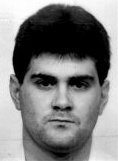 Cameron Willingham
Murderer · USA · 1991
Cameron Willingham was convicted of capital murder for murdering his three chil…
3 victims
Cameron Willingham
Murderer · USA · 1991
Cameron Willingham was convicted of capital murder for murdering his three chil…
3 victims
 Diego Santoy
Murderer · Mexico · 2006
Diego Santoy Riveroll was a Mexican university student who was accused of stabb…
2 victims
Diego Santoy
Murderer · Mexico · 2006
Diego Santoy Riveroll was a Mexican university student who was accused of stabb…
2 victims
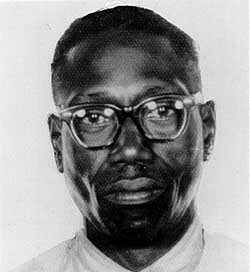 Monroe Hickson
Spree killer · USA · 1946
Monroe Hickson was a native of South Carolina. He was nicknamed "Blue Boy". He…
4 victims
Monroe Hickson
Spree killer · USA · 1946
Monroe Hickson was a native of South Carolina. He was nicknamed "Blue Boy". He…
4 victims
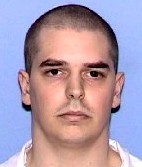 Sheldon Ward
Murderer · USA · 2002
Name: Sheldon Ward · TDCJ Number: 999454 · Date of birth: 09/20/1979 · Race: Wh…
1 victim
Sheldon Ward
Murderer · USA · 2002
Name: Sheldon Ward · TDCJ Number: 999454 · Date of birth: 09/20/1979 · Race: Wh…
1 victim
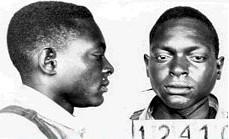 Charles Sanders
Murderer · USA · 1942
Charles Sanders was one of the defendants in a case involving Coy Collier Quall…
1 victim
Charles Sanders
Murderer · USA · 1942
Charles Sanders was one of the defendants in a case involving Coy Collier Quall…
1 victim
 Liz Carroll
Murderer · USA · 2006
Liz Carroll was sentenced to 54 years to life in prison on February 22, 2007. M…
1 victim
Liz Carroll
Murderer · USA · 2006
Liz Carroll was sentenced to 54 years to life in prison on February 22, 2007. M…
1 victim
- Gender
- male
- Country
- USA
- Location
- Taylor County, Texas, USA
- Date of birth
- March 14, 1958
- Age at first offence
- 32
- Characteristics
- murder for hire, arson, robbery
- Victim profile
- Gene and Helen Summers, both 64, (his adoptive parents) and Billy Mack Summers, 60
- Method of murder
- St abbing with knife
- Date(s) of murder
- June 11, 1990
- Years active
- 1990
- Date of arrest
- —
- Status
-
Executed
Executed by lethal injection in Texas on October 25, 2006
Case overview
Gregory Lynn Summers was executed by lethal injection in Texas on October 25, 2006. He was convicted in a murder-for-hire scheme involving the fatal stabbing of three family members, followed by the burning of their home in Abilene.
Status at execution
Attorneys for Summers tried to block the punishment by challenging the constitutionality of the lethal injection method, accusing prosecutors of hiding evidence and raising questions about testimony from a trial witness who implicated Summers. The U.S. Supreme Court refused to review his case three weeks earlier. The execution was delayed about three hours past its scheduled time of 6 p.m. CDT. When the warden asked whether he had a final statement, Summers answered, "no." The lethal injection began, and he was pronounced dead at 9:16 p.m.
Summers offered no final words before his execution. Three of Summers’ friends came in support of him, each dressed in a pink shirt and black slacks. They offered tears and prayers to the condemned, hands pressed firmly upon the glass. As Summers’ final moments passed, his friends were seen huddled together, sending out one final silent good-bye.
The offence
The three victims were stabbed to death inside their home in Abilene, and the home was later set ablaze.
The victims were:
- Mandell Eugene “Gene” Summers, 64
- Helen Summers, 64
- Bill Mack Summers, 60
Prosecutors alleged that Summers had offered payment to a co-defendant, Andrew Cantu, in connection with the murders. It was reported that Summers promised to pay co-defendant Andrew Cantu the sum of $10,000 for killing his family members. Prosecutors also alleged that Summers stood to collect $24,000 in life insurance from the death of his parents. Summers’ family had adopted him when he was three days old, and he was their only child.
Relationship and background
Gene and Helen Summers adopted their son when he was 3 days old. They were his parents in the case, and he was their only child.
Relatives and acquaintances testified about Summers’ relationship with his father and about his many threats to kill him and burn his house down with him in it. Relatives told authorities Summers was having financial problems. Gene Summers finally decided to stop bailing him out financially.
A statement after the execution was attributed to Arbie McAliley, the victims’ niece, who said:
"These were real people that we all loved very, very much," Arbie McAliley, the victims’ niece, said after watching Summers die. "Justice was served, we believe in our hearts. There was nothing inhumane about this at all tonight. “He got a better treatment than what he gave our three loved ones. It was brutal what they did. The only regrets we have is we had to sit and wait for something we knew was coming.”
Sandra Mitchell, a relative of the victims, said:
"I just think it has gone on too long. It should have happened 10 years ago."
During the trial, family testimony described Summers’ alleged history of violence against his family, including:
- kicking his first wife in the stomach while she was pregnant
- beating his second wife
- holding a gun to her head
- forcing her to beg for her life on her knees
- beating his sons
- evidence that while incarcerated, Summers threatened to have an inmate killed
Two psychiatrists testified that Summers was a continuing threat to society who could not be reformed.
Investigation and crime timeline (as described)
Around midnight on June 11, 1990, Abilene firefighters discovered three bodies in a burning house. The telephone line to the house was also cut. The victims were stabbed to death inside the home.
On June 15, 1990, police were contacted by an acquaintance of Summers. The acquaintance said that an acquaintance of his, Gregory Summers, tried to hire him to murder his parents and mentally retarded uncle and to burn their house down. The acquaintance said Summers offered to pay him from insurance money and cash in the house. The acquaintance’s suspicions were aroused after reading a newspaper story about the details of the murders and the victim’s identities.
On June 19, 1990, another tipster called the police. The tipster said that his brother, Andrew Cantu, told him he was hired for $10,000 to commit the murders, but he did not receive the money.
Details of the plot and accomplices (as described in trial evidence)
Evidence at trial revealed that Gregory Lynn Summers hired Andrew Cantu for $10,000 to murder Summers’s relatives—his father, mother, and mentally retarded uncle—respectively—for financial gain. Prosecutors alleged that Summers expected to collect $24,000 in insurance proceeds.
A woman found the bloody knife while mowing her lawn.
In testimony described for the case, Andrew Cantu’s accomplices were Ramon Gonzales and Paul Flores. At Cantu’s trial, Ramon Gonzales, 19, and Paul Flores testified about the burglary and the killings. According to their testimony:
- Flores cut a hole in a back window screen and crawled into the house.
- By the time Gonzales and Flores crawled inside, Cantu was already stabbing Gene Summers, who was lying in bed.
- Cantu threatened to kill Gonzales and Flores if they attempted to leave.
- Cantu proceeded to the living room and repeatedly stabbed Helen Summers, who was sleeping in a recliner.
- Cantu ordered Gonzales and Flores to search the home for the $10,000 that Summers promised to leave in a dresser drawer.
- Cantu proceeded to a front bedroom, where he stabbed and murdered Billy Mack Summers.
- Gonzales and Flores told Cantu they could not find the money, and Cantu ransacked the house looking for it but found none of the promised money.
- Cantu then doused the bedroom with lighter fluid and set it on fire.
- As they drove away, Cantu ordered Flores to get rid of the knife; Flores threw the murder weapon out of the car window.
According to additional narrative described in the case:
- Andrew Cantu told a friend named Max that he had a job to do: kill three old people. The intended victims were described as Gregory Summers’ parents.
- Cantu asked the friend’s assistance, and Max declined, using the fact that he was on probation as an excuse.
- Cantu borrowed his brother’s black sweat pants and sweat shirt and paced in and out of the house as if waiting for someone, but no one arrived.
- Early on June 11, 1990, Summers and Cantu were riding in Summers’ truck and approached Max and asked him to contact his cousin, Ramon Gonzales. Max could not contact him, but Gonzales came to Abilene from Haskell with a friend, Paul Flores.
- While riding around with Gonzales, Flores, and Max, Cantu asked if they would "waste" three old people.
- Cantu added he would be paid with money, jewelry, and guns in the house and from insurance policies collected later.
- When the others refused to help, Cantu changed the subject to burglary of a house.
- Gonzales dropped Cantu off at his house then took Max home.
- Gonzales and Flores returned to pick up Cantu. Cantu again borrowed his brother’s black sweat pants and shirt, and explained to his brother he was going to pull a "heist."
- The three then went to a grocery store where Cantu purchased lighter fluid, gloves, pantyhose, and a cap. The cashier identified Cantu and remembered the items.
- It was described that Cantu had earlier that day bought a knife from Flores.
- Near midnight, they drove through an alley behind the Summers’ residence; Cantu was dropped off in the alley behind the house and cut the telephone line.
- Gonzales picked up Cantu, drove to a nearby street, and parked. The three got out and walked toward the alley behind the Summers’ home.
- Cantu carried the knife and lighter fluid.
- A neighbor, seated on her unlit porch, saw three men and remembered that one was carrying a knife which shone in the streetlamp's light.
- The three entered the Summers’ yard through a back gate.
- Cantu cut a hole in a back window screen and crawled into the house.
- By the time Gonzales and Flores crawled inside, Cantu was already stabbing Gene Summers.
- Cantu proceeded to repeatedly stab Helen Summers, who was described as sleeping in a recliner.
- Cantu ordered Flores and Gonzales to search the house for the promised money before murdering Billy Mack Summers.
- Angry that Gonzales and Flores had not found it, Cantu ransacked the house for the money himself but found none.
- Before leaving, Cantu doused the bedroom with lighter fluid and set it on fire.
- Ambulance and fire truck sirens were heard heading toward the Summers’ home.
- When Cantu ordered Flores to "get rid" of the knife, Flores threw it out the car window.
- Flores and Gonzales returned to Haskell.
- The following morning, June 12, 1990, Cantu asked his brother if he had seen the news. His brother watched the midday news and learned about the triple murders.
- His brother asked Cantu whether he had been involved; Cantu denied involvement.
- Later that week, his brother asked again; disgusted by the answer, he called the police and made a statement on June 19, 1990.
- Max also asked Cantu about the murders; Cantu confessed he had committed them and complained about not having been paid.
- Another narrative described that after the incident, the three went to the home of Cantu’s uncle where Cantu chided Gonzales and Flores for failing to find promised money and searched them for it; Cantu threatened to kill Flores and Gonzales if they had the money or talked about the incident.
Trial and conviction
A jury convicted Summers of capital murder in August 1991. He was sentenced to death. The Texas Court of Criminal Appeals affirmed the conviction and sentence in June 1994. All subsequent appeals in state and federal court were denied.
In August 1991, Summers was convicted of capital murder. On August 23, 1991, the jury answered the special issues and Summers was formally sentenced to death by the 350th District Court judge.
Summers’ attorneys challenged aspects of evidence and witness testimony during the case. During execution-stage litigation, it was stated that prosecutors were accused of hiding evidence and that questions were raised about testimony from a trial witness who implicated Summers.
In an interview from death row the week before his execution, Summers said:
"I had nothing to do with this," Summers said in an interview from death row the week before his execution. "They know that ...I am so outraged that a system in a country that's supposed to be civilized can sit back and watch an innocent man be convicted and be sent to the death chamber, and nobody gives a damn," Summers said. "When I went to trial, all they proved was there were three murders," he said. "But they can't show I did this with Cantu because it never happened."
In another place during the case narrative, Summers said:
"When I went to trial, all they proved was there were three murders," Summers said in recent interview on death row. “But they can’t show I did this with Cantu because it never happened.”
In testimony-related narrative included in the case, it was stated that prosecutors called William Spaulding to testify during Summers’ trial, an inmate whom Summers befriended while in custody, and that Spaulding testified only after he discovered Summers had betrayed him, making Spaulding’s testimony unreliable. It was also stated that Andrew Cantu never testified.
The narrative also stated that Dr. Grigson testified during the sentencing phase, saying Summers may represent a future danger, and that Dr. Grigson had allegedly falsely testified for the state in another trial and was expelled for ethics violations. It was further described that Dr. Grigson was alleged to have testified in about 150 capital punishment cases, often siding with the prosecution, and that he stated defendants were "100 percent sure" to be a future danger without interviewing them. A quoted line attributed to a member of an APA board was:
“[Dr. Grigson] oversteps the bounds of his professional competence.”
Additional procedural and evidence discussion said that the court allowed several other character-assessment witnesses and that none could establish that Summers and Cantu made a deal about the murders.
Sentencing and appeals
Timeline
- June 11, 1990 — Abilene firefighters discovered three bodies in a burning house; the telephone line to the house was cut.
- June 15, 1990 — Police were contacted by an acquaintance of Summers who reported Summers tried to hire him to murder Summers’ parents and uncle and to burn their house down.
- June 19, 1990 — Police received another statement that Andrew Cantu said he was hired for $10,000 to commit the murders.
- August 16, 1990 — A Taylor County grand jury returned 3 capital murder indictments against Summers.
- January 16, 1991 — Taylor County grand jury indicted Andrew Cantu for capital murder.
- May 29, 1991 — Andrew Cantu was found guilty of capital murder.
- May 31, 1991 — The Cantu jury answered the special questions and the trial judge sentenced Andrew Cantu to death.
- June 13, 1991 — Summers’ motion for change of venue was granted; all three cases transferred to the 16th District Court in Denton County.
- August 9, 1991 — Guilt-innocence phase began in two of the cases (one was not tried and remains pending).
- August 21, 1991 — Summers was convicted of capital murder.
- August 23, 1991 — The jury answered the special issues and Summers was formally sentenced to death by the 350th District Court judge.
- September 10, 1991 — Summers filed a motion for a new trial and notice of appeal.
- September 13, 1991 — Summers’ cases were transferred back to Taylor County.
- August 24, 1992 — Summers filed a direct appeal raising 33 points of error.
- June 8, 1994 — The Texas Court of Criminal Appeals affirmed Summers’ conviction and sentence.
- June 23, 1994 — Summers asked for a rehearing of the Texas court’s opinion in one of the two cases on direct appeal.
- October 7, 1996 — The U.S. Supreme Court denied certiorari review.
- October 1, 1997 — Summers filed an application for a state writ of habeas corpus raising 22 issues.
- November 12, 1997 — On Summers’ state writs, Judge Holloway of Taylor County found that no contested issues of fact exist.
- February 16, 1999 — Andrew Cantu was executed for his part in the murders.
- October 11, 1999 — The trial court recommends that the writs be denied.
- February 22, 2001 — Pursuant to Court of Criminal Appeals, the trial court entered findings recommending the denial of relief.
- March 28, 2001 — The Texas Court of Criminal Appeals denies relief on writs.
- April 4, 2001 — Summers filed his federal habeas corpus petition raising 19 claims in the U.S. District Court.
- November 15, 2001 — Summers filed an amended federal writ petition.
- March 24, 2004 — The federal district court dismissed Summers’ federal habeas petition.
- April 23, 2004 — Summers filed notice of appeal in the Fifth Circuit.
- May 10, 2004 — The federal district court granted certificate of appealability (“COA”) on three claims only.
- August 3, 2004 — Summers filed an application for additional COA to include seven additional claims in the Fifth Circuit.
- December 8, 2004 — Summers filed his brief on the merits in the 5th U.S. Circuit Court of Appeals.
- December 2, 2005 — The 5th Circuit Court denied motion for additional COA and affirms district court’s denial of habeas relief.
- December 16, 2005 — Summers files a motion for rehearing by all members of the 5th Circuit Court.
- January 27, 2006 — Summers’ petition for rehearing was denied by the 5th Circuit Court.
- March 15, 2006 — The 350th District Court of Taylor County, Texas, scheduled Summers’ execution for Wednesday, October 25, 2006.
- April 27, 2006 — Summers petitioned the U.S. Supreme Court for certiorari review of the Fifth Circuit Court's opinion.
- October 2, 2006 — The U.S.
- October 25, 2006 — Summers was executed by lethal injection in Texas; he was pronounced dead at 9:16 p.m.
Co-defendant outcomes
- Andrew Cantu was convicted of capital murder and sentenced to death. He was executed on February 16, 1999.
- Ramon Gonzales was convicted of burglary and sentenced to 20 years in prison, and he had been out on parole since 1999.
- Information on Paul Flores was not available for the report.
Outcome
He was pronounced dead at 9:16 p.m. after a delay of about three hours past the scheduled time.
When the warden asked whether he had a final statement, Summers answered, "no."
Spotted an error, or have more information about this case?