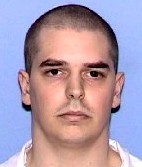
Sheldon Ward
Murderer Robert Martines Perez
Murderer · USA · 1994
Name: Robert Martines Perez · Other name used in proceedings: Robert Martinez P…
15 victims
Robert Martines Perez
Murderer · USA · 1994
Name: Robert Martines Perez · Other name used in proceedings: Robert Martinez P…
15 victims
 Billy Frank Vickers
Murderer · USA · 1993
Billy Frank Vickers Vickers was executed by lethal injection in Texas on Januar…
14 victims
Billy Frank Vickers
Murderer · USA · 1993
Billy Frank Vickers Vickers was executed by lethal injection in Texas on Januar…
14 victims
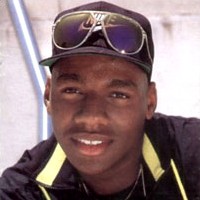 Christopher Roney
Murderer · USA · 1996
Christopher Roney (born December 15, 1969 in Philadelphia, Pennsylvania), known…
1 victim
Christopher Roney
Murderer · USA · 1996
Christopher Roney (born December 15, 1969 in Philadelphia, Pennsylvania), known…
1 victim
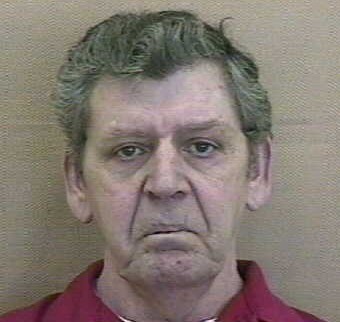 George Franklin Page
Homicide · USA · 1995
George Franklin Page was male, white, and aged 63. He served 16 years in the mi…
1 victim
George Franklin Page
Homicide · USA · 1995
George Franklin Page was male, white, and aged 63. He served 16 years in the mi…
1 victim
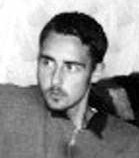 Dragoslav Petkovic
Homicide · Bosnia-Herzegovina · 2002
29 April 2002 — 17-year-old Dragoslav Petkovic opened fire with a handgun short…
1 victim
Dragoslav Petkovic
Homicide · Bosnia-Herzegovina · 2002
29 April 2002 — 17-year-old Dragoslav Petkovic opened fire with a handgun short…
1 victim
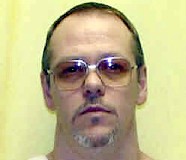 Donald Palmer
Murderer · USA · 1989
Donald Palmer, also known as “Duke,” was the defendant and death-row inmate. Hi…
2 victims
Donald Palmer
Murderer · USA · 1989
Donald Palmer, also known as “Duke,” was the defendant and death-row inmate. Hi…
2 victims
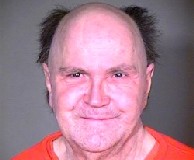 Robert Moormann
Murderer · USA · 1984
Robert Henry Moormann was convicted in Arizona of the first degree murder of hi…
1 victim
Robert Moormann
Murderer · USA · 1984
Robert Henry Moormann was convicted in Arizona of the first degree murder of hi…
1 victim
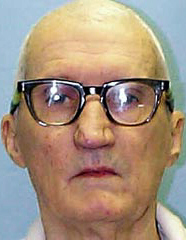 James Barney Hubbard
Murderer · USA · 1957
James Barney Hubbard was executed by lethal injection in Alabama on August 5, 2…
2 victims
James Barney Hubbard
Murderer · USA · 1957
James Barney Hubbard was executed by lethal injection in Alabama on August 5, 2…
2 victims
- Gender
- male
- Country
- USA
- Location
- Tarrant County, Texas, USA
- Date of birth
- September 20, 1979
- Age at first offence
- 23
- Characteristics
- kidnapping, rape, drug addict, history of mental illness
- Victim profile
- Nyanuer "Mary" Pal , 28 ( Sudanese immigrant)
- Method of murder
- Shooting
- Date(s) of murder
- February 14, 2002
- Years active
- 2002
- Date of arrest
- 8 days after
- Status
-
Died in custody
Sentenced to death on June 27, 2003; died in prison on May 13, 2010
Case information
- Name: Sheldon Ward
- TDCJ Number: 999454
- Date of birth: 09/20/1979
- Race: White
- Gender: Male
- Hair color: Brown
- Height: 05'06"
- Weight: 187
- Eye color: Brown
- Native county/state: Native
- Education level: 10 (dropped out in the 10th grade)
- Age at offense: 22
- County: Tarrant
- Prior occupation: King Washington Laborer
- Prior prison record: None
- Codefendant: Foster
- Co-defendant described: C. Foster, an Army recruiter
Timeline
- 02/14/2002 — Ward and codefendant Foster kidnapped a 28 year old black female, sexually assaulted her, and fatally shot her with a .380 pistol.
- 06/27/2003 — Ward was sentenced to death by a Tarrant County jury.
- 2005 — A 3-centimeter lesion was removed from Ward’s left posterior frontal lobe at the University of Texas Medical Branch at Galveston.
- 05/23/2007 — The Court of Criminal Appeals of Texas delivered its opinion (unanimous court; Womack, J.).
- 05/13/2010 — Ward died in a Galveston hospital at age 30.
The offence
On February 14, 2002, Sheldon Ward and codefendant Foster kidnapped a 28 year old black female, sexually assaulted her, and fatally shot her with a .380 pistol. The victim was identified as Nyanuer Pal (also referred to as “Mary”), and she was a 28 year old black female. Her body was found by two workers laying water pipe the same day she was killed in a remote area near Lake Worth.
Ward’s and Foster’s capital murder conviction was for the February 14, 2002 capital murder of Nyanuer Pal, with the kidnapping, raping, and shooting described as part of the offence.
Ward and Foster were also suspects in the slaying of Rachel Urnosky, 22, who was raped and shot dead in her bed on Dec. 18, 2001, at an apartment complex in southwest Fort Worth. Ward and Foster were never tried in Urnosky’s death, but evidence from that case was used during the punishment phases of their trials in Pal’s death.
Investigation
Prosecutors’ evidence included:
- DNA evidence from semen found on Pal’s body that matched Ward’s and Foster’s.
- Witness testimony that Foster and Ward followed Pal from Fat Albert’s pool hall.
- The bullet used to kill Pal matched the gun found in the motel room the men shared.
- Two bar employees who recognized Ward as a frequent customer, and saw him in a truck following Pal as she left in her car.
A separate issue described in the appeal involved a witness statement received by Detective McCaskill about seeing a nude, black female being chased by a black male carrying a handgun near the scene of the murder on “Tuesday February 12 or on Wednesday [the] 13, 2002 at about 20:30 hours.” The appellant is stated as not black.
Arrest and pretrial events
Eight days after Ms. Pal was murdered, Ward called Duane Thomas seeking help. Thomas picked up Ward from his Fort Worth motel room, intending to drive him to Thomas’s home in Johnson City. En route, Ward told Thomas he needed to leave town for an extended time because he had kidnapped a young woman at gunpoint, driven her out to a rural area, raped her, stripped her naked, and shot her in the head. Thomas decided to turn Ward in to police.
Thomas stopped at a convenience store in Joshua, told Ward he was going inside to buy cigarettes, and called the police. Joshua Police Department officers and a Johnson County Sheriff’s deputy arrived shortly thereafter. The sheriff’s deputy questioned Ward, who said the only thing he would say was that the Fort Worth Police Department had run a search warrant on his residence and found a gun.
Detectives John McCaskill and Cheryl Johnson investigated the murder of Ms. Pal. They went to Joshua. At the convenience store:
- Johnson interviewed Ward while Ward was seated in the back of a police car.
- Thomas showed McCaskill Ward’s luggage in the bed of Thomas’s truck.
- McCaskill seized Ward’s luggage and returned to Fort Worth. At Fort Worth Police headquarters, McCaskill opened Ward’s luggage and photographed its contents. Some photographs were admitted at trial over a pretrial motion to suppress.
Trial
Guilt phase
A jury found Ward guilty of capital murder of Nyanuer Pal (February 14, 2002). Ward did not contest sufficiency of the evidence. The appeal described the State’s evidence as including DNA connecting Ward to Pal’s body, eyewitness testimony that Ward was seen following Pal in her car shortly before her death, the recovered gun matching the caliber of the bullet recovered from Pal’s body, and Thomas’s testimony about Ward’s confession.
Punishment phase
The jury sentenced Ward to death after the punishment verdict required the trial court to sentence him to death.
During punishment, the State introduced photographs of sexually oriented magazines taken from Ward’s luggage. The State also introduced photographs of a bedroll and other items suggesting Ward was traveling.
The State introduced extraneous-offense evidence related to Rachel Urnosky during Ward’s punishment phase. Ward waited until the State had rested its punishment case-in-chief before moving to strike the testimony of all nine witnesses.
Ward attempted to present mitigation special issue testimony through Robin Neely, described as a social worker, based on her independent review of a social history and psychiatric evaluation conducted by others. The trial court ruled that the State would be allowed to have its own psychiatric expert evaluate Ward before Neely’s testimony could be admitted; Ward chose not to present Neely’s testimony.
The appeal also described State psychiatric expert testimony on future dangerousness by Dr. David Self.
Sentencing
The jury rendered a punishment verdict requiring the trial court to sentence Ward to death, and Ward was sentenced to death on June 27, 2003.
Appeals
Ward appealed the capital murder conviction and death sentence.
In the Court of Criminal Appeals of Texas:
- The court stated that Ward raised thirteen points of error and did not contest the sufficiency of the evidence.
- The judgment of the trial court was affirmed.
- The court delivered its opinion on May 23, 2007.
Issues addressed in the opinion
- Points of error four and five: Ward claimed that the warrantless seizure and search of his luggage violated the Fourth Amendment; the court assumed arguendo a possible violation and held any possible error in admitting photographs of the contents of Ward’s luggage was harmless beyond a reasonable doubt.
- Point of error six: Ward complained of the warrantless seizure of his automobile, but the court ruled it had not been preserved for review because Ward’s counsel stated “No objection” to State’s Exhibits 56 and 57.
- Point of error seven: Ward challenged the probable cause affidavit for search warrants used to obtain biological evidence from his person; the court overruled after finding Ward failed to meet his burden to show materiality of the omitted facts.
- Point of error one: Ward argued the trial court abused its discretion by admitting extraneous offense evidence about Rachel Urnosky; the court overruled because Ward made no objections during the testimony and waited until the State rested.
- Points of error two and three: Ward argued the trial court erred by compelling state-sponsored psychiatric examination if he presented mental health expert testimony for mitigation; the court overruled.
- Point of error eight: Ward challenged admission of psychiatric expert testimony on future dangerousness by Dr. David Self; the court overruled.
- Points of error nine through thirteen: Ward raised constitutional arguments about the Texas death penalty statute; the court overruled these points and affirmed the judgment.
Verbatim quotation (trial testimony exchange regarding objections)
[Prosecutor]: Did you take, I'm going to use the word cuttings from these jeans and the socks that are contained in State's 43?
[Witness]: I did.
Q: Let me show you State's 56 and 57. Tell me if you recognize those.
A: I do.
Q: What are those?
A: State's Exhibit 56 is the cutting from a pair of blue jeans that I took, and State's No. 57 is the cuttings from the socks.
[Prosecutor]: Judge, at this time the State would offer 57 and 56. (State's Exhibit Nos. 56 - 57 offered.)
[Defense Counsel]: No objection, Judge.
[The Court]: State's Exhibits 56 and 57 are admitted. (Emphasis added).
Outcome
Ward was sentenced to death on June 27, 2003 and died in prison on May 13, 2010 at age 30 after developing a brain tumor.
The opinion described the trial as being affirmed, and the case continued with appeals for the codefendant Foster at the time the narrative was written; Foster’s execution date had not been set.
Aftermath and later developments
Ward’s condemned-inmate death from cancer left unanswered questions for his family.
- Ward’s brother Jason Ward visited him on Death Row and stated he was never able to ask why Ward committed the crime. Jason Ward said:
- “I wanted to know how could someone I've known my whole life commit a crime like that,” and “There will be no more visits, no more chances to ask.”
- Jason Ward said Ward learned he had a brain tumor not long after sentencing. Jason Ward also said:
- “This way, Texas gets its pound of flesh, and my mother didn't have to see him executed,”
- “With his death, both sides got what they wanted,” and
- “Honestly, no matter what he told me, it couldn't have explained what he did.”
- Another quotation attributed to Ward’s family reflected a belief about causes of behavior:
- “Our family doesn't live in some fantasy world,”
- “We believe there were already some tendencies that existed.”
- In explanation of behavior changes described by Jason Ward:
- “However, when the function of the brain that prevents you from doing wrong isn't operating, you're not going to make rational decisions.”
- Lloyd Whelchel, the Tarrant County assistant district attorney who prosecuted both men, was quoted:
- “I think he was able to avoid justice,” and “The victims' family didn't get a chance to see him being executed.”
- Pam Urnosky, sister of Rachel Urnosky, was quoted:
- “We believe in the death penalty, but we're not a vindictive family,”
- “You take someone's life, you will be held accountable.”
- “There will always be those lingering questions I wanted answered.”
- “There were also hopes that he might say that he's sorry.”
- “But for now, my last image of him is not being very remorseful.”
- Arlington attorney John Stickels was quoted:
- “It is my belief that it played a role in his behavior, and his health was a mitigating factor on whether the jury should assess the death penalty,” and
- “Unfortunately, they were never able to consider it.”
- Ward left behind journals; his ashes and personal belongings were shipped to his mother’s home in Manhattan, Kan. Ward’s ashes were buried next to a younger half sister in Wellington, Kan.
Other details
Health and medical history described
Ward learned he had a brain tumor shortly after being sentenced. He had violent seizures in his cell. In 2005, a 3-centimeter lesion was removed from the left posterior frontal lobe at the University of Texas Medical Branch at Galveston. It also stated that Ward’s execution date had not been set when he died, and it described questions about why the tumor was not removed for two years and how he received cancer treatment during his seven years on Death Row.
Education and movement
- Ward was described as born Sept. 20, 1979, in Bellevue, Wash.
- The family moved to Manhattan, Kan. when Ward was in high school.
- Ward dropped out of high school in the 10th grade.
- Ward moved around from Washington to Kansas and in 1998 to Fort Worth.
Family background and upbringing (as described in narrative)
Jason Ward stated that during their childhood the brothers endured years of alcohol, drug and physical abuse from their parents. Jason Ward said:
- “Unlike the rest of us in the family, Sheldon didn't know how to deal with adversity,” and
- “Whenever we ran into issues we confronted them; Sheldon would run and hide in a closet.”
Other relatives testified that Ward’s mother, Stephanie Slifer, was a neglectful alcoholic, Ward’s stepfather was “mean,” and Ward lived for a while with an aunt who practiced witchcraft and let her children and Sheldon run wild.
Journals and personal writings
Ward kept journals starting in late teens, and some writing ended up transcribed into court records. The narrative described that he mused about nights of drug use and random sex escapades and praised himself for joining the Army Reserve.
Relationships and custody described
- Ward came to Fort Worth in 1998 to be best man at his brother Brandon Ward’s wedding.
- Ward stayed in Fort Worth and for a while the brothers shared an apartment.
- The brothers met Foster in late 1998.
- After Ward returned from basic training, he began a relationship with a young woman who later gave birth to his child; several relatives testified that this made him happier and more responsible.
- The couple split up and Ward was not allowed to see his baby; his mother testified that he became depressed and angry again.
References to alcohol/drugs and mental health history
The narrative described drug use and that Ward’s family endured alcohol and drug abuse; it also described his later brain tumor and behavior. It also described that Foster was an Army recruiter.
Spotted an error, or have more information about this case?