Glennon Paul Sweet
Murderer Brian Kevin Rosenfeld
Murderer · USA · 1985
Brian Kevin Rosenfeld Brian Kevin Rosenfeld was sentenced to three concurrent l…
23 victims
Brian Kevin Rosenfeld
Murderer · USA · 1985
Brian Kevin Rosenfeld Brian Kevin Rosenfeld was sentenced to three concurrent l…
23 victims
 Yahweh ben Yahweh
Murderer · USA · 1980
Yahweh ben Yahweh was born and legally named Hulon Mitchell Jr. (October 27, 19…
23 victims
Yahweh ben Yahweh
Murderer · USA · 1980
Yahweh ben Yahweh was born and legally named Hulon Mitchell Jr. (October 27, 19…
23 victims
 Russell Ellwood
Murderer · USA · 1991
Russell Ellwood was a former taxi driver. Authorities suspected him of killing…
20 victims
Russell Ellwood
Murderer · USA · 1991
Russell Ellwood was a former taxi driver. Authorities suspected him of killing…
20 victims
 Linda Jones
Murderer · USA · 1995
Linda Jones and Jack Jones had been married for nearly 30 years. They had two d…
1 victim
Linda Jones
Murderer · USA · 1995
Linda Jones and Jack Jones had been married for nearly 30 years. They had two d…
1 victim
 Radcliffe Haughton
Murderer · USA · 2012
Radcliffe Franklin Haughton was tentatively identified as the shooter. He was 4…
3 victims
Radcliffe Haughton
Murderer · USA · 2012
Radcliffe Franklin Haughton was tentatively identified as the shooter. He was 4…
3 victims
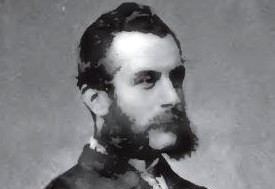 Eugéne-Marie Chantrelle
Murderer · United Kingdom · 1878
Eugéne-Marie Chantrelle was a French-born school teacher who lived in Edinburgh…
1 victim
Eugéne-Marie Chantrelle
Murderer · United Kingdom · 1878
Eugéne-Marie Chantrelle was a French-born school teacher who lived in Edinburgh…
1 victim
 Nasra al-Enezi
Mass murderer · Kuwait · 2009
Nasra Yussef Mohammad al-Enezi, known as Nasra al-Enezi, was the 23-year-old ex…
58 victims
Nasra al-Enezi
Mass murderer · Kuwait · 2009
Nasra Yussef Mohammad al-Enezi, known as Nasra al-Enezi, was the 23-year-old ex…
58 victims
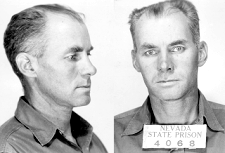 Burton Williamson
Murderer · USA · 1939
Burton Franklin Williamson was executed by asphyxiation-gas in Nevada on Novemb…
1 victim
Burton Williamson
Murderer · USA · 1939
Burton Franklin Williamson was executed by asphyxiation-gas in Nevada on Novemb…
1 victim
- Gender
- male
- Country
- USA
- Location
- Greene County, Missouri, USA
- Date of birth
- J une 30, 1955
- Age at first offence
- 32
- Characteristics
- abduction, to avoid arrest
- Victim profile
- Russell Harper, 45 ( Missouri State Highway Patrol Trooper )
- Method of murder
- Shooting ( H.K. 93 semiautomatic assault rifle)
- Date(s) of murder
- February 8, 1987
- Years active
- 1987
- Date of arrest
- Next day
- Status
-
Executed
Executed by lethal injection in Missouri on April 22, 1998
Case overview
Glennon Paul Sweet was executed by lethal injection in Missouri on April 22, 1998.
Sweet was convicted of murdering Missouri State Highway Patrol Trooper Russell Harper. The murder occurred on February 8, 1987, after Trooper Harper stopped Sweet for speeding along U.S. 60 just east of Springfield in southwest Missouri. Sweet was found guilty of Murder First Degree after a change of venue and was sentenced to death. He maintained his innocence throughout post-conviction and habeas proceedings.
Timeline
- February 8, 1987 — Trooper Russell Harper stopped Sweet for speeding on Highway 60 outside of Springfield, Missouri; after Sweet stopped his truck and opened the door, Sweet fired several bursts from a semi-automatic assault rifle, killing Harper.
- February 9, 1987 — Highway Patrol Troopers arrived at the Bills residence on a tip that Sweet was staying in an old bus on Bills’ property; Sweet was found hiding in the attic.
- February 8–9, 1987 — Legal chronology reflects that Sweet was arrested for the murder of Trooper Russell Harper.
- March 12, 1987 — Sweet was charged with Murder First Degree in Greene County.
- December 7, 1987 — Sweet’s trial began in Clay on a change of venue.
- December 12, 1987 — Sweet was convicted of Murder First Degree; the jury fixed punishment at death.
- January 20, 1988 — Sweet was sentenced to death.
- October 2, 1978 — Sweet was discharged from probation.
- April 22, 1998 — Sweet was executed by lethal injection in Missouri.
- March 18, 1991 — The United States Supreme Court denied discretionary review of Sweet’s state court appeal.
- March 20, 1991 — Sweet filed a federal petition for writ of habeas corpus in the United States District Court for the Western District of Missouri.
- November 22, 1995 — The U.S. District Court denied Sweet’s habeas corpus petition.
- March 9, 1998 — The United States Supreme Court declined to review Sweet’s habeas case.
- March 22, 1998 — The Missouri State Supreme Court issued an order and warrant of execution setting Sweet’s execution for April 22, 1998.
Background
Prior criminal history and other encounters
Glenn Sweet was found guilty of Possession of a Controlled Substance (Marijuana) Under 35 grams in Bolivar, Missouri on 02/26/1974 and was sentenced to one year in the Polk County Jail.
Sweet was fined $50 and court costs for disturbing the peace in Springfield, Missouri on 05/15/1974.
Sweet was fined $25 and court costs for disturbing the peace in Springfield, Missouri on 06/19/1974.
Sweet was sentenced on 10/24/1975 to a three year and a concurrent four year sentence for Shooting into a Dwelling and Felonious Assault without Malice in Springfield, Missouri. The execution of the sentence was suspended and Sweet was placed on three years probation. He was discharged from probation on October 2, 1978.
Sweet was fined $50 and court costs for Affray in Springfield, Missouri on 11/08/1978.
Sweet was fined $57 for Common Assault in Springfield, Missouri in May 1979.
Sweet was fined $69.50 for Property Destruction in Springfield, Missouri in April 1981.
On 04/01/1982, Sweet was sentenced to serve two, six month consecutive sentences for Peace Disturbance and Stealing in Springfield, Missouri. Sweet was also fined one hundred dollars and court costs.
On 01/19/1983, Sweet was sentenced to 30 days in the Greene County Jail and fined $500 and court costs for Driving while Intoxicated in Springfield, Missouri. The jail sentence was suspended and Sweet was placed on two years unsupervised probation.
Drug-related allegations mentioned around the murder
Testimony during the trial showed that Sweet was delivering methamphetamine.
The offence
Stop, shooting, and death of the officer
On February 8, 1987, at approximately 4:30 p.m., Trooper Russell Harper of the Missouri State Highway Patrol was stationed on Highway 60 near Springfield, Missouri operating a radar device.
A red mid-sixties Chevrolet pickup truck passed Trooper Harper at an excessive rate of speed. Trooper Harper activated his red lights and pursued the truck about a mile and a half where the truck pulled off and stopped on a farm road.
Before Trooper Harper could get out of his car, Sweet leapt from the truck, stepped toward the patrol car and fired several bursts of gunfire. One bullet struck Trooper Harper in the head, causing death. Twenty-nine bullet holes or indentations were found in the patrol car.
A separate description of the same incident states that when Sweet stopped and opened the door of his truck, Harper slowly drove up behind him; Sweet jumped out of the truck, aimed his semi-automatic assault rifle at the trooper's car, and fired several bursts. Twenty-nine bullets hit Harper's vehicle; one struck Harper in the head, killing him. Harper never even unbuttoned the holster flap covering his service revolver.
Charges and aggravating findings
Sweet was arrested and charged with first-degree murder. After a change of venue to Clay County, he was tried and found guilty.
The jury found aggravating circumstances that the murder was committed against a peace officer engaged in his official duties and that it was committed for the purpose of avoiding a lawful arrest. On December 12, 1987, the jury fixed the punishment at death.
Investigation
Vehicle modification and hiding
After the slaying, Sweet drove to the home of Donald Bills and the two began refurbishing the truck by replacing the tires, repainting and further modifying it to disguise the vehicle. Sweet also shaved his moustache to disguise himself.
On February 9, 1987, Highway Patrol Troopers arrived at the Bills residence on a tip that Sweet was staying in an old bus on Bills’ property.
During a search of the area, an H.K. 93 semiautomatic assault rifle, later determined to be the murder weapon, was found in a junked vehicle about 1000 yards from the Bills’ residence.
After obtaining a search warrant to further search the house, Troopers found Sweet hiding in the attic.
Witness identification and ballistics
Witnesses to the slaying identified Sweet as the assailant.
Gun cartridges found at the scene of the crime were found to have been fired from Sweet’s rifle. Ballistics specialists linked the rifle to the murder.
Other related items
The red pickup Sweet was believed to have been driving when Harper stopped him was found near the friend's house.
A rifle owned by Sweet was found in the trunk of a car nearby.
Arrest
Sweet was arrested two days later as he hid in the attic of a friend's house.
At the time of his arrest, Sweet was wanted on gun and drug charges.
Sweet was also described as being wanted on felony weapons charges in Kansas City and for jumping bail on a drug charge out of Texas.
Trial
Venue change and commencement
The trial began in Clay on December 7, 1987 following a change of venue.
Verdict
On December 12, 1987, Sweet was convicted of Murder First Degree.
A description of trial findings states that Sweet was convicted of murdering Harper after a five-day jury trial.
Sentencing
On January 20, 1988, after the denial of the motion for a new trial, Sweet was sentenced to death.
Appeals
Missouri Supreme Court direct appeal and post-conviction proceedings
Sweet filed post-conviction relief and pursued a consolidated appeal.
The Missouri Supreme Court affirmed Sweet’s conviction and sentence in the direct appeal and affirmed the denial of timely Rule 29.15 claims in the post-conviction appeal in the opinion State v. Sweet, 796 S.W.2d 607 (Mo. 1990).
- 11/29/1988 — Sweet filed a motion in the Circuit court for post-conviction relief.
- 09/15/1989 — The Circuit Court denied Sweet’s motion for post-conviction relief.
- 09/11/1990 — The Missouri State Supreme Court affirmed the conviction, sentence and denial for post-conviction relief.
United States Supreme Court and federal habeas
- 03/18/1991 — The United States Supreme Court denied discretionary review of Sweet’s state court appeal.
- 03/20/1991 — Sweet filed a federal petition for writ of habeas corpus in the United States District Court for the Western District of Missouri.
- 11/22/1995 — The U.S.
- 05/09/1996 — The court denied Sweet’s motion to alter or amend the judgment pursuant to Federal Rule of Civil Procedure 59(e).
- 09/10/1997 — The United States Court of Appeals for the Eighth Circuit affirmed the District Court’s denial of habeas relief.
- 10/09/1997 — Rehearing and suggestion for rehearing en banc were denied.
Certificate of appealability and claims raised
Sweet was granted a certificate of appealability under the Antiterrorism and Effective Death Penalty Act of 1996.
On appeal, Sweet raised nineteen claims summarized under twelve headings, including:
- Ineffective assistance of trial counsel during the guilt phase, including failing to investigate certain witnesses and evidence; failing to request a curative instruction or a mistrial during closing argument; failing to investigate and present evidence in support of a motion to suppress evidence; and being addicted to cocaine during the trial.
- Ineffective assistance of trial counsel during the penalty phase, including failure to object appropriately to the prosecutor's cross-examination of a witness; failure to investigate and present mitigating evidence; and failure to make an offer of proof to preserve mitigating testimony for appeal.
- Prosecutorial misconduct including introducing a prior bad act during the guilt phase; failing to provide proper notice of witnesses and evidence during the penalty phase; and using Sweet’s arrest record to cross-examine one of Sweet’s witnesses during the penalty phase.
- Improper exclusion of a juror.
- Improper exclusion of exculpatory evidence during cross-examination of Donald Bills.
- Unlawful search and seizure of Sweet’s property.
- Improper jury instruction defining reasonable doubt.
- Exclusion of certain mitigating evidence during the penalty phase.
- Improper admission of evidence of a prior bad act during the guilt phase.
- Improper jury instruction on mitigating circumstances during the penalty phase.
- Failure of the Missouri Supreme Court to conduct a meaningful proportionality review.
- Ineffective assistance of appellate and post-conviction counsel.
The appellate decision concluded:
- Some claims were declined because they were not properly before the court.
- Some claims were procedurally defaulted.
- One claim was reviewed for plain error, and no plain error was found.
- The court addressed on the merits preserved claims and denied relief.
- The judgment of the District Court was affirmed.
Federal appellate case information
The Eighth Circuit case included:
- Case: Glennon Paul Sweet, Appellant, v. Paul Delo, Superintendent, Potosi Correctional Center, Appellee
- Docket: No. 96-2581
- Submitted: June 12, 1997
- Decided: Sept. 10, 1997
- Rehearing and Suggestion for Rehearing En Banc Denied: Oct. 9, 1997
- Panel: BOWMAN, FLOYD R. GIBSON, and MORRIS SHEPPARD ARNOLD, Circuit Judges
- District Judge: The Honorable Joseph E. Stevens, Jr., United States District Judge for the Western District of Missouri
Outcome
Death sentence implementation
Sweet was declared dead at 12:05 a.m. at the Potosi Correctional Center.
Sweet maintained his innocence.
Sweet issued a final statement:
"I didn't shoot the trooper," Sweet said in his final statement. "This isn't justice, but I forgive everyone."
The execution was carried out by lethal injection in Missouri on April 22, 1998.
Summary of what authorities said about the killing
Authorities said 20 shots were fired at the trooper.
Troopers caught up with Sweet two days later as he hid in the attic of a friend's house in Springfield.
At the time of his arrest, Sweet was said to have fit the description of the killer.
Lt. Tom Martin, a 33-year veteran of the highway patrol who had worked with Harper, said:
"Harper was a hard working, good family man," said Lt. Tom Martin, a 33-year veteran of the highway patrol who had worked with Harper. "He was just out there that Sunday doing what he gets paid to do. He had no idea what was out there."
Highway patrol Capt. Jim Watson said:
"We have no remorse for him," highway patrol Capt. Jim Watson said.
Other details
Evidence regarding motive and prior bad act
During the guilt phase, the prosecutor elicited from witness Donald Bills evidence that at the time of the murder, Sweet was under an outstanding Texas warrant arising out of an incident involving cocaine and a gun.
The purpose of this evidence was to show that Sweet’s motive for killing Harper was to avoid being arrested and returned to Texas.
Jury and voir dire detail
Sweet claimed that a venireperson, Charlene Gill, was struck improperly for cause. The appellate discussion referenced the Witherspoon standard as interpreted through Wainwright v. Witt and included that Gill expressed doubts about the death penalty but stated she could vote for the death penalty.
The trial court denied the motion to strike Gill for cause, then moved Gill to the back of the panel due to issues in her personal life. The Missouri Supreme Court rejected Sweet’s constitutional argument because “Gill was not actually removed from the venire panel.”
Exculpatory evidence exclusion during cross-examination
Sweet sought to ask Donald Bills whether Sweet had ever denied involvement in the crime. The court sustained the prosecutor’s hearsay objection.
Mitigating evidence and exclusion
During the penalty phase, albums of photographs taken by Sweet were offered into evidence and were refused as irrelevant.
Evidentiary hearing request
Sweet sought an evidentiary hearing on claims of ineffective assistance of trial counsel and a claim regarding the prosecutor’s use of Sweet’s arrest record.
The appellate court concluded the District Court did not abuse its discretion in denying a hearing.
Additional administrative and legal notes included in the federal appellate decision
The appellate decision referenced Teague v. Lane regarding creation of new constitutional rules in habeas corpus, and discussed procedural default, cause and prejudice, and actual innocence standards including Schlup v. Delo and Sawyer v. Whitley.
The decision also referenced a Teague inquiry and the procedural bar rules applicable to habeas review of claims not properly raised in state court.

Spotted an error, or have more information about this case?