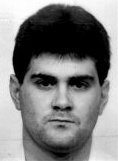
Cameron Willingham
Murderer Brian Kevin Rosenfeld
Murderer · USA · 1985
Brian Kevin Rosenfeld Brian Kevin Rosenfeld was sentenced to three concurrent l…
23 victims
Brian Kevin Rosenfeld
Murderer · USA · 1985
Brian Kevin Rosenfeld Brian Kevin Rosenfeld was sentenced to three concurrent l…
23 victims
 Russell Ellwood
Murderer · USA · 1991
Russell Ellwood was a former taxi driver. Authorities suspected him of killing…
20 victims
Russell Ellwood
Murderer · USA · 1991
Russell Ellwood was a former taxi driver. Authorities suspected him of killing…
20 victims
 Robert Martines Perez
Murderer · USA · 1994
Name: Robert Martines Perez · Other name used in proceedings: Robert Martinez P…
15 victims
Robert Martines Perez
Murderer · USA · 1994
Name: Robert Martines Perez · Other name used in proceedings: Robert Martinez P…
15 victims
 Billy Frank Vickers
Murderer · USA · 1993
Billy Frank Vickers Vickers was executed by lethal injection in Texas on Januar…
14 victims
Billy Frank Vickers
Murderer · USA · 1993
Billy Frank Vickers Vickers was executed by lethal injection in Texas on Januar…
14 victims
 Fletcher Mann
Murderer · USA · 1980
Fletcher Thomas Mann was executed by lethal injection in Texas on June 1, 1995.…
2 victims
Fletcher Mann
Murderer · USA · 1980
Fletcher Thomas Mann was executed by lethal injection in Texas on June 1, 1995.…
2 victims
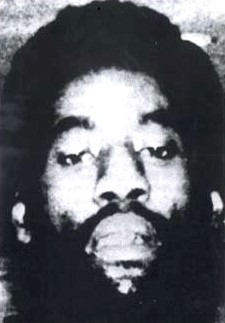 William Horton
Murderer · USA · 1974
William R. Horton was born August 12, 1951 in Chesterfield, South Carolina. On…
1 victim
William Horton
Murderer · USA · 1974
William R. Horton was born August 12, 1951 in Chesterfield, South Carolina. On…
1 victim
 Ruby McCollum
Murderer · USA · 1952
Ruby McCollum (August 31, 1909–May 23, 1992) was the subject of a notorious mur…
1 victim
Ruby McCollum
Murderer · USA · 1952
Ruby McCollum (August 31, 1909–May 23, 1992) was the subject of a notorious mur…
1 victim
 Loren Herzog
Murderer · USA · 1984
Loren Herzog — convicted multiple killer; pleaded guilty to voluntary manslaugh…
3 victims
Loren Herzog
Murderer · USA · 1984
Loren Herzog — convicted multiple killer; pleaded guilty to voluntary manslaugh…
3 victims
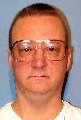 Gary Leon Brown
Murderer · USA · 1996
Gary Leon Brown was indicted for the capital offense of the murder of Jack McGr…
1 victim
Gary Leon Brown
Murderer · USA · 1996
Gary Leon Brown was indicted for the capital offense of the murder of Jack McGr…
1 victim
 Maria del Rosio Alfaro
Murderer · USA · 1990
Maria del Rosio Alfaro, also known as “Rosie” Alfaro, was sentenced to death on…
1 victim
Maria del Rosio Alfaro
Murderer · USA · 1990
Maria del Rosio Alfaro, also known as “Rosie” Alfaro, was sentenced to death on…
1 victim
- Gender
- male
- Country
- USA
- Location
- Navarro County, Texas, USA
- Date of birth
- January 9, 1968
- Age at first offence
- 23
- Characteristics
- parricide, arson
- Victim profile
- Amber, 2, and twins Karmon and Kameron, 1 (his three daughters)
- Method of murder
- Fire - Carbon monoxide poisoning
- Date(s) of murder
- December 23, 1991
- Years active
- 1991
- Date of arrest
- January 8, 1992
- Status
-
Executed
Executed by lethal injection in Texas on February 17, 2004
Case overview
Cameron Willingham was convicted of capital murder for murdering his three children during the same criminal transaction after setting fire to his home in Corsicana, Texas. He was sentenced to death and was executed by lethal injection on February 17, 2004.
Timeline
- December 23, 1991 — Willingham poured a combustible liquid on the floor throughout his home and intentionally set the house on fire in Corsicana; Amber and twins Karmon and Kameron died of acute carbon monoxide poisoning as a result of smoke inhalation.
- August 20, 1993 — A jury found Willingham guilty of capital murder; after a separate punishment phase hearing, the trial court imposed a sentence of death.
- October 30, 1995 — The U.S. Supreme Court denied certiorari review.
- June 8, 1998 — The U.S. Supreme Court denied Willingham’s certiorari petition.
- July 25, 2000 — A federal magistrate issued findings and conclusions and recommended that relief be denied; the court later adopted the magistrate’s findings, granted the state’s motion for summary judgment, and denied the petition for federal habeas relief.
- February 17, 2003 — The application for a certificate of appealability in the 5th U.S. Circuit Court of Appeals was denied.
- November 3, 2003 — The Supreme Court denied certiorari review.
- February 17, 2004 — Willingham was executed by lethal injection at 6:20 p.m., seven minutes after the lethal dose began flowing through his veins.
The offence
On December 23, 1991, Willingham poured a combustible liquid on the floor throughout his home and intentionally set the house on fire, resulting in the death of his three children. According to autopsy reports, Amber, age two, and twins Karmon and Kameron, age 1, died of acute carbon monoxide poisoning as a result of smoke inhalation.
An expert witness for the State testified that the floors, the front threshold, and the front concrete porch were burned, which only occurs when an accelerant has been used to purposely burn these areas. The witness further testified that igniting the floors and thresholds is typically employed to impede firemen in their rescue attempts.
Neighbors testified that as the house began smoldering, Willingham was “crouched down” in the front yard and refused, despite their pleas, to go into the house in an attempt to rescue the children. Neighbors testified that when the fire “blew out” the windows, Willingham “hollered about his car” and ran to move it away from the fire to avoid its being damaged. A firefighter also testified that Willingham was upset that his dart board was burned.
One of Willingham’s neighbors testified that the morning following the house fire (Christmas Eve), Willingham and his wife were at the burned house going through the debris while playing music and laughing.
Willingham told authorities that the fire started while he and the children were asleep. He claimed his attempts to save the children were not effective because of the fire conditions.
The investigation concluded that the fire was intentionally set with a flammable liquid.
Investigation
An investigation revealed that the fire was intentionally set with a flammable liquid. Fire investigation testimony described burned areas consistent with the use of an accelerant, including the floors, front threshold, and front concrete porch.
A fire marshall was described as chief investigator at the December 23, 1991 fire scene. The mood at the firehouse after the Willingham fire was described as solemn, and it was noted that the word of the fire and children’s deaths spread around town quickly. Firefighters had been called out earlier in the day to a fire that was also ruled an arson, and it was stated there were 11, 1-gallon jugs of gasoline involved in that earlier fire.
Arrest
Willingham was arrested and charged in the deaths on January 8, 1992.
Trial
Willingham was convicted of capital murder by murdering more than one person during the same criminal transaction after jury trial in the 13th Judicial District Court, Navarro County, Kenneth A. Douglas, J. The jury found him guilty on August 20, 1993 and, after a separate punishment phase hearing, the trial court imposed a sentence of death.
Punishment phase evidence
Testimony was presented that Willingham had a history of violence. He had been convicted of numerous felonies and misdemeanors, both as an adult and as a juvenile, and attempts at various forms of rehabilitation were presented as unsuccessful.
Witnesses testified that Willingham was verbally and physically abusive toward his family, and that at one time he beat his pregnant wife in an effort to cause a miscarriage. A friend testified that Willingham once bragged about brutally killing a dog. It was further testified that Willingham admitted to a fellow inmate that he purposely started this fire to conceal evidence that the children had been abused.
Dr. James Grigson testified for the State at punishment. He testified that Willingham fit the profile of a sociopath whose conduct becomes more violent over time and who lacks a conscience, that a person with this degree of sociopathy commonly has no regard for other people’s property or other human beings, that such a person cannot be rehabilitated in any manner, and that such a person poses a continuing threat to society.
Procedural rulings on direct appeal
On direct appeal, Willingham brought four points of error:
- denial of his Motion for Change of Venue in light of inflammatory statements made by the Navarro County District Attorney
- refusal to admit evidence offered by the defense to impeach the testimony of a witness for the State
- failure to instruct the jury on the effect of parole in the punishment phase
- insufficiency of the evidence to support the jury’s punishment-phase special issues, including the finding that he was a continuing threat to society and that mitigating circumstances would not warrant a life sentence
The Court of Criminal Appeals affirmed the judgment and sentence.
Sentencing
After jury verdict of guilty, the trial court sentenced Willingham to death. The U.S. Supreme Court denied certiorari review on October 30, 1995.
Appeals
Direct appeal
Willingham v. State, 897 S.W.2d 351 (Tex. Crim. App. 1995)
- The Court of Criminal Appeals affirmed.
- The court described that the jury could find that Willingham would commit criminal acts of violence that would constitute a continuing threat to society.
- The court found no error regarding denial of change of venue, refusal to admit certain impeachment evidence, and refusal to charge jury on effect of parole in the punishment phase.
Federal habeas
Willingham v. Johnson (N.D. Tex. 2001) A federal petition was denied.
In the habeas proceedings, objections were discussed regarding:
- right to represent himself on appeal
- conflict of interest with appellate counsel
- effectiveness of appellate counsel, including failure to raise several grounds relating to jury selection, evidence admissibility, and impeachment
- whether evidence admitted during the punishment phase violated the Eighth and Fourteenth Amendments
- constitutionality of Texas appellate review of death penalty convictions
- entitlement to a jury instruction on parole
The court concluded the objections were without merit and denied the petition for a writ of habeas corpus.
Willingham v. Texas, 116 S. Ct. 385 (1995) (Cert. Denied) Certiorari was denied.
Willingham v. Texas, 118 S. Ct. 2229 (1998) (Cert. Denied) Certiorari was denied.
Willingham v. Dretke, 124 S. Ct. 466 (2003) (Cert. Denied) Certiorari was denied.
A certificate of appealability application was denied on February 17, 2003.
After denial of a motion for rehearing, Willingham filed a timely petition for writ of certiorari with the Supreme Court on July 21, 2003, and the Supreme Court denied certiorari review on November 3, 2003.
Outcome
Willingham’s conviction and sentence were affirmed on direct appeal. Subsequent state and federal appeals were denied, and the U.S. Supreme Court denied certiorari review on multiple occasions.
Execution
Willingham was scheduled for execution in Texas. The Texas Attorney General’s Media Advisory stated that Cameron Todd Willingham, 35-year-old, was scheduled to be executed after 6 p.m. February 17, 2004.
He went to the Texas death house after 6 p.m. for the murder of his three children and was executed by lethal injection.
Last meal
The last meal was described as:
- three barbequed pork ribs
- two orders of onion rings
- fried okra
- three beef enchiladas with cheese
- two slices of lemon creme pie
Final words and conduct
Willingham’s final statement was:
"The only statement I want to make is that I am an innocent man convicted of a crime I did not commit. I have been persecuted for 12 years for something I did not do. From God's dust I came and to dust I will return so the Earth shall become my throne. I gotta go, Road Dog."
He expressed love to someone named Gabby and then addressed his ex-wife, Stacy Kuykendall, who was watching about 8 feet away through a window, and said several times, "I hope you rot in Hell, bitch." He then attempted to maneuver his hand, strapped at the wrist, into an obscene gesture.
He was pronounced dead at 6:20 p.m., seven minutes after the lethal dose began flowing through his veins.
Other details
Victims
- Amber Louise Kuykendall, age 2
- Karmon Diane Willingham, age 1 (twin)
- Kameron Marie Willingham, age 1 (twin)
Location
The children died in a fire at their home described as being in Corsicana. The fire occurred on Dec. 23, 1991. The home was described as being on West 11th Street, and also described as being in the 1200 block of West 11th Avenue; it was later described as a five-bedroom house on Corsicana’s south side.
Criminal history referenced at punishment
The Texas Court of Criminal Appeals recounted juvenile and adult criminal activity through testimony at punishment, including the following convictions and punishments as listed in the record:
- Second Degree Burglary (May 1986): probation; placed in a Nonviolent Intermediate Offender Act
- Grand Larceny (April 1987): two years probation and 60 days in the county jail
- Carrying a Concealed Weapon and Public Intoxication (April 1986): 4 days in the county jail; ordered to pay fine and costs
- Entering a Building with Unlawful Intent and Contributing to the Delinquency of a Minor (supplying paint for sniffing to a twelve-year-old child) (May 1986): ordered to pay restitution; 15 days in the county jail; six months probation running concurrently
- Two counts of Contributing to the Delinquency of a Minor (supplying paint to a twelve-year-old child and an eleven-year-old child) (November 1986): 60 days in the county jail
- Driving Under the Influence of Liquor and/or Drugs (substance was paint) (November 1988): one year probation on condition he check himself into an in-patient rehabilitation program for paint abuse
- Shoplifting (February 1989): probation orders from April 1987 Grand Larceny conviction and November 1988 DUI conviction vacated; sent to a special boot camp program; then given a two year sentence with all but 74 days suspended on condition he complete a substance abuse treatment program, attend at least one AA or NA meeting per week, and take part in a urinalysis every week and a half
Claims made by Willingham
Willingham said the fire started while he and the children were asleep. He suggested the fire could have resulted from a lantern lamp dumping fluid when a shelf collapsed inside the house or from his oldest daughter, described as “fascinated with everything,” accidentally setting off the blaze. He also alleged that someone came in with the intent to kill him and the children and stated that an arson investigator was a liar. He did not testify in his own defense.
Clemency and execution scheduling
A clemency request was rejected by the Texas Board of Pardons and Paroles on a 15-0 vote. A hearing was held in a Navarro County courtroom to set an execution date, and the court set the execution date for Feb. 17. The hearing included discussion about ongoing litigation concerning the constitutionality of using the “death by lethal injection” method, and it was stated the court denied the request to delay.
Other quoted statements from people named in the record
Corsicana fire marshall James Palos said:
"I can remember what I was doing that day, what was going on," Palos said.
"I can remember it just like it was yesterday."
Navigator County District Attorney Steve Keathley said:
"The appeals have run their course and the conviction and sentence have been upheld."
"The State of Texas requests that this court set an execution date."
A prosecutor named John Jackson recalled:
"He was engaged in pushing his car out of the way so it wouldn't be scorched by the flames," John Jackson, the prosecutor in the subsequent criminal case, recalled.
Navarro County district attorney Pat Batchelor said:
"He had a burn on his arm from charcoal lighter fluid."
"He really just wanted to get rid of them,"
A psychologist for the State at punishment, Dr. James Grigson, testified that the person demonstrated by Willingham could not be rehabilitated and posed a continuing threat to society.


Spotted an error, or have more information about this case?