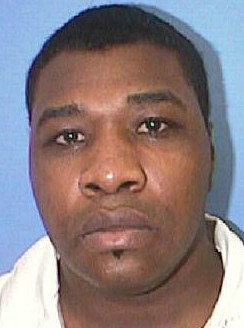
Elkie Lee Taylor
Murderer Brian Kevin Rosenfeld
Murderer · USA · 1985
Brian Kevin Rosenfeld Brian Kevin Rosenfeld was sentenced to three concurrent l…
23 victims
Brian Kevin Rosenfeld
Murderer · USA · 1985
Brian Kevin Rosenfeld Brian Kevin Rosenfeld was sentenced to three concurrent l…
23 victims
 Russell Ellwood
Murderer · USA · 1991
Russell Ellwood was a former taxi driver. Authorities suspected him of killing…
20 victims
Russell Ellwood
Murderer · USA · 1991
Russell Ellwood was a former taxi driver. Authorities suspected him of killing…
20 victims
 Robert Martines Perez
Murderer · USA · 1994
Name: Robert Martines Perez · Other name used in proceedings: Robert Martinez P…
15 victims
Robert Martines Perez
Murderer · USA · 1994
Name: Robert Martines Perez · Other name used in proceedings: Robert Martinez P…
15 victims
 Billy Frank Vickers
Murderer · USA · 1993
Billy Frank Vickers Vickers was executed by lethal injection in Texas on Januar…
14 victims
Billy Frank Vickers
Murderer · USA · 1993
Billy Frank Vickers Vickers was executed by lethal injection in Texas on Januar…
14 victims
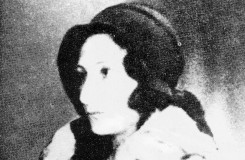 Anna Antonio
Murderer · USA · 1932
Anna Antonio, “Little Anna,” was an Italian woman who was 28 years old. She had…
1 victim
Anna Antonio
Murderer · USA · 1932
Anna Antonio, “Little Anna,” was an Italian woman who was 28 years old. She had…
1 victim
 Caleb Carrothers
Murderer · USA · 2009
July 11, 2009 — Caleb Carrothers shot and killed Frank Clark and his son, Taylo…
2 victims
Caleb Carrothers
Murderer · USA · 2009
July 11, 2009 — Caleb Carrothers shot and killed Frank Clark and his son, Taylo…
2 victims
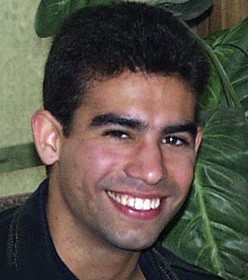 Ricky Rodriguez
Murderer · USA · 2005
Ricky Rodriguez committed suicide by shooting himself the same day. Ricky Rodri…
1 victim
Ricky Rodriguez
Murderer · USA · 2005
Ricky Rodriguez committed suicide by shooting himself the same day. Ricky Rodri…
1 victim
- Gender
- male
- Country
- USA
- Location
- Tarrant County, Texas, USA
- Date of birth
- December 14, 1961
- Age at first offence
- 32
- Characteristics
- drug addict, robbery, abuse
- Victim profile
- Ramon Carillo, 87 / Otis Flake, 65 (mentally ill)
- Method of murder
- Strangulation with a coat hanger
- Date(s) of murder
- March 22 / April 2, 1993
- Years active
- 1993
- Date of arrest
- —
- Status
-
Executed
Executed by lethal injection in Texas on November 6, 2008
Names and identifiers
Elkie Lee Taylor (also known as Ronnie Lee Watkins).
Background
Elkie Lee Taylor was a parolee. He was convicted of capital murder and sentenced to death for the robbery and murder of Otis Flake in Fort Worth, Texas on April 2, 1993.
After affirmance of the state capital murder conviction, Taylor filed a petition for writ of habeas corpus. The United States District Court for the Northern District of Texas (John H. McBryde, J.) denied the petition in 2006 (2006 WL 2707426). Taylor requested a certificate of appealability (COA).
On appeal, the United States Court of Appeals held that the petitioner was not required to prove that the state court decision was objectively unreasonable by clear and convincing evidence by merging two statutory standards of review, and that evidence supported the determination that the petitioner was not mentally retarded. The COA was denied.
Taylor also raised an Atkins claim. The court denied COA.
Taylor was a sixth-grade dropout. U.S. Supreme Court records and prison records described him as having an IQ of 63. The Supreme Court declined to take up the case at one point, and the action meant that the last hope for Taylor to avoid lethal injection in Huntsville depended on a possible later ruling on the method of execution used by Texas and other states.
The offence
Murder of Otis Flake (Fort Worth)
On the evening of April 1, 1993, Elkie Lee Taylor and Darryl Birdow smoked crack cocaine with an acquaintance staying at the home of Otis Flake. Otis Flake was a 64-year-old mentally ill man. While at Otis’s home, Taylor and Birdow were observed looking around the house for things to steal and were asked to leave. Otis’s houseguest departed shortly thereafter.
Taylor and Birdow returned in the early morning hours of April 2, 1993, and ransacked Otis Flake’s house, taking jewelry, cash, a television, and other items to sell for crack. Otis’s houseguest returned to find the front door open and the house in disarray. The houseguest saw Taylor and Birdow coming from the back of the house and called to them. Taylor had a white bag in his hand.
Inside the house, the houseguest found Otis sitting up against his bed. His hands were tied behind his back with white plastic tubing. His feet were tied together with a coat hanger. A T-shirt and two coat hangers were wrapped around his throat. Otis died of asphyxiation due to strangulation.
Murder of Ramon Carillo (seven blocks away)
Eleven days earlier, Taylor and an accomplice committed a murder of Ramon Carillo, an elderly man who lived alone. Carillo was 87 years old.
Carillo was discovered with an apron and a coat hanger wrapped around his neck. Carillo lived seven blocks down the street from Otis Flake.
Taylor later admitted that he had wrapped a coat hanger around a different man’s neck and stated, “dead men can’t talk.” Taylor smiled and laughed about his offenses.
Investigation
Apprehension and confession
Taylor was apprehended after leading police on a four-hour chase from Fort Worth to Waco. In the chase, he was driving the cab of a stolen 18-wheeler.
During the chase, Taylor tried to ram police cars and run over two troopers standing on the side of the road. The chase ended when a Texas State Trooper stood in front of the truck and shot out its tires with a shotgun, causing the truck to stop.
Upon arrest, Taylor admitted to police that he and his accomplice had gone to Flake’s house, that he had tied Flake’s mouth, hands and feet, and that he had taken jewelry, cash, a television, and other items to sell for crack, netting a total of $16. Taylor claimed that his accomplice killed Otis.
Taylor also admitted involvement in the murder of Ramon Carillo, but claimed that his accomplice killed the victim with a coat hanger.
Admissions to roommates
Taylor admitted to his roommates on separate occasions that he and his accomplice had committed two murders. The first murder occurred 11 days earlier and seven blocks down the street.
The judgment also described testimony from Lucille and May Hardaway, admitted prostitutes and crack users, who testified that Taylor bragged to them about the murders, explaining in detail how and why he strangled each man with a coat hanger. They testified that on March 22, Taylor came to their apartment and told them he had robbed and killed a Mexican man, and that he told them he choked the man and then strangled him with a coat hanger. Several days later, Taylor returned with news of another murder, again describing that he personally strangled Otis Flake with a coat hanger while his accomplice “watched out.”
Trial
Capital murder conviction and sentencing
A jury convicted Taylor of capital murder and sentenced him to death.
The trial court was described as submitting the special issues set out in Article 37.071, subsections 2(b)(1), 2(b)(2), and 2(e) of the Texas Code of Criminal Procedure. The judgment stated that, in accordance with the jury’s answers to those issues, the trial court assessed appellant’s punishment at death. The judgment stated that Taylor’s conviction was affirmed.
The judgment in Taylor v. State described that, in June 1994, appellant was convicted of capital murder under Texas Penal Code 19.03(a)(2) for murder in the course of robbery committed in April 1993. The trial court submitted the special issues, and the jury answered them such that the punishment was death.
Evidence of prior murder admitted at trial
Taylor raised points of error related to admitting extraneous offense evidence during the guilt/innocence phase.
The judgment described the extraneous offense evidence as a separate murder taking place on March 22, 1993 (Ramon Carillo). The judgment stated that the offense occurred on Flake’s street, a few blocks from his house. Carillo’s death was caused by ligature strangulation with an untwisted coat hanger.
The judgment described that police apprehended Taylor subsequent to Flake’s murder and that appellant gave statements admitting involvement in the Carillo offense. In the statement, Taylor maintained that he and Darryl Birdow went to Flake’s house, where both took part in tying and robbing their victim, but that Taylor did not accept responsibility for the strangulation of the victim, claiming Birdow instructed Taylor to wait by the door while Birdow turned off lights in the house. The judgment described that Taylor claimed the victim was in his bedroom tied and gagged but still alive, and that Birdow went back into the victim’s bedroom for five or ten minutes. The judgment described Taylor’s statement that when Birdow emerged from the room he told appellant, “eyes don’t see, ears don’t hear.” The judgment stated Taylor claimed he did not know of Birdow’s intention to murder the deceased until it was too late.
The judgment also described that in appellant’s original statement, appellant wrote: “I tied his mouth up and then tied his hands and feet up.” After signing that statement, Taylor was allowed to make corrections. He scratched out the word “I” and substituted another word beginning with “DA” and ending with “LL”. The middle of the word was cut out by the police detective’s hole-punch.
The judgment described that at trial the judge gave an instruction limiting the jury’s consideration of the extraneous offense evidence to determining motive, intent, or identity, or to rebut the defensive theory that appellant’s accomplice had murdered Flake.
The judgment’s discussion included specific rulings: that the prior murder evidence was relevant to show intent; that testimony concerning the method used was admissible to prove identity where the method was distinctive enough to be treated as a “signature”; that the evidence was relevant to show motive; and that it rebutted a defensive theory.
The judgment also described Rule 403 analysis and concluded that the trial court’s admission of this evidence was not outside the zone of reasonable disagreement. It overruled the points of error about admissibility.
Limiting instruction purposes
Taylor complained that the trial court’s limiting instruction on admission of extraneous offense evidence was impermissibly broad because it named four purposes: intent, identity, motive, and rebuttal of defensive theory instead of one.
The judgment stated that appellant cited no authority requiring a limiting instruction to be limited to a single purpose, and it held that extraneous offense evidence could be relevant to more than one issue. It held it was proper for the trial court to include more than one purpose in its instruction. The court overruled the point of error.
Sentencing
Taylor was sentenced to death following his capital murder conviction.
Co-defendant Darryl Birdow received a life sentence for Flake’s murder and remained in custody as of “this writing.”
Appeals
Direct appeal
The judgment described direct appeal to the Texas Court of Criminal Appeals and an affirmation of conviction and sentence. It described the Court of Criminal Appeals as affirming the conviction and sentence, and it included that Clinton and Overstreet, JJ., concurred in result, with Baird, J., joining only the judgment.
U.S. Supreme Court last-day appeals and other appeals
The execution occurred after the U.S. Supreme Court and the Texas Court of Criminal Appeals turned down last-day appeals. The U.S. Supreme Court declined to take up the case at one point, meaning that Taylor’s last hope depended on a possible Supreme Court ruling on the method of execution employed by Texas and other states and the federal government.
Subsequent appeals were denied, including all of his subsequent appeals in state and federal court being denied.
Habeas and COA denial
Taylor filed a petition for writ of habeas corpus. The district court denied the petition. The Court of Appeals denied a certificate of appealability, including on the Atkins claim.
Outcome
Taylor was executed by lethal injection in Texas on November 6, 2008. He was pronounced dead at 6:30 p.m.
The execution included Taylor’s statements from the death chamber gurney: “You ain't got to worry about nothing,” Elkie Lee Taylor told an aunt and a couple of friends from the death chamber gurney. “I am going home. I hope to see all of y'all one day. Lord have mercy on my soul.”
He then looked through another death chamber window where relatives of his victims were standing and told them: “Stay strong. It's bad to see a man get murdered for something he didn't do. But I am taking it like a man, like a warrior. I am going home to Jesus.”
After telling the warden he was ready and as the lethal drugs began flowing, he said: “Don't forget to tell my daughter ...” and mumbled something that couldn’t be understood.
In another account of his last statement, Taylor said to his friends and an aunt who attended his execution: “You ain't got to worry about nothing,” and
He then turned to face the relatives of the two victims and said:
Other details
Prior burglary sentence and parole
Taylor began serving an 8-year prison sentence in April 1992 for burglary and was paroled only 9 months later. Taylor had been on parole for only three months when he was sentenced to death for the robbery and murder of Otis Flake in Fort Worth, Texas on April 2, 1993.
Previous criminal history
The record described that Taylor had four previous burglary convictions in the last three years.
Trial details cited in the case judgment
The judgment described that Taylor raised twenty-four points of error and that “We will affirm,” concluding that it would affirm the trial court’s judgment.
Dates and age references contained in the record
Taylor was described as 46 at the time of his execution. He was described as 31 at the time of the April 2, 1993 offense in one account, and as 47 two days from his execution date in another account.
Spotted an error, or have more information about this case?