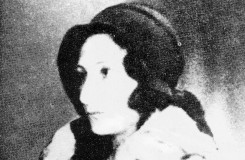
Anna Antonio
Murderer Martha Wise
Murderer · USA · 1924
Martha Wise (born 1885; died June 28, 1971), also known as “the Borgia of Ameri…
3 victims
Martha Wise
Murderer · USA · 1924
Martha Wise (born 1885; died June 28, 1971), also known as “the Borgia of Ameri…
3 victims
 Mary Frances Creighton
Murderer · USA · 1923
Mary Frances Creighton (c. 1898 - July 16, 1936) was a housewife and was execut…
3 victims
Mary Frances Creighton
Murderer · USA · 1923
Mary Frances Creighton (c. 1898 - July 16, 1936) was a housewife and was execut…
3 victims
 Inez Palmer
Murderer · USA · 1926
Inez Palmer — defendant; lived at the Stout farmhouse and pleaded guilty to a f…
2 victims
Inez Palmer
Murderer · USA · 1926
Inez Palmer — defendant; lived at the Stout farmhouse and pleaded guilty to a f…
2 victims
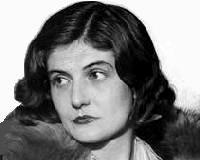 Winnie Ruth Judd
Murderer · USA · 1931
Winnie Ruth Judd (January 29, 1905 – October 23, 1998) was a Phoenix, Arizona m…
2 victims
Winnie Ruth Judd
Murderer · USA · 1931
Winnie Ruth Judd (January 29, 1905 – October 23, 1998) was a Phoenix, Arizona m…
2 victims
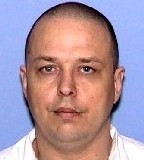 Robert Leslie Roberson
Murderer · USA · 2002
Robert Leslie Roberson III was a white male. His hair color was brown, his heig…
1 victim
Robert Leslie Roberson
Murderer · USA · 2002
Robert Leslie Roberson III was a white male. His hair color was brown, his heig…
1 victim
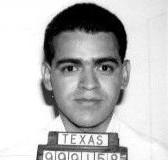 Paul Nuncio
Murderer · USA · 1993
Paul Selso Nuncio was convicted of capital murder in the strangulation death of…
1 victim
Paul Nuncio
Murderer · USA · 1993
Paul Selso Nuncio was convicted of capital murder in the strangulation death of…
1 victim
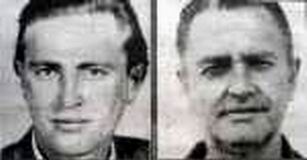 Romulus Veres
Serial killer · Romania · 1972
Romulus Vereş was a serial killer known as “the man with the hammer”. He was bo…
5 victims
Romulus Veres
Serial killer · Romania · 1972
Romulus Vereş was a serial killer known as “the man with the hammer”. He was bo…
5 victims
 Angelica Alvarez
Mass murderer · USA · 2006
Angelica Alvarez was 27 years old. She was described as an Elkhart County mothe…
4 victims
Angelica Alvarez
Mass murderer · USA · 2006
Angelica Alvarez was 27 years old. She was described as an Elkhart County mothe…
4 victims
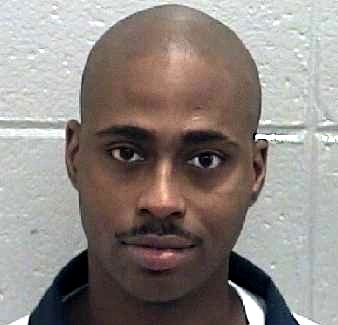 Demarcus Ali Sears
Murderer · USA · 1990
Demarcus Ali Sears was 25 years old when he was sentenced to death in September…
1 victim
Demarcus Ali Sears
Murderer · USA · 1990
Demarcus Ali Sears was 25 years old when he was sentenced to death in September…
1 victim
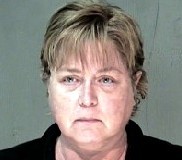 Shari Tobyne
Murderer · USA · 2009
Shari Tobyne Shari Tobyne was the wife of Dwight Tobyne and had been married to…
1 victim
Shari Tobyne
Murderer · USA · 2009
Shari Tobyne Shari Tobyne was the wife of Dwight Tobyne and had been married to…
1 victim
- Gender
- female
- Country
- USA
- Location
- Albany, New York, USA
- Date of birth
- 1 906
- Characteristics
- parricide, murder-for-hire, abuse
- Victim profile
- Salvatore Antonio, 30 (her husband)
- Method of murder
- Shooting - Stabbing with knife
- Date(s) of murder
- March 27, 1932
- Years active
- 1932
- Date of arrest
- May 5, 1932
- Status
-
Executed
Executed by electrocution at Sing Sing Prison on August 9, 1934
Background
Anna Antonio, “Little Anna,” was an Italian woman who was 28 years old. She had thick, long dark hair and a very slight build. At the time of execution, her frail body weighed 85 pounds. Her head was partially shaved to prepare for electrode attachment.
At the age of 16, Anna married Salvatore Antonio, 30, of Albany, New York. Salvatore Antonio dominated Anna’s life and placed restrictions on everything she could and could not do. When she did not obey, she was beaten. Together they had 4 children, but one died at an early age. Anna was a batterd wife and mother of three young children.
Salvatore Antonio allegedly worked for a railroad as a brakeman and had two insurance policies: one with Met Life for $2,500 and another with his union, the Brotherhood of Railway Trainmen for $2,800.
Anna stated: “The house was always full of dope and guns,” and that statement was attributed to Anna later told to the cops.
The offence
Anna was described as having hired a killer to take care of her husband.
Ferraci and another friend, Vincent Saetta, shot and stabbed Salvatore Antonio on a highway outside of Albany. Salvatore Antonio was found with 15 stab wounds and 5 bullet holes.
Police told investigators that Anna Antonio was the person who had asked them to kill Salvatore Antonio in exchange for $800 of the insurance money.
Anna said she did not tell those men to kill her husband for his insurance money of $5,000, and she said she could have killed him a dozen times.
Investigation
Police pinpointed Ferraci and Saetta. They told police they killed Salvatore Antonio at the bequest of Anna Antonio, who promised to pay them $800 of the insurance money.
The Albany District Attorney John Delaney called Saetta’s statement “an absolute fabrication of lies” (Times, June 30, 1934, p. 1).
Arrest
Anna Antonio, Vincent Saetta and Sam Ferraci were arrested on May 5, 1932 and charged with murder.
Trial
After a 26 day trial held in Albany County Court during the Spring of 1933, Anna Antonio, Saetta and Feracci were found guilty of murder in the 1st Degree.
On April 15, 1933, all three defendants were sentenced to die for Salvatore Antonio’s murder.
Sentencing
The defendants went to Death Row in Sing Sing awaiting punishment. Anna’s execution date was scheduled by the Albany Court for May 29, 1933.
Appeals
Three reprieves were granted from the chair, and Governor Lehman granted stays in order to resolve unanswered questions.
A face-to-face meeting with Governor Lehman occurred, and it lasted two hours; this meeting was attended by Anna’s attorney, Daniel Prior. Anna’s three children—Phyllis, 9, Marie, 7 and Frankie, 3—accompanied Prior to the Governor’s mansion, along with Anna’s brother, Pasquale Capello of Schenectady.
The Governor denied Prior’s request the next day. Anna was informed at Sing Sing of the Governor’s decision.
Saetta asked to speak with Warden Lewis E. Lawes at 10:50 p.m. barely ten minutes before the execution was scheduled to take place. Saetta told the warden that he, not Anna, had killed Salvatore Antonio and that she had nothing to do with the murder. Saetta said he and Salvatore Antonio argued over a $75 debt that Salvatore Antonio owed him, and Saetta said Salvatore Antonio threatened his life, leading Saetta to decide to kill him. Saetta said Saetta and Ferraci took Salvatore Antonio for a ride outside Albany on March 27, 1933 and that Saetta shot Salvatore Antonio. Saetta also said: “Mrs. Antonio was absolutely innocent of the crime,” and “I’m not thinking of myself so much,” was stated by Anna about thinking of the future of her children when she was awaiting news.
Ferraci and Saetta sweated in their cells while the warden read Saetta’s statement over the phone to Governor Lehman. A dramatic decision came through at 1:00 a.m.: “I have directed the warden of Sing Sing prison to postpone the electrocution of Vincent Saetta, Sam Ferraci and Anna Antonio until Friday night, June 29, in order that I may have time to study and consider the long statement made by Saetta.”
The execution was then postponed until Friday night, June 29.
It was then decided that a ten-day reprieve would allow Prior to draw up a motion for a new trial based on Saetta’s statements. The motion would be made in Albany County Court in front of Judge Earl H. Gallup, the same judge who presided over the original trial in 1933.
On July 5, the motion for a new trial was denied by Judge Gallup. Prior immediately appealed the ruling. Anna said: “I have already died enough for a million men!”
On July 10, Governor Lehman granted a reprieve of one month to the beleaguered defendants in order to appeal the case. On July 16, the State Court of Appeals refused to hear the case, dropping the matter back into Governor Lehman’s lap. The court issued guidelines for future death penalty cases when it ruled: “After affirmance of judgment of death, no stay of execution can be granted except by the Governor.” It was stated that no death penalty case could come to the State Court of Appeals with an expectation of a reprieve.
The new date for the execution was set at August 9, 1934.
Anna’s statement included: “You don’t know how terrible it is to be here! The Governor knows everything there is to know. Why doesn’t he say something?” and later she said: “It looks as if they’ve all turned me down, God alone can help me!”
Clarence Darrow supported Anna, and newspaper editorials lamented the on-again, off-again execution as cruel and unusual punishment. Various Italian civic organizations made pleas in her behalf.
Other participants
Sam Feracci, a friend of Salvatore Antonio, was involved in the account of the murder. Vincent Saetta, 22, was identified as an alleged accomplice and made a statement claiming Anna Antonio had nothing to do with the murder.
Warden Lewis E. Lawes was involved when Saetta asked to speak with him.
Governor Lehman made decisions regarding the postponements and reprieves.
Anna’s attorney Daniel Prior of Albany filed appeal after appeal, and he attended meetings with Governor Lehman.
Judge Earl H. Gallup presided over the original trial and denied the motion for a new trial.
The prison physician, Dr. Charles C. Sweet pronounced those who died.
The executioner, Robert G. Elliot, wrote journal notes about the execution.
Father McCaffrey was present during Anna’s prayer.
Outcome
Anna Antonio was executed by electrocution at Sing Sing Prison on August 9, 1934. She sat in the chair calmly and repeated the Catholic prayer. She was pronounced dead at 11:16 p.m.
Ferraci was escorted into the death chamber after Anna’s death and was smiling while he was strapped to the chair. Ferraci said: “I want to thank you gentlemen,” and continued: “I go to die but I am innocent. That is all I can say, I wish you good luck, all of you.”
Saetta was brought into the chamber at 11:27 p.m., grinning. Saetta said: “Hello, guard!” He was pronounced dead at 11:31 p.m.
All three bodies were removed and stored until the following day.
Family members claimed the bodies on August 10, and funeral arrangements were made.
Anna was buried in Albany on August 13, 1934.
Aftermath
Prison officials remarked to the press that more money was spent on Anna’s incarceration and care than any other defendant in American history.
Governor Lehman, stung by criticism for not saving Anna’s life, said: “The law makes no distinction of sex in the punishment of crime; nor would my own conscience permit me to do so” (Citizen Register, p. 2).
For little Marie, Anna’s daughter, August 9, 1934 was her 10th birthday.
Timeline
- May 5, 1932 — Anna Antonio, Vincent Saetta and Sam Feracci were arrested and charged with murder.
- Spring of 1933 — A 26 day trial was held in Albany County Court; Anna Antonio, Saetta and Feracci were found guilty of murder in the 1st Degree.
- April 15, 1933 — All three defendants were sentenced to die for Sal’s murder.
- May 29, 1933 — The Albany Court set a date of execution for Anna’s killers.
- May 29, 1933 — Ferraci and Saetta were on Death Row in Sing Sing awaiting punishment.
- June 28, 1934 — The execution was postponed and eventually set for June 28, 1934.
- June 20, 1934 — Daniel Prior attended a face-to-face meeting with Governor Lehman that lasted two hours; Anna’s children and Anna’s brother accompanied him.
- June 27, 1934 — The matrons partially shaved Anna’s head to prepare for electrode attachment.
- July 5, 1934 — The motion for a new trial was denied by Judge Gallup.
- July 10, 1934 — Governor granted a reprieve of one month to appeal the case.
- July 16, 1934 — The State Court of Appeals refused to hear the case and issued guidelines: “After affirmance of judgment of death, no stay of execution can be granted except by the Governor.”
- August 9, 1934 — Anna was executed by electrocution at Sing Sing Prison.
- August 10, 1934 — Family members claimed Anna Antonio, Vincent Saetta and Sam Ferraci; funeral arrangements were made.
- August 13, 1934 — Anna was buried in Albany.
Other details
At 11:00 p.m., the guards came for Anna and she stood trembling in the outer corridor for ten minutes before she was allowed to proceed.
She walked to the chair unassisted though nervous, wearing a tight blue dress with bits of white triming on the front and across the front, which she made herself. She wore one dark stocking on her left leg because she was required to keep her right leg bare for the electrode. Her dress covered her crotch area and left leg.
She sat in the chair at 11:12 p.m. and repeated the Catholic prayer. Because she was so small, the side of her dress was slid all the way up so they could spread her legs to fit into the ancle stocks of the electric chair. Her bare right leg was held out to the side quite exposed.
At 11:16 p.m. the prison physician Dr. Charles C. Sweet pronounced her dead: “I hereby pronounce this person dead,” he intoned.
Anna lost fifteen pounds during her ordeal, did not eat for three days, and was unable to cope with constant pressure of death staring her in the face. She laid in her cot for twenty-four hours, and the matrons brought her tea and toast and forced her to eat.
Anna told the matrons: “I am a little more hopeful, “ and earlier she said while elation: “If I could only live to bring up the three children!” and also: “I’m not thinking of myself so much,” “I’m thinking what it will mean to the future of my children.”
Anna signed a will leaving whatever she had in this world to her kids. When informed by matrons of what she wished for her last meal, Anna replied: “I want nothing.”
On the day of execution, the three local women matrons became friends with Anna. They stood in front of her to avoid anyone taking photographs of Anna sitting in the chair.
The Snyder incident in 1928, in which a reporter snapped a death photo with a hidden camera, was mentioned as still on everyone’s mind.
At 10:50 p.m., Vincent Saetta asked to speak with Warden Lewis E. Lawes. Saetta said: “Mrs. Antonio was absolutely innocent of the crime,” and he also said: “I’m willing to pay the price!” was attributed to Saetta. Ferraci said: “I gave the State what information I could when we were first arrested.”
The executioner Robert G. Elliot later wrote in his journal: “She walked to the chair unassisted although nervous. She sat in the chair calmly and repeated the Catholic prayer with Father McCaffrey” (Elliot, p. 254).
After the executions, witnesses included one spectator who collapsed in the row of seats while Dr. Sweet declared Ferraci dead.
Spotted an error, or have more information about this case?