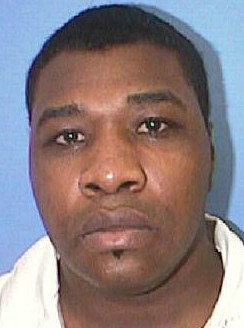
Robert Lee Tarver
Murderer Brian Kevin Rosenfeld
Murderer · USA · 1985
Brian Kevin Rosenfeld Brian Kevin Rosenfeld was sentenced to three concurrent l…
23 victims
Brian Kevin Rosenfeld
Murderer · USA · 1985
Brian Kevin Rosenfeld Brian Kevin Rosenfeld was sentenced to three concurrent l…
23 victims
 Marvin Gray
Murderer · USA · 1975
Marvin Gray was convicted killer who claimed responsibility for 23 slayings and…
23 victims
Marvin Gray
Murderer · USA · 1975
Marvin Gray was convicted killer who claimed responsibility for 23 slayings and…
23 victims
 Yahweh ben Yahweh
Murderer · USA · 1980
Yahweh ben Yahweh was born and legally named Hulon Mitchell Jr. (October 27, 19…
23 victims
Yahweh ben Yahweh
Murderer · USA · 1980
Yahweh ben Yahweh was born and legally named Hulon Mitchell Jr. (October 27, 19…
23 victims
 Russell Ellwood
Murderer · USA · 1991
Russell Ellwood was a former taxi driver. Authorities suspected him of killing…
20 victims
Russell Ellwood
Murderer · USA · 1991
Russell Ellwood was a former taxi driver. Authorities suspected him of killing…
20 victims
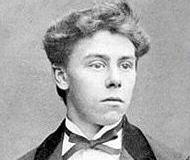 Hendrik Jut
Murderer · Netherlands · 1872
Hendrik Jut (July 19, 1851 – June 12, 1878) was a murderer from The Hague. He k…
2 victims
Hendrik Jut
Murderer · Netherlands · 1872
Hendrik Jut (July 19, 1851 – June 12, 1878) was a murderer from The Hague. He k…
2 victims
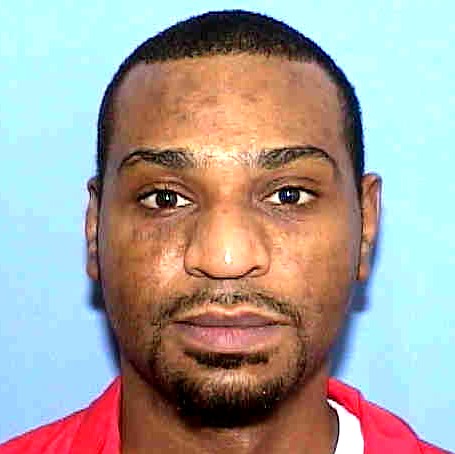 Ronald Chris Foster
Homicide · USA · 1989
Ronald Chris Foster was an African American who was 17 years of age at the time…
1 victim
Ronald Chris Foster
Homicide · USA · 1989
Ronald Chris Foster was an African American who was 17 years of age at the time…
1 victim
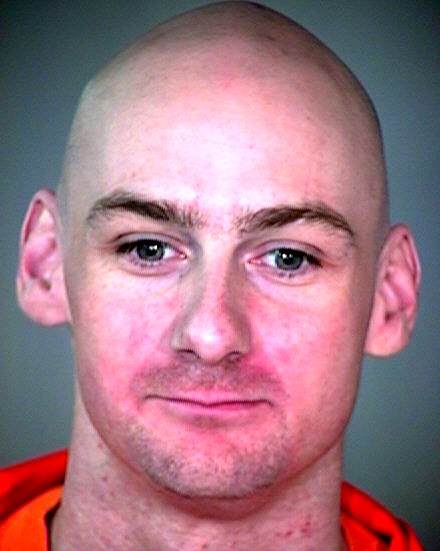 Tracy Allen Hampton
Murderer · USA · 2001
Tracy Allen Hampton was staying with Charles Findley and Findley’s girlfriend,…
2 victims
Tracy Allen Hampton
Murderer · USA · 2001
Tracy Allen Hampton was staying with Charles Findley and Findley’s girlfriend,…
2 victims
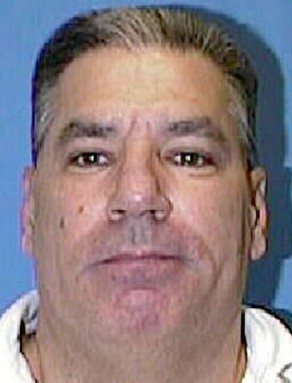 Michael Griffith
Murderer · USA · 1994
Name: Michael Griffith · Status: Executed by lethal injection in Texas on June…
1 victim
Michael Griffith
Murderer · USA · 1994
Name: Michael Griffith · Status: Executed by lethal injection in Texas on June…
1 victim
- Gender
- male
- Country
- USA
- Location
- Russell County, Alabama, USA
- Date of birth
- 1947
- Age at first offence
- 37
- Characteristics
- robbery
- Victim profile
- Hugh Kite (store owner)
- Method of murder
- Shooting ( .38-caliber revolver)
- Date(s) of murder
- September 15, 1984
- Years active
- 1984
- Date of arrest
- October 11, 1984
- Status
-
Executed
Executed by electrocution in Alabama on April 14, 2000
Case overview
Robert Lee Tarver Jr. was convicted and sentenced to death for the September 15, 1984 robbery and murder of Hugh Kite in Cottonton, Alabama. Hugh Kite owned and operated Kite's Grocery and Bait Store on Alabama 165.
The offence
On the evening of September 15, 1984, Hugh Kite was closing up his store and exited the building and went around the corner where he was shot three times with a .38-caliber revolver. He was robbed of his cash. After the shooting, shoe prints led away from the vicinity of the area where Kite was found, across railroad tracks, and into a dirt road in a pasture owned by Kite.
The victim’s money and wallet were addressed in the testimony and physical evidence:
- In testimony at the scene, Lesley Vance stated that the victim's wallet was found on his body and that there was money lying outside the victim's left pocket; Vance was later recalled and stated that his earlier testimony about finding the victim's wallet was incorrect and that the victim's wallet was not found.
- Officer Parker testified about the items and money found in the victim’s pockets, including $36 in $1 bills, $50 in $5 bills, and $3.96 in change, plus a set of keys, in the inside and just outside the victim’s left front pocket; and in the right front pocket, $15 in $1 bills, $50 in $5 bills, and 35 cents in change, along with two sets of keys, some medication and a pocketknife. Next to the victim’s left leg, Parker testified there were a Master card and a Visa. Parker testified that no wallet was found on the victim.
The store served as a community place. Russell County District Attorney Kenneth Davis said:
"That store was kind of a community center, a gethering place for people in the community. Most everybody in the area knew him, including Tarver and and his accomplice, Andrew Lee Richardson. At trial, Richardson testified he was with Tarver on the night Kite was murdered."
Davis also said:
"Mr. Kite's death cast a pall over that community. It was frightening and disconcerting and had a chilling effect on everybody there."
Investigation
Deputy Sollie Pate testified that on the evening in question he received a dispatcher call reporting someone had been shot at Kite’s Store at 10:30 p.m. (Eastern time). Pate went to the scene, found no pulse, secured the scene, and called for an ambulance, the coroner, and investigators.
Lesley Vance testified that he examined the victim’s body at the scene, found three gunshot wounds, and determined the victim was dead.
Raymond Smith, an investigator with the Russell County Sheriff’s Department, testified that he took photographs of the scene and the victim’s body and described pocket contents and footprints. Smith testified that shoe prints with a distinctive tread design were found leading away from the area and that tire prints led to the highway, appearing the vehicle proceeded onto the highway in a southerly direction. Smith testified that attempts to locate similar shoe and tire tread designs in area stores were unsuccessful.
Thomas Boswell, chief investigator for the Russell County Sheriff’s Department, received information concerning the case from Robert Jackson on October 11, 1984. Boswell asked Investigator Herbert Parker to locate Andrew Richardson. Richardson came to the sheriff’s office and made a statement; after his statement, Richardson was arrested for the victim’s murder.
Boswell asked Esther Dennis about a gun after Richardson made a comment to Dennis. Dennis produced a Colt single shot revolver that was unloaded. Boswell went to the home of Addie Upshaw, described as an occasional residence of Tarver. Boswell testified that a Chevrolet automobile with distinctive tires was found at Upshaw’s residence and was impounded and towed to the jail yard. A search of Upshaw’s home found a pair of Nike tennis shoes. Boswell testified that on October 4, 1984, a request had been made to the Governor to authorize payment of a reward for information leading to the arrest of a suspect, but Boswell stated that Jackson never mentioned a reward and that Boswell already had the name of the appellant with 25 other names when he talked to Jackson.
A Budweiser cigarette butt and the apparent freshness of a beer can were described:
- Joe Edwards, a Phenix City police officer, testified that on September 16, 1984, he found a Budweiser beer can beside the tire tracks in the pasture behind Kite’s Store. He testified that when he poured the beer from the can, it began to foam.
- Edwards also testified about the can being relatively fresh based on the foaming.
Gloria Walters, a latent print examiner with the Alabama Bureau of Investigation, lifted a latent fingerprint from the Budweiser can that matched the known fingerprint of the appellant’s right thumb.
Tellis Hudson, a criminalist with the Department of Forensic Sciences, examined shoe prints in the pasture, made photographs and a plaster cast, and testified the shoe print tread design was unusual and that part of the impression was probably made by the person’s pants legs being too long and dragging the ground. Hudson compared Nike tennis shoes to photographs of the shoe prints and testified the tread design was fairly similar but did not match. Hudson also examined and made photographs of tire tracks and examined the tires of the Chevrolet, making tire prints. Hudson testified that one print in the pasture could have been made by the left, and possibly the right, front tire of the Chevrolet.
Prentiss Griffith, Sheriff of Russell County, examined the shoe prints and testified that the stride length leading away from the store to the pasture were longer than those leading from the pasture to the store, indicating the person was running away. Griffith testified his observation of tire prints indicated the vehicle turned from Highway 165 into a pasture via a dirt road, forked, pulled into the middle of the fork next to a tree, backed into a grassy area, and then left the pasture turning south onto Highway 165. Griffith testified about tire tread design and wear matching the prints in the pasture and testified it had rained in the area during the afternoon of the victim’s death, covering all prints except the ones found.
Ballistics and medical evidence were presented:
- Dr. Thomas Gilchrist performed the autopsy and testified the victim had a gunshot wound to the chest and two gunshot wounds to the right thigh; two bullets were removed and the third bullet had exited. Gilchrist determined the cause of death was a gunshot wound to the chest.
- Lonnie Harden, a firearms and toolmark examiner with the Department of Forensic Sciences, examined the two expended .38 bullets removed from the body and test fired the gun obtained from Dennis; Harden testified the bullets had been fired through that particular gun. Harden testified that he found no gunpowder residue around the bullet holes in the shirt and pants, indicating the gunshots were fired from a distance of in excess of 30 inches away.
Joe Edwards testified about the scene; officers and investigators also took steps to secure and analyze physical evidence including a pistol that a ballistics report linked to the murder.
Arrest and co-defendant information
Andrew Richardson was identified as the co-defendant and came to the sheriff’s office after Boswell asked him to be located. Richardson was arrested for the victim’s murder following his statement.
Esther Dennis testified she lent her gun to the appellant after he came to her house alone. She stated it was returned about a week and a half later and that Richardson was with the appellant when the gun was returned.
Addie Upshaw testified that the appellant was living with her on September 15, 1984. Debra Upshaw testified she was at her mother’s house on the afternoon of September 15, 1984, and that the appellant told her there was a gun in the pocket of the chair where Richardson was sitting, saying the gun was for protection.
At trial, Richardson testified about being with Tarver on the night Hugh Kite was murdered. Richardson testified that two men were drinking beer in Tarver’s late 1970s Chevrolet Impala in a pasture near Kite’s store before Tarver, armed with a gun, got out of the car and walked toward the store. Richardson testified that when Tarver returned, he gave Richardson $80 and told him “he had to kill” Kite.
Richardson pleaded guilty to lesser charges of First Degree Robbery and received a 25-year sentence eligible for parole in April 2001. The record states Richardson was in Alabama’s Ventress Correctional Facility while serving that 25-year sentence.
Trial
The record describes the guilt and sentencing phases in the trial.
Indictment and guilt phase
Robert Lee Tarver Jr. was indicted for the intentional murder of Hugh Sims Kite during the course of a robbery, in violation of § 13A-5-40(a)(2), Code of Alabama 1975.
The jury found the appellant “guilty as charged in the indictment” during the guilt phase.
The record also described witness testimony about the scene and surrounding activities, including the following:
- Jerry Ford, described as a 10-year-old boy, was helping Kite at the store and heard two shots while waiting outside during closing preparations.
- Bennie Davis testified he stopped at Kite’s Store and found the victim lying on the ground after hearing about shots.
- Cynthia Sue Howard testified she saw some car lights in a pasture about 300 yards away and later heard four gunshots.
- Sollie Pate testified about receiving the call, finding no pulse, and securing the scene.
- Additional witnesses testified about whether Tarver or Richardson were seen at ML’s Club and Mary’s Lounge at the relevant times.
Tarver’s defense and testimony
Tarver took the stand in his own defense and denied killing Kite. He said he was nowhere near Kite’s Store the night of the murder. Tarver also pointed to Andrew Richardson as the person who had shown Tarver the gun used to kill Kite.
In his interview, Parker testified Tarver stated he was nowhere near Cottonton on the night in question and asserted an alibi that he was at Mary’s Lounge playing pool with Richardson from 7:00 p.m. until 3:00 a.m., drinking Budweiser and that Richardson drank whiskey. Tarver stated he spent the night with his girlfriend and went to Brundidge after being told by Bruce Person that the victim had been killed. Parker testified that no threats, inducements, or promises were made to Tarver in return for his statement, and Parker acknowledged differences between Richardson’s statement and his testimony.
Sentencing phase
At the sentencing phase, the jury recommended a sentence of life imprisonment without parole. Circuit Judge Wayne Johnson rejected the jury’s recommendation after determining the aggravating circumstances outweighed the mitigating circumstances and sentenced Tarver to death.
During the sentencing phase, Tharon Alford, Tarver’s parole officer, testified that Tarver was placed on parole in October 1982; his parole was revoked for failing to report, maintain employment, and pay fees. The record states that on September 15, 1984, Tarver was under a sentence of imprisonment in Alabama.
A stipulation was entered that Tarver was arrested while at work. Johnny Blue, Tarver’s uncle, testified the men grew up together and that the appellant had a normal childhood though the family was poor. Blue testified that Tarver married at 18 and his wife died of cancer in 1968. Blue testified he was aware of some of Tarver’s previous convictions.
Al Garcia, a certified polygraph examiner, testified he conducted a polygraph examination on Tarver and that Tarver exhibited no deceptive responses when asked questions about the offense. Garcia admitted that there is controversy about polygraph reliability and testified that results did not mean Tarver was not necessarily lying.
The record also contains additional testimony about people at lounges:
- Alberta Williams testified she heard three shots and did not see Richardson or Tarver’s car at ML’s Club.
- Robert Hardaway testified he was at Mary’s Lounge from 7:00 p.m. until 1:00 a.m. (Central time) and did not see Richardson and Tarver at Mary’s until 11:30 or 12:00; he testified Richardson’s pants legs were not rolled up that night.
- Clarence Diggs Jr. testified he was the DJ at Mary’s Lounge and that no one played pool once the music started.
- Hugh Sims Kite Jr. testified about his father’s habits and the wallet and money arrangements.
During rebuttal at trial, two witnesses, Bill Landreau and Tom Woodard of the Russell County Sheriff’s Department, stated they had seen the bullet Tarver had at the jail, which was released to Upshaw. They testified that the bullet they had seen was a revolver bullet, while the bullet Upshaw brought to court was a rifle bullet.
Appeals
The record indicates that Tarver’s appeals lasted 15 years and references multiple rulings including the following described decisions:
- The U.S. Supreme Court granted a stay initially scheduled for February 4 and later voted 5-4 not to address Tarver’s challenge to Alabama’s electric chair.
- Tarver filed another appeal on April 6 claiming blacks were unfairly excluded from his trial jury. It was denied by the state Court of Criminal Appeals, the Alabama Supreme Court, and the U.S. Supreme Court.
A signed affidavit by former Russell County assistant district attorney Mark Carter stated Carter said race was a factor in jury selection; however, the record states Carter admitted to having “no specific recollection as to the jury selection and striking process at Tarver’s 1985 trial,” and that the trial court judge rejected the appeal for vagueness. Russell County Circuit Judge George Greene wrote:
"Carter only makes reference to a vague policy that race played a role in jury selection ... although he cannot recall how he came to understand how this policy existed ... ."
The Court of Criminal Appeals ruled the racial discrimination claims failed “to meet the definition of newly discovered evidence.”
Outcome and execution
Tarver was executed by electrocution in Alabama on April 14, 2000. The record states he was pronounced dead at 12:11 a.m. at Holman Prison near Atmore.
The record describes the conduct and witnesses during execution:
- Kite’s son, Hugh Kite Jr., watched the execution.
- The victim’s daughter, Coty Kite Holmes, stood out of sight of reporters.
- The record states that Kite’s children declined comment afterward.
Strapped into the chair, Tarver talked briefly with his guards, then stared straight ahead and waved briefly to a prison chaplain. Twice, he made eye contact with Kite’s children but did not attempt to communicate with them.
The record states Tarver refused to make a final statement and that he waived a final meal Thursday and spent the day visiting with family members and the chaplain, according to state Department of Corrections officials. The record states Tarver left his watch to his son and left personal papers and other items to his sister.
Mike Haley, state prison commissioner, said after the execution:
"The inmate was very reserved," and that: "did not indicate any remorse."
The record also states Tarver was initially scheduled to be executed on February 4, but the U.S. Supreme Court granted him a stay shortly before the scheduled execution. It states that on February 22 the justices voted 5-4 not to address the issue, clearing the way for the state Supreme Court to set a second execution date.
Tarver argued Alabama’s “antiquated” electric chair exposed him to a risk of “excessive burning, disfigurement and ... pain and suffering.” The Supreme Court rejected his appeal that called death in Alabama’s electric chair a type of “cruel and unusual punishment.”
Other details
William Allen Motley described community impact, saying:
"I think it put everybody around here on their P's and Q's," and also: "Especially those who operated businesses. From that time on I made sure I was never alone when I opened or closed my store."
The record includes discussion of the U.S. Supreme Court vote regarding Tarver’s claim and references Alabama’s electric chair being characterized as “almost painless and instantaneous” by Alabama officials. It also describes Tarver’s appeal content regarding jury selection and newly discovered evidence.
The record includes additional procedural and publication references:
- It describes Tarver v. State, 500 So.2d 1232 (Ala.Cr.App. 1986) (Direct Appeal).
Spotted an error, or have more information about this case?