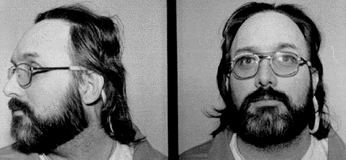
John Albert Taylor
Murderer Brian Kevin Rosenfeld
Murderer · USA · 1985
Brian Kevin Rosenfeld Brian Kevin Rosenfeld was sentenced to three concurrent l…
23 victims
Brian Kevin Rosenfeld
Murderer · USA · 1985
Brian Kevin Rosenfeld Brian Kevin Rosenfeld was sentenced to three concurrent l…
23 victims
 Yahweh ben Yahweh
Murderer · USA · 1980
Yahweh ben Yahweh was born and legally named Hulon Mitchell Jr. (October 27, 19…
23 victims
Yahweh ben Yahweh
Murderer · USA · 1980
Yahweh ben Yahweh was born and legally named Hulon Mitchell Jr. (October 27, 19…
23 victims
 Russell Ellwood
Murderer · USA · 1991
Russell Ellwood was a former taxi driver. Authorities suspected him of killing…
20 victims
Russell Ellwood
Murderer · USA · 1991
Russell Ellwood was a former taxi driver. Authorities suspected him of killing…
20 victims
 Robert Martines Perez
Murderer · USA · 1994
Name: Robert Martines Perez · Other name used in proceedings: Robert Martinez P…
15 victims
Robert Martines Perez
Murderer · USA · 1994
Name: Robert Martines Perez · Other name used in proceedings: Robert Martinez P…
15 victims
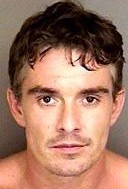 Jeremy Jones
Serial killer · USA · 1992
Name: Jeremy Jones · Aliases/identities mentioned: John Paul Chapman · Age (as…
21 victims
Jeremy Jones
Serial killer · USA · 1992
Name: Jeremy Jones · Aliases/identities mentioned: John Paul Chapman · Age (as…
21 victims
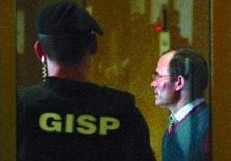 António Luís Costa
Serial killer · Portugal · 2005
24 June 2006 — António Luís Costa was arrested by the Polícia Judiciária. · 4 J…
3 victims
António Luís Costa
Serial killer · Portugal · 2005
24 June 2006 — António Luís Costa was arrested by the Polícia Judiciária. · 4 J…
3 victims
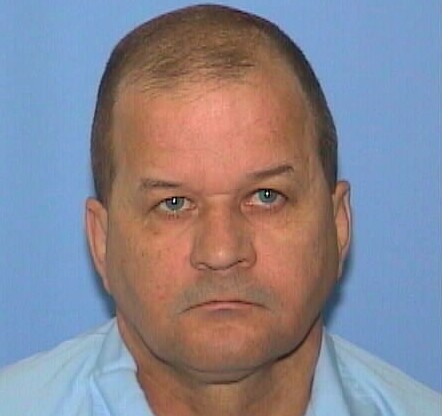 Luther Casteel
Murderer · USA · 2001
Luther Casteel was described by acquaintances as a divorced construction worker…
2 victims
Luther Casteel
Murderer · USA · 2001
Luther Casteel was described by acquaintances as a divorced construction worker…
2 victims
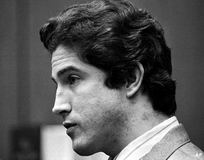 Kenneth Bianchi
Serial killer · USA · 1977
Kenneth Alessio Bianchi (born May 22, 1951) was an American serial killer. He a…
12 victims
Kenneth Bianchi
Serial killer · USA · 1977
Kenneth Alessio Bianchi (born May 22, 1951) was an American serial killer. He a…
12 victims
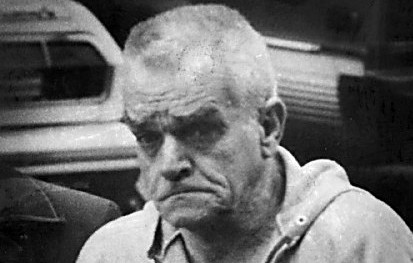 Charles Pierce
Child killer · USA · 1969
Charles E. Pierce was convicted of second-degree murder in the 1969 killing of…
3 victims
Charles Pierce
Child killer · USA · 1969
Charles E. Pierce was convicted of second-degree murder in the 1969 killing of…
3 victims
- Gender
- male
- Country
- USA
- Location
- Weber County, Utah, USA
- Date of birth
- June 19 59
- Characteristics
- rape
- Victim profile
- Charla Nicole King (female, 11)
- Method of murder
- Strangulation with a telephone cord
- Date(s) of murder
- June 23, 1988
- Years active
- 1988
- Date of arrest
- 5 days after
- Status
-
Executed
Executed by shooting in Utah on January 26, 1996
Case overview
John Albert Taylor (c. 1960) was executed by firing squad in Utah on January 26, 1996 at 12:03 a.m. Mountain Time for the 1988 rape and strangulation of 11-year-old Charla King.
Timeline
- June 23, 1988 — Charla King was found dead in a Washington Terrace, Utah apartment; she had been raped and strangled with a telephone cord.
- June 25, 1988 — A tipster later revealed to be Taylor's sister Laurie Galli contacted Washington Terrace Police officer Marsha Gathercole with information connected to the murder.
- June 28, 1988 — Taylor was arrested at about 9 p.m. at the home of his half-sister Tresa Taylor in Ogden, Utah; Sherron King moved out of the apartment complex on June 28.
- June 29, 1988 — Taylor was charged with first-degree murder.
- June 1988 — Taylor arrived from Florida four days before the murder and had been staying with another sister in the same apartment complex.
- November 27, 1989 — Taylor’s trial commenced under District Judge David Roth after Taylor waived his right to a jury.
- December 5, 1989 — Judge Roth found Taylor guilty of murder and sexual assault.
- December 19, 1989 — Taylor became the first convict in 40 years to be sent to death row by a Weber County court.
- October 1991 — The Utah Supreme Court upheld Taylor’s conviction and sentence.
- January 15, 1992 — Taylor’s execution was initially scheduled.
- June 24, 1992 — The execution date was rescheduled to June 24 when Taylor’s attorney Martin Gravis requested to withdraw from the case.
- June 17, 1992 — Judge Roth granted a stay of execution after Taylor’s new defense attorney Ron Yengich requested more time to prepare an appeal.
- October 1995 — Taylor decided to end further appeals after the Utah Supreme Court rejected his argument that his legal counsel was ineffective; he fired defense attorney Ed Brass.
- January 21, 2004 — Utah state representative Sheryl Allen first introduced a bill to eliminate the firing squad.
- February 2004 — HB180 removed the right of the condemned to choose their method of execution after February 2004.
- January 26, 1996 — Taylor was executed by firing squad at Utah State Prison at 12:03 a.m.
- 12:07 a.m. (January 26, 1996) — A doctor declared Taylor dead.
- 2004 — The state of Utah withdrew the firing squad as a method of execution, leaving lethal injection as the only remaining option.
- Jun 9, 2006 — Detectives who investigated the case shared lessons they learned at the 2006 Children’s Justice Symposium.
The offence
On June 23, 1988, Sherron King returned from work to her apartment in Washington Terrace, Utah to find her daughter Charla in the bedroom with a nightgown wrapped around the head and panties stuffed in the mouth. Sherron called the police, was instructed to perform cardiopulmonary resuscitation, and discovered that Charla had been strangled to death with a telephone cord.
Charla’s foster grandmother Bertha Poster stated that she had dropped off Charla at the apartment at about 1:30 p.m. after visiting the mall. Charla had been planning to celebrate her 12th birthday at an amusement park on the next day.
In 1989, Charla was found dead in her mother’s Washington Terrace apartment and had been raped and strangled with a phone cord.
Background
John Albert Taylor was raised in Florida, where he said he was abused as a child and became involved in drugs by his teens.
Taylor stated that he did not get along with his stepfather, a Vietnam veteran, or his mother: “But she could never control me. My mother had a lot of animosity toward my father. They alienated me for a long time. I was the whipping post.”
At the age of 13, he stabbed his stepfather.
According to court records, he repeatedly raped his sister Laurie during his teens, assaulted other young girls, and was committed to a sex offender program by his parents.
In 1977, Taylor was charged with burglary and carrying a concealed weapon after he was caught with a stolen gun. He was convicted and imprisoned until December 1981.
Three months later, he was arrested in Fort Lauderdale, Florida for armed burglary, armed robbery, and sexual assault. He had been diagnosed at the age of 17 as “a remorseless pedophile.” He was acquitted of the charges in September 1982, but was sentenced to 15 additional years in prison for parole violations.
In 1989, Taylor was released and departed for Utah to be with his sisters and biological father.
Investigation
Taylor’s own sister tipped off police in June 1988 after 11-year-old Charla King was found raped and strangled to death in Washington Terrace, Utah.
Taylor’s fingerprints were found at the crime scene, which was located in an apartment complex he had been staying at.
Police investigating the murder got a pair of breaks that led them to Taylor, an ex-con who had been in the Ogden area just four days. His fingerprints were on the telephone, and his sister came forward to tell police about his criminal history of assaults and rapes.
Detectives later shared lessons learned and urged police agencies to put aside egos and turf battles and focus on child victims.
Weber County Chief Deputy Sheriff Chris Zimmerman and Lt. Doug Coleman recounted investigating Charla King’s homicide at the 2006 Children’s Justice Symposium, hosted by the Utah Attorney General’s Office. Zimmerman said: “This was a boogie man-type homicide.”
Tracey Tabet said: “It’s critical they have ongoing training so we can better serve children.” Tabet also said Utah’s 15 Children’s Justice Centers can help by providing a comforting environment for a child and facilitating interviews with child victims. Tabet stated: “Before a Children’s Justice Center, a child could be taken back to a police station, to a hospital, to a CPS worker’s office, back to a police station for another interview. They may end up being interviewed six, seven, eight times.” Tabet continued: “Imagine how much room there is for the story to change and compounding the trauma to a child.”
The officers used crime-scene photos, interviews with King’s mother, and interrogations with Taylor to recount successes and failures in the case. They urged multi-jurisdictional cooperation to solve crimes.
Zimmerman said: “Ninety percent of rural Utah doesn’t have crime-scene investigation units. They’re trying to do it themselves. It doesn’t work.” Zimmerman stated that a homicide task force and a crime-scene investigations unit came out of the King murder, with experts from different departments pitching in. He also stated that a victim advocate program came out of the case. Zimmerman said: “It’s a team approach,” and acknowledged that police egos still get in the way: “There are still detectives that don’t want to ask for help. There are still chiefs and sheriffs that think they can handle it on their own.”
Coleman said: “Nobody heard about this until the (expletive) execution, then it’s a big deal.” Coleman added: “This is the kind of case that will happen in their city. They’re not going to have a 30-year serial killer. But they will have a Charla Nicole. It will happen in their cities.”
Arrest
On June 25, a tipster later revealed to be Taylor's sister Laurie Galli contacted Washington Terrace Police officer Marsha Gathercole with information connected to the murder.
Taylor’s fingerprints were found on a telephone in the King residence and matched to records provided by authorities in Fort Lauderdale, Florida.
Taylor was arrested at about 9 p.m. on June 28 at the home of his half-sister Tresa Taylor in Ogden, Utah and was charged with first-degree murder the next morning.
Taylor arrived from Florida four days before the murder and had been staying with another sister in the same apartment complex.
Sherron King moved out of the apartment complex on June 28. She was upset that the neighbors who came forward as witnesses did nothing when they heard her daughter screaming.
Trial
Taylor’s trial commenced on November 27, 1989 under District Judge David Roth after Taylor waived his right to a jury.
Taylor testified on his own behalf that he only entered the apartment in the act of burglary while no one was home, leaving his fingerprints on the phone when he found money underneath it.
Weber County deputy attorney William Daines stated that Taylor previously denied being in the apartment and that two witnesses placed him at the scene at the time of the crime.
Prison inmate Mike Gallegos testified that he had a brief conversation in which Taylor told him that he killed a girl by accident.
Duane Moyes and James Gaskill of the Weber State College crime laboratory testified that the person who cut the telephone cord with a knife and wrapped it around the neck of the victim was likely the same as the one who left behind fingerprints on the phone. Lab director Gaskill stated that the prints, three of which were matched to fingers on Taylor’s left hand, were the only evidence that placed Taylor at the crime scene. Gaskill said there was no evidence in the apartment to indicate a burglary took place or that any other person was connected to the murder.
On December 5, Judge Roth found Taylor guilty of murder and sexual assault. On December 19, 1989, Taylor became the first convict in 40 years to be sent to death row by a Weber County court. Roth said that the facts of the case outweighed any mitigating circumstances.
Sentencing
Taylor was sentenced to death in December 1989 and placed on death row at Utah State Prison.
Roth ordered Taylor to choose a method of execution. Taylor chose to be executed by firing squad to make the process more difficult for Utah state officials.
Taylor also said he was prepared to die partly because of his failing health, including an enlarged heart, bleeding ulcers, and swollen legs and feet. Taylor said: “I don’t want to die alone in my cell.”
Taylor stated: “I would like to say for my family and my friends -- as the poem was written, 'Remember me, but let me go,'” before the warden placed a black hood over his head.
Appeals
The case was automatically appealed to the Utah Supreme Court, which upheld Taylor’s conviction and sentence in October 1991.
Taylor’s execution was initially scheduled for January 15, 1992. The date was rescheduled to June 24 when Taylor’s attorney Martin Gravis requested to withdraw from the case.
On June 17, Judge Roth granted a stay of execution after Taylor’s new defense attorney Ron Yengich requested more time to prepare an appeal. At issue was a new 1992 law in Utah that established the sentence of life imprisonment without parole.
While incarcerated at Utah State Prison, Taylor kept busy in an effort to overcome his claustrophobia and boredom, earned his high school diploma, and studied to be a paralegal until his educational grant money ran out.
In October 1995, Taylor decided to end further appeals after the Utah Supreme Court rejected his argument that his legal counsel was ineffective. He fired defense attorney Ed Brass, stating: “If I don't fight for my appeal, I don't need an attorney.”
Taylor gave up appealing his sentence after his request for retrial was rejected by the Utah Supreme Court.
Execution
On January 26, 1996, Taylor was executed by firing squad in a warehouse at Utah State Prison.
Taylor was strapped to a chair 17 feet away from the shooters. A hood covered his head. Multiple bright lights covered Taylor. Sandbags were arranged behind him to prevent any ricochets.
“I would like to say for my family and my friends -- as the poem was written, 'Remember me, but let me go,'”
—Final statement of John Albert Taylor
At 12:03 a.m. Mountain Standard Time, five riflemen fired at a white cloth target pinned over Taylor’s heart.
A doctor pronounced Taylor dead at 12:07 a.m.
Last meal and demeanour
Taylor ordered pizzas “with everything” for his last meal and shared his pizza with his uncle Gordon Lee while joined by attorney Ed Brass and a Catholic priest. Taylor requested antacid medication earlier in the day and declined deputy warden Wally Schulsen’s offer for more pizza, soda, and coffee.
Taylor gave his glasses to warden Hank Galetka and said, “There is no need for them.”
Taylor refused an offer to be sedated before his execution, but was allowed his first cigarette in six years.
Method selection statements
In an interview with the Deseret News, Taylor stated: “I didn’t commit the murder, and I’m not going to submit to letting them kill me on that table.”
Taylor said about lethal injection: “I don't want to go flipping around like a fish out of water on that table.”
Taylor said about his execution: “Because I'm innocent of the crime for which I was convicted of (and) if my execution is carried out, it will be murder. Granted, it may be legally sanctioned, but nonetheless murder it will be and the firing squad is my way of showing that point, and, because of the cost and inconvenience it will cause the state because they are not really prepared for an execution by firing squad.”
He also had said he chose the firing squad to make a statement that Utah was sanctioning murder.
Media witnesses and quotations
More than 150 television crews from around the world were on hand to report the execution, and nine media witnesses were allowed to record the actual event.
Paul Murphy, from KTVX Channel 4 in Salt Lake City, said: “[we] saw this very large man strapped to a chair. His eyes were darting back and forth”.
Kevin Dale Stanfield said: “The image I have when I close my eyes is of his chest heaving upward after he was shot.”
Sherron King said: “I felt something pass through my heart around midnight and felt he was dead.” She also said: “Part of me wanted him to die and the other part of me felt bad for him. My heart goes out to his mom.”
Elliott King, the uncle of Charla King, was described as the sole member of the victim’s family to arrive as a witness and expressed that he had no sympathy for Taylor.
Sister Helen Prejean, the author of Dead Man Walking, wrote Taylor a letter that was delivered right before his execution.
Execution logistics
The chair to which Taylor was strapped was surrounded by sandbags to absorb his blood.
Five police officers volunteered to carry out the execution and were each paid $300.
The shooters used identical Winchester Model 94 rifles. One prison official selected each rifle at random from a table and handed them to another prison official sitting in a small room, out of sight. The second prison official loaded the rifle and returned it to the table.
Four of the rifles were loaded with live ammunition. One was secretly loaded with a wax bullet so that none of the officers would be certain that they fired a lethal shot. The blank cartridge was tested to ensure that the report and recoil was difficult to distinguish from a real cartridge.
Other details
Victim and related persons
Charla King was 11 years old.
Sherron King was Charla King’s mother.
Bertha Poster was Charla King’s foster grandmother.
Elliott King was Charla King’s uncle.
Prison officials, lawyers, and court personnel named
District Judge David Roth presided over the trial.
Weber County deputy attorney William Daines made statements during trial.
Mike Gallegos testified for the prosecution.
Duane Moyes and James Gaskill testified for the prosecution; Gaskill was described as lab director.
Ron Yengich was Taylor’s new defense attorney during an appeal stay.
Martin Gravis was Taylor’s attorney whose request led to rescheduling.
Ed Brass was Taylor’s defense attorney whom he fired in October 1995; Brass also accompanied Taylor at his last meal.
Attorney Ed Brass was also present with Taylor at his last meal; a Catholic priest was present as well.
Warden Hank Galetka placed the black hood over Taylor’s head.
Deputy warden Wally Schulsen offered Taylor more food and drink.
Aftermath
After an autopsy, Taylor’s remains were cremated and shipped to his uncle Gordon Lee in Oregon.
The Salt Lake County Sheriff’s Office said it would specify homicide as the cause of death on Taylor’s death certificate because the execution met the state’s definition of “intentional death by another hand.” Utah state law exempts the actions of executioners from prosecution.
A commemorative pin was created to recognize the staff who had participated in the execution.
Utah House of Representatives representative Sheryl Allen introduced a bill to eliminate the firing squad, and later succeeded in passing HB180, which removed the right of the condemned to choose their method of execution after February 2004.
If they chose the firing squad, it was described as “one last magnificent manipulation of the system to bring attention to themselves... It's time for Utah to do away with the firing squad.”
Taylor was described as becoming the 49th person executed in the state of Utah since 1852.
Taylor was described as the last person executed in the United States by firing squad. As of 2005, firing squad remained a legal (but not necessarily preferred) method of execution in three United States (Idaho, Oklahoma and Utah).
In 2004, the state of Utah withdrew the firing squad as a method of execution, leaving lethal injection as the only remaining option.
Spotted an error, or have more information about this case?