Johnny Taylor
Murderer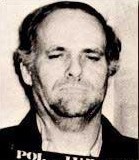 Ervil LeBaron
Murderer · USA · 1972
Ervil Morrell LeBaron (1925 to August 16, 1981) was the leader of a polygamous…
35 victims
Ervil LeBaron
Murderer · USA · 1972
Ervil Morrell LeBaron (1925 to August 16, 1981) was the leader of a polygamous…
35 victims
 Brian Kevin Rosenfeld
Murderer · USA · 1985
Brian Kevin Rosenfeld Brian Kevin Rosenfeld was sentenced to three concurrent l…
23 victims
Brian Kevin Rosenfeld
Murderer · USA · 1985
Brian Kevin Rosenfeld Brian Kevin Rosenfeld was sentenced to three concurrent l…
23 victims
 Marvin Gray
Murderer · USA · 1975
Marvin Gray was convicted killer who claimed responsibility for 23 slayings and…
23 victims
Marvin Gray
Murderer · USA · 1975
Marvin Gray was convicted killer who claimed responsibility for 23 slayings and…
23 victims
 Yahweh ben Yahweh
Murderer · USA · 1980
Yahweh ben Yahweh was born and legally named Hulon Mitchell Jr. (October 27, 19…
23 victims
Yahweh ben Yahweh
Murderer · USA · 1980
Yahweh ben Yahweh was born and legally named Hulon Mitchell Jr. (October 27, 19…
23 victims
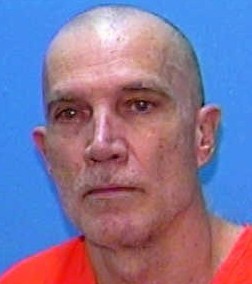 James Franklin Rose
Murderer · USA · 1976
James Franklin Rose was convicted of kidnapping (Count I) and first-degree murd…
1 victim
James Franklin Rose
Murderer · USA · 1976
James Franklin Rose was convicted of kidnapping (Count I) and first-degree murd…
1 victim
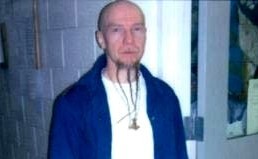 Richard Clarey
Murderer · USA · 1984
Richard Clarey was raised in West Germany by American parents working abroad. H…
3 victims
Richard Clarey
Murderer · USA · 1984
Richard Clarey was raised in West Germany by American parents working abroad. H…
3 victims
 Baruch Goldstein
Mass murderer · Palestine · 1994
Baruch Kappel Goldstein (Hebrew: ברוך גולדשטיין ; December 9, 1956 – February…
29 victims
Baruch Goldstein
Mass murderer · Palestine · 1994
Baruch Kappel Goldstein (Hebrew: ברוך גולדשטיין ; December 9, 1956 – February…
29 victims
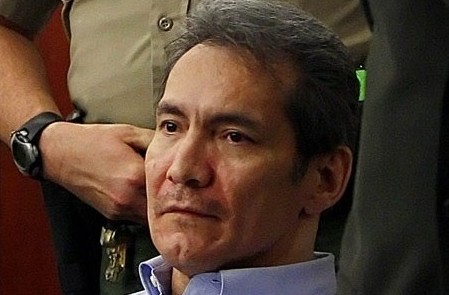 Floyd Maestas
Murderer · USA · 2004
Floyd Eugene Maestas was repeatedly convicted of violence against elderly women…
1 victim
Floyd Maestas
Murderer · USA · 2004
Floyd Eugene Maestas was repeatedly convicted of violence against elderly women…
1 victim
 Jack Dempsey Ferrell
Murderer · USA · 1981
Defendant: Jack Dempsey Ferrell Date of birth: 08/05/40 District/County/Case nu…
2 victims
Jack Dempsey Ferrell
Murderer · USA · 1981
Defendant: Jack Dempsey Ferrell Date of birth: 08/05/40 District/County/Case nu…
2 victims
 Gerald Wayne Bivins
Murderer · USA · 1991
Gerald Wayne Bivins · January 16, 1991 — Bivins and two other men committed mul…
1 victim
Gerald Wayne Bivins
Murderer · USA · 1991
Gerald Wayne Bivins · January 16, 1991 — Bivins and two other men committed mul…
1 victim
- Gender
- male
- Country
- USA
- Location
- Jefferson Parish, Louisiana, USA
- Date of birth
- 1954
- Age at first offence
- 26
- Characteristics
- robbery, armed robbery
- Victim profile
- David Vogler, Jr. (male)
- Method of murder
- St abbing with knife
- Date(s) of murder
- February 8, 1980
- Years active
- 1980
- Date of arrest
- June 17, 1980
- Status
-
Executed
Executed by electrocution in Louisiana on February 29, 1984
Case details
Johnny Taylor, Jr. was executed by electrocution at the Louisiana State Penitentiary at Angola on February 29, 1984.
The offence
David Vogler, Jr. was stabbed to death on February 8, 1980. Vogler was found in the trunk of his own car the next day.
Taylor was convicted of stabbing to death David Vogler, Jr., on February 8, 1980, to steal a car. The Buick used in the offence was later shown to be stolen.
In the factual background described in the appeals record, David Vogler left his home in Kenner, Louisiana around 8:45 p.m. on February 8, 1980 after receiving a telephone call from a black male requesting to see a 1976 Buick Regal that the Voglers had displayed for sale in a nearby parking lot. Vogler left in his Cadillac to show the car. Vogler was not seen alive again by Mrs. Vogler.
The next morning, around 12:45 a.m., Mrs. Vogler went to the parking lot in search of her husband along with her sister and her sister's boyfriend. The red Buick was missing; Vogler's Cadillac was parked in the lot. Mrs. Vogler looked in the Cadillac window and saw her husband's coat on the front seat. She saw two police cars stopped in the lot and asked if they had seen the Buick; they assured her they would be on the look out for it. Mrs. Vogler returned to her mother's house and spent the night.
Around 9:00 o'clock the next morning, Mrs. Vogler returned to the parking lot with her brother-in-law, Larry Huesman. Huesman looked inside the Cadillac and saw blood on the upholstery. Fearing foul play, Huesman dropped Mrs. Vogler off and called the police. He met Officer Averett back at the parking lot and gave the officer Mrs. Vogler's extra set of keys. When Officer Averett opened the trunk, he saw the body of David Vogler.
An autopsy revealed that David Vogler died from multiple stab wounds. In the appeals record, the coroner testified that Vogler was stabbed approximately twenty times and that he bled to death in the trunk of his car ten or twenty minutes after being stabbed.
Investigation
Detectives William Fayard and Nick Congemi of the Kenner Police Department conducted an investigation. Customers and employees of nearby businesses were interviewed with no success.
Due to rainy weather on the night of February 8 and the morning of the 9th, the car was towed to a security garage to dry out. On February 10, technician Joseph Deidrich dusted the car for latent fingerprints. Black hairs were recovered from the ceiling of the automobile, the sun visors and the inside trunk ledge. Deidrich also vacuumed the vehicle to collect debris.
On June 23, 1980, fingerprints and palmprints were sent to the Federal Bureau of Investigation by registered mail for comparison with latent prints lifted from the Cadillac in which Vogler's body was found. Ronald Young, a latent fingerprint specialist with the FBI, compared the two sets of prints and concluded that Taylor's left palmprint matched a partial palm print from the outside trunk lid based on forty points of identification.
Samples of head hair taken from Taylor during the interview showed similar characteristics to hairs found in the Cadillac.
Arrest and related vehicle history
On June 14, 1980, Chief Jimmy Acton stopped Taylor in Millry, Alabama for a traffic violation while Taylor was driving the Buick Regal. His cousin, Samuel Young, and his girl friend, Linda Pugh, were with him.
A check on the automobile indicated that it was stolen and that the occupants might have been involved in a murder in Kenner, Louisiana. Taylor fled from the officer under the pretext of needing to urinate; his companions were arrested for possession of a stolen vehicle.
On June 15, 1980, Detectives Fayard and Congemi drove to Millry and interviewed Young and Pugh. They compared the “vin” number on the automobile to the number of the vehicle registration form to determine that this vehicle was the one stolen from the Voglers. In the trunk of the Buick they found receipts dated March 16, 1980 and May 3, 1980 bearing the name “James Taylor” for body work done on the Buick at Terry's Body Shop.
Detective Congemi and Fayard drove to Pritchard, Alabama and questioned Terry Webb, the owner of the repair garage. Webb gave them his copy of an estimate sheet dated February 9, 1980 which itemized repairs to be done to the car and a paint job requested by Taylor. The Buick was then driven back to Kenner, Louisiana.
Taylor was subsequently arrested on June 17, 1980 for an unrelated auto theft and incarcerated in Butler, Alabama. Detectives Fayard and Congemi drove to Butler on June 18 to question Taylor. Two statements were given by Taylor; neither statement satisfactorily explained how the accused came into possession of the Buick Regal.
In the appeals record, Taylor signed a written statement indicating he had not come into possession of the Buick until March 1980. When the detectives confronted Taylor with their knowledge that he had taken the car to a garage on February 9, 1980, Taylor stated that he had purchased the Buick on that date from Allen Thomas, a white male known to him, and a black man. At trial, Taylor testified that he identified the black man in his oral statement as “Charlie Robertson's brother-in-law.” Detectives Fayard and Congemi did not recall hearing a name other than Thomas. The detectives did not reduce the second statement to writing because they were convinced that Taylor was lying.
In the appeals record, Eddie Slayton of the Alabama Bureau of Investigation took defendant's finger and palm prints and gave them to Detective Fayard. These prints, along with those taken from the Cadillac, were then sent to the FBI.
A warrant for defendant's arrest was executed on June 17, 1980. A copy of the warrant was given to the authorities in Alabama.
Taylor was indicated on August 28, 1980 and subsequently extradited to Louisiana.
Trial
Taylor was tried for first degree murder in March 1981. He was represented by two attorneys: James Manning and Maurice Bell. Manning was court-appointed, while Bell was from Alabama and had previously represented Taylor and was retained again.
The state relied on Taylor's possession of the Buick almost immediately after its theft and Vogler's murder, Taylor's unsatisfactory explanations of how he came into possession of the Buick, and evidence connecting Taylor to the crime scene: the partial palmprint and the hairs.
Taylor testified that he had not even been in the state of Louisiana since 1978, and that his palmprint and hairs could not possibly have been lifted from the victim's Cadillac. His alibi witnesses were not persuasive, and the jury found him guilty of first degree murder.
Sentencing
Taylor's trial was bifurcated. During the sentencing phase, the state relied on evidence previously adduced to show the presence of two “aggravating factors” under the Louisiana death penalty statute:
- Taylor was engaged in armed robbery when he murdered Vogler.
- The offense was committed “in an especially heinous, atrocious or cruel manner”.
Taylor's attorney presented no new evidence at the sentencing stage.
In the sentencing phase, Taylor's attorney began to argue that the unreliability of the evidence against Taylor should be considered by the jury when deciding whether to recommend the death penalty. The trial judge forbade this line of argument because it went to the issue of guilt rather than to the appropriateness of capital punishment. Taylor's attorney made no other argument on Taylor's behalf.
The jury recommended that Taylor be sentenced to die. The trial judge later entered the death sentence.
Appeals and habeas corpus proceedings
Taylor appealed his conviction and sentence to the Louisiana Supreme Court, which affirmed them both (422 So.2d 109). On direct appeal, Taylor raised claims relating to the fingerprint evidence gathered at the crime scene, including an argument that the state had violated his due process rights by discarding some fingerprints collected from the crime scene and misplacing others. The Louisiana Supreme Court rejected these arguments after discussing their merits.
After the conviction was affirmed on direct appeal, Taylor sought a writ of mandamus in Louisiana state court to obtain police records of the investigation of Vogler's murder, made available on April 27, 1983. The records included a fingerprint log book maintained by the Jefferson Parish Crime Lab division. The entries relating to the prints lifted from Vogler's Cadillac were described as “ 1/2 palm” in the “Good and filed” column and in the “No good” column, with the numerals 4 and 1. Manning contended that the entry of five “no good” prints, compared with the fact that five fingerprint lifts were taken from the Cadillac, proved that as of February 10, 1980, the state had no usable fingerprints from the crime scene. Manning argued, without evidentiary support, that the “ 1/2 palm” entry must have been added after Taylor's arrest.
Using exhibits from the fingerprint log book entries obtained through mandamus action, Taylor filed a petition for post-conviction relief in state court on May 22, 1983. He argued that his due process rights were violated by use of manufactured evidence at trial and by the failure of the state to produce the fingerprint log book when he requested exculpatory material.
The claims were rejected, without a hearing, by the state district court on January 11, 1984, and by the Louisiana Supreme Court on February 3, 1984.
On January 17, 1984, the state trial judge ordered Taylor to be put to death on February 29, 1984, between midnight and 3:00 a.m.
Taylor then filed a petition for a writ of habeas corpus and an application for a stay of execution with the United States District Court for the Eastern District of Louisiana. The district court considered and rejected, without a hearing, the two claims that Taylor had presented in his state court petitions for post-conviction relief, and denied habeas corpus relief and the application for a stay of execution. The district judge refused to issue a certificate of probable cause. The district court's memorandum opinion was filed on February 15, 1984 (581 F.Supp. 359). On February 20, 1984, Taylor retained new counsel, Frank Sloan, and discharged Manning.
Sloan filed an application for a stay of execution and for a certificate of probable cause on February 20, 1984, requesting a stay pending appeal from the district court's order of February 15. Sloan also requested that the court consider additional claims under Fifth Circuit Local Rule 8.1.3. The additional claims were that Taylor had been deprived of effective assistance of counsel during both the guilt and sentencing phases of his trial. Taylor immediately presented these new claims to Louisiana courts, and on February 24 the Louisiana Supreme Court denied his motions for relief, including the request for a stay of execution.
A second habeas petition was filed on February 25 with the federal district court. The district court denied Taylor's second habeas petition and the accompanying stay application and refused to issue a certificate of probable cause. Taylor immediately filed a notice of appeal and an application for a certificate of probable cause with the United States Court of Appeals for the Fifth Circuit.
The United States Court of Appeals for the Fifth Circuit reviewed Taylor's request for a certificate of probable cause in conjunction with denial of his first habeas petition and denied the certificate of probable cause, dismissing the appeal. The first application for a stay of execution was denied.
The Court of Appeals also considered and rejected four grounds claimed in Taylor's second habeas petition: ineffective assistance of counsel in previous habeas petitions, ineffective assistance in the guilt phase, ineffective assistance in the sentencing phase, and use of evidence gathered after unlawful arrest. The appellate court denied a certificate of probable cause and dismissed the appeal. The second application for a stay of execution was denied.
Execution and final words
Taylor was executed on February 29, 1984. His last words were: “I've done a lot of wrong, caused a lot of hurt. I guess this is the price I pay for it. I found God in Christ. I made a commitment with him. I'm ready to see this through. There are those out there who need help. I wish in some way you could all contribute to helping them. Living has been hard for me and its (sic) time for me to die, for whatever reason . . . . I hope you will not leave with the sense this is going to deter crime. "That's it, let's go.”
Outcome
Taylor's conviction for first degree murder was affirmed on direct appeal by the Louisiana Supreme Court, and the subsequent appeals and habeas corpus requests did not result in reversal. Taylor was executed by electrocution on February 29, 1984.
Other details
- Johnny Taylor, Jr. was executed at the Louisiana State Penitentiary at Angola.
- In the appeals proceedings, the case was captioned: Johnny Taylor, Jr., Petitioner-Appellant, v. Ross Maggio, Jr., Warden, Louisiana State Penitentiary, Angola, Louisiana, and Harry Lee, Sheriff, Respondents-Appellees. Nos. 84-3108, 84-3141, United States Court of Appeals, Fifth Circuit.
- Taylor had last been represented at trial by two attorneys, James Manning and Maurice Bell.
Spotted an error, or have more information about this case?