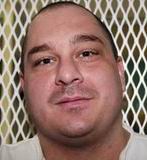
Lee Andrew Taylor
Murderer Russell Ellwood
Murderer · USA · 1991
Russell Ellwood was a former taxi driver. Authorities suspected him of killing…
20 victims
Russell Ellwood
Murderer · USA · 1991
Russell Ellwood was a former taxi driver. Authorities suspected him of killing…
20 victims
 Robert Martines Perez
Murderer · USA · 1994
Name: Robert Martines Perez · Other name used in proceedings: Robert Martinez P…
15 victims
Robert Martines Perez
Murderer · USA · 1994
Name: Robert Martines Perez · Other name used in proceedings: Robert Martinez P…
15 victims
 Billy Frank Vickers
Murderer · USA · 1993
Billy Frank Vickers Vickers was executed by lethal injection in Texas on Januar…
14 victims
Billy Frank Vickers
Murderer · USA · 1993
Billy Frank Vickers Vickers was executed by lethal injection in Texas on Januar…
14 victims
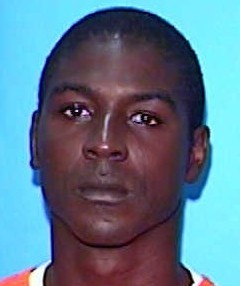 Kenneth Dessaure
Murderer · USA · 1999
Name: Kenneth Dessaure · Date of birth: 01/28/78 · Supreme Court of Florida opi…
1 victim
Kenneth Dessaure
Murderer · USA · 1999
Name: Kenneth Dessaure · Date of birth: 01/28/78 · Supreme Court of Florida opi…
1 victim
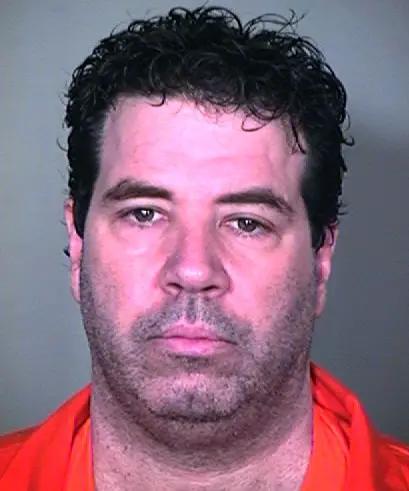 Shawn Patrick Lynch
Murderer · USA · 2001
Shawn Patrick Lynch was convicted and later sentenced to death. Shawn Patrick L…
1 victim
Shawn Patrick Lynch
Murderer · USA · 2001
Shawn Patrick Lynch was convicted and later sentenced to death. Shawn Patrick L…
1 victim
 Maureen McDermott
Murderer · USA · 1985
Maureen McDermott was convicted of one count of murder and one count of attempt…
1 victim
Maureen McDermott
Murderer · USA · 1985
Maureen McDermott was convicted of one count of murder and one count of attempt…
1 victim
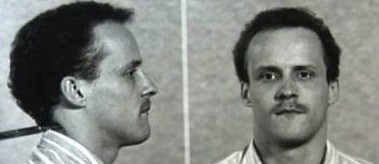 Michel Peiry
Serial killer · USA / France / Switzerland · 1981
Michel Peiry (born 28 février 1959), nicknamed “Le sadique de Romont (FR)”, was…
5 victims
Michel Peiry
Serial killer · USA / France / Switzerland · 1981
Michel Peiry (born 28 février 1959), nicknamed “Le sadique de Romont (FR)”, was…
5 victims
 Regina & Margaret DeFrancisco
Homicides · USA · 2000
Regina DeFrancisco and Margaret DeFrancisco were two teenage girls who made nat…
1 victim
Regina & Margaret DeFrancisco
Homicides · USA · 2000
Regina DeFrancisco and Margaret DeFrancisco were two teenage girls who made nat…
1 victim
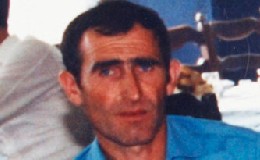 Ljubiša Bogdanović
Mass murderer · Serbia · 2013
Ljubiša Bogdanović was born in Velika Ivanča in 1953. He served as a Serb veter…
13 victims
Ljubiša Bogdanović
Mass murderer · Serbia · 2013
Ljubiša Bogdanović was born in Velika Ivanča in 1953. He served as a Serb veter…
13 victims
- Gender
- male
- Country
- USA
- Location
- Bowie County, Texas, USA
- Date of birth
- January 8, 1979
- Age at first offence
- 20
- Characteristics
- —
- Victim profile
- Donta Green, 22 (inmate)
- Method of murder
- St abbing with an 8" home-made weapon
- Date(s) of murder
- April 1, 1999
- Years active
- 1999
- Date of arrest
- Same day
- Status
-
Executed
Sentenced to death on February 22, 2000; executed by lethal injection in Texas on June 16, 2011
Case identifiers
- Name: Lee Andrew Taylor
- Prison number: #765153
- Other identifiers mentioned: “Lee Andrew Taylor # 999344” and “Polunsky Unit 3872”
Background
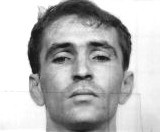
Lee Andrew Taylor was a white male who was imprisoned. He had brown hair and brown eyes, and he was 5' 09" tall and weighed 207. He had 9 years of education and worked as a stocker and laborer.
Taylor was from Galveston County and was described as a Galveston native.
Taylor was a member of the Aryan Brotherhood of Texas, which was described as a recognized security threat group. He was also described as a member of the “Aryan Brotherhood” and as a member of a white prison gang.
A statement attributed to Taylor described his childhood as involving physical abuse, mental illness, neglect, instability, sexual abuse, substance abuse and exposure to traumatic violence. A statement attributed to his lawyer, David Sergi, described the childhood as “fraught with physical abuse, mental illness, neglect, instability, sexual abuse, substance abuse and exposure to traumatic violence,” and said:
“A reasonable investigation would have uncovered details of a childhood vastly different and more severe from the one presented to Taylor's jury.”
A separate statement attributed to Taylor included claims about his own background and prison life. In an online pen-pal style letter, Taylor wrote:
“Hello, my name is Lee. I was locked up at the age of 16. I received a life sentence. There was a death involved, but I was only convicted of aggravating robbery. I was a product of the environment I would dwell in. I was on my own from the age of 13. Houston, TX and lived the Houston street life. I started drugs then became addicted to powder cocaine. I will go deeper into this in a later point in time if their is a person out there whom really cares to hear it. I was in the Texas Department of Criminal Justice for five years almost, there is sooo much violence, and racism and abuse that I could go on & on. I am a white male with a farely decent build. And I believe that my keeping in shape, not only physically but mentally as well was the only reason I made it them years. Well in '98 the State or rather "George Bush" made a law where if your serving a life sentence and kill someone, it is Capital Murder, and no matter what you will be found guilty. Because there is supposed to be no weapons in T.D.C. Because, the public believes that these "officers" are here to protect "us", when really they secure the area in which someone is fighting, i.e. rioting, and video tape the incident. So, they can "punish" the aggressors. But, what about the victims? Well, I was a victim in a racist war. Being white we are the minority here, therefore taken advantage of. Most pay for protection. Me on the other hand can't submit to another person for protection. A lot to be explained by this letter I realize, but, I'm trying to keep this short as possible....Long story short, there was a black guy who stole some other white guy's stuff, and he wasn't a "hoe" or whatever. So, the others and myself included have to back him up because, he never broke to the several abusive beatings he had and every white has in TX when you come to the prison system. The "officers" feed the few whites to the majority so they don't have any problems. Anyway, the riot took place April 15th '99 and while it took place and I defended myself I killed a person. The odds were 8 on the two of us. I am the first person to be sentenced to death under the new law "George Bush" made. I was sentenced Feb, 18th, 00. The thing about it is, that the whole place knew it was self-defense, but because I had a weapon in the prison system it was declared a murder. But, what am I supposed to do? The officers do just what I said lock all doors and run, get the camera and watch someone beaten or killed. So, do I let that happen to me? No. But, I'm wrong I think No!! The actual riot had nothing to do with race. But, everything to do with stealing. Then just because I'm white and he was black, I'm a kkk member and kill em all?!? When I went to court the D.A's whole case was that I'm a racist. Please, I have a 48 year old black dude next to me at the moment that looks at me like a son, and he knows every detail of my prison life. And he knows how the regular population in T.D.C is with all the promoted racism from the officials. I did what I had to do, and any man would have. The lawyer in my trial is still a good friend, because he got to know me. When I got locked up I couldn't read, write spell. I know I still can't spell too well. But people can understand my letters 100%. I know all type of subjects. Why? Because, the five years I was locked up I did care. I cared for my life and wanted a change. But, due to the way the violence is out of control in T.D.C, I could not. Anyways, I love to write, and when I do I just let my thoughts flow, as you can very well see from this letter. I bet who ever types this letter out on the web site will be unhappy! :) If anyone cares to write, please feel free, anyone at all. I will write all. I've enclosed a picture of myself for you, don't laugh! I've always had compliments on my looks. But, somehow can't see any good looking features. I have a lot life story to tell that I wish no twenty-one year-old should ever have to tell. It is sad and disrupted. But, it is mine, and I am a different person than I was five years ago. Even before the riot on April first. because, although I was a product of my environment in the free, I changed and grew into a man, and the reason the defensive killing took place was because of the environment the State put me in. If you put a cat in a cage with a dog, he will defend himself with whatever he can, this is probably a pretty poorly written introduction letter, but like I said I ain't trying to be someone I'm not, and "me" is a person who writes his feelings and thoughts. Lee Andrew Taylor # 999344 Polunsky Unit 3872 F.M. 350 South Livingston, TX 77351 USA”
The offence
Taylor committed capital murder while serving a life sentence for aggravated robbery.
Victim
- Victim: Donta Greene, an adult prison inmate
- Victim description in the materials: Greene was described as a fellow inmate; Greene was black.
- Greene’s death: Greene died as a result of stabbing injuries.
Location and context
The stabbing occurred in prison. The materials describe:
- The TDCJ-ID Telford Unit dayroom, in one description of the incident.
- “Barry Telford state prison in New Boston” in another description of the facts.
- The Telford Unit near Texarkana in multiple descriptions.
Date of offence as stated
- April 1, 1999: one description says “On 04/01/99.”
- March 31, 1999: another portion says the theft occurred “During the evening hours of March 31, 1999,” and that the stabbing followed in the early morning hours of April 1, 1999.
- March 31, 1999: another portion describes “the morning of March 31, 1999.”
- April 15, 1999: Taylor’s letter says, “the riot took place April 15th '99.”
Manner of killing
Taylor and Daniel Richbourg planned revenge after property was stolen from Richbourg’s cell; Greene participated in the theft of Richbourg’s property.
After inmates were released from their cells for breakfast, Taylor struck Greene, grabbed Greene around the head and held him in a headlock, and then repeatedly stabbed Greene in the chest with a prison-made stabbing device that resembled an ice pick. One description says Taylor used “an 8-inch home-made weapon,” and another says the weapon was “a rod-like shank—a prison-made stabbing device that resembled an ice pick.” Another description says Greene was stabbed 13 times with an 8-inch metal rod.
During the stabbing, Richbourg brandished his own shank to chase away other inmates attempting to help Greene so Taylor could complete the killing. The materials state that Greene himself never had a weapon.
Taylor shouted at Greene, “That’s what you get for stealing....”
One description says Taylor was euphoric and repeatedly bragged that he must have stabbed Greene twenty-five to thirty times. The same materials also state that Taylor inflicted thirteen actual stab wounds and numerous scratches, and that several puncture wounds were fatal.
Medical evidence in one account said that Taylor’s weapon was responsible for the fatal wounds.
Co-defendant
- Co-defendant: Daniel Richbourg (also spelled as “Richbourg, Daniel” in one section)
Richbourg was convicted in connection with the attack on Greene and received a 48-year sentence in the materials.
Procedural history
- November 4, 1999 — Taylor was indicted by a Bowie County grand jury for capital murder in the death of Donta Greene.
- February 18, 2000 — A jury found Taylor guilty of capital murder, and the court sentenced Taylor to death.
- December 11, 2002 — The Texas Court of Criminal Appeals affirmed Taylor’s conviction and sentence.
- November 30, 2001 — Taylor filed a state application for writ of habeas corpus in the trial court.
- March 31, 2004 — The Texas Court of Criminal Appeals denied habeas relief, adopting the trial court’s findings of fact and conclusions of law recommending denial.
- March 30, 2005 — Taylor filed a federal habeas petition in a U.S. district court.
- July 11, 2008 — Taylor’s attorney informed the court that a doctor determined Taylor was not mentally retarded.
- July 28, 2008 — The court lifted the stay.
- August 31, 2009 — The court denied federal habeas relief.
- October 7, 2010 — The U.S. Court of Appeals for the Fifth Circuit affirmed the federal district court’s decision.
- January 5, 2011 — Taylor filed a petition for writ of certiorari in the U.S. Supreme Court.
- April 18, 2011 — The Supreme Court denied the petition.
- June 16, 2011 — Execution occurred.
Trial and evidence (factual and appellate material)
Taylor’s capital murder conviction was for intentionally or knowingly causing the death of an individual while serving a sentence of life imprisonment for aggravated robbery. The materials reference the statutory basis as Tex. Penal Code Ann. §§ 19.02(b)(1), 19.03(a)(6)(B).
The federal appellate narrative included that, following a jury trial, Taylor was convicted and sentenced to death, and on direct appeal the Texas Court of Criminal Appeals affirmed on December 11, 2002.
Prison disciplinary record and Confrontation Clause litigation
During the sentencing phase, the State sought to introduce a copy of Taylor’s prison disciplinary record. The record contained reports of altercations with other inmates and threats made to prison guards. Taylor objected on hearsay and Confrontation Clause grounds.
The state trial court admitted the prison disciplinary record under the business records exception to the hearsay rule (Tex. R. Evid. 803(6)).
On direct appeal, Taylor argued that admission was erroneous under the business records exception because it contained “matters observed by police officers and other law enforcement personnel” (Tex. R. Evid. 803(8)(B)), and that the claim was subject to the Cole v. State principle regarding improper use of an exception.
Because Taylor did not raise that objection at trial, the Texas Court of Criminal Appeals held Taylor “procedurally defaulted his Cole claim for appeal.” It further held the Confrontation Clause claim was procedurally defaulted as well, and held alternatively that any error was harmless.
In the federal appeal, the Court of Appeals affirmed without reaching the Confrontation Clause claim because Taylor offered no independent justification to reach the merits, rejecting the attempt to excuse default using “actual innocence” arguments that were tied to his rejected Eighth Amendment eligibility contentions.
Sentencing
Taylor was sentenced to death by a Bowie County state district court after a jury found him guilty of capital murder.
In one section, the materials say:
- “On Feb. 18, 2000, a jury found Taylor guilty of the capital murder and the court sentenced Taylor to death.”
Appeals
Texas Court of Criminal Appeals
- December 11, 2002 — affirmed conviction and sentence.
- March 31, 2004 — adopted trial court findings and conclusions and denied habeas relief.
Federal habeas and Fifth Circuit
- August 31, 2009 — denial of federal habeas relief.
- October 7, 2010 — Fifth Circuit affirmed.
U.S. Supreme Court
- April 18, 2011 — Supreme Court denied petition for writ of certiorari.
Outcome
Taylor was executed by lethal injection in Texas on June 16, 2011, and was pronounced dead at 6:24 p.m.
Before execution, he made statements and spoke through witnesses. In one account, Taylor stated:
“There are 300 people on death row and not every one of them is a monster,” said Taylor, who was sentenced to death for killing a fellow inmate in 1999. “The state of Texas is carrying out a very inhumane and unjust situation. It’s not right to kill anybody, not the way I did it or the way it’s being done to me. “Everyone changes right? Life is about experience and people change.”
In another account, Taylor’s statement included:
“I defended myself when I killed your family member.”
Additional statements attributed to Taylor included:
“Prison is a bad place. There was eight against me. I didn't set out to kill him. I am sorry that I killed him, but he would not have been in prison if he was a saint. I hope y'all understand that.”
and: “The death penalty is inhuman and unjust and that not everyone on Death Row is a monster.”
and: “Everyone changes right?”
and: “Life is about experience, and people change.”
and: “I'm ready to teleport.”
and: “I hope you don't find satisfaction in this, watching a human being die,”
In another account, Taylor said:
“I am sorry that I killed him but he would not have been in prison if he was a saint,”
A spokesman for the Texas Department of Criminal Justice, Jason Clark, was quoted as describing additional statements attributed to Taylor:
“I hope people understand the grave injustice by the state,” Clark quoted Taylor as saying. “It's not right to kill anybody just because I killed your people. Everyone changes, right?”
In the aftermath of the execution preparation:
- Taylor’s mother and others were described as reacting, including Taylor’s mother crying “Oh my God, please don’t.”
- One account described Taylor’s mother sobbing: “This is not right.”
Supreme Court filing noted in one report
A report described that the U.S. Supreme Court refused an appeal on the day of execution, with a 5-4 vote, just hours before Taylor was scheduled to die.
Prior convictions and earlier sentence
Taylor had a prior prison record including:
- #765153 — on 10/29/96: life sentence for 1 count Aggravated Robbery.
One account described the aggravated robbery incident as:
- November 17, 1995: incident in which a grandfather and his wife were beaten at their home.
- The grandfather died a short time later in a hospital.
- Taylor was 16 at the time of the aggravated robbery.
- A plea was entered and Taylor pleaded guilty (as described in one account) and was convicted of aggravated robbery and sentenced to life imprisonment.
A separate account described details of the robbery in Channelview (near Houston) involving:
- John Hampton and Mildred Hampton, both 79 years old.
- They were beaten during a robbery in their home.
- Mildred required reconstructive surgeries to repair broken jaw and other damage to her face.
- John Hampton was in a coma for most of the two months after the beating before dying in a hospital on January 13, 1996.
- The materials described stolen jewelry boxes and that John Hampton’s wallet containing about $40 was stolen.
- Taylor was described as having thrown away John Hampton’s wallet after police questioned him, and as having confessed and shown where he threw it away.
- A grandson, John K. Hampton, testified at a February 20, 1996 hearing held to determine whether to certify Taylor as an adult.
- The grandson described traveling from Plano with his wife, half-brother, and two young children to visit his grandparents in Houston on the day of the crime.
- The grandson described knocking after an unsuccessful response, checking the garage, and noticing that Mildred often left the garage door slightly elevated for cats.
- The grandson described that when Mildred made it to the door, her head was “about twice the size and her eyes were swollen shut,” and there was “blood on her hands and all over her blouse.”
- The grandson described sending his family back to the car and having a neighbor call 911, noting that Mildred warned him not to touch the phone because the attacker had touched it and there might be fingerprints.
- The grandson described that the phones were not working because the cords had been ripped from the wall.
The materials also described that Taylor used money from the robbery to rent a motel room and throw a party.
Other details
Co-defendant in the earlier theft setup
- In the property theft setup, Greene participated in theft and took some of Richbourg’s property.
Gang description
The materials described the Aryan Brotherhood as a white prison gang with roughly 19,000 members in and out of prison and stated that though the gang made up less than one percent of the prison population, it was responsible for up to 21 percent of murders in the federal prison system, according to the FBI. Another report described Taylor as being only the second white convict executed in Texas for killing a black person, with the first being in 2003.
Timing and last meal (execution day)
- One report stated that Taylor was pronounced dead at 6:24 p.m.
- Taylor’s last meal included pizza, soft tacos, fried jalapeno sticks, french fries, fried okra and ice cream.
- Another report described Taylor requested a medium pizza with cheese, beef, black olives and mushrooms, and also ate four soft tacos, large bowls of fried okra and one pint of Blue Bell Ice Cream.
Future dangerousness evidence (as described in materials)
- Taylor was convicted of aggravated assault and sentenced to life imprisonment for a Nov. 17, 1995 incident where a grandfather and his wife were beaten at their home.
- The grand father died shortly after in a hospital, as stated in one section.
Victim count / victims
- Greene: 1 victim (Donta Greene) killed in the capital murder incident.
- Earlier robbery: 2 victims (John Hampton and Mildred Hampton) were beaten, with John Hampton dying later. Mildred Hampton survived.
Publication and legal citation mentioned
- Taylor v. Thaler, 397 Fed.Appx. 104 (5th Cir. 2010) (Habeas) was listed with a background and holdings summary, including that the Court of Appeals held:
- that using Taylor’s aggravated robbery conviction for an offense committed as a minor did not constitute cruel and unusual punishment,
- that Texas’s capital-sentencing scheme rationally narrowed the class of persons eligible for the death penalty,
- and that Taylor’s Confrontation Clause claim about admission of portions of his prison disciplinary record was barred by procedural default.
- The federal appellate decision was described as affirmed per curiam.
Spotted an error, or have more information about this case?