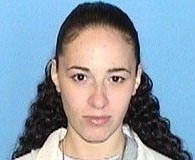
Regina & Margaret DeFrancisco
Homicides Tasmiyah & Yasmiyah Whitehead
Homicides · USA · 2010
Jarmecca “Nikki” Whitehead was the mother of identical twin daughters, Tasmiyah…
1 victim
Tasmiyah & Yasmiyah Whitehead
Homicides · USA · 2010
Jarmecca “Nikki” Whitehead was the mother of identical twin daughters, Tasmiyah…
1 victim
 Vickie Dawn Jackson
Serial killer · USA · 2000
Vickie Dawn Jackson was a former nurse who received a life sentence after plead…
10 victims
Vickie Dawn Jackson
Serial killer · USA · 2000
Vickie Dawn Jackson was a former nurse who received a life sentence after plead…
10 victims
 Jennifer San Marco
Mass murderer · USA · 2006
Jennifer San Marco (December 6, 1961 – January 30, 2006) was a former US Postal…
7 victims
Jennifer San Marco
Mass murderer · USA · 2006
Jennifer San Marco (December 6, 1961 – January 30, 2006) was a former US Postal…
7 victims
 Judy Kirby
Mass murderer · USA · 2000
Judy Kirby was found guilty of murder for intentionally causing a head-on crash…
7 victims
Judy Kirby
Mass murderer · USA · 2000
Judy Kirby was found guilty of murder for intentionally causing a head-on crash…
7 victims
 Khoua Her
Mass murderer · USA · 1998
Khoua Her pleaded guilty and received a sentence of 50 years in prison with no…
6 victims
Khoua Her
Mass murderer · USA · 1998
Khoua Her pleaded guilty and received a sentence of 50 years in prison with no…
6 victims
 Megan Huntsman
Murderer · USA · 1996
Megan Huntsman was 40 at sentencing. She was a mother of three children who wer…
6 victims
Megan Huntsman
Murderer · USA · 1996
Megan Huntsman was 40 at sentencing. She was a mother of three children who wer…
6 victims
 Fu Hegong
Serial killer · China · 2002
October 21, 2004 — Fu Hegong sneaked into Beixin Kindergarten in Dongcheng Dist…
5 victims
Fu Hegong
Serial killer · China · 2002
October 21, 2004 — Fu Hegong sneaked into Beixin Kindergarten in Dongcheng Dist…
5 victims
 Naomi Gaines
Murderer · USA · 2003
Naomi Gaines was a 24-year-old mother from St. Paul, Minnesota. On July 4, 2003…
1 victim
Naomi Gaines
Murderer · USA · 2003
Naomi Gaines was a 24-year-old mother from St. Paul, Minnesota. On July 4, 2003…
1 victim
 Sukhwinder Dhillon
Serial killer · Canada / India · 1995
Sukhwinder Singh Dhillon was convicted of first-degree murder for fatally poiso…
5 victims
Sukhwinder Dhillon
Serial killer · Canada / India · 1995
Sukhwinder Singh Dhillon was convicted of first-degree murder for fatally poiso…
5 victims
 Stephen Port
Serial killer · United Kingdom · 2014
Stephen Port (born 1975) was a convicted British rapist and serial killer who m…
4 victims
Stephen Port
Serial killer · United Kingdom · 2014
Stephen Port (born 1975) was a convicted British rapist and serial killer who m…
4 victims
- Gender
- female
- Country
- USA
- Location
- Chicago, Illinois, USA, USA
- Date of birth
- Regina - July 17, 1982 / Margaret - May 23, 1984
- Age at first offence
- 18
- Characteristics
- juvenile, robbery
- Victim profile
- Oscar Velazquez, 22 (Regina's boyfriend)
- Method of murder
- Shooting ( .38 caliber semi-automatic pistol)
- Date(s) of murder
- June 6, 2000
- Years active
- 2000
- Date of arrest
- Regina - October 17, 2002 / Margaret - March 24, 2002
- Status
-
Imprisoned
Sentenced to 35 years in prison on September 9, 2004; sentenced to 46 years in prison on December 14, 2004
Case record: Regina DeFrancisco and Margaret DeFrancisco
Background
Regina DeFrancisco and Margaret DeFrancisco were two teenage girls who made national headlines for the high-profile Chicago, Illinois murder of Oscar Velazquez. Oscar Velazquez was Regina’s boyfriend. The sisters were later described as fugitives from justice and were separately apprehended in 2002 after their story was broadcast on Unsolved Mysteries and America’s Most Wanted.
The offence
On June 6, 2000, Regina DeFrancisco called her boyfriend of three weeks, 22 year-old Oscar Velazquez, to their home. The sisters’ friend Veronica Garcia was also at their home. According to Veronica Garcia, she had given Margaret her boyfriend’s gun, a .38 caliber semi-automatic pistol, believing that the gun was to be used for armed robbery. Margaret used the gun to shoot Oscar Velazquez once in the back of the head, instantly killing him.
After the murder, Regina and Margaret robbed Oscar Velazquez of $600. The sisters drove Oscar’s body in his Camaro Z28 to a vacant lot. Regina used nail polish remover, which was used to ignite his body. An anonymous caller phoned 911 to report the fire and called 911 again after finding Oscar Velazquez’s body in the fire.
The sisters tried to sell the Camaro but were unsuccessful, so they abandoned the vehicle and set it on fire.
The women were accused of luring Oscar Velazquez, 22, to their home in the 700 block of West 21st Street to rob him on June 6, 2000, shooting him in the head and disposing of the body. At the time Margaret was 16 and her sister was 17. They used nail-polish remover to set the body on fire in a vacant lot.
In procedural and evidentiary detail from later proceedings, the evidence included that Oscar loaned Margaret money after Margaret asked for $1,000 to bail Regina DeFrancisco out, and then Oscar discovered the sisters had been lying and called repeatedly demanding the return of his $1,000. Oscar made 24 phone calls to the DeFrancisco residence between May 30, 2000 and June 4, 2000. On June 6, 2000, Margaret called Veronica Garcia and asked to borrow a gun. Veronica agreed, and she brought the gun to the DeFrancisco family residence where Margaret and DeFrancisco discussed how to get more money from Oscar. Oscar arrived at the residence and proceeded downstairs to see DeFrancisco while Margaret followed with the gun concealed behind her back. Veronica testified she heard a gunshot, saw Margaret ascend the stairs with the gun, and saw Oscar on the basement floor bleeding from his ears.
Trial testimony and evidence further stated that DeFrancisco and Margaret took Oscar’s cell phone, keys, gun, chain, and wallet, containing at least $600. Margaret and DeFrancisco split the money and later tried to sell both Oscar’s car and his gun. DeFrancisco testified that she curled up on the floor and begged Oscar not to kill her before hearing a gunshot and looking up to see Margaret holding a gun and Veronica at her side. DeFrancisco testified that Veronica urged them to get rid of Oscar’s body and identification, so they wrapped his body in clear plastic and a comforter, carried it to his white Camaro, and disposed of it in an alley in Veronica’s neighborhood.
Investigation
After receiving a report of a body on fire, Chicago Police Detective Timothy O’Meara, an expert in fire investigations, examined the body later identified as Oscar Velasquez. O’Meara concluded that a flammable liquid had been applied to the body before it was burned, and he found an empty bottle of nail polish remover in the vicinity.
Dr. Albert Fusaro conducted an autopsy on Oscar’s body and concluded that Oscar had died as a result of a gunshot wound and that the burning occurred post-mortem.
Arrest and captures
After both sisters fled from police following their questioning as suspects, Margaret DeFrancisco was captured in Rockford, Illinois on March 24, 2002. An anonymous tip following a broadcast of America’s Most Wanted led to her capture at an apartment complex where she was staying with relatives. She was arrested and charged with the murder of Oscar Velazquez and for unlawful flight to avoid prosecution.
On October 18, 2002, Regina DeFrancisco was arrested in Dallas, Texas. Chicago FBI reported that she was taken into police custody following a traffic stop and high-speed chase. She was charged with murder and unlawful flight to avoid prosecution and was later extradited to Illinois to stand trial.
Later procedural detail also stated that DeFrancisco was ultimately arrested on October 17, 2002, after a high speed police chase.
Trial
Regina and Margaret DeFrancisco’s trial began in July 2004. The women pled not guilty by reason of self-defense.
Veronica Garcia was described as the star witness for the prosecution. Garcia had cut a deal with prosecutors, pleading guilty to the lesser change of concealment of a homicide in exchange for a short prison sentence and her testimony. Garcia claimed to have had no foreknowledge of the murder and stated that she provided her boyfriend’s gun to the sisters, believing it would be used in a robbery. Garcia testified that she did not see Margaret DeFrancisco kill Oscar Velazquez and that Oscar was apparently armed. Neither the murder weapon nor Velazquez’s weapon were found.
Garcia’s testimony was corroborated by prosecution witnesses Jessica Benitez, Luciana Macias, and Maria Constantino. Benitez testified that both sisters confessed to having killed Oscar Velazquez and that Margaret kicked the victim in the head “so he could die faster.” Constantino testified that she saw Regina, Margaret, and Veronica Garcia loading Oscar Velazquez’s body in the back of his Camaro, and that Regina had confessed to orchestrating the crime.
In evidentiary detail later adopted in federal habeas proceedings, Jessica Tellez Benitez testified that on June 7, 2000, she went to DeFrancisco’s residence where there was a big stain near the door that looked like blood, and that DeFrancisco was mopping the basement stairs. Jessica asked about the stain and DeFrancisco said, “we killed a guy.” DeFrancisco told Jessica they had called Oscar over to return the $1,000 he loaned them but that they never intended to return it. DeFrancisco further stated that they put plastic down in the basement where Oscar was shot before he arrived. Jessica testified DeFrancisco had recounted being surprised to find Oscar carrying a gun because he was not a violent person. Jessica testified that DeFrancisco and Margaret split the $600 in Oscar’s wallet. DeFrancisco admitted talking to Jessica but testified she had not said anything to Jessica about a plan to rob or kill Oscar.
Maria Constantino testified that she saw DeFrancisco, Margaret, and another girl load a large plastic-wrapped object into a white Camaro on June 6, 2000. Maria testified that about a week after seeing this incident DeFrancisco came to her door crying and said, “we killed him.” Maria testified DeFrancisco described how Margaret shot Oscar from behind when he stepped on some plastic and how the three girls dumped the body and burned it. Maria testified DeFrancisco told her they did it for the money, about $600.
Margaret DeFrancisco’s trial and the first outcomes
On July 7, 2004, Margaret DeFrancisco was called to the witness stand. She maintained that she killed her sister’s boyfriend in self-defense. She stated that Velazquez was angry because the sisters had tricked him out of $1,000 and that she shot him to protect Regina. Margaret also claimed that she did not remember the actual shooting. She testified that she did not tell the initial officer’s the truth because, “We would've got in trouble” and “If I told the truth, I would've been there longer”.
Regina DeFrancisco also took the stand. She stated that after coming out of her bedroom, Velazquez was in the living room shouting and cursing at her. She claimed Velazquez pulled a gun on her, and she was curled up in the fetal position begging for her life. She then stated that she heard a gunshot before seeing Margaret holding a gun. She testified that it had been Veronica Garcia’s idea to dispose of Velazquez’s body.
After six-and-a-half hours of jury deliberations, Regina DeFrancisco was found guilty of murder during an armed robbery. Margaret DeFrancisco’s jury was unable to convict. There was reportedly an 11 to 1 deadlock in favor of conviction, but one juror held out for acquittal. The alleged reason was that the juror could not believe how someone so young could commit murder.
One day after Regina’s conviction, Margaret was released from custody on bail to await retrial.
Retrial
The re-trial of Margaret DeFrancisco began in November 2004, four months after her first trial. In a repeat of Margaret’s first trial, Veronica Garcia testified for the prosecution, giving the same testimony. After this trial, Margaret DeFrancisco was convicted of first-degree murder.
In earlier trial reporting, it was also described that a Cook County jury late Thursday found one of two sisters guilty of first-degree murder in the killing of one of their boyfriends after a trial in which prosecutors portrayed the young women as lying murderers and their lawyers called them irrational teenagers. The verdict in Regina DeFrancisco’s case came after 6 1/2 hours of deliberation. Her sister, Margaret DeFrancisco, burst into tears and had to be led out of the courtroom by sheriff’s deputies after the verdict in Regina’s case.
Sentencing
On September 9, 2004, Regina DeFrancisco was sentenced to 35 years in prison. On December 14, 2004, Margaret DeFrancisco was sentenced to 46 years in prison.
A Cook County judge sentenced Margaret DeFrancisco to 46 years in the Illinois Department of Corrections for the murder of Oscar Velazquez. The judge stated that she must serve the entire sentence. In that sentencing report, it was described that Margaret was eligible for between 45 years and life in prison as the shooter. Margaret’s lawyer, Ed Genson, argued that the shooting was a terrible choice Margaret made as a 16-year-old and urged the judge to allow DeFrancisco, who worked as a nurse’s assistant, to have time with her young child. The sentencing report included quotations from Judge James Schreier, including:
“This is one day in a little girl's life,” Genson said, as his client wiped tears from her eyes. He had urged Schreier to allow DeFrancisco, who worked as a nurse's assistant, to have time with her young child, a girl “she will have to leave now for her entire adult life.”
“I have never from beginning to end come across a stranger murder case,” the judge said.
“A rather simple, amateurish plan but a professional execution. A single, mortal shot to the back of the unsuspecting victim's head in her own basement.”
“We'll never know.”
“What could've possibly possessed her or influenced her to be of the mind to end a life and desecrate the body afterward?”
In that same sentencing report, it was also described that Veronica Garcia was sentenced to 5 years for her role in the murder, served her time, and was released.
Appeals
Both women were described as having filed appeals, but all have been unsuccessful.
In federal proceedings related to Regina DeFrancisco, it was stated that on direct appeal to the Illinois Appellate Court, the appellate court rejected the arguments and affirmed her conviction and sentence. The appellate court rejected claims including ineffective assistance of counsel and prosecutorial misconduct, and it affirmed the conviction of felony murder predicated on armed robbery. The Illinois Supreme Court denied leave to appeal on September 27, 2006. A petition for certiorari in the United States Supreme Court was denied on October 1, 2007.
A pro se post-conviction petition in the Circuit Court of Cook County was filed on September 7, 2007 and was denied on November 30, 2007. After failing to file a timely appeal, DeFrancisco filed a motion in the state appellate court for leave to file a late notice of appeal on June 10, 2008, stating she had not received notice of the trial court’s ruling until May 23, 2008. The appellate court denied the motion. DeFrancisco sought leave to file a late PLA in the Illinois Supreme Court, which the court denied on January 27, 2009. She concurrently filed a mandamus complaint alleging she did not receive timely notice that the post-conviction petition had been denied; the trial court denied the mandamus complaint on September 17, 2008.
DeFrancisco also filed a petition for relief from judgment pursuant to 735 ILCS 5/2-1401 on December 8, 2008 alleging that three of the witnesses who testified for the State gave false testimony after police detectives threatened them. The trial court denied the petition on December 15, 2008 and DeFrancisco filed a timely notice of appeal.
On November 10, 2008, DeFrancisco filed a petition for a writ of habeas corpus in the United States District Court pursuant to 28 U.S.C. § 2254. The federal court denied the petition and also denied motions to amend and to stay on March 17, 2010.
Outcome
Regina DeFrancisco was convicted of murder during an armed robbery and was sentenced to 35 years in prison.
Margaret DeFrancisco’s first jury trial ended in a deadlock, with an 11 to 1 deadlock reported in favor of conviction and one juror holding out for acquittal. After retrial, Margaret DeFrancisco was convicted of first-degree murder and was sentenced to 46 years in prison.
Other details
Both women were incarcerated at the Dwight Correctional Center.
The federal habeas proceedings described DeFrancisco’s conviction as felony murder predicated on armed robbery, and described the sentence as thirty-five years of imprisonment.
The federal habeas proceedings also included discussion of DeFrancisco’s claims and procedural history, including that DeFrancisco filed a petition for writ of habeas corpus pursuant to 28 U.S.C. Section 2254(d)(1), and that the court denied her Motion to Amend, Motion to Stay, and habeas petition. The opinion was delivered by Judge Virginia M. Kendall, United States District Judge for the Northern District of Illinois.
In the earlier trial reporting, it was also stated that defense lawyers had argued the shooting was in self-defense and that Regina DeFrancisco’s lawyer, John DeLeon, said: “All I can say is I'm not happy with the verdict, and we'll go forward to an appeal,” and that Regina DeFrancisco’s lawyer, Ed Genson, argued and urged jury deliberations to consider whether there was enough evidence to show that an armed robbery had been planned.
Margaret DeFrancisco was reported to have carved a tattoo from her abdomen to avoid being recognized. A statement from the victim’s mother, Maria Rios Velazquez, described how her family was decimated by his death.
US body disposition and evidence included: O’Meara examined the body and found an empty bottle of nail polish remover; the autopsy concluded the gunshot caused death and burning occurred post-mortem.
The federal habeas procedural discussion referenced that DeFrancisco argued on direct appeal that trial counsel was ineffective for failing to request jury instructions on self-defense and theft, that the trial court abused its discretion in allowing the State to dismiss the intentional and knowing murder charges after the defense rested, that the trial court committed prejudicial error by allowing admission of gruesome photographs, and that pervasive prosecutorial misconduct occurred. The federal opinion described that DeFrancisco’s only preserved ground was her contention that the trial court erred in allowing the State to drop intentional and knowing murder charges at the close of the defense’s case.

Spotted an error, or have more information about this case?