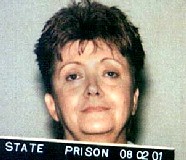
Maureen McDermott
Murderer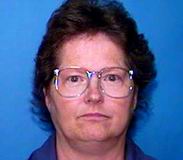 Bobbie Sue Terrell
Murderer · USA · 1984
Bobbie Sue Dudley Terrell was a Pinellas County nurse and worked as the night s…
12 victims
Bobbie Sue Terrell
Murderer · USA · 1984
Bobbie Sue Dudley Terrell was a Pinellas County nurse and worked as the night s…
12 victims
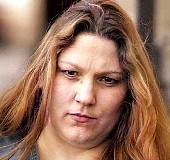 Angela Johnson
Murderer · USA · 1993
Angela Jane Johnson was convicted in federal court of aiding and abetting the m…
5 victims
Angela Johnson
Murderer · USA · 1993
Angela Jane Johnson was convicted in federal court of aiding and abetting the m…
5 victims
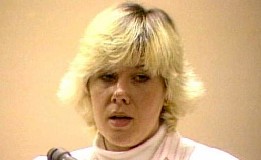 Catherine May Wood
Murderer · USA · 1987
Catherine May Wood was an American caregiver who worked at the Alpine Manor Nur…
5 victims
Catherine May Wood
Murderer · USA · 1987
Catherine May Wood was an American caregiver who worked at the Alpine Manor Nur…
5 victims
 Amy Bishop
Murderer · USA · 1986
Amy Bishop — biology professor and perpetrator · James Anderson — Bishop’s husb…
4 victims
Amy Bishop
Murderer · USA · 1986
Amy Bishop — biology professor and perpetrator · James Anderson — Bishop’s husb…
4 victims
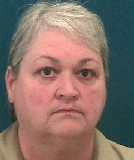 Martha Ann Johnson
Murderer · USA · 1977
Martha Ann Johnson (also known as Martha Ann Bowen) was an American serial kill…
4 victims
Martha Ann Johnson
Murderer · USA · 1977
Martha Ann Johnson (also known as Martha Ann Bowen) was an American serial kill…
4 victims
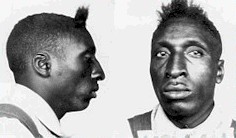 Grady Cole
Murderer · USA · 1942
Grady Cole was one of three defendants named as C. Levice, Charles Sanders, and…
1 victim
Grady Cole
Murderer · USA · 1942
Grady Cole was one of three defendants named as C. Levice, Charles Sanders, and…
1 victim
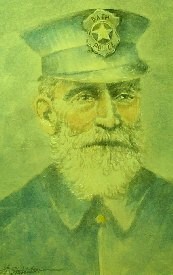 Daniel Wilkinson
Murderer · USA · 1883
Daniel Wilkinson (c. 1845 – November 21, 1885) was the last person to be execut…
1 victim
Daniel Wilkinson
Murderer · USA · 1883
Daniel Wilkinson (c. 1845 – November 21, 1885) was the last person to be execut…
1 victim
 Haji Mammadov
Murderer · Azerbaijan · 1995
Haji Mammadov was a former officer of the Crime Investigation Department of the…
11 victims
Haji Mammadov
Murderer · Azerbaijan · 1995
Haji Mammadov was a former officer of the Crime Investigation Department of the…
11 victims
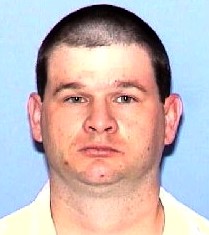 Kent Sprouse
Murderer · USA · 2002
Kent Sprouse was sentenced to death in Ellis County, Texas, for capital murder…
2 victims
Kent Sprouse
Murderer · USA · 2002
Kent Sprouse was sentenced to death in Ellis County, Texas, for capital murder…
2 victims
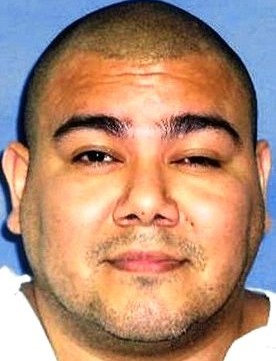 David Martinez
Murderer · USA · 1994
David Martinez was convicted and sentenced to death for the 1994 capital murder…
2 victims
David Martinez
Murderer · USA · 1994
David Martinez was convicted and sentenced to death for the 1994 capital murder…
2 victims
- Gender
- female
- Country
- USA
- Location
- Van Nuys, Los Angeles County, California, USA
- Date of birth
- May 15, 1947
- Age at first offence
- 38
- Characteristics
- murder for hire, attempt to collect insurance money
- Victim profile
- Stephen Eldridge, 37 (her roommate)
- Method of murder
- Stabbing with knife (44 times)
- Date(s) of murder
- April 28, 1985
- Years active
- 1985
- Date of arrest
- —
- Status
-
Sentenced to death
Sentenced to death on June 8, 1990; California Supreme Court affirmed the conviction and death sentence on August 12, 2002
Overview
Maureen McDermott was convicted of one count of murder and one count of attempted murder in connection with the deaths of Stephen Eldridge and an earlier knife attack on Eldridge. The jury found true special circumstances that the murder was carried out for financial gain and by means of lying in wait, and the trial court sentenced McDermott to death. The California Supreme Court affirmed the judgment.
Timeline
- April 28, 1985 — Stephen Eldridge was stabbed to death in the home he shared with Maureen McDermott.
- April 29, 1985 — Eldridge was stabbed 44 times and his penis was cut off postmortem; Luna later placed Eldridge’s penis in his own pocket and flushed it down the toilet.
- January 10, 1986 — Maureen McDermott was arraigned in Los Angeles, California, after being arrested in Pennsylvania.
- January 2, 1987 — Preliminary hearing began in Los Angeles County.
- January 9, 1987 — Preliminary hearing ended.
- March 2, 1985 — A jury convicted McDermott of first-degree murder with special circumstances in Eldridge’s death and of attempted murder in a March 21, 1985, knife attack on Eldridge.
- March 21, 1985 — Eldridge was attacked with a knife in an incident arranged by McDermott.
- August 14, 1989 — Jury selection began.
- August 12, 2002 — The California Supreme Court affirmed the death sentence.
The offence
On April 28, 1985, Stephen Eldridge was brutally stabbed to death in the home he shared with Maureen McDermott. It was undisputed at trial that the actual killers were Jimmy Luna and two brothers whom Luna hired for the murder, Marvin and Dondell Lee.
The prosecution theory was that McDermott hired Luna to kill Eldridge so she could obtain sole ownership of a house she co-owned with Eldridge and collect $100,000 under an insurance policy she had on Eldridge’s life. The jury found true special circumstance allegations that the murder was carried out for financial gain and by means of lying in wait.
Prosecution evidence: guilt phase
At the time of Eldridge’s murder in 1985, McDermott was 37 years old. During the day, she worked as a registered nurse at Los Angeles County-USC Medical Center, and in the evening she provided nursing care to Lee La Porte at his home. McDermott shared a house in Van Nuys with Eldridge, a 27-year-old, self-employed landscaper. They owned the property as joint tenants.
In December 1984, McDermott and Eldridge each bought $100,000 in life insurance, designating each other as beneficiary. In early 1985, Eldridge’s relationship with McDermott deteriorated. Eldridge complained about the unkempt condition of the house and about his pets. McDermott was upset about Eldridge’s treatment of her pets and his plans to sell his interest in the house.
Near the end of February 1985, McDermott discussed with Jimmy Luna a plan to kill Eldridge. McDermott told Luna she had an insurance policy on Eldridge’s life and that she wanted him dead. She offered Luna $50,000, and Luna agreed. McDermott told Luna that she wanted Eldridge stabbed because a gun would make too much noise, and that she wanted the killing to look like a “homosexual murder” because she thought the police would not investigate the murder of a homosexual as vigorously as other killings. To make the murder look like a homosexual killing, McDermott on different occasions suggested Luna carve out the word “gay” on the body with a knife or cut off the victim’s penis.
On three occasions in late February and early March of 1985, McDermott arranged for Luna to be at the house she shared with Eldridge so Luna could kill Eldridge. Each time, however, Luna became frightened and could not carry out the murder. McDermott then suggested Luna find someone to help him kill Eldridge, but she told him she did not want anyone but Luna to know of her involvement.
In March 1985, Luna asked his friend Marvin Lee to help him commit the murder. Luna told Marvin an “organization” wanted someone killed, and offered Marvin $3,000 to “watch [his] back.” Marvin agreed. Luna later told Marvin that the intended victim was a homosexual and that Luna would castrate the victim to make it look like a “homosexual murder.”
In the evening of March 21, 1985, Luna and Marvin knocked on the door of the house where McDermott and Eldridge lived. As Eldridge opened the door, Luna and Marvin forced their way inside. Luna threatened Eldridge with a knife and ordered him to crawl into the bedroom and to lie facedown on the bed. Luna then cut Eldridge on the buttocks with the knife and yelled homosexual epithets. Marvin retrieved a two-foot-long bedpost and struck Eldridge on the head. Eldridge jumped up and ran out of the house. Luna and Marvin left. A Los Angeles Police Officer David Yates found Eldridge dressed only in his underwear and covered in blood and dispatched an ambulance for treatment.
The day after the March 21 attack, McDermott spoke by telephone with Luna about the failed murder attempt, telling him, “we are going to have to do it again, and this [28 Cal. 4th 964] time you can't fail.”
After March 21 but before April 28, 1985, there were several telephone conversations between McDermott and Luna. During one conversation, Marvin was with Luna and listened in as McDermott discussed the murder plan and what they would do with the anticipated insurance proceeds. McDermott objected to Marvin’s participation and said that if Marvin told anyone about it, Luna would “have to kill that nigger too.” Dondell Lee overheard part of this conversation when Marvin passed him the telephone.
On April 28, 1985, Luna met Marvin and Dondell Lee and offered Dondell money to help commit the murder. Luna made several telephone calls to McDermott in which she told him she would leave a front bedroom window open for entry into the house and that Luna should tie her up and cut or hit her so she would look like a robbery victim.
Around 8:15 p.m., Luna, Marvin, and Dondell entered the house through the front bedroom window. Luna went down the hall to McDermott’s bedroom, where McDermott told him Eldridge had not yet returned from a dinner engagement. McDermott told Luna to cut her on the breast and inner thigh, and Luna did so, to make it appear that Eldridge was killed when he came home while McDermott was being robbed. Around 10:40 p.m., Eldridge came home. Dondell Lee met him with a rifle owned by McDermott and provided by Luna. Marvin then grabbed Eldridge by the neck in a chokehold, took him down the hall, and Luna repeatedly stabbed him until he slumped to the floor.
Luna then returned to McDermott’s bedroom and found her lying on the floor with a facial injury. McDermott asked Luna how the injury looked, saying she had banged her head on a table in the bedroom. As Luna and the Lee brothers were about to leave, Marvin Lee overheard McDermott yell from the back bedroom not to forget to cut off Eldridge’s penis. Luna did so.
Los Angeles County Deputy Medical Examiner Susan Selser performed the autopsy. She testified that Eldridge had been stabbed 44 times and that his penis was cut off postmortem. Of the 44 stab wounds, 28 were independently fatal.
Autopsy and injuries
The prosecution evidence included testimony that Eldridge was stabbed 44 times and that his penis was cut off postmortem. It also included testimony at the guilt phase about the manner of injuries and the number of stab wounds.
Investigation
The prosecution’s case included evidence about McDermott’s communications and her planned involvement. The appellate opinion described that independent evidence corroborated accomplice testimony.
Investigation details in trial evidence
- McDermott discussed a plan to kill Eldridge with Luna near the end of February 1985, offering Luna $50,000.
- McDermott planned for Luna to kill Eldridge and for injuries to herself to make it appear as a robbery victimization.
- The prosecution introduced independent evidence including motive and McDermott’s presence in the house during the killing.
- The investigating detective concluded that the crime was a murder, not a robbery that turned into a murder.
Arrest and charges
At trial, the appellate opinion described procedural history tied to arrest and charging.
McDermott was arrested in Pennsylvania for the murder of Stephen Eldridge in California. She was arraigned in Los Angeles on January 10, 1986.
On September 2, 1987, the prosecution filed an amended information charging McDermott with attempted murder, solicitation of murder, and murder. The amended information also alleged the special circumstances that the murder was for financial gain and murder by means of lying in wait. Later, the trial court dismissed the charge of solicitation of murder.
In August 1985, McDermott was also arrested and charged with attempted murder and murder and special circumstance allegations of murder for financial gain and lying in wait. The opinion described that she entered a plea of not guilty and denied the special circumstance allegations.
Trial
Guilt phase
A jury convicted McDermott of:
- One count of murder (Pen. Code, § 187, subd. (a)).
- One count of attempted murder (§§ 664, 187, subd. (a)).
The jury found true special circumstance allegations that:
- The murder was carried out for financial gain (§ 190.2, subd. (a)(1)).
- The murder was carried out by means of lying in wait (§ 190.2, subd. (a)(15)).
McDermott denied complicity.
Luna and both Marvin and Dondell Lee testified against McDermott. Luna had pled guilty to first degree murder. Marvin and Dondell Lee were granted complete immunity and were never charged with the murder.
The jury returned a guilty verdict, and the same jury unanimously recommended last April that McDermott die for the crimes.
McDermott did not testify.
Penalty phase
At the penalty phase, the prosecution presented evidence that McDermott had Luna beat up Dewayne Bell so McDermott could obtain Bell’s caretaker job for Lee La Porte. The appellate opinion described the attack on Bell and telephone threats, including:
- Bell, John Phillips, and Philip La Chance were alternating-shift caretakers for the elderly Lee La Porte.
- McDermott temporarily assumed La Chance’s caretaker duties while La Chance was in jail for driving under the influence.
- McDermott told Luna she wanted permanent employment with the La Portes and offered Luna money to injure Bell so she could take the job.
- Luna attacked Bell by slashing Bell’s face, throat, and chest.
- When Bell returned, McDermott had Luna repeatedly telephone the La Portes and make threats against Bell when Betty La Porte answered.
- Bell lost his job with the La Portes, and McDermott took over Bell’s duties.
The defense presented testimony from coworkers, her brother, prison guards, and a criminal justice expert. Dr. Philip Merritt described McDermott as a compassionate and caring nurse. Other witnesses described McDermott as a hard worker and well liked by patients, her loving relationship with her mother with money sent to her mother, and her adjustment to incarceration. A criminal justice consultant stated an opinion that McDermott would adjust well in prison if sentenced to life without the possibility of parole.
The trial court sentenced McDermott to death.
Jury selection and constitutional claims
McDermott raised challenges regarding jury selection, including peremptory challenges and challenges for cause.
Prosecutor’s peremptory challenges and race-neutral reasons
McDermott contended she was denied her right to a jury drawn from a representative cross-section and her equal protection right due to peremptory challenges used to remove prospective jurors because of race.
The appellate opinion described that during initial jury selection:
- The defense excused 20 prospective jurors and the prosecution excused 18 via peremptory challenges.
- The prosecution exercised six of its 18 peremptory challenges against Black prospective jurors.
- The defense removed one Black prospective juror by peremptory challenge.
- The jury sworn included no Blacks.
- After one juror was discharged for reading a newspaper article, alternate juror selection included use of peremptory challenges, resulting in at least one Black alternate juror later serving on the jury, replacing a juror excused during the trial.
The appellate opinion set out individual juror responses and the trial court’s evaluation of the prosecutor’s stated reasons, concluding that the prosecutor could reasonably view the challenged Black prospective jurors as unfavorable on the death penalty issue rather than due to race. The opinion discussed the death penalty views and responses of multiple jurors, including jurors identified as Patricia M., Gilbert K., Theola J., Brenda B., Kathryn S., Keia M., James T., and Gerald W., along with the trial court’s findings and reasoning.
Challenges for cause
McDermott also challenged rulings on for-cause challenges. The appellate opinion discussed denial of the defense challenge for cause as to Harold O., Mary F., Hilyard B., Katherine K., Barbara M., and Richard R., and the granting of the prosecution’s challenges for cause as to Scott M. and Beverly S.
Double jeopardy and comment on failure to testify
Immediately after the jury was sworn, the trial court recalled that juror Fred L. had earlier told the bailiff about reading a newspaper article regarding the case. Fred L. stated that the article would cause him to want the defendant to testify even though she constitutionally did not have to, and that would lead him to be prejudiced against her. The trial court discharged Fred L.
McDermott argued that jeopardy attached when the original 12 jurors were sworn and that subsequent proceedings violated her right under the Fifth Amendment not to be placed in jeopardy twice. The appellate opinion rejected the argument, relying on California law about alternates and also rejected claims of improper comment on failure to testify in light of the circumstances described and instructions given.
Accomplice corroboration
McDermott contended she was entitled to a judgment of acquittal because the only evidence linking her came from uncorroborated testimony of accomplices Luna and brothers Marvin and Dondell Lee.
The appellate opinion described the legal rule requiring corroboration of accomplice testimony and concluded that the evidence adequately corroborated the accomplice testimony. It described independent evidence of motive to kill Eldridge to obtain possession of the house and proceeds of an insurance policy, independent evidence that McDermott was present in the house when Eldridge was killed and received only superficial wounds, and independent evidence that Luna was a coworker and personal friend of McDermott.
The opinion also described evidence of telephone calls between McDermott and Luna before and after the murder, and referenced corroboration beyond telephone records.
Speedy trial and continuances
McDermott argued that delay between her arraignment and the beginning of jury selection violated her constitutional right to a speedy trial.
The appellate opinion described that between January 10, 1986 and August 14, 1989, defense counsel requested and obtained 25 continuances, with McDermott waiving time for each continuance. The continuances were based on counsel’s trial commitments in other criminal cases, including capital cases, and preparation needs. The prosecution expressed concern about the trial delay.
The appellate opinion applied the Barker v. Wingo balancing framework and rejected the speedy trial claim on the third factor, noting McDermott repeatedly requested and obtained continuances and waived the right during them. It also rejected an ineffective assistance claim related to the continuances.
Conflict of interest claim
McDermott contended she was denied the Sixth Amendment right to counsel free of conflict of interest.
The appellate opinion described that on October 24, 1989, defense counsel Joe Ingber told the trial court that during a prosecution interview with accomplice James Luna four days earlier, Luna mentioned having a “relationship” with Ingber. Ingber explained he had not represented Luna but had represented Randy Howard, Luna’s cellmate and sexual partner. The prosecutor agreed not to bring up the subject during Luna’s direct examination. On November 8, 1989, the prosecutor raised her concern to the trial court about possible confidential information from Howard that could be useful for cross-examining Luna.
The trial court appointed Bruce Hill as independent counsel to consult with McDermott. On November 20, 1989, after consultation, McDermott told the trial court she wanted Ingber to continue representing her and waived her right to conflict-free counsel. The trial court explained potential disadvantages and increased risk of conviction. The record included an express waiver in which McDermott stated, “Yes, I do.”
When the defense called Randy Howard as a witness, Howard testified that he had not told counsel Ingber anything Luna had told him about the case and that Luna had told him that McDermott hired Luna to kill someone for insurance money.
Effectiveness of trial counsel
McDermott alleged ineffective assistance of counsel, including failure to investigate and prepare the case, failure to seek judgment of acquittal, failure to object to closing argument, and other alleged deficiencies.
The appellate opinion rejected the claim at the threshold, stating that counsel vigorously represented McDermott and subjected the prosecution’s case to adversarial testing. It discussed multiple specific allegations and rejected or found insufficient support for each.
The appellate opinion described, among other points, that defense counsel cross-examined witness James Luna for eight days, challenged his veracity, and presented testimony from five of Luna’s former coworkers at Los Angeles County-USC Medical Center that Luna was a habitual liar. It also addressed corroboration of accomplice testimony and found no futility requiring acquittal motions or objections.
Admission of videotape and prior bad acts evidence
The appellate opinion addressed admission of an 18-minute videotape of the crime scene made by police shortly after arrival. The opinion discussed that the tape included a 30-second view of the victim’s groin area showing that his penis had been cut off, and it considered whether the video was unduly gruesome or inflammatory.
The opinion also addressed admission of evidence of prior misconduct by McDermott, including testimony from Phillip La Chance about other acts related to stealing a ring from Betty La Porte and clearing a checking account.
The appellate court discussed arguments about relevance, limiting instructions, and corroboration requirements for accomplice testimony.
Prosecutorial misconduct at penalty phase
McDermott argued prosecutorial misconduct at the penalty phase based on alleged inflammatory epithets and other alleged conduct. The appellate opinion described that at trial McDermott objected only to some instances and therefore limited issues on appeal.
The appellate opinion quoted parts of the prosecutor’s penalty phase closing argument. One segment began with:
“The time has now arrived for us to . . . look exactly at what one human being did to another. [¶] And I use the term human being in a literal sense because I'm not so sure that Maureen McDermott really should be categorized as a human being. [¶] Because human beings have a heart and human beings have a soul. And nobody with a heart and nobody with a soul could have done what Maureen McDermott has done in this case.”
The appellate opinion described the trial court’s ruling and concluded that the remarks were within the permissible scope of closing argument given the evidence of deliberate and cold-blooded planning.
The opinion also addressed other described characterizations and comparisons, including “a Nazi working in the crematorium by day and listening to Mozart by night,” concluding that it was not misconduct in context because it was described as arguing double lives and the contrast between refined sensitivity and barbaric cruelty.
Instructions about accomplices at the penalty phase
At the penalty phase, the trial court gave an instruction over defense objection stating:
“You may not consider either the punishment or absence of punishment for the following accomplices: James Luna, Marvin Lee and Dondell Lee in determining the appropriate penalty for the defendant Maureen McDermott in this case.”
The appellate opinion addressed the arguments about whether this instruction was improper or rendered sentencing unreliable, concluding that it was not error.
Automatic motion to modify the verdict
Under Penal Code section 190.4, subdivision (e), the appellate opinion described an automatic application for modification of the death sentence. The appellate court addressed whether the trial court independently reweighed evidence of aggravating and mitigating circumstances and concluded that it did.
Appeals and outcome
The California Supreme Court affirmed the judgment and upheld the death sentence. The opinion stated that the appeal was automatic and that the judgment was affirmed, with multiple justices concurring.
Additional statement by Maureen McDermott
Maureen McDermott made a statement dated April 8, 2004, using the name “Miki,” describing her need for help and asserting her innocence. She said:
“I need help! My name is Maureen McDermott, but my friends call me ‘Miki.’ My life has been stolen away from me by the horrific violence and insane lies of Jimmy Luna, whom I once thought was, at worst, a pest. Never did I imagine that he would steal the life of my friend, Stephen Eldridge, then lie and steal my life, too. But that's what he did. My case was fabricated from police and prosecutorial misconduct. My trial was a travesty. My incompetent trial lawyer did no investigation, and presented no defense. And I'm on death row for a crime I did not commit, a crime I knew nothing about, a crime I never would have wanted to happen, had I ever known or suspected it was going to happen. I had excellent attorneys for my post-conviction appeal, and now I have excellent attorneys for federal habeas. What I need most now is public support. I need favorable publicity. I need people to be informed of how I was unjustly convicted, and how three brutal murderers avoided punishment in return for their perjured testimony that made me out to be a cold-blooded killer. I need people on my team to influence public opinion, to convince people of my innocence, and to work for my release. I need your help. I am completely innocent. Please help me to prove it. Respectfully, Maureen ‘Miki’ McDermott”
Case identifiers and counsel
The appellate opinion identified the case as People v. McDermott and included:
- Docket number No. S016081.
- Superior Court of Los Angeles County No. A810541, with Alan B. Haber, Judge.
- Opinion by Kennard, J., expressing the unanimous view of the court.
Counsel listed in the appellate opinion included:
- For Defendant and Appellant: Steffan Imhoff and Verna Wefald, under appointments by the Supreme Court.
- For Plaintiff and Respondent: Bill Lockyer, Attorney General, and deputy attorneys general including G. Tracey Letteau.


Spotted an error, or have more information about this case?