
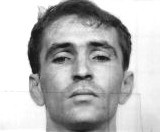
Charles Daniel Thacker
Murderer Brian Kevin Rosenfeld
Murderer · USA · 1985
Brian Kevin Rosenfeld Brian Kevin Rosenfeld was sentenced to three concurrent l…
23 victims
Brian Kevin Rosenfeld
Murderer · USA · 1985
Brian Kevin Rosenfeld Brian Kevin Rosenfeld was sentenced to three concurrent l…
23 victims
 Russell Ellwood
Murderer · USA · 1991
Russell Ellwood was a former taxi driver. Authorities suspected him of killing…
20 victims
Russell Ellwood
Murderer · USA · 1991
Russell Ellwood was a former taxi driver. Authorities suspected him of killing…
20 victims
 Robert Martines Perez
Murderer · USA · 1994
Name: Robert Martines Perez · Other name used in proceedings: Robert Martinez P…
15 victims
Robert Martines Perez
Murderer · USA · 1994
Name: Robert Martines Perez · Other name used in proceedings: Robert Martinez P…
15 victims
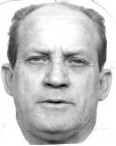 Billy Frank Vickers
Murderer · USA · 1993
Billy Frank Vickers Vickers was executed by lethal injection in Texas on Januar…
14 victims
Billy Frank Vickers
Murderer · USA · 1993
Billy Frank Vickers Vickers was executed by lethal injection in Texas on Januar…
14 victims
 Bugsy Siegel
Murderer · USA
Benjamin “Bugsy” Siegel (February 28, 1906 – June 20, 1947) was an American mob…
Bugsy Siegel
Murderer · USA
Benjamin “Bugsy” Siegel (February 28, 1906 – June 20, 1947) was an American mob…
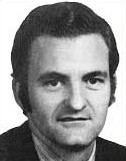 William Bradford Bishop
Mass murderer · USA · 1976
William Bradford Bishop was a fugitive from justice after 1976. William Bradfor…
5 victims
William Bradford Bishop
Mass murderer · USA · 1976
William Bradford Bishop was a fugitive from justice after 1976. William Bradfor…
5 victims
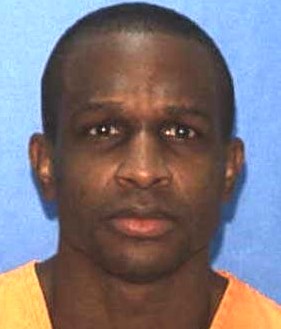 Jason Stephens
Murderer · USA · 1996
Jason Stephens was sentenced to death for the murder of 3-year-old Robert Sparr…
2 victims
Jason Stephens
Murderer · USA · 1996
Jason Stephens was sentenced to death for the murder of 3-year-old Robert Sparr…
2 victims
 Timea Faludi
Homicide · Hungary · 2000
Timea Faludi was a Hungarian nurse dubbed the “Black Angel”. She was sentenced…
30 victims
Timea Faludi
Homicide · Hungary · 2000
Timea Faludi was a Hungarian nurse dubbed the “Black Angel”. She was sentenced…
30 victims
 Mayra Perez
Murderer · USA · 2013
Mayra Perez was 23 and lived in northeast Denver with her husband, Ricky Perez,…
2 victims
Mayra Perez
Murderer · USA · 2013
Mayra Perez was 23 and lived in northeast Denver with her husband, Ricky Perez,…
2 victims
- Gender
- male
- Country
- USA
- Location
- Harris County, Texas, USA
- Date of birth
- September 18, 1968
- Age at first offence
- 25
- Characteristics
- serial rapist, rape
- Victim profile
- Karen G. Crawford (female, 26)
- Method of murder
- Strangulation
- Date(s) of murder
- April 7, 1993
- Years active
- 1993
- Date of arrest
- Next day
- Status
-
Executed
Executed by lethal injection in Texas on November 9, 2005
Case details
Charles Daniel Thacker was a white male convicted in Harris County, Texas, of capital murder. He was sentenced to death and was executed by lethal injection in Texas on November 9, 2005.
Thacker was scheduled for execution after 6 p.m. Wednesday, Nov. 9, 2005.
Background
Charles Daniel Thacker received an 8-year education and obtained a GED. His physical characteristics were listed as brown hair, blue eyes, height 5 ft 08 in, and weight 172. He had prior occupation described as maintenance.
At the time of the April 7, 1993 offense, he had been out of prison about eight months after serving less than four years of two 12-year sentences for robbery and sexual assault. In February 1993, he sexually assaulted a woman. Prior to that, he sexually assaulted a woman in 1992.
In 1987, he attacked two women in separate incidents, assaulted and robbed a woman, and sexually molested a five-year-old girl that he babysat from 1985 to 1987. In September 1988, he was sentenced to 12 years in prison for sexual assault and robbery. In 1992, he was paroled.
In February 1993, he sexually assaulted another woman.
Relatives testified that Thacker had been molested as a child by his mother’s boyfriend and underwent counseling. His mother, Glada, told the jury in the penalty phase that her son had been molested as a child by a man she had dated and begged that his life be spared.
Thacker expressed love to his family and friends and apologized shortly before dying. He said: “I am sorry for the things I have done.” He also said: “I know God will forgive me.” He told his spiritual advisers: “I will miss you guys.” He asked his witnesses to tell his attorney: “they couldn't find a vein on my arm.” He said: “I’ll get to see Mom.” He also said: “I guess that's all.” He asked his witnesses to keep track of his daughter for him, stating: “Keep track of Danielle for me. I will miss you guys. I love you. I guess that's all.”
Thacker also protested his innocence regarding the death of Karen Gail Crawford, 26.
The offence
On the evening of April 7, 1993, Karen Crawford said during a telephone conversation with a friend that she was going to go to the store for dog food.
That same evening, a resident of Crawford’s apartment complex informed the maintenance supervisor that Crawford’s keys were hanging from her mailbox, which was located in a common area near the apartment offices.
The maintenance supervisor went to Crawford’s apartment but she did not answer the door. He then noticed her car, with her dog inside, parked near the mail room. While checking the area of the mail room and pool, he found the women’s restroom locked. He beat on the door, and a man’s voice answered from the inside.
The man became quiet when asked why he was using the women’s restroom. The maintenance supervisor attempted unsuccessfully to force open the door of the restroom. He telephoned the apartment manager.
The manager and her husband arrived at the scene, and the three discussed what to do. Suddenly, the restroom door opened and Thacker emerged. A fight ensued when the maintenance supervisor attempted to stop him. He attempted to cut Thacker with his pocket knife, but Thacker sprayed him with mace and got away. Thacker sprayed the manager’s husband as well, and then pushed his way through one of the two exit gates.
The maintenance man and others nearby chased Thacker down the block and tried to cut off his escape. Thacker ran toward the back gate and escaped into a wooded area.
In the meantime, the manager found Karen lying face down on the restroom floor. She was unconscious. One shoe and one leg of her jogging pants were pulled off; the other pants leg was pulled down to her ankle.
Hall and another bystander administered CPR. They detected a heart beat, but she was not breathing. Some faint brain activity was detected when she arrived at the hospital, but it ceased within twenty-four hours.
Medical examiners concluded that Karen’s death was the result of strangulation. Her neck was bruised on the front and left side and her face and eyes exhibited a condition known as pinpoint hemorrhaging. A choke hold or “hammerlock” was determined to be the probable method of strangulation.
No evidence of a completed sexual assault was found.
In the early morning hours of April 8, 1993, a police canine unit discovered Thacker hiding in a yard near Karen Crawford’s apartment complex.
A truck containing papers bearing Thacker’s name was found parked outside the offices of Karen’s apartment complex. Thacker was identified by several witnesses who saw him loitering about the mail room just before the offense, and also identified by witnesses who saw him running where Karen was found. A pubic hair matching a sample from Karen was found in Thacker’s underwear.
Investigation
Police using tracking dogs found Thacker hiding behind a house in the woods.
Authorities found a hair belonging to the victim in Thacker’s underwear. Thacker wanted DNA testing to support his claim that he was not involved in Crawford’s death.
Thacker wrote that he suggested Crawford accidentally died because of CPR efforts.
Arrest and identification
After Karen Crawford’s keys were noticed hanging from her mailbox, the maintenance supervisor went to her apartment, returned to the mailboxes, and checked the restrooms.
When the women’s restroom was found locked and a man’s voice answered from inside, witnesses and residents who saw Thacker emerged and fled identified him as the fleeing man after the restroom door opened.
A police canine unit later discovered Thacker hiding in a yard near Crawford’s apartment complex.
Trial
Thacker was indicted for capital murder in April 1993.
A jury found Thacker guilty by May 4, 1994. On May 9, 1994, he was sentenced to death.
The trial record included identification and eyewitness testimony that Thacker sprayed mace during the struggle and fled through an exit gate.
At least six victims testified at his trial how he raped or attempted to sexually assault them. The women who testified he raped or tried to rape them ranged in age from 13 to 64. During the penalty phase, Thacker’s mother, Glada, testified about his childhood molestation and begged that his life be spared. The jury returned a sentence of death in only about two hours.
The U.S. Supreme Court denied certiorari on October 6, 1997.
Jurors’ note on intent and the jury charge
The jury sent a note during deliberations asking if “the defendant had to have the intent to cause her death to be convicted of capital murder.” The court replied: “refer to the charge and continue deliberating.” The jury returned fifteen minutes later with a guilty verdict on the charge of capital murder.
The prosecuting attorney stated, during a hearing outside the jury’s presence, that “The State does not have evidence on the issue of [Thacker’s] intent to kill.”
Testimony about strangulation method and sexual assault
Medical examiners concluded that Crawford’s death was the result of strangulation, with the probable method determined to be a choke hold or “hammerlock.” No evidence of a completed sexual assault was found.
Sentencing
Thacker was sentenced to death on May 9, 1994.
Appeals
The Texas Court of Criminal Appeals affirmed the conviction and sentence on direct appeal on September 18, 1996.
The U.S. Supreme Court denied certiorari review on October 6, 1997.
State habeas proceedings
Thacker applied for state habeas relief. On July 11, 2000, after holding a hearing on Thacker’s claims, the trial court recommended that relief be denied.
On December 19, 2001, the Texas Court of Criminal Appeals adopted the lower court’s recommendation and denied relief.
On December 19, 2001, the Texas Court of Criminal Appeals denied habeas relief in an unpublished opinion: Ex parte Thacker, No. 74,034 (Tex.Crim.App. Dec. 19, 2001) (unpublished).
Federal habeas proceedings
On October 7, 2002, the U.S. Supreme Court denied certiorari review.
On August 30, 2002, Thacker filed a federal habeas petition. The federal district court dismissed it in 2003 for failure to exhaust.
Thacker filed a subsequent state writ petition in November 2003. The Texas Court of Criminal Appeals dismissed it as abusive under state law on December 10, 2003, in an unpublished opinion: Ex parte Thacker, No. 48,092-02 (Tex.Crim.App. Dec. 10, 2003) (unpublished).
In January 2004, Thacker filed a new federal habeas application. The district court denied relief on May 27, 2004. The denial of a certificate of appealability occurred when, on January 5, 2005, the 5th U.S. Circuit Court of Appeals denied Thacker’s request for a certificate of appealability.
On October 3, 2005, the U.S.
DNA testing motion and DNA appeal
On Oct. 13, 2005, appellant filed an application for post-conviction DNA testing. The trial court denied relief, finding that appellant failed to establish that the request was not made to unreasonably delay the execution of sentence or the administration of justice.
On Oct. On Oct, 26, 2005, Thacker filed a motion in the trial court for new DNA testing in his case, and on Oct. 31, 2005, the trial court denied both motions.
On Nov. 1, 2005, Thacker filed a notice of appeal with the Texas Court of Criminal Appeals.
On Nov. 7, 2005, the appeals court rejected Thacker’s DNA appeal and affirmed the convicting court’s rulings denying Thacker’s request to subject certain evidence to DNA testing.
On Nov. 7, 2005, the Court of Criminal Appeals issued a per curiam opinion (Thacker v. State, --- S.W.3d ----, 2005 WL 2980965 (Tex.Crim.App. 2005) (PCR)) denying Thacker’s motion to stay execution. The court granted his motion to have the appeal considered immediately. The court affirmed the trial court’s judgment and concluded there was no reversible error.
In the per curiam opinion, it was stated that Chapter 64 authorizing motions for DNA testing had been in effect since April 5, 2001, and that appellant waited over four years to file his motion. The court held that the trial court’s finding regarding unreasonable delay was supported by the record and denied the motion for stay of execution.
Motion for stay of execution and federal challenges
Thacker filed a section 1983 method-of-execution challenge on Nov. 4, 2005. A federal district court dismissed the challenge on the same day Thacker filed it.
On Nov. 7, 2005, Thacker filed a successive state writ raising several issues, including whether lethal injunction violates a prisoner's constitutional rights. The Texas Court of Criminal Appeals dismissed his writ on Nov. 8, 2005.
On Nov. 8, 2005, Thacker filed a motion for a stay of execution or a preliminary injunction in the 5th U.S. Circuit Court of Appeals. On the same day, the appeals court rejected his appeal, and he followed up by filing an appeal with the U.S. Supreme Court.
Certificate of appealability and habeas denial
In Thacker v. Dretke, 396 F.3d 607 (5th Cir.) (Habeas), the court denied a request for a certificate of appealability. The court held that Thacker could not make a substantial showing of the denial of a federal constitutional right.
Clemency and execution procedure challenges
Thacker filed a clemency petition with the Texas Board of Pardons and Paroles.
On Nov. 7, 2005, the Board denied Thacker’s request that his sentence be commuted to life in prison and denied his request for a 120-day reprieve.
At the time of execution, the issue of injection procedures was in his appeals that were rejected by the Supreme Court about 30 minutes before his execution.
Thacker asked his witnesses to tell his attorney that “they couldn't find a vein on my arm.” The lethal injection was started after his final statement.
Supreme Court involvement just before execution
The issue of injection procedures was in his appeals rejected by the Supreme Court about 30 minutes before his execution. The lethal dose began and he was pronounced dead at 6:32 p.m.
Outcome
Thacker was executed by lethal injection in Texas on November 9, 2005.
He was pronounced dead at 6:32 p.m. Shortly before his death, he expressed love to family and friends and apologized. He said: “I am sorry for the things I have done.” He said: “I know God will forgive me.” He said: “I will miss you guys. I love you. I guess that's all.” He told his spiritual advisers to tell his family he loved them and asked them to keep track of his daughter for him. He also said: “I’ll get to see Mom.” He additionally said: “I can already feel it a little bit,” and he was pronounced dead at 6:32 p.m.
Other details
Victim
Karen G. Crawford was 26 years old. She was a white woman and a 1991 Sam Houston State University graduate who majored in education. She taught second grade in the Klein Independent School District for less than two years before her death in April 1993. She was attacked outside her apartment.
Places mentioned in the case
Crawford’s apartment complex was described as in Houston, in northwest Harris County, and in Tomball. Reuters described the location as “6800 block of Champions Plaza in northwest Houston.” The offence involved a common area near apartment offices and a women’s restroom within the apartment complex.
Civil damages finding
In 1995, jurors awarded the victim’s parents, Mary and Charles Crawford, $8.1 million in damages and related costs against the apartment complex. The jurors found the apartment complex negligent in providing basic levels of protection.
Thacker’s statements denying involvement
Thacker posted statements on a website where death row inmates seek pen pals. He acknowledged being in the area when Crawford was attacked “up to no good with two other guys looking for stuff to steal and sell.” He also claimed he was uninvolved in the attack and suggested Crawford accidentally died because of CPR efforts.
Thacker wrote that at the time he was arrested, he was wearing different clothing than the eyewitnesses reported the suspect was wearing, and that he had no cuts or bruises to indicate he had been in a fight.
Thacker wrote that he implied Crawford died from Billy Hall’s attempt to perform CPR, “not knowing what he was doing.”
Thacker also wrote that the judge in his trial, Mary Bacon, was biased against him, stating: “Ms Bacon and her daughter were robbed and her daughter was raped many years ago and the man was never caught,” and “Ms. Bacon throws the book at any male accused of a crime against a female in her court room, and she will break and violate the law to get what she wants.”
DNA delay issue described in the per curiam opinion
The court described that Chapter 64 had been in effect since April 5, 2001 and that appellant waited over four years to file his motion and filed it less than a month before his scheduled execution. The court also addressed his arguments about delay, including that he claimed federal habeas proceedings prevented dual filing and that DNA technologies became available in 2002 and 2004, but he did not file until October 2005.
Named individuals connected to events described
Arkan Hall was identified as the maintenance supervisor in one appellate summary. Emily Vaughn was identified as the apartment manager. Terrence Cowie was identified as her husband. Billy Hall was identified as the maintenance worker in other descriptions. Steve Crawford was identified as the brother of Karen Crawford. Joseph Owmby was identified as a Harris County assistant district attorney who prosecuted Thacker. Mary Bacon was identified as the trial judge in statements attributed to Thacker. Robin Norris was identified as Thacker’s lawyer. Danielle was identified as Thacker’s daughter in his execution-day statements. Julie Hollas was described as a woman who said she was sexually assaulted by Thacker on Feb. 17, 1993. Greg Hollas was identified as her husband. Glada was identified as Thacker’s mother.

Spotted an error, or have more information about this case?