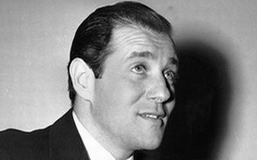
Bugsy Siegel
Murderer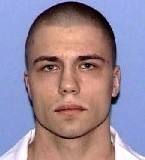 Clinton Lee Young
Murderer · USA
Clinton Lee Young (born July 19, 1983) was convicted of murdering two men in No…
2001 victims
Clinton Lee Young
Murderer · USA
Clinton Lee Young (born July 19, 1983) was convicted of murdering two men in No…
2001 victims
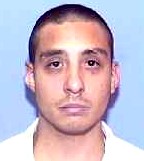 Ivan Abner Cantu
Murderer · USA
Name: Ivan Abner Cantu · TDCJ number: 999399 · Date of birth: 06/14/1973 · Age…
2000 victims
Ivan Abner Cantu
Murderer · USA
Name: Ivan Abner Cantu · TDCJ number: 999399 · Date of birth: 06/14/1973 · Age…
2000 victims
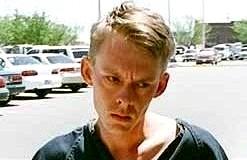 Michael John Yowell
Murderer · USA
Name: Michael John Yowell · TDCJ number: 999334 · Date of birth: 01/25/1970 · P…
1998 victims
Michael John Yowell
Murderer · USA
Name: Michael John Yowell · TDCJ number: 999334 · Date of birth: 01/25/1970 · P…
1998 victims
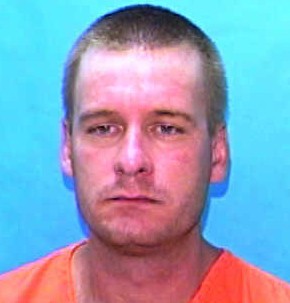 Michael Duane Zack
Murderer · USA
Michael Duane Zack was convicted and sentenced to death for the 06/13/96 murder…
1996 victims
Michael Duane Zack
Murderer · USA
Michael Duane Zack was convicted and sentenced to death for the 06/13/96 murder…
1996 victims
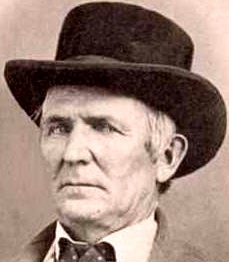 John Doyle Lee
Murderer · USA · 1857
Name: John Doyle Lee Lifespan: September 12, 1812 - March 23, 1877 Legal outcom…
120 victims
John Doyle Lee
Murderer · USA · 1857
Name: John Doyle Lee Lifespan: September 12, 1812 - March 23, 1877 Legal outcom…
120 victims
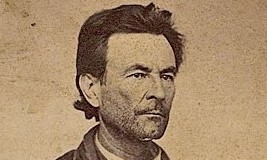 Champ Ferguson
Murderer · USA · 1861
Champ Ferguson was born November 29, 1821 in Clinton County, Kentucky, near the…
100 victims
Champ Ferguson
Murderer · USA · 1861
Champ Ferguson was born November 29, 1821 in Clinton County, Kentucky, near the…
100 victims
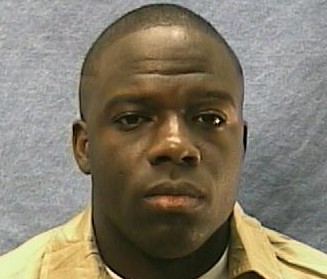 David Cooper
Murderer · USA · 1993
July 18, 1993 — After church, Latasha Goodman and her family had Sunday dinner…
1 victim
David Cooper
Murderer · USA · 1993
July 18, 1993 — After church, Latasha Goodman and her family had Sunday dinner…
1 victim
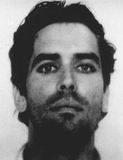 Glen Stewart Godwin
Murderer · USA / Mexico · 1980
August 3, 1980 — Eagle Mountain residents found a blown-up pickup truck with re…
2 victims
Glen Stewart Godwin
Murderer · USA / Mexico · 1980
August 3, 1980 — Eagle Mountain residents found a blown-up pickup truck with re…
2 victims
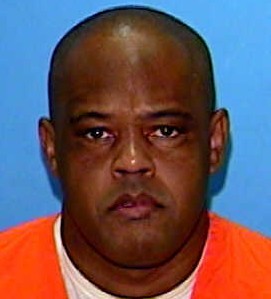 Kayle Barrington Bates
Murderer · 1982
Kayle Barrington Bates was convicted of first-degree murder, kidnapping, armed…
1 victim
Kayle Barrington Bates
Murderer · 1982
Kayle Barrington Bates was convicted of first-degree murder, kidnapping, armed…
1 victim
 Willie Marcel Shannon
Murderer · USA · 1992
Willie Marcel Shannon was convicted of capital murder for the carjacking and ki…
1 victim
Willie Marcel Shannon
Murderer · USA · 1992
Willie Marcel Shannon was convicted of capital murder for the carjacking and ki…
1 victim
- Gender
- male
- Country
- USA
- Location
- New York/New Jersey/California, USA
- Date of birth
- February 28, 1906
- Characteristics
- fugitive, crime spree, armed robbery, rape, murder for hire, domestic dispute, domestic violence
- Victim profile
- Men (members of rival gangs)
- Method of murder
- Shooting
- Date(s) of murder
- 1920s - 1940s
- Years active
- —
- Date of arrest
- —
- Status
-
At large
Shot dead on June 20, 1947 at the Beverly Hills home of his girlfriend, Virginia Hill; no one was charged and the murder remains officially unsolved
Other details
Benjamin “Bugsy” Siegel (February 28, 1906 – June 20, 1947) was an American mobster associated with the Luciano crime family. He was nicknamed “Bugsy.” He was described as handsome and charismatic and became one of the first front-page-celebrity gangsters.
He was described as one of the most “infamous and feared gangsters of his day.” He was also a driving force behind the development of the Las Vegas Strip.
He was one of the founders and leaders of Murder, Incorporated. During Prohibition, he became a bootlegger. After Prohibition was repealed in 1933, he turned to gambling. In 1936, he left New York and moved to California.
Background
Benjamin Siegel was born in 1906 in Williamsburg, Brooklyn, to a poor Jewish family from Letychiv, Podolia Governorate of the Russian Empire, in modern Ukraine. However, other sources stated that his family came from Austria. His parents were Max and Jennie, who constantly worked for meager wages. Siegel was the second of five children. He vowed that he would rise above that life.
As a boy, Siegel dropped out of school and joined a gang on Lafayette Street on the Lower East Side of Manhattan. He committed mainly thefts until he met Moe Sedway.
Siegel developed a protection racket with Moe Sedway where pushcart merchants were forced to pay him a dollar or he would incinerate their merchandise. Siegel had a criminal record that included armed robbery, rape and murder dating back to his teenage years.
During adolescence, Siegel befriended Meyer Lansky, who formed a small mob whose activities expanded to gambling and car theft. Lansky saw a need for Jewish boys in their Brooklyn neighborhood to organize similarly to Italians and Irish. Lansky’s first recruit was Ben Siegel.
Siegel became a bootlegger and was involved in bootlegging within several major East Coast cities. He also worked as the mob’s hitman, whom Lansky would hire out to other crime families.
The two formed the Bugs and Meyer Mob, which handled contracts for the various bootleg gangs operating in New York and New Jersey almost a decade before Murder, Inc. was formed. The gang kept themselves busy hijacking the booze cargoes of rival outfits. The Bugs and Meyer Mob was known to be responsible for the killing and removal of several rival gangdom figures.
Siegel’s gang mates included Abner “Longie” Zwillman, Louis “Lepke” Buchalter, and Lansky’s brother, Jake. “Doc” Stacher recalled to Lansky biographers that Siegel was fearless and saved his friends’ lives as the mob moved into bootlegging:
“Bugsy never hesitated when danger threatened," Stacher told Uri Dan. "While we tried to figure out what the best move was, Bugsy was already shooting. When it came to action there was no one better. I've never known a man who had more guts.”
He was also a boyhood friend to Al Capone. When there was a warrant for Capone’s arrest on a murder charge, Siegel allowed him to hide out with an aunt.
Siegel first smoked opium during his youth and was involved in the drug trade. By age 21, Siegel was making money and flaunted it. He was regarded as handsome with blue eyes and was known to be charismatic and liked by everyone. He bought an apartment at the Waldorf-Astoria Hotel and a Tudor home in Scarsdale. He wore flashy clothes and participated in the night life of New York City.
Marriage and family
On January 28, 1929, Siegel married Esta Krakower, his childhood sweetheart and sister of contract killer Whitey Krakower. They had two daughters.
Siegel had a reputation as a womanizer, and the marriage ended in 1946. His wife moved with their teenage daughters to New York.
The offence
Greenberg murder and related trial
On November 22, 1939, Siegel, Whitey Krakower, Frankie Carbo and Albert Tannenbaum killed Harry “Big Greenie” Greenberg outside of his apartment. Greenberg had threatened to become a police informant, and Lepke Buchalter, boss of Murder, Inc., ordered his killing.
Tannenbaum confessed to the murder and agreed to testify against Siegel. Siegel and Carbo were implicated to have shot and killed Greenberg. Whitey Krakower was killed before he could face trial.
In September 1941, Siegel was tried for the Greenberg murder. The trial gained notoriety because of the preferential treatment Siegel received in jail; he refused to eat prison food and was allowed female visitors. He was also granted leave for dental visits.
Siegel hired attorney Jerry Giesler to defend him. After the deaths of two state witnesses, no additional witnesses came forward. Tannenbaum’s testimony was dismissed. In 1942, Siegel and Carbo were acquitted due to insufficient evidence. Siegel’s reputation was damaged.
During the trial, newspapers revealed his past and referred to him as “Bugsy.” He hated the nickname, said to be based on the slang term “bugs,” meaning “crazy,” used to describe his erratic behavior. He preferred to be called “Ben” or “Mr. Siegel.”
Arrests and other criminal proceedings
Bookmaking arrest
On May 25, 1944, Siegel was arrested for bookmaking. George Raft testified on Siegel’s behalf, and in late 1944, Siegel was acquitted.
Investigation
Murder of Siegel
On the night of June 20, 1947, Siegel was shot dead at the Beverly Hills home of his girlfriend, Virginia Hill. As he sat with his associate Allen Smiley in Virginia Hill’s Beverly Hills home reading the Los Angeles Times, an assailant fired at him through the window with a .30-caliber military M1 carbine, hitting him many times, including twice in the head.
No one was charged with the murder, and the crime remained officially unsolved.
A coroner’s report numbered #37448 stated the cause of death as cerebral hemorrhage. Siegel’s death certificate (Registrar’s #816192) stated the manner of death as a homicide and the cause as “Gunshot Wounds of the head.”
The death scene and postmortem photographs indicated:
- One shot penetrated his right cheek and exited through the left side of his neck.
- The other struck the right bridge of his nose where it met the right eye socket.
- The pressure created by the bullet passing through Siegel’s skull blew his left eye out of its socket.
It was also stated that he was hit by several other bullets including shots through his lungs.
Florabel Muir stated:
“Four of the nine shots fired that night destroyed a white marble statue of Bacchus on a grand piano, and then lodged in the far wall.”
The day after Siegel’s death, the Los Angeles Herald-Express carried a photograph on its front page from the morgue showing Siegel’s bare right foot with a toe tag. It was reported as “Homicide,” with his last name misspelled with the e before the i.
Uncharged, unsolved status
No one was charged with the murder, and the murder remained officially unsolved.
Trial
Greenberg murder trial
Siegel was tried for the Greenberg murder in September 1941. He was acquitted in 1942 due to insufficient evidence.
Sentencing
No sentencing details were provided.
Appeals
No appeal details were provided.
Outcome
Siegel was never convicted of murder. He was acquitted in 1942 for the Greenberg murder and acquitted in late 1944 for bookmaking.
Siegel was shot dead on June 20, 1947 at the Beverly Hills home of his girlfriend, Virginia Hill.
Aftermath
The day after Siegel’s murder, David Berman and his Las Vegas mob associates walked into the Flamingo and took over operation of the hotel and casino.
Timeline
- January 28, 1929 — Siegel married Esta Krakower.
- September 1941 — Siegel was tried for the Greenberg murder.
- 1942 — Siegel and Carbo were acquitted due to insufficient evidence.
- May 25, 1944 — Siegel was arrested for bookmaking.
- Late 1944 — Siegel was acquitted.
- December 26, 1946 — The Flamingo opened.
- March 1, 1947 — The Flamingo reopened with a finished hotel and began turning a profit.
- June 20, 1947 — Siegel was shot dead at the Beverly Hills home of his girlfriend, Virginia Hill.
Other details
Las Vegas and Flamingo
Siegel traveled to Las Vegas, Nevada where he handled and financed some of the original casinos.
He assisted developer William Wilkerson’s Flamingo Hotel after Wilkerson ran out of funds. Siegel took over the project and managed the final stages of construction. The Flamingo opened on December 26, 1946 to poor reception and soon closed. It reopened in March 1947 with a finished hotel.
Three months later, on June 20, 1947, he was shot dead at the Beverly Hills home of his girlfriend, Virginia Hill.
Sportsman lifestyle, disputes, and conduct
In Las Vegas during construction, it was stated that Siegel demanded the finest building that money could buy at a time of postwar shortages. Each bathroom in the 93-room hotel had its own sewer system (cost: $1,150,000); more toilets were ordered than needed (cost: $50,000); because of plumbing alterations, the boiler room was enlarged (cost: $113,000); and Siegel ordered a larger kitchen (cost: $29,000). Problems with dishonest contractors and disgruntled unpaid builders contributed to budget over-runs.
As costs soared, Siegel’s checks began bouncing. By October 1946, the costs were above $4 million. In 1947, the Flamingo cost was over $6 million (around $62,500,000 in today’s money).
The desert’s first air conditioning collapsed regularly. While gambling tables were operating, luxury rooms that would have served as the lure for people to stay and gamble were not ready. After two weeks, the Flamingo’s gaming tables were $275,000 in the red and the entire operation shut down in late January 1947.
After being granted a second chance, Siegel cracked down and did everything possible to turn the Flamingo into a success by making renovations and obtaining good press. He hired future newsman Hank Greenspun as a publicist.
Siegel was described as paranoid and resentful of Wilkerson’s vision. Tom Seward described Siegel as “so jealous of Billy [Wilkerson] it drove him crazy”. Siegel was portrayed as making decisions without Wilkerson’s authority and informing work crews that Wilkerson had put him in charge, ordering changes that conflicted with blueprints. It was stated that when Siegel demanded more involvement, Wilkerson agreed that Siegel would supervise the hotel while Wilkerson retained control of everything else.
On June 20, 1946, Siegel formed the Nevada Project Corporation of California and named himself president. He was also the largest principal stockholder in the operation, defining everyone else merely as shareholders. William Wilkerson was eventually coerced into selling all stakes in the Flamingo under the threat of death and went into hiding in Paris for a time. From that point the Flamingo became syndicate-run.
Siegel reportedly boasted one day that he had personally killed some men. When he saw the panicked look on head contractor Del Webb, he reassured him:
“Del, don't worry, we only kill each other.”
Other associates portrayed Siegel as intense but including a charitable side, including donations for the Damon Runyon Cancer Fund. Lou Wiener Jr., Siegel’s Las Vegas attorney, described him as “very well liked” and “good to people”.
Community and memorials
In the Bialystoker Synagogue on New York’s Lower East Side, Siegel was memorialized by a Yahrtzeit plaque marking his death date so mourners could say Kaddish for the anniversary. His plaque was below Max Siegel’s, his father, who died two months before his son.
On the property at the Flamingo Las Vegas, between the pool and a wedding chapel, is a memorial plaque to Siegel.
Siegel was interred in the Hollywood Forever Cemetery in Hollywood, California.
Popular culture references
Siegel was the basis for the character and personality of the Moe Greene character in Mario Puzo’s novel The Godfather (1969). In the 1972 film adaptation, he was portrayed by Alex Rocco.
Sergio Leone’s film Once Upon a Time in America (1984) was loosely based on the lives of Siegel and Lansky.
In the universe of the case’s retellings:
- He was portrayed by Jonathan Stewart in AMC’s series The Making of the Mob: New York.
- He was portrayed by Michael Zegen in the HBO series Boardwalk Empire.
- He was a central character in Frank Darabont’s television series Mob City, portrayed by Edward Burns.
He was depicted in film and series including Bugsy (1991), Mobsters (1991), The Marrying Man (1991), and others mentioned, alongside additional cultural references including the song “Mr. Siegal” by Tom Waits and fictional parallels in television and novels.
Content preserved from embedded material
A statement in the embedded material described Siegel as having a motive described as “CE/PC,” and it listed:
- AKA: Bugsy
- Sex: M
- Race: W
- Type: N
- Motive: CE/PC
- Date(s): 1920s-40s
- Venue: New York/New Jersey/California
- Victims: “Numerous”
- MO: Psychopathic racketeer; insisted on personal involvement in murders even after elevation to “boss” status
- Disposition: Murdered for embezzling mob money, June 20, 1947.

Spotted an error, or have more information about this case?