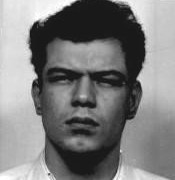
Joe Mario Trevino
Murderer Brian Kevin Rosenfeld
Murderer · USA · 1985
Brian Kevin Rosenfeld Brian Kevin Rosenfeld was sentenced to three concurrent l…
23 victims
Brian Kevin Rosenfeld
Murderer · USA · 1985
Brian Kevin Rosenfeld Brian Kevin Rosenfeld was sentenced to three concurrent l…
23 victims
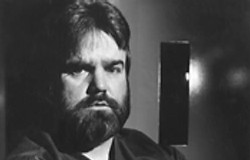 Marvin Gray
Murderer · USA · 1975
Marvin Gray was convicted killer who claimed responsibility for 23 slayings and…
23 victims
Marvin Gray
Murderer · USA · 1975
Marvin Gray was convicted killer who claimed responsibility for 23 slayings and…
23 victims
 Yahweh ben Yahweh
Murderer · USA · 1980
Yahweh ben Yahweh was born and legally named Hulon Mitchell Jr. (October 27, 19…
23 victims
Yahweh ben Yahweh
Murderer · USA · 1980
Yahweh ben Yahweh was born and legally named Hulon Mitchell Jr. (October 27, 19…
23 victims
 Russell Ellwood
Murderer · USA · 1991
Russell Ellwood was a former taxi driver. Authorities suspected him of killing…
20 victims
Russell Ellwood
Murderer · USA · 1991
Russell Ellwood was a former taxi driver. Authorities suspected him of killing…
20 victims
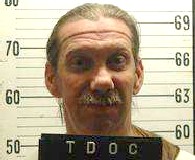 Harold Roy Hester
Murderer · USA · 1999
Harold Roy Hester was convicted in Tennessee of first degree murder, attempted…
1 victim
Harold Roy Hester
Murderer · USA · 1999
Harold Roy Hester was convicted in Tennessee of first degree murder, attempted…
1 victim
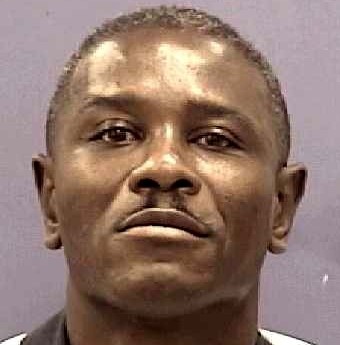 Marcus Wellons
Murderer · USA · 1989
Marcus A. Wellons was convicted of the malice murder and rape of 15-year-old In…
1 victim
Marcus Wellons
Murderer · USA · 1989
Marcus A. Wellons was convicted of the malice murder and rape of 15-year-old In…
1 victim
 Margaret Allen
Murderer · United Kingdom · 1948
Margaret Allen was a cross-dressing lesbian who preferred to be called "Bill" a…
1 victim
Margaret Allen
Murderer · United Kingdom · 1948
Margaret Allen was a cross-dressing lesbian who preferred to be called "Bill" a…
1 victim
- Gender
- male
- Country
- USA
- Location
- Tarrant County, Texas, USA
- Date of birth
- J uly 25, 1962
- Age at first offence
- 21
- Characteristics
- rape, robbery
- Victim profile
- Blanche Miller (female, 80)
- Method of murder
- Strangulation
- Date(s) of murder
- January 17, 1983
- Years active
- 1983
- Date of arrest
- Same day
- Status
-
Executed
Executed by lethal injection in Texas on August 18, 1999
Case overview
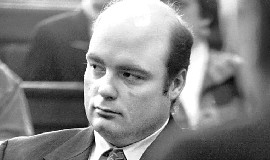
Joe Mario Trevino Jr. was convicted of the rape and murder of Blanche Miller, an 80-year-old grandmother, during a burglary of her home. He was sentenced to death by lethal injection and was executed in Texas on August 18, 1999. Trevino declined to make a last statement and said “No” when asked whether he had a final statement.
Timeline
- January 17, 1983 — Blanche Miller was found dead between 3 and 3:30 p.m. after Trevino broke into her home, strangled her when she tried to call police, and drove away in her car with her jewelry and stereo equipment.
- January 17, 1983 (a few hours later) — Trevino was located and arrested at his residence; Miller’s car and stolen belongings were found at his home.
- December 19, 1985 — Trevino filed his brief in the Court of Criminal Appeals of Texas.
- June 20, 1984 — Jury selection for Trevino’s trial began.
- July 3, 1984 — Trevino’s trial ended; he was sentenced to death by lethal injection.
- 1985 — Trevino filed his initial appeal based on the jury being not ethnically diverse.
- 1991 — The Court of Criminal Appeals did not review the appeal until 1991; Trevino’s appeal was denied in 1994 after proceedings.
- 1994 — Trevino’s appeal was denied.
- December 18, 1983 — Miquel Martinez-Vera was shot to death in Dallas.
- September 24, 1997 — Judge John McBryde denied Trevino’s recusal motion in federal habeas proceedings.
- November 12, 1997 — Judge McBryde denied Trevino’s federal habeas petition.
- December 4, 1997 — Judge McBryde denied Trevino’s request for a certificate of appealability.
- February 19, 1999 — The United States Court of Appeals for the Fifth Circuit affirmed the denial of habeas relief regarding Trevino’s recusal motion and denied a certificate of appealability for other issues.
- August 18, 1999 — Trevino was put to death by lethal injection at 6:17 p.m., eight minutes after the flow of lethal drugs began.
Background
Blanche Miller lived alone in Haltom City near Fort Worth. On the afternoon of January 17, 1983, she was out drying clothes before she walked in on Trevino, who was inside looking for valuables.
Trevino was Hispanic and was tried by an all-white jury in Fort Worth. He was 37 at the time of his execution.
The offence
On January 17, 1983, Trevino broke into Miller’s home. He began loading some of Miller’s belongings into her car when Miller interrupted him. When Miller tried to call the police, Trevino took the phone away from her and strangled her. Trevino then drove away in Miller’s car with some of her jewelry and stereo equipment.
According to Trevino’s confession to police, Miller had already surrendered jewelry and silverware and Trevino was loading his car with stereo equipment when she grabbed a phone to call for help; Trevino said, “I took the phone away from her and went crazy.” Trevino later claimed that his companion, not he, had actually killed Blanche Miller, and he maintained in court that he was only present at the crime scene. Trevino told the story that he stayed outside until he was called to help move things into the car.
Witness and physical evidence was described as linking Trevino to the crime, including body fluids and footprints at the murder scene. A witness who recognized Trevino and saw him at the house notified police. Police found the woman’s stereo at Trevino’s house.
Trevino also stated that he used drugs: he said witnesses had seen he was the lone murderer and he acknowledged drug use in a recent interview on death row. Trevino insisted he was only a lookout and driver for an accomplice who actually killed Ms. Miller, and he said the accomplice later was shot and killed. Trevino said: “I was totally blitzed.” He also said: “I didn’t rape and kill her. That’s the whole thing. I don’t mind dying for my participating in it, but kill me for what I did, not for what I’m accused of doing. I was just the driver.”
Investigation and arrest
Miller’s granddaughter found her body between 3 and 3:30 p.m. the same day. A witness recognized Trevino and saw him at the house and notified police. After police went to Trevino’s house, they found Miller’s stereo. Body fluids and footprints at the murder scene linked Trevino to the crime. Miller’s car and the stolen belongings were also found at Trevino’s home.
Trevino was located and arrested a few hours later at his residence.
Trial
Jury selection for Trevino’s trial began on June 20, 1984. The jury was all-white, and it returned a verdict of guilty. Following sentencing proceedings with two special questions posed by the court, Trevino was sentenced to death by lethal injection.
Before jury selection, Trevino filed a motion seeking to prohibit the State from using peremptory challenges to strike members of a cognizable group. The motion asserted that the State historically and habitually used peremptory challenges to strike black people and other minorities to produce an ethnically pure, all-white jury.
During voir dire, the prosecution used its peremptory challenges to excuse the only black members of the venire. After each peremptory strike, Trevino renewed his motion and asked the court to require reasons for striking the jurors. The trial court stated: “I know of no requirement yet for either party to announce his reasons for exercising a preemptory [sic] challenge. Can you cite me some law on that?” Trevino’s counsel cited McCray v. Abrams and discussed Swain v. Alabama.
Trevino did not confess in court to murdering Blanche Miller and continued to claim he was only present at the crime scene. Trevino requested that a judge not preside over certain appeals proceedings.
Sentencing
The trial court sentenced Trevino to death by lethal injection. The sentencing phase jury instructions were challenged later in federal habeas proceedings, where Trevino argued the jury should have been instructed that it could consider his social history and background, age, immaturity, and other extenuating circumstances. Trevino also objected to an instruction stating: “During your deliberations, you shall not consider or discuss what the effect of your answer to the above issues may be.”
The Texas Court of Criminal Appeals found Trevino’s instruction claim lacked merit and determined the punishment phase jury instruction did not prevent the jury from giving effect to any potentially mitigating testimony. The state court relied on a jury instruction that Trevino could consider all facts shown by the evidence admitted during the full trial.
Appeals and federal habeas proceedings
Texas direct appeal and Batson-related review
Trevino filed his initial appeal in 1985. He argued that the jury who sentenced him was not ethnically diverse. The Court of Criminal Appeals did not review the appeal until 1991. Trevino’s appeal was denied in 1994. Trevino raised equal protection arguments connected to the State’s use of peremptory challenges.
The U.S. Supreme Court decision in Trevino v. Texas (503 U.S. 562) involved Trevino’s equal protection claim regarding peremptory challenges based on race. Trevino sought review under the rule announced in Batson v. Kentucky. The Supreme Court held Trevino was entitled to review under Batson, and it granted certiorari, reversed and remanded. The Supreme Court’s described procedural posture included: “Held: Trevino is entitled to review under the rule announced in Batson.” It stated that Trevino presented his equal protection claim to the trial court and preserved it on appeal when he included an express reference to the Fourteenth Amendment.
The Supreme Court also reproduced Trevino’s pretrial motion, including the request: “The Accused requests of the Court that the State of Texas be prohibited from its use of peremptory challenges to strike prospective jurors merely based on the fact of race.” It also alleged that “The prosecution, the State of Texas, historically and habitually uses its peremptory challenges to strike black people and other minorities who are otherwise qualified” and that these challenges were used “to produce an ethnically pure, all-white, jury.” The motion asserted that the practice deprived the accused of due process and a fair trial and deprived him of a jury representing a fair cross-section of the community in violation of the Sixth Amendment.
The Supreme Court ultimately ruled: “The petition for a writ of certiorari is granted, the judgment of the Court of Criminal Appeals of Texas is reversed, and the case is remanded for further proceedings not inconsistent with this opinion.”
State habeas and federal habeas
Trevino filed a petition for a writ of habeas corpus in the state district court in 1994. The state district court issued proposed findings of fact and conclusions of law, and the Texas Court of Criminal Appeals adopted them in 1996, denying Trevino’s habeas petition. The Supreme Court again denied certiorari.
On June 4, 1997, Trevino filed a federal habeas corpus petition pursuant to 28 U.S.C. 2254 in the Northern District of Texas, with Judge John McBryde presiding. Trevino asked Judge McBryde to recuse himself under 28 U.S.C. 455(a) because his attorney, Art Brender, had been subpoenaed by a special investigatory committee of the Fifth Circuit Judicial Council to testify regarding Judge McBryde.
Judge McBryde denied the recusal motion on September 24, 1997, and later denied the habeas petition on November 12, 1997. On December 4, 1997, Judge McBryde denied Trevino’s request for a certificate of appealability (COA). Trevino timely appealed to the Fifth Circuit.
The Fifth Circuit concluded that Judge McBryde did not abuse his discretion in denying the recusal motion. It denied Trevino leave to appeal all issues relating to his state habeas proceeding and his underlying state-court conviction.
The Fifth Circuit’s discussion described that Brender had been subpoenaed to testify but did not testify at the first evidentiary hearing; he did not testify at the second hearing either. After completion of the McBryde proceedings, the Fifth Circuit Judicial Council issued an order reprimanding Judge McBryde and included certain attorneys on an “Attachment A” list. The order barred Judge McBryde from hearing any cases involving attorneys on the Attachment A list for three years.
The Fifth Circuit stated that the portion of the Judicial Council order barring Judge McBryde from hearing cases involving the Attachment A attorneys did not go into effect until February 9, 1998, after Judge McBryde had already denied Trevino’s habeas petition and COA application.
The majority described the governing standard under 28 U.S.C. 455(a) as objective, referring to whether a reasonable man would harbor doubts about the judge’s impartiality. It concluded that a reasonable person would not harbor doubts about McBryde’s impartiality given the circumstances described.
There was also a dissent by DeMOSS, Circuit Judge, stating that the dissent would not reach the merits because Judge McBryde should have recused himself and citing United States v. Anderson and United States v. Avilez-Reyes. The dissent described concerns that a reasonable person would question impartiality where an attorney was subpoenaed to testify in Judicial Council proceedings and where Judge McBryde’s proceedings led to an order including Brender on a list of attorneys barred from cases for three years.
Claims relating to punishment phase in federal habeas
In the Fifth Circuit’s decision, Trevino’s federal habeas issues regarding his punishment phase included:
- Jury instructions on mitigation and the instruction not to consider the effect of answers to special questions. The Fifth Circuit declined to issue a COA, finding Trevino had not made a substantial showing of denial of a constitutional right.
- Voir dire questioning about youth as a mitigating factor. The Fifth Circuit declined to issue a COA, explaining that Morgan v. Illinois did not require specific questions about individual mitigating factors in the way Trevino sought.
- Alleged failure to disclose documents under Brady v. Maryland regarding Trevino’s upbringing in the possession of Harris County Independent School District, Child Protective Services, and the Texas Youth Council. The Fifth Circuit declined to issue a COA, stating Trevino could not overcome AEDPA deference to state court findings.
- An evidentiary ruling excluding a report prepared by an educational psychologist. The Fifth Circuit declined to issue a COA, stating Trevino argued only that the report was relevant and did not show a substantial and injurious effect on the sentence.
The Fifth Circuit affirmed the decision not to recuse and denied Trevino’s request for a COA on all other issues.
Outcome and execution
Trevino was pronounced dead at 6:17 p.m., eight minutes after the flow of lethal drugs began. When a warden asked whether he had a final statement, Trevino said: “No.” He took couple of gasps and stopped moving.
Trevino declined to make a last statement. His family statement after his death described Blanche Miller as “our mother, grandmother and great-grandmother,” stated her biggest adventure in a week was probably “ladies’ Bible class,” and said she had been in the cemetery “16 1/2 years.” The family also said: “Her family feels that Trevino's death sentence is justified and past due!”
Other details
Trevino had been out of prison four months after serving less than two years of a five-year term for burglary and auto theft in Harris County when he was arrested for killing Blanche Miller.
Trevino’s case was part of an execution schedule described as scheduled for 24 hours after another inmate, Larry Robison, was set to die for another Tarrant County murder. The Texas Court of Criminal Appeals agreed in a 5-4 vote that returned Robison to death row about four hours before he could have gone to the death house gurney. The information also described attention to Gov. George W. Bush’s campaign theme and a proposed one-time 30-day reprieve that was ultimately left to Lt. Gov. Rick Perry due to Bush’s absence out of state.
Rufus Adcock, a former Tarrant County assistant district attorney who prosecuted Trevino, described Trevino’s conduct as “He was pulling a two-bit burglary,” and said Trevino was “back on drugs” and that “That morning he had used both cocaine and heroin.”

Spotted an error, or have more information about this case?