
Eddie Leroy Trice
Murderer Brian Kevin Rosenfeld
Murderer · USA · 1985
Brian Kevin Rosenfeld Brian Kevin Rosenfeld was sentenced to three concurrent l…
23 victims
Brian Kevin Rosenfeld
Murderer · USA · 1985
Brian Kevin Rosenfeld Brian Kevin Rosenfeld was sentenced to three concurrent l…
23 victims
 Yahweh ben Yahweh
Murderer · USA · 1980
Yahweh ben Yahweh was born and legally named Hulon Mitchell Jr. (October 27, 19…
23 victims
Yahweh ben Yahweh
Murderer · USA · 1980
Yahweh ben Yahweh was born and legally named Hulon Mitchell Jr. (October 27, 19…
23 victims
 Russell Ellwood
Murderer · USA · 1991
Russell Ellwood was a former taxi driver. Authorities suspected him of killing…
20 victims
Russell Ellwood
Murderer · USA · 1991
Russell Ellwood was a former taxi driver. Authorities suspected him of killing…
20 victims
 Byron Smith
Murderer · USA · 2012
Byron Smith, 65, was involved in the killings of two teenage intruders in his h…
2 victims
Byron Smith
Murderer · USA · 2012
Byron Smith, 65, was involved in the killings of two teenage intruders in his h…
2 victims
 Troy Kell
Murderer · USA · 1986
Troy Michael Kell was an inmate on death row in Utah. He was born June 13, 1968…
2 victims
Troy Kell
Murderer · USA · 1986
Troy Michael Kell was an inmate on death row in Utah. He was born June 13, 1968…
2 victims
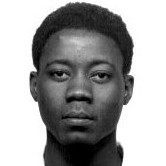 Donald Gene Franklin
Murderer · USA · 1975
Donald Gene Franklin was convicted of capital murder under Tex.Penal Code Ann.…
1 victim
Donald Gene Franklin
Murderer · USA · 1975
Donald Gene Franklin was convicted of capital murder under Tex.Penal Code Ann.…
1 victim
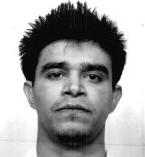 Ramon Montoya Facundo
Murderer · USA · 1983
Jan. 16, 1983 — Ramon Montoya shot and killed a Dallas police officer, Officer…
1 victim
Ramon Montoya Facundo
Murderer · USA · 1983
Jan. 16, 1983 — Ramon Montoya shot and killed a Dallas police officer, Officer…
1 victim
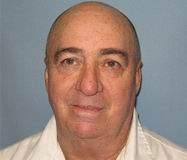 Phillip Hallford
Murderer · USA · 1986
Phillip D. Hallford was convicted of capital murder arising from a murder commi…
1 victim
Phillip Hallford
Murderer · USA · 1986
Phillip D. Hallford was convicted of capital murder arising from a murder commi…
1 victim
- Gender
- male
- Country
- USA
- Location
- Oklahoma County, Oklahoma, USA
- Date of birth
- March 27, 1952
- Age at first offence
- 35
- Characteristics
- rape, robbery
- Victim profile
- Earnestine Jones (female, 84)
- Method of murder
- Beating with nunchucks
- Date(s) of murder
- February 14, 1987
- Years active
- 1987
- Date of arrest
- 4 days after
- Status
-
Executed
Executed by lethal injection on January 9, 2001
Name
Eddie Leroy Trice
Background
Eddie Leroy Trice was an Oklahoma state prisoner sentenced to death for first-degree murder, first-degree rape, first-degree burglary, and assault and battery.
Trice was described as ingesting large amounts of intoxicating spirits prior to the attack, and there were accounts that he spent most of the day drinking with his roommate, Archie Landon, and Landon’s brother Walter. Accounts also described Trice as using PCP on the day of the crimes.
Trice was portrayed during clemency proceedings as having mental health and learning issues. A psychologist, Dr Ray Hand, evaluated Trice and discussed a history of abuse and deprived childhood, learning disabilities, head injuries, limited education, and an IQ score referenced as 79 in 1994 and 92 later. Hand also described Trice as having post traumatic stress disorder (PTSD). During the clemency hearing, attorney Vicki Werneke presented documents that showed Trice had been abused. The hearing included testimony that Trice was raped at age 15 while incarcerated in an adult jail, and that he had a history of alcohol and substance issues. Five of Trice’s relatives attended and four spoke on his behalf. Prayer vigils were held at no less than 12 locations across the state, with 32 people taking part in a prayer vigil outside the gates of the penitentiary in McAlester.
The offence
On Friday, February 13, 1987, Trice spent most of the day drinking with his roommate, Archie Landon, and Landon’s brother Walter. Trice and Landon returned to their apartment between 5:30 and 6:00 p.m., and Landon fell asleep on the couch, not seeing Trice again until early the next morning.
At some point later that evening, Trice left the apartment and drove to a house occupied by Earnestine Jones, an 84-year-old woman, and her 63-year-old, mentally retarded son, Emanuel. Trice parked one block away, walked to the Jones’ house, and entered through a bedroom window on the northwest side of the house.
Once inside, Trice severely beat Earnestine Jones with a set of nunchucks and raped her. The assault caused injuries including a fracture to one of her eye sockets, fractures to both her lower and upper jaw, neck injuries, a crushed rib cage, internal bruises to her heart and lungs, two broken fingers, extensive bruises in the genital area, and scratches in the vaginal canal and cervix area. An autopsy suggested Earnestine Jones likely survived for several hours after the attack, but she ultimately died of multiple blunt force injuries to her head, neck, and chest. Trice’s nunchucks broke during the attack.
Trice also assaulted Emanuel Jones with a hammer, puncturing Emanuel’s right eye, fracturing Emanuel’s right cheekbone, and fracturing Emanuel’s right forearm. Before leaving the Jones’ residence, Trice stole approximately $500 in cash from Emanuel and threatened to kill him if he told anyone what had happened.
Trice returned to his apartment at approximately 1:00 a.m. on Saturday, February 14. Landon observed blood on Trice’s coat and asked what had happened. Trice said he “tore up” his nunchucks “on some homosexual’s head.” Trial Tr. at 635.
Trice and Landon unwrapped the money, with some of it wrapped in pouches and some wrapped in newspaper. Trice removed his clothes, wrapped them in his bloody coat, and left saying he was going to burn them. After Trice returned, Trice and Landon proceeded to Landon’s brother’s apartment, where the three men spent the rest of the night drinking wine and ingesting cocaine purchased with the robbery proceeds.
Investigation
Trice was later arrested and charged in the District Court of Oklahoma County with four counts arising out of his attack on Earnestine and Emanuel Jones:
- one count of first-degree malice aforethought murder
- one count of first-degree rape, after former conviction of two or more felonies
- one count of assault and battery with a dangerous weapon, after former conviction of two or more felonies
- one count of first-degree burglary, after former conviction of two or more felonies
Authorities said Trice entered Jones’ home through a bedroom window on the northwest side of the house, beat Jones with a martial arts weapon called nunchakus or nunchucks, and stole cash.
Testing performed on Trice’s clothes revealed that the blood found thereon was consistent with the blood type of the victim.
A police inspector, Eric Mullenix, reported that Trice was arrested four days after the slaying and later confessed. At trial, Detective Mullenix gave testimony about Trice’s confessions.
Arrest
Trice was arrested at approximately 3:35 a.m. on February 18, 1987.
Trial
Trice was tried before a jury in the District Court of Oklahoma County. The Honorable William Burkett presided at trial, which started on June 8, 1987, and a verdict was returned on June 11, 1987. The case was tried on June 8–12, 1987.
Charges and verdict
At the conclusion of the guilt phase, the jury found Trice guilty of all four counts as charged. Trice was convicted of Murder in the First Degree, Rape in the First Degree, Burglary in the First Degree, and Assault with a Dangerous Weapon.
Sentencing
At the conclusion of the sentencing phase, the jury sentenced Trice to death on the first-degree murder charge and 999 years imprisonment on each of the remaining charges.
The jury was found to have determined the existence of multiple aggravating factors. The proceedings described the jury’s determination that the crime met four aggravating circumstances. It was also described that jurors found the mitigating factors proffered by Trice—including references to a horrific childhood, low IQ, substance abuse, being the victim of homosexual rape, participation in prison programs, and diminished capacity—were outweighed.
Trice was directed to be sentenced to death by lethal injection.
Confessions and interrogation
Detective Michael Burke began interviewing Trice at approximately 6:30 a.m. after Trice was transported to a holding facility at the police station. Burke obtained Trice’s name and address and names of some of Trice’s friends without advising Trice of his rights. Burke also questioned Trice regarding his whereabouts on Friday, February 13, 1987, and asked if he owned shoes recovered by police.
Between approximately 7:30 and 8:00 a.m., Detective Eric Mullenix arrived and began participating in the interview. Mullenix advised Trice of his Miranda rights. Trice said he understood his rights and wished to talk to the detectives.
Trice asked to read an affidavit from Archie Landon and asked Trice’s statement tape to be turned off; Trice then told Mullenix he used to date Geraldine Jones, the daughter of Earnestine Jones and the sister of Emanuel Jones. Trice told Mullenix he had heard that Geraldine’s son, Moses, had been engaged in a homosexual relationship with Emanuel Jones. Trice alleged he went to Emanuel’s house in early morning hours of February 14, 1987, to “whip his ass.” Trial Tr. at 522.
Trice described that Emanuel let him in the house and then slapped him. Trice described that Earnestine Jones came out and began hitting him with a long, white object; Trice said he pulled out his nunchucks and struck Emanuel and Earnestine Jones. Trice stated the fight continued for a while, and he left through a back bedroom window after picking up pants belonging to Emanuel containing money.
After Trice concluded his story, Mullenix asked him if he would be willing to have his statement tape-recorded. Trice agreed but asked to speak first to a “district attorney.” Trial Tr. at 526. Mullenix contacted the DA’s office and arranged for assistant DA Jay Farber to come speak with Trice. Farber told Trice he would look into drug and alcohol rehabilitation programs. Trice then had his statement recorded. At the beginning of the tape recording, Mullenix again advised Trice of his Miranda rights.
After the tape-recorded statement in which he confessed to beatings of both victims, Mullenix asked whether Trice had raped Earnestine Jones. Trice admitted raping her and said he had been drinking wine and ingesting PCP prior to the incident. Mullenix asked if he would agree to have this admission tape-recorded; Trice said he was tired and was not interested.
The trial court conducted an in camera hearing on the details of Trice’s arrest, transport, interview, and confessions. The trial court found that Trice’s confession was voluntarily made, that Trice effectively waived his right to counsel, and that Trice did not ask “for a lawyer.” Trial Tr. at 596.
At trial, the state sought to introduce Trice’s confession to Mullenix, including both tape-recorded and unrecorded portions. The tape-recorded confession was admitted and Detective Mullenix testified about the unrecorded confession to the rape.
Appeals
Direct appeal
Trice appealed to the Oklahoma Court of Criminal Appeals with 22 propositions of error. The Oklahoma Court of Criminal Appeals affirmed Trice’s convictions and death sentence on April 15, 1993. Trice v. State, 853 P.2d 203 (Okla. Crim. App. 1993) (Trice I).
Trice petitioned for certiorari, which was denied by the United States Supreme Court on December 13, 1993. Trice v. Oklahoma, 510 U.S. 1025 (1993).
Trice raised challenges including:
- admission of his confession to Oklahoma City detectives Burke and Mullenix
- comments made by Oklahoma County District Attorney Robert Macy during closing arguments
- jury instructions in the penalty phase, including what the jury was and was not instructed regarding mitigating factors and sentencing procedures
- constitutional challenges to aggravating factors
Confession issues on appeal
The appeal narrative included that Trice claimed he requested counsel; detectives testified to the contrary. It was also described that Oklahoma law placed the burden of proof for voluntariness on the defendant and the district court denied the motion to suppress based on Trice’s failure to establish he requested counsel.
It was described that the state conceded Trice did request to see a “district attorney,” and that the district and criminal appeals courts rejected Trice’s argument that this request should have been treated as an invocation of Miranda rights.
It was also described that Detective Burke questioned Trice about whereabouts on the night of the crime without Miranda warnings, and the statement was suppressed, but the courts concluded that this invalid portion did not taint subsequent post-Miranda interrogation under Oregon v. Elstad, 470 US 298 (1985).
Prosecutorial comments on appeal
The appeal described that the Court of Criminal Appeals rejected Trice’s contentions that District Attorney Robert Macy’s comments included sympathy for the victim, personal opinions, and maligning Trice’s character.
The Court of Criminal Appeals also held Macy’s comments concerning the failure of the defendant to corroborate a claim of diminished capacity were proper.
The federal habeas review narrative lists alleged improper comments made by Macy during closing arguments in both stages, including repeated references to Earnestine Jones as “little-bitty” and “little,” references to Emanuel Jones being mentally retarded and small in stature, referring to February 14 as Valentine’s Day, “He [Trice] asked for mercy, where was mercy on February 14th?”, describing Trice as a “vicious, calculated, cold-blooded killer who preys on little people,” arguing Trice was “vicious, cruel, [and] totally without compassion” and that, “in the face of blood, in the face of hysteria, in the face of pain and screaming can become sexually aroused and perform a sexual act,” arguing, “At that point in her [Ms. Jones'] life, to be violated like that, beaten, and left to die there in her own blood, while he is out snorting cocaine, sleeping in a clean bed every night, three good meals a day, visits from your family; is that adequate punishment? Ain't no way. No way it is.”, “I hate those pictures [i.e., the pictures of Ms. Jones], and I'm not going to show them to you because I don't want to look at them myself.” and, “I think that is about as heinous - I think you know from this evidence that is about as heinous, and atrocious as a crime can be.”, “Ladies and gentleman, I submit to you under the evidence, if ever a man needed to die, he is sitting right there.”, “follow your duty in this case, to make the punishment fit this crime by returning a verdict of death.”, “This man is unique because he is without compassion; he is without human feelings; he is without love for his fellow human beings. Thank God he is different. Because he is different, he sits where he sits.”, and “Ladies and Gentlemen, today, June 12, 1987, ought to be Earnestine Jones' day, because it ought to be the day that this man is brought before the bar of justice and justice is meted out.”
The narrative also quoted a comment by the prosecutor during first-stage argument: “[B]oth Defense and the State have the power of subpoena. If Leroy Trice-if Eddie Leroy Trice was intoxicated that night, where are the witnesses that say he was intoxicated? Surely somebody saw him.”
The Oklahoma Court of Criminal Appeals was described as finding some comments should have been sustained and a jury admonished, including: “[h]e asked you for mercy. Where was mercy on February the 14th?” It also found comments not objected to were reviewed for fundamental error.
Aggravating factors issues on appeal
The appeal described challenges to aggravating factors, including:
- “grave risk of death to another” as overbroad and vague
- “future dangerousness” as vague
- use of the rape and assault conduct as evidence supporting multiple aggravating factors
- “heinous, atrocious, and cruel” factor being struck and considered harmless error
It was described that the cruel, heinous, and atrocious factor was struck from consideration because United States Supreme Court decisions had struck down a similar factor as vague in Maynard v. Cartwright, 486 US 356 (1988). The narrative further described that the Oklahoma Court of Criminal Appeals declared the inclusion of this invalid factor to be harmless error and affirmed the sentence.
Post-conviction relief
Trice filed an application for post conviction relief. The trial court denied it on November 18, 1994, and the Court of Criminal Appeals affirmed on February 29, 1996. Trice v. State, 912 P.2d 349 (Okla. Crim. App. 1996) (Trice II). Certiorari was denied by the United States Supreme Court.
The narrative described issues including ineffective assistance of counsel, with Strickland v. Washington, 466 US 668 (1984) applied. The Court of Criminal Appeals summarily denied claims that the result on direct appeal would have been different due to counsel’s unartful presentation and affirmed that certain trial counsel decisions were strategic choices.
Federal habeas corpus
Trice filed a petition for a writ of habeas corpus with the United States District Court for the Western District of Oklahoma. Relief was denied, and the decision was affirmed. The United States Court of Appeals for the Tenth Circuit (before Kelly, PJ, and Briscoe and Lucero, JJ) rendered a decision on November 15, 1999, with certiorari pending. The case cited was Eddie Leroy Trice v. Ron Ward, Warden, Oklahoma State Penitentiary.
Execution and clemency
The Oklahoma Court of Criminal Appeals set January execution dates for multiple death row inmates. Trice’s scheduled execution date was January 9, 2001.
A clemency hearing occurred on Thursday, November 2, 2000. The Oklahoma Pardon and Parole Board voted 4-0 to deny clemency. Attorney Vicki Werneke represented Trice. Dr Ray Hand testified as an Oklahoma psychologist who had evaluated Trice. Five of Trice’s relatives attended the hearing and four spoke on his behalf. The hearing included testimony that Trice had been abused, had completed Bible correspondence courses while on death row, had grown up abused and deprived, and had experienced physical and sexual abuse throughout his life, including that he was raped at age 15 in an adult jail. Hand also described PTSD and the impact of structure in prison settings.
On Tuesday, January 9, 2001, Trice was executed via lethal injection at Oklahoma State Penitentiary in McAlester. He was pronounced dead at 9:15 p.m. just before the execution was reported as expected to go forward, with Attorney General Drew Edmondson stating that no appeals were pending on Trice’s behalf.
Outcome
Trice’s judgment of conviction and death sentence was upheld through direct appeal and post conviction proceedings, and federal habeas relief was denied. The scheduled execution proceeded on January 9, 2001.

Spotted an error, or have more information about this case?