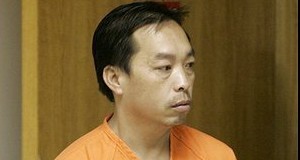
Chai Soua Vang
Mass murderer Gameel Al-Batouti
Mass murderer · USA · 1999
Gameel Al-Batouti (also rendered “Gamil ElBatouty” or “El Batouty” in U.S. offi…
216 victims
Gameel Al-Batouti
Mass murderer · USA · 1999
Gameel Al-Batouti (also rendered “Gamil ElBatouty” or “El Batouty” in U.S. offi…
216 victims
 Timothy McVeigh
Mass murderer · USA · 1995
Timothy James McVeigh (April 23, 1968 – June 11, 2001) was a United States Army…
168 victims
Timothy McVeigh
Mass murderer · USA · 1995
Timothy James McVeigh (April 23, 1968 – June 11, 2001) was a United States Army…
168 victims
 Seung-Hui Cho
Mass murderer · USA · 2007
Seung-Hui Cho was a mass murderer who shot and killed 32 people and wounded man…
32 victims
Seung-Hui Cho
Mass murderer · USA · 2007
Seung-Hui Cho was a mass murderer who shot and killed 32 people and wounded man…
32 victims
 Adam Lanza
Mass murderer · USA · 2012
Adam Lanza, 20, fatally shot twenty children and six adult staff members in a m…
27 victims
Adam Lanza
Mass murderer · USA · 2012
Adam Lanza, 20, fatally shot twenty children and six adult staff members in a m…
27 victims
 Eric Harris
Mass murderer · USA · 1999
Eric Harris committed suicide by gunshot to the roof of the mouth on April 20,…
13 victims
Eric Harris
Mass murderer · USA · 1999
Eric Harris committed suicide by gunshot to the roof of the mouth on April 20,…
13 victims
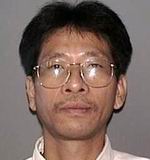 Jiverly Wong
Mass murderer · USA · 2009
December 8, 1967 — Jiverly Antares Wong was born. · late 1980s — Wong first cam…
13 victims
Jiverly Wong
Mass murderer · USA · 2009
December 8, 1967 — Jiverly Antares Wong was born. · late 1980s — Wong first cam…
13 victims
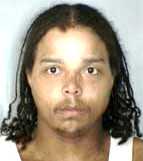 James Cooke
Murderer · USA · 2005
James Cooke (James E. Cooke, Jr.; James Edward Cooke) James E. Cooke, Jr. was b…
1 victim
James Cooke
Murderer · USA · 2005
James Cooke (James E. Cooke, Jr.; James Edward Cooke) James E. Cooke, Jr. was b…
1 victim
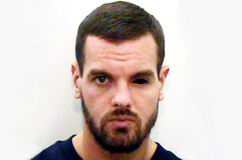 Dale Cregan
Murderer · United Kingdom · 2012
Dale Christopher Cregan (born 6 June 1983) was convicted in the United Kingdom…
4 victims
Dale Cregan
Murderer · United Kingdom · 2012
Dale Christopher Cregan (born 6 June 1983) was convicted in the United Kingdom…
4 victims
 Rhonda Glover
Murderer · USA · 2004
Rhonda Glover was tried and convicted for the murder of her on-again, off-again…
1 victim
Rhonda Glover
Murderer · USA · 2004
Rhonda Glover was tried and convicted for the murder of her on-again, off-again…
1 victim
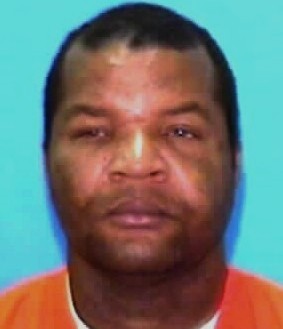 Harry Butler
Murderer · 1997
03/13/97 — Date of offense: Harry Butler was convicted and sentenced to death f…
1 victim
Harry Butler
Murderer · 1997
03/13/97 — Date of offense: Harry Butler was convicted and sentenced to death f…
1 victim
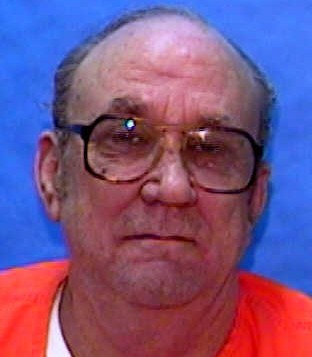 Eddie Lee Sexton
Murderer · USA · 1993
November 2, 1994 — Eddie Lee Sexton was sentenced to death. · 1993 — Eddie Lee…
2 victims
Eddie Lee Sexton
Murderer · USA · 1993
November 2, 1994 — Eddie Lee Sexton was sentenced to death. · 1993 — Eddie Lee…
2 victims
- Gender
- male
- Country
- USA
- Location
- Birchwood, Wisconsin, USA
- Date of birth
- September 24, 1968
- Age at first offence
- 36
- Characteristics
- domestic violence
- Victim profile
- Robert Crotteau, 42; Joey Crotteau, 20; Allan Laski, 43; Mark Roidt, 28; Jessica Willers, 27; and Denny Drew, 55 ( deer hunters )
- Method of murder
- Shooting ( Saiga rifle)
- Date(s) of murder
- November 21, 2004
- Years active
- 2004
- Date of arrest
- Same day
- Status
-
Life imprisonment
Sentenced to six consecutive life terms plus seventy years on November 8, 2005
Case overview
Chai Soua Vang (born September 24, 1968) shot several deer hunters in northern Wisconsin on November 21, 2004. He was held at Iowa State Penitentiary. Vang was found guilty of all six charges of first degree murder and two charges of attempted murder by a jury of eight women and four men. On November 8, 2005, he was sentenced to six consecutive life terms plus seventy years.
Vang acknowledged shooting the hunters before conviction, but challenged the chain of events that caused a dispute over a deer stand to become violent and how it escalated into multiple deaths. The conflict began during an interaction in which a hunter asked Vang to leave private land where he had taken a position in a deer stand. The events after confrontation were under dispute.
Timeline
- September 24, 1968 — Chai Soua Vang was born in a mountainous region in Sayaboury Province of northwest Laos.
- 1975 — His family moved to a city in Thailand and then to a refugee camp after his father helped U.S. forces block the Ho Chi Minh Trail during the Vietnam War.
- 1980 — His family emigrated to St. Paul, where he and his older sister delivered Pioneer Press newspapers before school.
- 1983-84 — Vang attended Humboldt High School in St. Paul.
- 1985 — His family moved to Stockton, California; he attended Benjamin Franklin High School and founded the Hmong Club, becoming its first president.
- 1989 — He was at U.S. Army Basic Training at Fort Sam Houston, Texas, aimed at 40 targets, hit between 30 and 35, earned a sharpshooter badge, and joined the California National Guard for six years.
- 1990-1995 — He worked as a teacher’s aide for disabled students, volunteered at a Lao Family Community Center, and became a truck driver, criss-crossing 48 states.
- 1999 — His family returned to St. Paul for better jobs and a lower cost of living.
- October 10, 2000 — His father died.
- December 24, 2001 — Police responded to a 911 call from his wife, Say Xiong, and he spent Christmas in jail.
- April 29, 2001 — He paid a $328 fine in Hennepin County for catching 93 crappies over the fishing limit.
- April 7, 2002 — He was fined $244 in Green Lake County, Wisconsin, for trespassing while deer hunting.
- April 30, 2003 — He defaulted on child support payments for three children of Youa Lee in Stockton.
- October 20, 2003 — He put down $5,000 in cash and agreed to pay $1,260 a month in a contract-for-deed deal on 40 acres of wooded land in Kanabec County between Mora and Hinckley, near Brook Park.
- September 14, 2004 — He took a second job driving a delivery truck for Number 1 Couriers in Edina.
- October 6, 2004 — His “new wife,” Deu Khang, gave birth to his daughter.
- November 21, 2004 — During deer hunting, Vang’s confrontation with hunters escalated into multiple shootings; six hunters died and two were wounded.
- November 24, 2004 — He was placed in custody of the Sawyer County Jail.
- November 8, 2005 — He was sentenced to six consecutive life terms plus seventy years.
- September 10, 2005 — His trial began in Sawyer County Courthouse.
- September 16, 2005 — The conviction date given in the record appeared as “On September 16, 2005”.
Background
Chai Soua Vang was a hunter and a Hmong immigrant from Laos who lived in St. Paul, Minnesota at the time of the shootings. He was a naturalized U.S. citizen. He enlisted in the California National Guard and later worked as a truck driver. He lived with his family shaman work and participated in hunting.
Vang was described as a father of six children and as a family shaman and hunting enthusiast. He was said to be the father of seven children in the sentencing coverage. Another portion of the material stated that records suggested he had 10 children with four women.
Family and early life
Vang was born in 1968 in northwest Laos. His father, Cher Vang, was described as an infantry soldier who helped U.S. His family moved to a city in Thailand and then to a refugee camp after the father’s involvement during the Vietnam War. In 1980 the family emigrated to St. Paul. In 1985 they moved to Stockton, California.
Military experience
Vang’s military experience included six years in the California National Guard from 1989 to 1995 and a sharpshooter qualification badge (mid-level, above “marksman,”) and a Good Conduct medal.
The offence
Setting and confrontation
The shootings occurred on November 21, 2004. Vang went deer hunting with two friends and their two sons in northwest Wisconsin near the town of Meteor and east of Birchwood. In the region there was a mix of public and private land. The material stated that Vang and his friends began their day on public land but he later went onto a private 400 acre (1.6 km²) tract of land.
A hunting party of about 15 people was in a cabin on this private land. The property was co-owned by Robert Crotteau and Terry Willers. One person, Terry Willers, left the cabin and saw Vang sitting in a deer stand. Terry Willers used a handheld radio to ask the people still in the cabin whether anyone should be in the stand, and upon receiving a negative response he began to approach Vang and called to him to leave the private land.
Terry Willers asked directions, and after that Vang walked away towards a trail through a forested area of the property. Vang was confronted at that point by five of the hunters from the cabin who had heard Terry Willers’ radio message. The material included a note that the area in question did not contain sign denoting private property.
Dispute over what happened next
The events after the confrontation were described as under dispute. The material stated that the aggressor of the event would only be known by Willers, Hesebeck, and Vang. It also stated that four of the eight injured hunters were shot in the back, and three of these four were hit by multiple rounds. Terry Willers radioed the cabin and said they had been shot. The others came out to provide assistance, some riding on all-terrain vehicles.
The material stated that Vang proceeded to shoot more of the hunters. Within a short period, five hunters were dead and three more were wounded. Vang then disappeared into the woods. It was believed that he fired about 20 rounds from a Saiga rifle chambered in 7.62x39 with serial number HO-3104079.
Victim outcome during and immediately after
One of the wounded hunters died the next day, bringing the toll to six dead and two wounded. The material also stated that during the day one wounded hunter improved enough to be flown by helicopter from Rice Lake to a trauma center in Marshfield, Wisconsin, but he died soon after.
Investigation
Conflicting accounts and self-defense claim
There were conflicting reports about what led to the shootings. In oral statements by Vang, one of the local hunters, Terry Willers, took the first shot at him from about 100 feet (30 m) away and therefore the shootings were in self-defense.
The material stated that no shell casing was ever recovered from Willer’s gun even though during trial Hesebeck admitted to firing a single shot. It also stated that Hesebeck testified that no shot was ever fired and that additional forensic analysis of Willer’s gun was not performed by local law enforcement.
Vang claimed that race may have been a factor and alleged that during the verbal dispute some hunters yelled racial slurs at him including “chink” and “gook”. On the stand, Hesebeck admitted that Robert Crotteau had called Vang a “Hmong a--hole.” Hesebeck also admitted that he told law enforcement that Robert Crotteau had problems with trespassers in the past, specifically citing Hmong hunters.
The term “Mud Duck” was described as a common reference to Minnesota residents used often in Western Wisconsin, similar to “Cheesehead.” The material stated that the term was used to describe Chai Vang as being from Minnesota, that it had no racial connotation, and that the defense made a claim of racial connotation. The word was used when Willers radioed back to the cabin. It was stated that it was unknown how during the altercation they concluded Vang was from Minnesota.
Prior history referenced in the material
The material stated that Vang had a history of domestic violence. It also stated that the criminal complaint stated Vang shot four victims in the back and that Vang himself admitted he shot one victim in the back, which the prosecutor’s office claimed did not help self-defense.
Communications and lead-up to apprehension
Terry Willers radioed that they had been shot. Sawyer County Sheriff James Meier gave an account that as Willers radioed for help, Vang opened fire on others, that the rescuers checked bodies for signs of life, and that they grabbed who they could and got out because they were still under fire. Police said Vang was captured several hours later when two hunters encountered him wandering lost and that they took him to a game warden.
The material stated that Vang’s hunting license number was noted in dust of an ATV and relayed to authorities, who issued a bulletin as survivors were taken to hospitals.
Arrest and custody
Vang was apprehended about five hours after the shootings and placed in custody of the Sawyer County Jail on November 24, 2004. His bail was set for $2.5 million.
Trial
Jury selection and sequestration
The trial of Chai Soua Vang began Saturday, September 10, 2005, in Sawyer County Courthouse. Fourteen jurors (10 women and four men) were selected from Dane County, Wisconsin, and bussed about 280 miles northwest to Sawyer County, where they were sequestered.
Vang’s testimony and statements
Vang told the jury he feared for his life and began firing only after another hunter’s shot nearly hit him. He detailed how the other hunters approached him and how he responded by shooting at each one. He said he shot two victims in the back because they were “disrespectful.” He recounted, “with clarity,” how he killed each victim.
While on the stand, he stated, “(he wished) it wasn’t happening”. Wisconsin Attorney General Peg Lautenschlager asked: “Did Mr. Crotteau deserve to die?” Vang replied: “Yes,” Chai Soua Vang replied.
Vang further testified that Joseph Crotteau deserved to die “because he accused me of giving him the finger and tried to cut in front of me to stop me from leaving.” Vang said Laski deserved to die because he had a gun.
Vang re-enacted his deeds on the stand using his hands and arms to imitate motions of firing a rifle. The material stated that Vang’s lawyers commented that some of his seemingly abnormal remarks were due possibly to the language barrier.
Sentencing
On November 8, 2005, Judge Norman Yackel ordered Vang to serve six life prison terms, one after the other, guaranteeing he would never be freed from prison. The sentencing material stated that in addition to mandatory life terms for the murder convictions, he received a total of seventy years (with figures given as “40 for two counts of attempted murder plus five additional years for each count of murder in the first degree” in the main sentencing statement).
The sentencing narrative stated that Wisconsin does not have the death penalty.
Judge Norman Yackel described Vang as a “time bomb ready to go off” at the slightest provocation and stated: “These crimes are not isolated acts, but a pattern of anti-social conduct,” (as quoted in the sentencing coverage).
Attorney General Peg Lautenschlager sought the maximum sentence and argued that Vang would kill again unless locked up for the rest of his life, referring to his “explosive temperament” and lack of true remorse or regret. Vang addressed the victims’ families in court Tuesday but did not apologize. He said: “I understand your anger, your frustration, your grief.”
The material stated that Vang was convicted on six counts of first-degree intentional homicide and three counts of attempted homicide, with homicide charges carrying a mandatory sentence of life in prison. It also stated that Yackel could have set a parole eligibility date but ordered consecutive life terms. The material further stated that he sentenced Vang to three concurrent terms of 40 years in prison on the attempted homicide charges, and that he was 37 years old at sentencing in one sentencing account and 36 in another.
Appeals
No appeals content was present in the provided material.
Outcome
The jury convicted Chai Soua Vang of all six charges of first degree murder and two charges of attempted murder. He was sentenced to six consecutive life terms plus seventy years on November 8, 2005.
Victims
The victims were described as part of a group about 15 people making their annual opening-weekend trip to the 400 acre (1.6 km²) property co-owned by Robert Crotteau and Terry Willers.
Those who were killed
- Robert Crotteau (42) — owned a concrete business in Rice Lake; married with 3 children; shot once in the back.
- Joey Crotteau (20) — Robert’s son and partner; shot 4 times in the back.
- Allan Laski (43) — manager of a Rice Lake area lumber yard; married with 3 children; shot in the back 3 times.
- Mark Roidt (28) — a friend of the Drew family; shot once in the head.
- Jessica Willers (27) — a nurse from Rice Lake who had moved to Green Bay; engaged; shot in the back twice.
- Denny Drew (55) — a car salesman in Rice Lake; shot once through the stomach and died in the hospital.
Those who were wounded
- Lauren Hesebeck (48) — manager at a car dealership in Rice Lake; Drew was his brother-in-law; shot once through the shoulder, exiting the back.
- Terry Willers (47) — father of Jessica Willers; worked in Crotteaus’ concrete business; shot once in the neck.
Other details
Weapons and ammunition referenced
The material stated that Vang fired from a Saiga rifle chambered in 7.62x39 with serial number HO-3104079. It also stated that he had an SKS rifle.
A 20-round clip and mention of “emptying” it within 15 minutes were included in the account given by Sawyer County Sheriff James Meier. The material stated that Vang ran out of bullets and fled.
Bystander and community descriptions
The material described the shooting incident as attracting nationwide attention and sparking controversy. It described a dispute in which some residents discussed discrimination against Hmong and some argued that the focus of news reports was on potential discrimination instead of the victims’ suffering.
It also stated that bumper stickers circulated with the title “Save a Deer, Shoot a Hmong” and compared it to the controversial “Save a Walleye. Spear a Indian” campaign at Rice Lake.
The material included accusations of racism and claims that either Vang or the white shooting victims was the target of hate crime. It listed incidents attributed to crimes toward the Hmong community due to the events:
- Possible arson destroying a former home owned by Chai Soua Vang.
- Spray paint of “killer” on 3 Hmong homes in Menominee.
- Hate literature showing up in a Hmong neighborhood in St. Paul.
Relations and personal life details included in the material
The material stated that Vang married as teenagers in a ceremony arranged by families to Say Xiong. It said Xiong had grown tired of his long truck-driving absences. It stated that after the breakup, Xiong lived in Milwaukee with five of Chai’s children.
The material stated that after the breakup Xiong had a short-term relationship with a woman named Zia Yang that produced a baby named Ka Bao in May 2003, according to state Health Department birth records.
It stated that about a year before the shootings Vang began courting Deu Lee Khang, and family said they were married in a Hmong ceremony not recognized by state authorities. It stated that Khang bought land adjoining Vang’s near Mora and that their daughter was born two months before the shootings in a Maplewood hospital.
Prior conduct referenced in the material
The material stated that on Christmas Eve of 2001, Minneapolis police responded to a 911 call from two screaming women and Vang explained that he “got out of hand” during an argument with his longtime wife, Say Xiong, about impending breakup. It said he admitted to waving a handgun and threatening to kill his wife and that after spending Christmas in jail he was released and no charges were filed.
The material stated that documents showed Vang defaulted on child support for three children of Youa Lee, with ages 8, 5, and 2. It also described hunting and fishing violations including:
- A 2001 fine of $328 for possessing 93 crappies over the fishing limit.
- A 2002 trespassing ticket in Green Lake County; when he failed to appear in court or pay, an arrest warrant was issued.
- A prior incident in which his hunting and fishing authorities had “run-ins” as described.
Shaman rituals referenced
The material stated that about five years before the shootings Vang began performing shaman rituals, according to Xiong. It described the claim that Hmong shamans had special gifts including speaking to those “on the other side,” curing ailments, and seeing into the future during trance-like rituals. It included a quoted description:
- Xiong said through an interpreter: “He has an altar and a special bench and jumps up and down and sends messages back and forth in a different language.” It also included:
- Xiong said: “He would always spend about an hour talking to the family and explaining what he would do and what it meant. I would hold him and make sure he didn't fall.”
The material stated that Xiong bumped into Vang three weeks before the Wisconsin shooting at a funeral in Maplewood. Xiong said Vang had a “very decent haircut, nice clothes and was very friendly and seemed as stable a person as ever.”
Threats and fears described for family
The material stated that Vang’s family left their home in St. Paul fearing a backlash. Mai Vang had received calls threatening Chai Vang’s family.
Ber Xiong was quoted saying: “It's all so hard to understand,” and that he wondered “what triggered a perfectly decent person to become involved in such a tragedy.”
Quotes attributed to family members and other named people
- Nou Cher Vang, 77, said: “I cannot hold my tears.”
- Nou Cher Vang said: “I had hoped he would bury me.”
- Nou Cher Vang said: “I don't want to eat or drink because I feel so emotional. I don't know what to do. He is locked up. I don't have money, no transportation. Now if I die, I would die like an animal; no one is going to pray for me.”
- Nou Cher Vang said: “What I believe, in my heart, this person is decent.”
- Nou Cher Vang said he would ask: “Why did you do that? I am your grandfather.”
- Nou Cher Vang said: “I would shout at him: `Why did you do that?' ”
- Long Vang said: “We'd play soldier and we'd use bamboo to make a gun.”
- Long Vang said: “We'd hide in the bush and go bang, bang, bang.”
- Chue Vang said: “He used to be a role model.”
- Chue Vang said: “He was a mentor for us at the time.”
- Pao Vang said: “A bunch of young people tried to attack me and my friends.”
- Pao Vang said: “He said: `We don't believe in violence.' He's just a laid-back person.”
- Chue Vang said: “We are devastated at what happened,”
- Chue Vang said: “I wouldn't expect it to happen to Chai. He seemed to be a reasonable person. It makes us all look bad - but we really don't know what happened other than it has a negative impact on the Hmong community.”
- Bee Vang, who was not related to Chai, said: “I was totally shocked when I saw it on the news. I couldn't believe it happened. He was a very reasonable guy. Even in high school, he was the most mature Hmong student.”
- Bee Vang said: “He just had a big heart for the community,”
- Mai Vang said through an interpreter: “He and Mai were together all the time,” and “He always shared what he had with me,” and “Ever since we had our own families and didn't have a chance to come and visit one another, he would always take the time to call and see how I was doing.”
- Mai Vang said: “We understand the pain and hardship of the families that have lost loved ones,” and “We know it is very hard for them. But it is very hard for us as well to process all this pain and heartache.”
- Mai Vang said: “We send our condolences to the families, and all I can do is ask God to be with us all.”
- Mai Vang said Vang told her: “He told me a man started yelling at him and called his friends on a walkie-talkie and they surrounded him,” and “They yelled and scolded him and cursed him racially.”
- Mai Vang said Vang told her: “He told me a bullet flew by his head and if he hadn't turned around, it would have hit him in the back of the head,”
- Mai Vang said: “That's why he took his gun and shot it.”
- Mai Vang said she asked why he didn’t then leave and Vang said: “He said there were just too many people and he had to do what he did to survive,” and “All I know is that he is a very good brother and he would not just want to kill anyone.”
- Vang was quoted in the sentencing narrative as telling the victims’ families: “I understand your anger, your frustration, your grief,”
Additional details about other named people in the material
- Joe Bee Xiong, 44, was described as director of the Eau Claire Area Hmong Mutual Assistance Association and a former Eau Claire City Council member.
- Xiong was quoted saying: “To think that he shot so many people makes me think maybe something that we don't know about happened,” and “Once in a while when I'd hunt I'd meet non-Hmong who would say things to me, but I speak English well and I know the laws, so I would explain myself and walk away from the situation.”
- Mark Miller was quoted as saying: “It's just bizarre,” and “It's worse when you know them. I knew Bobby pretty good.”
- Patricia Willers, described as an operating room nurse, was named.
- Lynn D. Koob was named as a Rice Lake surgeon who tended to Drew and saw him onto the helicopter.
- Richard Kern, Richard Kern’s two friends, and Mark Roidt were named.
- Kern was quoted saying: “Thanksgiving isn't Thanksgiving. It's when deer hunting starts,” and “Most of the people around here have been hunting since they were 12. It's just something we do.”
- Richard Kern was quoted saying: “Thanksgiving isn't Thanksgiving. It's just something we do.”
Custody and incarceration location
The material stated that Vang was held at Iowa State Penitentiary.
Spotted an error, or have more information about this case?