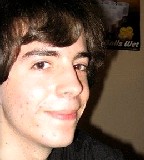
Adam Lanza
Mass murderer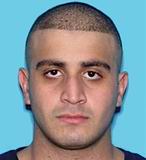 Omar Mateen
Mass murderer · USA · 2016
Omar Mir Seddique Mateen was an American mass murderer who killed 49 people and…
49 victims
Omar Mateen
Mass murderer · USA · 2016
Omar Mir Seddique Mateen was an American mass murderer who killed 49 people and…
49 victims
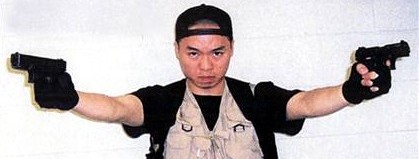 Seung-Hui Cho
Mass murderer · USA · 2007
Seung-Hui Cho was a mass murderer who shot and killed 32 people and wounded man…
32 victims
Seung-Hui Cho
Mass murderer · USA · 2007
Seung-Hui Cho was a mass murderer who shot and killed 32 people and wounded man…
32 victims
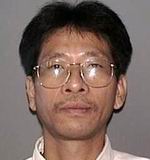 Jiverly Wong
Mass murderer · USA · 2009
December 8, 1967 — Jiverly Antares Wong was born. · late 1980s — Wong first cam…
13 victims
Jiverly Wong
Mass murderer · USA · 2009
December 8, 1967 — Jiverly Antares Wong was born. · late 1980s — Wong first cam…
13 victims
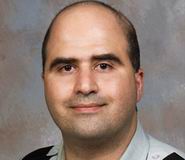 Nidal Hasan
Mass murderer · USA · 2009
Nidal Malik Hasan (born September 8, 1970) was a former United States Army Medi…
13 victims
Nidal Hasan
Mass murderer · USA · 2009
Nidal Malik Hasan (born September 8, 1970) was a former United States Army Medi…
13 victims
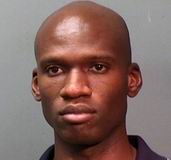 Aaron Alexis
Mass murderer · USA · 2013
Aaron Alexis was a lone gunman who carried out a mass shooting at the headquart…
12 victims
Aaron Alexis
Mass murderer · USA · 2013
Aaron Alexis was a lone gunman who carried out a mass shooting at the headquart…
12 victims
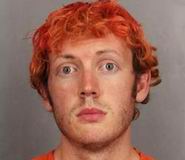 James Holmes
Mass murderer · USA · 2012
James Eagan Holmes (born December 13, 1987) was the admitted perpetrator of a m…
12 victims
James Holmes
Mass murderer · USA · 2012
James Eagan Holmes (born December 13, 1987) was the admitted perpetrator of a m…
12 victims
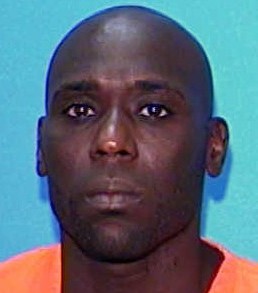 William Earl Sweet
Murderer · USA · 1990
William Earl Sweet was sentenced to death on August 30, 1991. The case was in t…
2 victims
William Earl Sweet
Murderer · USA · 1990
William Earl Sweet was sentenced to death on August 30, 1991. The case was in t…
2 victims
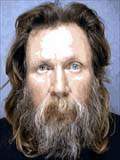 Brian Alpress Hunt
Murderer · USA · 1992
Brian Alpress Hunt (defendant; homeless drifter; 49-year-old at the time of the…
2 victims
Brian Alpress Hunt
Murderer · USA · 1992
Brian Alpress Hunt (defendant; homeless drifter; 49-year-old at the time of the…
2 victims
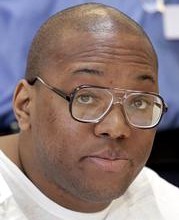 Terrick Nooner
Murderer · USA · 1993
Terrick Nooner was sentenced to death on September 28, 1993. At approximately 1…
1 victim
Terrick Nooner
Murderer · USA · 1993
Terrick Nooner was sentenced to death on September 28, 1993. At approximately 1…
1 victim
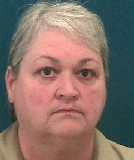 Martha Ann Johnson
Murderer · USA · 1977
Martha Ann Johnson (also known as Martha Ann Bowen) was an American serial kill…
4 victims
Martha Ann Johnson
Murderer · USA · 1977
Martha Ann Johnson (also known as Martha Ann Bowen) was an American serial kill…
4 victims
- Gender
- male
- Country
- USA
- Location
- Newtown, Fairfield County, Connecticut , USA
- Date of birth
- April 22, 1992
- Age at first offence
- 20
- Characteristics
- school shooting
- Victim profile
- Nancy Lanza , 52, his mother / Rachel D'Avino , 29, teacher's aide / Dawn Hochsprung , 47, principal / Anne Marie Murphy , 52, teacher's aide / Lauren Rousseau , 30, teacher / Mary Sherlach , 56, school psychologist / Victoria Leigh Soto , 27, teacher / Charlotte Bacon , 6 / Daniel Barden , 7 / Olivia Engel , 6 / Josephine Gay , 7 / Dylan Hockley , 6 / Madeleine Hsu , 6 / Catherine Hubbard , 6 / Chase Kowalski , 7 / Jesse Lewis , 6 / Ana Marquez-Greene , 6 / James Mattioli , 6 / Grace McDonnell , 7 / Emilie Parker , 6 / Jack Pinto , 6 / Noah Pozner , 6 / Caroline Previdi , 6 / Jessica Rekos , 6 / Avielle Richman , 6 / Benjamin Wheeler , 6 / Allison Wyatt , 6
- Method of murder
- Shooting
- Date(s) of murder
- December 14, 2012
- Years active
- 2012
- Date of arrest
- —
- Status
-
Died in custody
Committed suicide by shooting himself in the head as first responders arrived
Case details
Adam Lanza, 20, fatally shot twenty children and six adult staff members in a mass murder at Sandy Hook Elementary School in the village of Sandy Hook in Newtown, Connecticut. Before driving to the school, Lanza shot and killed his mother, Nancy Lanza, at their Newtown home. As first responders arrived, he committed suicide by shooting himself in the head.
Timeline
- December 14, 2012 — Adam Lanza fatally shot his mother, Nancy Lanza, at their Newtown home using a .22 Marlin rifle; he then drove to Sandy Hook Elementary School and shot his way through a locked glass door at about 9:35 a.m. using his mother’s Bushmaster XM-15 rifle.
- December 14, 2012 — Newtown police dispatch requested officers on the scene at 9:35 a.m.; Connecticut State Police received the first call at 9:41 a.m.
- December 14, 2012 — Lanza stopped shooting between 9:46 a.m. and 9:49 a.m. after firing 154 rounds with the rifle; after being spotted by a pair of police officers inside the building, Lanza fled from their sight and then fatally shot himself in the head with a Glock 10mm handgun in Soto’s classroom.
- December 14, 2012 — According to a transcript of police radio traffic, Lanza committed suicide within fifteen minutes of the first 911 call being received.
- December 14, 2012 — At approximately 10:00 a.m., Danbury Hospital scrambled extra medical personnel; two children were later declared dead; the other was an unidentified adult.
- December 15, 2012 — At a press conference, Dr. H. Wayne Carver II, the Chief Medical Examiner of Connecticut, was asked about the wounds and replied.
- December 16, 2012 — President Barack Obama traveled to Newtown where he met with victims’ families and spoke at an interfaith vigil.
- December 17, 2012 — Governor Dan Malloy called for a statewide moment of silence and church bells to be tolled 26 times at 9:30 a.m. on Friday, December 21.
- December 19, 2012 — President Obama affirmed he would make gun control a central issue at the start of his second term, in a speech on December 19; he signed 23 executive orders and proposed 12 congressional actions regarding gun control one month after the shooting.
- December 21, 2012 — The National Rifle Association called on the United States Congress to appropriate funds for the hiring of armed police officers in every American school to protect students.
- January 3, 2013 — Sandy Hook students returned to school at Chalk Hill Middle School in nearby Monroe.
- January 31, 2013 — The Newtown school board voted unanimously to ask for police officer presence in all of its elementary schools.
- February 15, 2013 — President Obama honored the six slain adults posthumously with the 2012 Presidential Citizens Medal.
- March 11, 2013 — Details of the investigation were reported by law enforcement officials at a meeting of the International Association of Police Chiefs and Colonels held during the week of March 11, 2013.
- March 17, 2013 — An article published in the New York Daily News on March 17, 2013, provided purported details of a report by an anonymous law enforcement veteran.
- March 18, 2013 — Lt. Paul Vance responded that the information from the meeting was law enforcement sensitive information and considered the release to be a leak.
- March 28, 2013 — Court documents released from the investigation showed the school shooting occurred in less than five minutes with 155 shots fired; they also provided details on items found at Lanza’s home including three samurai swords, a newspaper article about the Northern Illinois University shooting, and a National Rifle Association certificate.
- April 17, 2013 — The bill that would have seen the restrictions on gun control failed to pass legislation after failing six votes short.
- April 18, 2013 — In a speech the following day, Obama called the failing of the bill shameful.
Background
As of November 30, 2012, Sandy Hook Elementary School had 456 children enrolled in kindergarten through fourth grade. According to school authorities, the school’s security protocol had recently been upgraded, requiring visitors to be individually admitted after visual and identification review by video monitor. The doors to the school were locked at 9:30 a.m. each day after morning arrivals.
Newtown was located in the Fairfield County suburbs of New York City. Violent crime had been rare in the town of 28,000 residents, and there was only one homicide in the town in the ten years prior to the school shooting.
Lanza did not have a criminal record. He attended Sandy Hook Elementary School for a brief time. Afterward, he attended St. Rose of Lima Catholic School in Newtown and then Newtown High School, where he was described as an honors student. Lanza was subsequently home-schooled by his mother and earned a GED. His aunt said his mother removed him from the Newtown public school system because she was unhappy with the school district’s plans for her son. He attended Western Connecticut State University in 2008 and 2009.
Students and teachers who knew him in high school described Lanza as “intelligent, but nervous and fidgety”. He avoided attracting attention and was uncomfortable socializing. He was not known to have any close friends in school. Lanza’s brother told law enforcement that Adam was believed to have a personality disorder and was “somewhat autistic”.
An anonymous law enforcement official and friends of Nancy Lanza reported that Adam had been diagnosed with Asperger syndrome. The Hartford Courant and Frontline described Lanza as diagnosed with sensory integration disorder when he was about 6; it was described as frequently one of the characteristics of autism.
Following her divorce from Adam’s father, a corporate executive, Nancy Lanza was supported by alimony payments. A relative commented that she did not have to work because the divorce settlement had left her “very well off”.
There were initially conflicting reports on whether Lanza had worked as a volunteer at the Sandy Hook Elementary School. His sister-in-law described Nancy Lanza as a “gun enthusiast who owned at least a dozen firearms”. She often took her two sons to a local shooting range and had them learn to shoot.
Due to concerns that published accounts of Lanza’s autism could result in a backlash against others with the condition, autism advocates campaigned to clarify that autism is a brain-related developmental problem and not a mental illness. The predatory aggression demonstrated by Lanza in this rampage was described as generally not seen in the autistic population.
The offence
On December 14, 2012, some time before 9:30 a.m. EST, Adam Lanza fatally shot his mother, Nancy Lanza, age 52, with a .22 Marlin rifle at their Newtown home. Investigators later found Nancy Lanza’s body, clad in pajamas, in her bed with four gunshot wounds to her head.
Adam Lanza then drove his mother’s car to Sandy Hook Elementary School. At about 9:35 a.m., using his mother’s Bushmaster XM-15 rifle, Lanza shot his way through a locked glass door at the front of the school. He was wearing black clothing and a mask. Police denied reports that he had been wearing body armor, saying that “It was a fishing type vest, a jacket with a lot of pockets; it was not a bullet-proof vest.”
Some people present heard initial shots on the school intercom system, which was being used for morning announcements. Principal Dawn Hochsprung and school psychologist Mary Sherlach were meeting with other faculty members when they heard gunshots. Hochsprung, Sherlach, and lead teacher Natalie Hammond immediately left the room, rushed to the source of the sounds, and encountered and confronted Lanza.
A faculty member at the meeting said the three women called out “Shooter! Stay put!” which alerted colleagues and saved their lives. Lanza shot and killed both Hochsprung and Sherlach. Hammond ran back to the meeting room and pressed her body against the door to keep it closed. Lanza shot Hammond through the door, in her leg and arm. She was later treated at Danbury Hospital.
Hochsprung may also have turned on the school intercom to alert others in the building, or it may have been left on following morning announcements.
A nine-year-old boy said he heard the shooter say: “Put your hands up!” and someone else say “Don’t shoot!”, with people yelling and many gunshots over the intercom as he, his classmates, and teacher took refuge in a closet in the gymnasium. Diane Day, a school therapist who was at the faculty meeting with Hochsprung, heard screaming followed by more gunshots. The police reported that a second adult was wounded in the attack, but the individual was not publicly identified. Later reports indicated that the second wounded teacher was closing a door further down the hallway when she was hit in the foot with a ricochet bullet. Lanza never entered her classroom.
Lanza entered a first-grade classroom where Lauren Rousseau, a substitute teacher, had herded her first-grade students to the back of the room and was trying to hide them in a bathroom. Rousseau and most of the students in her class were killed; a six-year-old girl was the sole survivor. The girl’s family pastor said she survived the mass shooting by playing dead and remaining still. When she reached her mother, she said, “Mommy, I’m okay, but all my friends are dead.” The child described the shooter as a very angry man.
Lanza then went to another first-grade classroom nearby. The classroom’s teacher, Victoria Leigh Soto, had concealed five children in a closet and some other students were hiding under desks. Soto was walking back to the classroom door to lock it when Lanza entered the classroom. Lanza walked to the back of the classroom, saw the children under the desks, and shot them. First grader Jesse Lewis shouted at his classmates to run for safety, which several of them did. Lewis was looking directly at Lanza when Lanza fatally shot him.
Six of the children who ran out of the classroom escaped, possibly when Lanza’s rifle jammed or when he erred in reloading it. Earlier reports said that as Lanza entered her classroom, Soto told him that the children were in the auditorium. When several of the children came out of their hiding places and tried to run for safety, Lanza fatally shot them. Soto put herself between her students and the shooter, who then fatally shot her.
Six surviving children from Soto’s class and a school bus driver took refuge at a nearby home. Police found the five children hidden in the closet unharmed when they entered the classroom. Eleven children from Soto’s class survived.
Anne Marie Murphy, a teacher’s aide who worked with special-needs students, shielded six-year-old Dylan Hockley with her body, trying to protect him from the bullets that killed them both. Teacher’s aide Rachel D’Avino, who had been employed for a week at the school to work with a special-needs student, also died trying to protect her students.
School nurse Sally Cox, 60, hid under a desk in her office. She later described seeing the door opening and Lanza’s boots and legs facing her desk from approximately 20 feet (6.1 m) away. He remained standing for a few seconds before turning around and leaving. She and the school secretary Barbara Halstead called 9-1-1 and hid in a first-aid supply closet for up to four hours.
Custodian Rick Thorne ran through hallways, alerting classrooms. First grade teacher Kaitlin Roig, age 29, hid 14 students in a bathroom and barricaded the door, telling them to be completely quiet to remain safe. Lanza was believed to have bypassed her classroom because, following a lockdown drill weeks earlier, Roig failed to remove a piece of black construction paper covering the small window in her classroom door. Lanza may have believed Roig’s classroom was empty because the door was closed and the window was covered.
School library staff Yvonne Cech and Maryann Jacob first hid 18 children in a part of the library the school used for lockdown in practice drills. Discovering that one door would not lock, they had the children crawl into a storage room, where Cech barricaded the door with a filing cabinet. Music teacher Maryrose Kristopik, 50, barricaded her fourth-graders in a tiny supply closet during the rampage. Lanza arrived moments later, pounding and yelling “Let me in”, while the students in Kristopik’s class quietly hid inside.
Two third graders, chosen as classroom helpers, were walking down the hallway to the office to deliver the morning attendance sheet as the shooting began. Teacher Abbey Clements pulled both children into her classroom, where they hid. Laura Feinstein, a reading specialist at the school, gathered two students from outside her classroom and hid with them under desks after they heard gunshots. Feinstein called the school office and tried to call 911 but could not connect because of lack of reception on her cell phone. She hid with the children for approximately 40 minutes, before law enforcement came to lead them out of the room.
Lanza stopped shooting between 9:46 a.m. and 9:49 a.m. after firing 154 rounds with the rifle. After realizing he had been spotted by a pair of police officers who had entered the building, Lanza fled from their sight, then fatally shot himself in the head with a Glock 10mm handgun in Soto’s classroom.
Authorities determined that Lanza reloaded frequently during the shootings, sometimes firing only fifteen rounds from a thirty-round magazine. He shot all of his victims multiple times, and at least one victim, six-year-old Noah Pozner, 11 times. Most of the shooting took place in two first-grade classrooms near the entrance of the school, where he killed fourteen in one room and six in the other.
The student victims were eight boys and twelve girls, between six and seven years of age, and the six adults were all women who worked at the school. Bullets were also found in at least three cars parked outside the school, leading police to believe that he was firing at a teacher standing near a window.
Investigation
Investigators were not believed to have found a suicide note or any messages referring to the planning of the attack.
Janet Robinson, superintendent of Newtown schools, said she had not found any connection between Lanza’s mother and the school, in contrast to initial media reports that stated Lanza’s mother had worked there.
Police investigated whether Lanza was the person who had been in an altercation with four staff members at Sandy Hook School the day before the massacre. It was presumed that he killed two of the four staff members involved in the altercation (the principal and the psychologist) and wounded the third (the lead teacher) in the attack; the fourth staff member was not at the school that day. The state police stated that they did not know of any reports about any altercations at the school.
Police sources initially reported Lanza’s sibling, Ryan Lanza, as the perpetrator. This was likely because the perpetrator was carrying his brother’s identification; Ryan told The Jersey Journal. Ryan Lanza voluntarily submitted to questioning by New Jersey State Police, Connecticut State Police, and the Federal Bureau of Investigation. Police said he was not considered a suspect and he was not taken into custody. Ryan Lanza said he had not been in touch with his brother since 2010.
Connecticut State Police indicated their concern about misinformation being posted on social media sites and threatened prosecution of anyone involved with such activities.
A large quantity of unused ammunition was recovered inside the school along with three semi-automatic firearms found with Lanza: a .223-caliber Bushmaster XM15-E2S rifle (with a 30 round magazine), a 10mm Glock handgun, and a 9mm SIG Sauer P226 handgun. Outside the school, an Izhmash Saiga-12 combat shotgun was found in the car Lanza had driven.
Shortly after the shooting, police announced that Lanza used the rifle to kill the victims at the school. At a press conference on December 15, Dr. H. Wayne Carver II, the Chief Medical Examiner of Connecticut, was asked about the wounds and replied: “All the ones that I know of at this point were caused by the long weapon.” When asked if the children suffered before dying, Carver replied: “If so, not for very long”.
Under Connecticut law at the time, the 20-year-old Lanza was old enough to carry a long gun such as a rifle or shotgun, but too young to own or carry handguns.
On March 28, 2013, court documents released from the investigation showed that the school shooting had occurred in the space of less than five minutes with 155 shots fired, comprising 154 shots from the rifle and one shot from the 10mm pistol used by Adam Lanza to kill himself.
Investigators evaluated Lanza’s body for evidence of drugs or medication through toxicology tests. DNA testing of Lanza was utilized. Lanza’s autopsy showed no tumors or gross deformities in his brain. Lanza removed the hard drive from his computer and damaged it prior to the shooting, creating a challenge for investigators to recover data.
Police believed Lanza extensively researched earlier mass shootings, including the 2011 Norway attacks and the 2006 Amish school shooting at a one-room school in Nickel Mines, Pennsylvania.
Details of the investigation were reported by law enforcement officials at a meeting of the International Association of Police Chiefs and Colonels held during the week of March 11, 2013. An article published in the New York Daily News on March 17, 2013, provided purported details of this report by an anonymous law enforcement veteran who had attended the meeting. The article stated that the investigation found that Lanza created a 7-by-4 foot sized spreadsheet listing around 500 mass murderers and the weapons they used, considered to have taken years of work and used by Lanza as a “score sheet”. On March 18, 2013, Lt. Paul Vance of the Connecticut State Police responded that the information from this meeting was “law enforcement sensitive information” and considered the release to be a leak. Lt. Vance also stated that the investigation was ongoing and that police would not speak directly to the public or release information prior to informing families involved in the shooting.
The March 28 documents also provided details on items found at Lanza’s home, including three samurai swords, a newspaper article about the Northern Illinois University shooting, and a National Rifle Association certificate. The NRA denied that Adam Lanza or Nancy Lanza were members. The documents described a gun safe found in a bedroom and investigators finding more than 1,400 rounds of ammunition and other firearms.
At home, Lanza had access to three more firearms: a .45 Henry rifle, a .30 Enfield rifle, and a .22 Marlin rifle. These were legally owned by Lanza’s mother who was described as a gun enthusiast.
The documents contained an affidavit stating that Adam Lanza spent significant amounts of time at home playing the video game Call of Duty.
Police found that Adam Peter Lanza (April 22, 1992 – December 14, 2012) and his mother lived in Sandy Hook, 5 miles (8 km) from the elementary school.
Arrest
Ryan Lanza was questioned and not treated as a suspect. He was not taken into custody.
Response and first response
Newtown police dispatch first requested officers on the scene at 9:35 a.m. Connecticut State Police received the first call at 9:41 a.m. and, with Newtown police, quickly mobilized local police dog and police tactical units, a bomb squad, and a state police helicopter. Police locked down the school and began evacuating the survivors room by room, escorting groups of students and adults away from the school. They swept the school for additional shooters at least four times. No shots were fired by the authorities.
At approximately 10:00 a.m., Danbury Hospital scrambled extra medical personnel in expectation of having to treat numerous victims. Three wounded patients were evacuated; two children were later declared dead and the other was an unidentified adult. The New York City medical examiner dispatched a portable morgue to assist the authorities. The victims’ bodies were removed from the school and formally identified during the night after the shooting. A state trooper was assigned to each victim’s family to protect their privacy and provide them with information.
Sentencing
No sentencing occurred because Adam Lanza died by suicide.
Outcome
Adam Lanza died by suicide after shooting himself in the head as first responders arrived, and the killings resulted in deaths of twenty children and six adult staff members at Sandy Hook Elementary School.
Aftermath
Reactions
President Barack Obama gave a televised address the day of the shootings, saying: “We’re going to have to come together and take meaningful action to prevent more tragedies like this, regardless of the politics.” Obama expressed “enormous sympathy for families that are affected”. He ordered flags to be flown at half-staff at the White House and other U.S. federal government facilities worldwide in respect of the victims.
Obama traveled to Newtown on December 16, met with victims’ families, and spoke at an interfaith vigil. Obama honored the six slain adults posthumously with the 2012 Presidential Citizens Medal on February 15, 2013.
Connecticut Governor Dan Malloy addressed the media the evening of the shootings near a local church holding a vigil for the victims, urging people of Connecticut to come together and help each other. Malloy said: “Evil visited this community today, and it is too early to speak of recovery, but each parent, each sibling, each member of the family has to understand that Connecticut, we are all in this together, we will do whatever we can to overcome this event, we will get through it.”
Hundreds of mourners, including Malloy, attended vigils in various churches in Newtown. On December 17, Malloy called for a statewide moment of silence and church bells to be tolled 26 times at 9:30 am on Friday, December 21, exactly one week after the school shooting. U.S. Secretary of Education Arne Duncan said: “... our thanks go out to every teacher, staff member, and first responder who cared for, comforted, and protected children from harm, often at risk to themselves. We will do everything in our power to assist and support the healing and recovery of Newtown.”
The day after the shootings, Adam Lanza’s father released a statement: “Our hearts go out to the families and friends who lost loved ones and to all those who were injured. Our family is grieving along with all those who have been affected by this enormous tragedy. No words can truly express how heartbroken we are. We are in a state of disbelief and trying to find whatever answers we can. We too are asking why. We have cooperated fully with law enforcement and will continue to do so. Like so many of you, we are saddened, but struggling to make sense of what has transpired.”
Leaders from many countries and organizations worldwide offered condolences through the weekend after the shooting. Movie premieres were cancelled or scaled down following the shootings, including Quentin Tarantino’s film Django Unchained.
Gun control debates followed the shootings, including discussion of the Protection of Lawful Commerce in Arms Act passed in 2005, which prevented the maker of the weapon used in the shootings from being sued for negligence as had occurred after the 2002 Beltway sniper shootings.
Gun control measures and political response
In his speech at the December 16 vigil, Obama called for using “whatever power this office holds”, to prevent similar tragedies in the future. Within 15 hours of the incident, 100,000 Americans signed a petition at the Obama administration’s We the People petitioning website in support of a renewed national debate on gun control.
Obama formed a Gun Violence Task Force led by Vice President Joe Biden to address the causes of gun violence in the United States. Senators Dianne Feinstein and Joe Lieberman called for an assault weapon ban, with Feinstein intending to introduce a ban bill on the first day of the new Congress. Former Congresswoman Gabrielle Giffords launched Americans for Responsible Solutions to raise money for further gun control efforts in light of the Sandy Hook shooting.
Fear of future restrictions on firearms led to a spike in sales of guns, ammunition, and magazines in the weeks following the shooting. On December 21, 2012, the National Rifle Association called on the United States Congress to appropriate funds for the hiring of armed police officers in every American school to protect students. The NRA also announced the creation of a school protection program called the National School Shield Program, led by former Drug Enforcement Administration (DEA) administrator and United States Congressman Asa Hutchinson.
A month after the shooting, Obama cited the incident while announcing proposals for increased gun control, including universal background checks on firearms purchases, an assault weapons ban, and limiting magazine capacity to 10 cartridges. Relatives of the victims and survivors from other mass shootings were official guests during the announcement.
On January 17, 2013, the Utah Sheriffs’ Association sent a letter to President Obama criticizing attempts “to demonize firearms”. The letter suggested they would refuse to uphold federal laws that restricted the Second Amendment rights of their constituents.
Gun permit applications increased in a multi-state trend that followed the Connecticut school shooting. On April 17, 2013, the bill that would have seen the restrictions on gun control failed to pass legislation after failing six votes short when four Republicans and Democrats blocked all the proposals. The reported statement was that: “expanding background checks, at gun shows or elsewhere, will not reduce violent crime or keep our kids safe in their schools.” On April 18, 2013, Obama called the failing of the bill “shameful” and stated how the Republicans had “wilfully lied” about the proposal on background checks. Ted Cruz stated that making a registry was the only way to make the background checks effective.
Community impact and memorial activities
The school was closed indefinitely following the shooting, partially because it remained a crime scene. Sandy Hook students returned to school on January 3, 2013, at Chalk Hill Middle School in nearby Monroe at the town’s invitation. Chalk Hill had been a previously unused facility refurbished after the shooting, with desks and equipment brought in from Sandy Hook Elementary. The Chalk Hill school was temporarily renamed “Sandy Hook”.
The University of Connecticut created a scholarship for the surviving children of the shootings. On January 31, 2013, the Newtown school board voted unanimously to ask for police officer presence in all of its elementary schools; other schools in the district had such protection, but Sandy Hook had not.
After the town clerk’s office was inundated with requests from the media, Connecticut House of Representatives Republican Dan Carter introduced legislation that would restrict access to public information available under the Freedom of Information Act.
Victims (as listed)
- Nancy Lanza, 52 (shot at home)
- Rachel D’Avino, 29, teacher’s aide
- Dawn Hochsprung, 47, principal
- Anne Marie Murphy, 52, teacher’s aide
- Lauren Rousseau, 30, teacher
- Mary Sherlach, 56, school psychologist
- Victoria Leigh Soto, 27, teacher
- Charlotte Bacon, 6
- Daniel Barden, 7
- Olivia Engel, 6
- Josephine Gay, 7
- Dylan Hockley, 6
- Madeleine Hsu, 6
- Catherine Hubbard, 6
- Chase Kowalski, 7
- Jesse Lewis, 6
- Ana Marquez-Greene, 6
- James Mattioli, 6
- Grace McDonnell, 7
- Emilie Parker, 6
- Jack Pinto, 6
- Noah Pozner, 6
- Caroline Previdi, 6
- Jessica Rekos, 6
- Avielle Richman, 6
- Benjamin Wheeler, 6
- Allison Wyatt, 6
- Adam Lanza, 20 (suicide)
Other details
A number of victims were referenced with specific ages and roles during the account of the attack: a six-year-old girl who survived Rousseau’s classroom, a first-grade classroom teacher Victoria Leigh Soto who was killed, and multiple children killed or survived in the two first-grade classrooms.
Lanza shot Hammond through the door, in her leg and arm; Hammond later received treatment at Danbury Hospital.
and 9:49 a.m. after firing 154 rounds with the rifle, and authorities determined he reloaded frequently during the shootings, sometimes firing only fifteen rounds from a thirty-round magazine.
Investigators reported a possible basis for Lanza bypassing Roig’s classroom because black construction paper covering a small window remained in place during a lockdown drill weeks earlier.
Police officers had swept the school for additional shooters at least four times, and no shots were fired by authorities during that response.
Spotted an error, or have more information about this case?