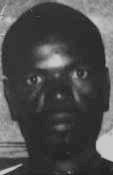
Bongani Vilakati
Mass murderer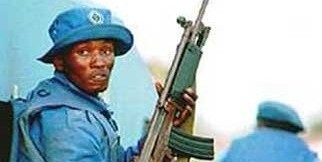 Bulelani Vukwana
Mass murderer · South Africa · 2002
Bulelani Vukwana was a South African security guard who worked for Gray Securit…
11 victims
Bulelani Vukwana
Mass murderer · South Africa · 2002
Bulelani Vukwana was a South African security guard who worked for Gray Securit…
11 victims
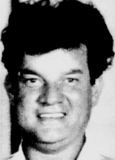 Kallie Delport
Mass murderer · South Africa · 1992
Carel Johannes “Kallie” Delport was a South African mass murderer. He killed ni…
9 victims
Kallie Delport
Mass murderer · South Africa · 1992
Carel Johannes “Kallie” Delport was a South African mass murderer. He killed ni…
9 victims
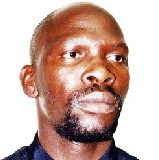 Chippa Mateane
Mass murderer · South Africa · 2006
Chippa Mateane was a police superintendent who went on a killing spree in the W…
8 victims
Chippa Mateane
Mass murderer · South Africa · 2006
Chippa Mateane was a police superintendent who went on a killing spree in the W…
8 victims
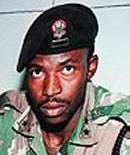 Sibusiso Madubela
Mass murderer · South Africa · 1999
Sibusiso Madubela was a black army lieutenant serving with the 1st South Africa…
8 victims
Sibusiso Madubela
Mass murderer · South Africa · 1999
Sibusiso Madubela was a black army lieutenant serving with the 1st South Africa…
8 victims
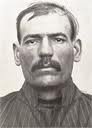 Stephanous Swart
Mass murderer · South Africa · 1927
Stephanus Andries Johannes Swart (1890 - 6 May 1927) was a South African farmer…
8 victims
Stephanous Swart
Mass murderer · South Africa · 1927
Stephanus Andries Johannes Swart (1890 - 6 May 1927) was a South African farmer…
8 victims
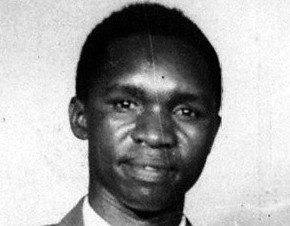 Joseph Kibweteere
Mass murderer · Uganda · 2000
Joseph Kibweteere led a breakaway sect known as the Movement for the Restoratio…
1000 victims
Joseph Kibweteere
Mass murderer · Uganda · 2000
Joseph Kibweteere led a breakaway sect known as the Movement for the Restoratio…
1000 victims
 Kathrine Dufresne
Murderer · Canada · 2011
Kathrine Dufresne was the mother of seven-year-old Sophie Fitzpatrick, her adop…
1 victim
Kathrine Dufresne
Murderer · Canada · 2011
Kathrine Dufresne was the mother of seven-year-old Sophie Fitzpatrick, her adop…
1 victim
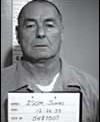 James Michael Isom
Murderer · USA
James Michael Isom was an Oregon death row inmate. He died in prison in 1997. I…
1 victim
James Michael Isom
Murderer · USA
James Michael Isom was an Oregon death row inmate. He died in prison in 1997. I…
1 victim
 Benjamin Ng
Mass murderer · USA · 1983
Benjamin Ng participated in the killings at the Wah Mee gambling club in Seattl…
3 victims
Benjamin Ng
Mass murderer · USA · 1983
Benjamin Ng participated in the killings at the Wah Mee gambling club in Seattl…
3 victims
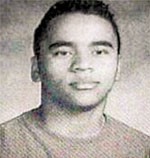 Ronald Eric Salazar
Homicide · USA · 2005
Ronald Eric Salazar was 14 when police said he killed his 11-year-old sister in…
1 victim
Ronald Eric Salazar
Homicide · USA · 2005
Ronald Eric Salazar was 14 when police said he killed his 11-year-old sister in…
1 victim
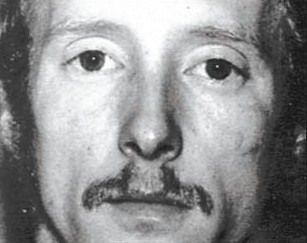 Richard Boggs
Murderer · USA · 1984
Richard T. Boggs was convicted and sentenced to death for the capital murder of…
2 victims
Richard Boggs
Murderer · USA · 1984
Richard T. Boggs was convicted and sentenced to death for the capital murder of…
2 victims
- Gender
- male
- Country
- South Africa
- Location
- Malkerns, South Africa
- Date of birth
- 1967
- Age at first offence
- 33
- Characteristics
- parricide, murder for hire, rape
- Victim profile
- One man (his brother) - children - ???
- Method of murder
- Suffocation with plastic bags - ???
- Date(s) of murder
- July 2000
- Years active
- 2000
- Date of arrest
- —
- Status
-
Died in custody
Shot and killed by police on March 29, 2001
Case record
Bongani Vilakati was implicated in killings that involved multiple victims discovered with plastic bags and shallow graves. The bodies were unearthed at Vilakati’s farm in Malkerns, and the children were suffocated with plastic bags and possibly buried alive.
Background
In July 2000, the bodies of six people were unearthed at Vilakati’s farm in Malkerns. One of the bodies was identified as Vilakati’s brother. The killings were described as part of suspected serial killings that rattled residents in Swaziland, where police later uncovered decomposed bodies in a commercial forest at Malkerns.
At the time of the killings, Vilakati was in hiding for eight months. After being spotted by police, he was chased through a maize field and fatally shot.
The offence
Police believed the murders were carried out over a period of 10 months. Many victims appeared to have been sexually abused before being killed. Some accounts described that the victims were killed over a period of several months up to a couple of years. The bodies were discovered stripped naked, and victims had been raped before being strangled to death or beheaded. Used condoms were found near shallow graves where the bodies were buried.
Investigators uncovered bodies and described that the bones and clothing of the victims were packed into plastic bags and transported to a nearby police station before being taken to mortuaries for identification.
Investigation
Swaziland police discovered the six bodies in August 2000, buried in shallow graves at Vilakati’s farm in Malkerns. Vilakati was implicated by two Mozambicans who were hired by Vilakati to dig the graves, and the two Mozambicans were arrested by police for their role in assisting the killer.
In addition to the six bodies linked to Vilakati’s farm, police uncovered 28 decomposed bodies, mostly of women, in Usuthu Pulp Forest at Malkerns during an operation that lasted several weeks and ended on the Wednesday preceding April 25, 2001. Police officials said many victims appeared to have been sexually abused before being killed and that many bodies were naked, with used condoms found near shallow graves.
Police offered a N$50 000 reward for information leading to the arrest of the killer or killers and said there had been progress in investigations. However, the police had not established whether Vilakati was responsible for subsequent killings after he was shot and killed.
Senior police detective Jomo Mavuso led the search in the thick forest.
Police Commissioner Edgar Hillary described the murders as a “national disaster”.
Arrest
Vilakati was shot following an attempted escape in his home town of Mankayane. Police found him after he had been in hiding for eight months; they chased him through a maize field before he was fatally shot.
Trial
No trial details were provided.
Sentencing
No sentencing details were provided.
Appeals
No appeal details were provided.
Outcome
Vilakati died while doctors were still trying to operate him after he was shot following his attempted escape in his home town of Mankayane. The Swazi media criticised the police for shooting the unarmed suspect, stating that, if he had lived, he might have shed some light on reports of missing persons in the Malkerns area.
Aftermath
After Vilakati’s death, his father Jabhi Vilakati was at a loss because the family was loathe to pay for the funeral.
Swaziland senator Mbho Shongwe was praised in Parliament for paying for the burial costs of Bongani Vilakati, who was kept on ice in a state mortuary for three months. The burial took 30 minutes at Manzini Cemetery.
Relatives of missing women flocked to the area to see if their loved ones were among the dead.
Human Rights Association of Swaziland secretary general Joshua Mzizi said:
"We have reason to applaud the police for the brilliant work they have done so far, but, because we do have no experience in dealing with such matters, we need experts to help us,"
South African high commission (embassy) spokesman Tando Dalamba told AFP:
"Our government would respond positively to such a request if it was made but, as far as I know, it has not,"
The Queen Mother, who rules alongside King Mswati III, suggested the murders were the result of demonic activity and urged her subjects to pray for salvation:
"The demons have spread everywhere and they can only be subdued by prayer,"
The national League of Churches suspected the killings to be the work of a religious cult similar to one involved in the death of 700 worshippers in Uganda last year.
League president Isaac Dlamini said:
"Deducting from what happened there, one would be justified to expect a similar slaughter here in Swaziland,"
Women activists blamed the killings on deep-seated attitudes that encourage the exploitation of women. Ntombi La-Ngwenya, the head of the Swaziland National Association of Teachers womens league, said:
"How many women have fallen victims in the hands of men? The number of women dying in mens hands is increasing day after day,"
Other details
The police and soldiers stumbled from one body to another after a herdsman discovered the first victim. Other accounts put the total of victims at 33, and the dead bodies were uncovered in a forest near Swaziland’s traditional capital, Lobamba. In other accounts, the bodies of the 21 women and three children were found stripped naked lying face down. Police believed the bodies and three others found a week before could possibly be further victims of suspected serial killer Bongani Vilakati.

Spotted an error, or have more information about this case?