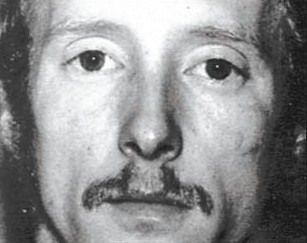
Richard Boggs
Murderer Brian Kevin Rosenfeld
Murderer · USA · 1985
Brian Kevin Rosenfeld Brian Kevin Rosenfeld was sentenced to three concurrent l…
23 victims
Brian Kevin Rosenfeld
Murderer · USA · 1985
Brian Kevin Rosenfeld Brian Kevin Rosenfeld was sentenced to three concurrent l…
23 victims
 Marvin Gray
Murderer · USA · 1975
Marvin Gray was convicted killer who claimed responsibility for 23 slayings and…
23 victims
Marvin Gray
Murderer · USA · 1975
Marvin Gray was convicted killer who claimed responsibility for 23 slayings and…
23 victims
 Yahweh ben Yahweh
Murderer · USA · 1980
Yahweh ben Yahweh was born and legally named Hulon Mitchell Jr. (October 27, 19…
23 victims
Yahweh ben Yahweh
Murderer · USA · 1980
Yahweh ben Yahweh was born and legally named Hulon Mitchell Jr. (October 27, 19…
23 victims
 Russell Ellwood
Murderer · USA · 1991
Russell Ellwood was a former taxi driver. Authorities suspected him of killing…
20 victims
Russell Ellwood
Murderer · USA · 1991
Russell Ellwood was a former taxi driver. Authorities suspected him of killing…
20 victims
 Aaron Foust
Murderer · USA · 1997
Aaron Christopher Foust (TDCJ #999268) was convicted for the capital offense of…
1 victim
Aaron Foust
Murderer · USA · 1997
Aaron Christopher Foust (TDCJ #999268) was convicted for the capital offense of…
1 victim
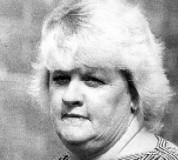 Valmae Beck
Murderer · Australia · 1987
Valmae Beck Valmae Beck was sentenced to life imprisonment with a non parole pe…
1 victim
Valmae Beck
Murderer · Australia · 1987
Valmae Beck Valmae Beck was sentenced to life imprisonment with a non parole pe…
1 victim
 Janjira Smith
Murderer · USA · 2006
Janjira Jeffrey Smith poisoned her ex-boyfriend’s Jägermeister with insecticide…
1 victim
Janjira Smith
Murderer · USA · 2006
Janjira Jeffrey Smith poisoned her ex-boyfriend’s Jägermeister with insecticide…
1 victim
 Jesse Morrison
Murderer · USA · 1989
Jesse Morrison was sentenced to death on October 30, 1991. The California Supre…
1 victim
Jesse Morrison
Murderer · USA · 1989
Jesse Morrison was sentenced to death on October 30, 1991. The California Supre…
1 victim
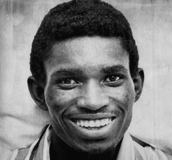 Russell Lee Smith
Murderer · USA · 1975
February 6, 1947 — Russell Lee Smith was born in Bessemer, Alabama, United Stat…
2 victims
Russell Lee Smith
Murderer · USA · 1975
February 6, 1947 — Russell Lee Smith was born in Bessemer, Alabama, United Stat…
2 victims
 Frederick Bywaters
Murderer · United Kingdom · 1922
Frederick Edward Francis Bywaters (27 June 1902 – 9 January 1923) and Edith Jes…
1 victim
Frederick Bywaters
Murderer · United Kingdom · 1922
Frederick Edward Francis Bywaters (27 June 1902 – 9 January 1923) and Edith Jes…
1 victim
- Gender
- male
- Country
- USA
- Location
- Portsmouth, Virginia, USA
- Date of birth
- 1962
- Age at first offence
- 22
- Characteristics
- alcohol, drugs, robbery
- Victim profile
- Male pedestrian / Treeby M. Shaw (female neighbor, 87)
- Method of murder
- Hit by a car / St abbing with knife
- Date(s) of murder
- January 25, 1984
- Years active
- 1984
- Date of arrest
- February 17, 1984
- Status
-
Executed
Executed by electrocution on July 19, 1990
Case record: Richard Boggs
Background
Richard T. Boggs was convicted and sentenced to death for the capital murder of Treeby M. Shaw, a neighbor of Boggs.
Boggs sought habeas corpus relief in the state courts, which was denied. He then filed a petition for habeas corpus relief in the federal district court. The district court denied habeas corpus relief as to the guilt phase of Boggs’ trial, but granted relief as to the penalty phase, requiring a new trial as to the penalty. On appeal, the Commonwealth claimed the district court erred in requiring a new sentencing trial in the state court; Boggs claimed the district court erred in not, at the least, requiring a complete new trial. The United States Court of Appeals for the Fourth Circuit agreed with the portion of the district court’s decision that denied relief as to guilt, but reversed the decision requiring a new trial for sentencing.
The offence
On January 25, 1984, Boggs murdered Treeby M. Shaw, an 87-year-old woman who lived in Portsmouth and who was a neighbor of Boggs.
Boggs struck and killed Shaw after she offered him tea. He knocked her unconscious with a round hunk of steel and then went into her kitchen, where he picked up a butcher knife and fatally stabbed her in the heart.
Boggs also carried out a hit-and-run accident earlier that day in which Boggs was observed striking a pedestrian with his vehicle. In the subsequent hit-and-run investigation and arrest, silver taken from Shaw’s house was found in Boggs’ vehicle when he was arrested for the hit and run accident committed earlier on the day of the murder.
Boggs stated his motive for the murder was that he needed money “to support my habit of drugs.”
Investigation
The Portsmouth, Virginia police arrested Richard T. Boggs at approximately 1:30 a.m. on February 17, 1984, in connection with a fatal hit-and-run accident in which Boggs had been observed striking a pedestrian with his vehicle. Boggs fled the scene, was chased by a passerby, and forced off the road by a police vehicle. Boggs was subdued after attempting to run from the police.
While an officer was trying to gain control of Boggs against the side of Boggs’ Volkswagen, Boggs stated: “Hey, man, I didn't do nothing. That nigger jumped off the sidewalk onto the front of my car.”
After Boggs was arrested, Boggs was administered several sobriety tests. The results led to his arrest for hit-and-run as well as for drunk driving. Boggs and his car were transported to the police station.
At the time of the arrest for hit-and-run, the police notified detectives investigating the murder of Treeby Shaw, in which Boggs was loosely considered a suspect or someone who should be talked to. An informant had told the police that Boggs had been attempting to sell items of silver similar to those taken from the Shaw home.
Boggs was questioned by a detective as to the Shaw homicide and denied having any knowledge thereof. After those first questions, an inventory search was conducted of Boggs’ impounded vehicle. During the search, a knapsack was found in the trunk containing items that matched the description of silver stolen from the Shaw home.
At approximately 6:25 a.m., Boggs was informed of the items found in his vehicle and was now a suspect in connection with the January 25, 1984 murder of Treeby Shaw. After receiving Miranda warnings, Boggs signed a written waiver and made a statement admitting the murder and robbery of Mrs. Shaw. The statement was transcribed and signed at 7:10 a.m.
Boggs’ confession included the following:
I preplanned the murder. I knew you were going to get me. I knocked on her door for a friendly visit to borrow a book. She offered me tea. I drank three cups of tea. I had the murder weapon in my pocket when I walked to the door. I was in her house from approximately 7:00 to 9:00 Wednesday evening [January 24, 1984]. The murder weapon was a round hunk of steel about 4 inches long and 1 inch in diameter. Well she offered me tea, I sat down and drank tea with her. Man it was hard to kill her. The woman was so nice, so kind to me. It was about 8:30 I started pounding her in the head with the metal weapon. There was no struggle. She fell on the first blow to the head. I continually pounded her head with the murder weapon and she didn't die. So I went in the kitchen and got a butcher knife and I repeatedly stabbed her, until I heard no more breathing. Then I searched the house for money. One of the homicide detectives involved in taking the statement later testified that Boggs became very emotional during the confession by breaking down and crying while describing what he called a "horrible death."
During the interrogation, Boggs also stated:
I want to kill the enemy on the other side. Which is me, the white all over the world. I want to kill niggers. I'm a cold blooded killer, [expletive deleted] it.
At trial, Boggs also challenged his confession and the items seized from his car, asserting the search of his vehicle was improper under the Fourth Amendment.
Arrest
At approximately 1:30 a.m. on February 17, 1984, the Portsmouth, Virginia police arrested Richard T. Boggs for a fatal hit-and-run accident involving him striking a pedestrian with his vehicle. He was arrested after being forced off the road and subdued when attempting to run from police. He was administered sobriety tests and was arrested for hit-and-run as well as for drunk driving.
Boggs was arrested before his confession about the Shaw homicide.
Trial
Boggs was tried before a jury, upon his plea of not guilty, to charges of capital murder and robbery.
The jury found him guilty on both charges. The jury fixed his punishment at life imprisonment on the robbery charge.
A separate trial was conducted before the same jury to determine defendant’s sentence on the capital murder conviction. During the guilt phase, Dr. Faruk Presswalla, the Commonwealth’s Deputy Chief Medical Examiner for the Tidewater area, described the nature of the injuries that the autopsy revealed. Presswalla found that Mrs. Shaw died as a result of a combination of blows to the head which injured her brain and a stab wound which penetrated her heart. Presswalla testified as to the details of Mrs. Shaw’s fatal injuries in the penalty phase of the trial as well.
The Commonwealth introduced photographs of the decedent, the murder weapon, and the signed waiver and confession of Boggs.
Boggs called two witnesses in mitigation besides himself. One was his father, who stated that Boggs had shown remorse over the killing and read to the jury a letter written by Boggs after his arrest that expressed such. The other was Dr. E. Daniel Kaye, a psychiatrist who had examined Boggs. Kaye reported that from his examination he determined that Boggs’ capacity to conform his conduct to the requirements of the law was significantly impaired at the time of the murder, but that Boggs was neither insane nor showed any signs of severe psychiatric disorder.
The jury returned a sentence of death, stating that Boggs’ conduct in committing the offense was outrageously or wantonly vile, horrible, or inhuman in that it involved aggravated battery to the victim.
After sentencing hearings, the trial court sentenced Boggs to life imprisonment on the robbery charge and to death by electrocution on the murder charge.
Boggs’ confession was admitted during both phases of his trial, including the two sentences Boggs sought to have redacted.
Boggs’ pre-trial motion included an argument to suppress Boggs’ confession and exclude items seized from his car. Boggs’ counsel also filed a motion on the first day of trial requesting that the court redact the sentence “I want to kill niggers” from his confession before it was read to the jury; this motion was denied.
Sentencing
The trial court sentenced Boggs to life imprisonment on the robbery charge and to death by electrocution on the murder charge.
Appeals
Boggs’ conviction and sentence were affirmed on appeal by the Supreme Court of Virginia.
Boggs filed a petition to the Supreme Court of the United States for a writ of certiorari to review his conviction and sentence. The petition was denied on February 24, 1986.
On November 26, 1986, Boggs filed a petition for writ of habeas corpus in state court. He sought relief on eight grounds, all of which were later advanced in his federal habeas corpus petition. The Commonwealth moved to dismiss the petition; the motion was granted on February 24, 1987. Boggs filed an appeal with the Supreme Court of Virginia, which was denied. Boggs filed an appeal with the Supreme Court of the United States asking the Court to consider claims about a warrantless inventory search and the trial court’s refusal to redact prejudicial portions of his confession. After further briefing, the petition was denied on April 4, 1988.
In the federal habeas proceedings, the district court denied relief as to the guilt phase but granted relief as to the penalty phase requiring a new trial for sentencing. The Commonwealth and Boggs appealed and cross-appealed that decision.
The United States Court of Appeals for the Fourth Circuit issued a decision in case numbers 88-4010 and 88-4012, involving the Commonwealth’s appeal and Boggs’ appeal respectively.
The Court of Appeals described and addressed multiple issues including:
- constitutionality of the vileness factor application in Boggs’ case under Virginia Code § 19.2-264.2,
- whether Boggs’ confession was involuntary due to intoxication,
- whether Boggs was afforded a full and fair opportunity to litigate a Fourth Amendment search claim,
- exclusion for cause of jurors who expressed personal opposition to the death penalty,
- refusal to sustain challenges for cause to four jurors alleged to be biased in favor of the prosecution, and
- admission of unredacted confession statements containing racist slurs.
In the course of its analysis, the Court quoted the challenged confession phrases as follows:
- “I want to kill the enemy on the other side, which is me, the white all over the world.”
- “I want to kill niggers.”
On the question of whether the admission of those sentences violated constitutional rights, the Court stated:
In case No. 88-4010 in which the district court issued its writ of habeas corpus with respect to the sentencing phase of the trial, the judgment of the district court is REVERSED. In case No. 88-4012, in which the district court declined to issue its writ of habeas corpus as to the guilt phase of the trial, the judgment of the district court is AFFIRMED.
Outcome
Boggs was executed by electrocution in Virginia on July 19, 1990.
At the State Penitentiary in downtown Richmond, Boggs was led into the death chamber and was given two 55-second surges of 2,500 volts each. He was pronounced dead at 11:07 P.M.
His execution followed the denial of a stay of execution and subsequent denials of review. Federal District Judge Richard L. Williams turned down Boggs’ request for a stay of execution, and a three-judge panel of the Court of Appeals for the Fourth Circuit upheld the ruling. The United States Supreme Court denied an application for a stay of execution by a vote of 7 to 2, with Justices William Brennan and Thurgood Marshall dissenting and opposing the death penalty in all cases.
Boggs’ execution was the first in the six-month-old administration of Gov. L. Douglas Wilder, and it was the ninth since Virginia reinstituted the death penalty in 1977 and the 135th nationwide since the Supreme Court allowed states to resume executions in 1976.
Aftermath
A separate later event occurred involving Michael W. Boggs, who was shot to death by police after a high-speed chase, after he stopped, got out of a van, and pointed a gun at officers. The investigation was continuing and it had not been determined if Boggs was the person firing the shots. The record also noted that Michael W. Boggs died of a head wound, and that his death occurred seven years after Richard Boggs’ execution in Virginia for the murder of an elderly neighbor.
In the community discussion after Michael W. Boggs’ death, neighbors discussed the earlier killing of Treeby Shaw and described the Boggs family’s presence in the neighborhood, including Billy L. and Sybil Boggs, the couple who would lose their son for the 1984 murder, and other neighbors’ recollections of the family.
Other details
Boggs asserted that he needed money “to support my habit of drugs.”
During the suppression-related discussion and testimony, it was noted that Boggs was administered a breathalyzer test at 2:10 a.m. on the night of his arrest to determine alcohol content in his blood, and the result of the test was .22% alcohol at that time. Boggs did not introduce testimony about the effect of the blood test at his suppression hearing, nor at his state habeas corpus hearing. In his federal habeas proceeding, he sought to have a hearing on the degree of his intoxication at the time of his confession and filed an affidavit of a physician estimating that his blood alcohol level would have been .145 at the time of his confession between 6:45 a.m. and 7:10 a.m., and that his mental processes would have been seriously impaired due to alcohol.
The Court of Appeals also addressed jury selection. It described prospective jurors James Brabson, Yvonne Johnkins, and Charlotte Boomer and quoted their voir dire answers as follows:
Q (to James Brabson): Are there any circumstances which would enable you to vote for the death penalty?
A: None; I am just against it.
Q: You couldn't imagine any sort of circumstances?
A: None at all, I am just plain against it.
Q (to Yvonne Johnkins): Are there circumstances that you could imagine where you could vote for the death penalty? Are there any circumstances at all that would allow you to do that?
A: No.
Q (to Charlotte Boomer): And once again, I am not trying to give you a hard time, but just to sharpen it a little bit, are you telling us, absolutely, you could not vote for the death penalty under any circumstances?
A: Right.
At trial, Boggs was represented by counsel named in the later narrative: David Bruck was identified as Boggs’ lawyer during the appeals period surrounding the execution.
During the sentencing phase cross-examination by the prosecutor, the Court quoted questions and answers in which Boggs acknowledged the confession’s truth:
Q: You heard this statement read by Detective Harvey. That's what you told him, isn't it? Do you want to read the statement? Read that, and make sure that's what you told him. (Defendant reads statement)
A: This is what I told the police.
Q: And is what you told the police true?
A: Yes.
Q: So everything you read in that statement is true; right?
Appendix 727.
The case also included procedural and appellate identifiers: Richard T. Boggs, Petitioner-appellee, v. Toni V. Bair, Warden; Edward W. Murray, Director; Mary Sue Terry, Attorney General, Respondents-appellants; and Richard T. Boggs, Petitioner-appellant, v. Toni V. Bair, Warden; Edward W. Murray, Director; Mary Sue Terry, Attorney General, Respondents-appellees. The United States Court of Appeals for the Fourth Circuit noted “Argued May 11, 1989” and “Decided Dec. 12, 1989,” with “Rehearing and Rehearing En Banc Denied Jan. 9, 1990.” The panel included WIDENER and SPROUSE, Circuit Judges, and DUPREE, Senior District Judge for the Eastern District of North Carolina, sitting by designation.

Spotted an error, or have more information about this case?