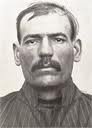
Stephanous Swart
Mass murderer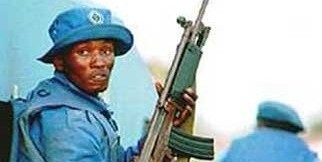 Bulelani Vukwana
Mass murderer · South Africa · 2002
Bulelani Vukwana was a South African security guard who worked for Gray Securit…
11 victims
Bulelani Vukwana
Mass murderer · South Africa · 2002
Bulelani Vukwana was a South African security guard who worked for Gray Securit…
11 victims
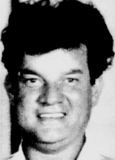 Kallie Delport
Mass murderer · South Africa · 1992
Carel Johannes “Kallie” Delport was a South African mass murderer. He killed ni…
9 victims
Kallie Delport
Mass murderer · South Africa · 1992
Carel Johannes “Kallie” Delport was a South African mass murderer. He killed ni…
9 victims
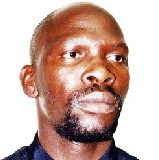 Chippa Mateane
Mass murderer · South Africa · 2006
Chippa Mateane was a police superintendent who went on a killing spree in the W…
8 victims
Chippa Mateane
Mass murderer · South Africa · 2006
Chippa Mateane was a police superintendent who went on a killing spree in the W…
8 victims
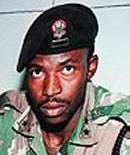 Sibusiso Madubela
Mass murderer · South Africa · 1999
Sibusiso Madubela was a black army lieutenant serving with the 1st South Africa…
8 victims
Sibusiso Madubela
Mass murderer · South Africa · 1999
Sibusiso Madubela was a black army lieutenant serving with the 1st South Africa…
8 victims
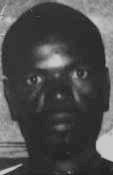 Bongani Vilakati
Mass murderer · South Africa · 2000
Bongani Vilakati was implicated in killings that involved multiple victims disc…
6 victims
Bongani Vilakati
Mass murderer · South Africa · 2000
Bongani Vilakati was implicated in killings that involved multiple victims disc…
6 victims
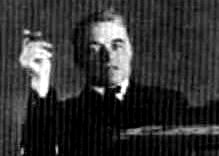 Andrew Kehoe
Mass murderer · USA · 1927
Andrew P. Kehoe committed suicide the same day by killing himself in the explos…
44 victims
Andrew Kehoe
Mass murderer · USA · 1927
Andrew P. Kehoe committed suicide the same day by killing himself in the explos…
44 victims
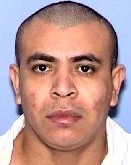 Walter Sorto
Murderer · USA · 2002
Name: Walter Alexander Sorto TDCJ Number: 999465 Date of Birth: 08/10/1977 Gend…
2 victims
Walter Sorto
Murderer · USA · 2002
Name: Walter Alexander Sorto TDCJ Number: 999465 Date of Birth: 08/10/1977 Gend…
2 victims
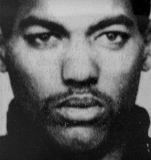 Guy Georges
Serial killer · France · 1991
Guy Georges was a French rapist and serial killer who preyed on attractive, you…
7 victims
Guy Georges
Serial killer · France · 1991
Guy Georges was a French rapist and serial killer who preyed on attractive, you…
7 victims
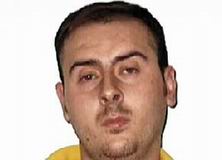 Alfredo Galán
Serial killer · Spain · 2003
Alfredo Galán Sotillo (born April 5, 1978) was a Spanish serial killer. · Janua…
6 victims
Alfredo Galán
Serial killer · Spain · 2003
Alfredo Galán Sotillo (born April 5, 1978) was a Spanish serial killer. · Janua…
6 victims
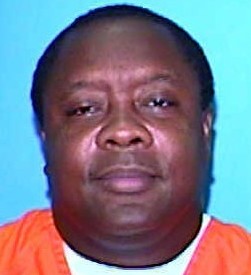 Alfred Lewis Fennie
Murderer · USA · 1991
Alfred Lewis Fennie was also known by the alias “Ezell Foster.” Fennie was indi…
1 victim
Alfred Lewis Fennie
Murderer · USA · 1991
Alfred Lewis Fennie was also known by the alias “Ezell Foster.” Fennie was indi…
1 victim
 Jennifer Trayers
Murderer · USA · 2010
Jennifer Trayers (defendant; wife of Navy Lt. Cmdr. Frederick Trayers III) · Fr…
1 victim
Jennifer Trayers
Murderer · USA · 2010
Jennifer Trayers (defendant; wife of Navy Lt. Cmdr. Frederick Trayers III) · Fr…
1 victim
- Gender
- male
- Country
- South Africa
- Location
- Charlestown, KwaZulu-Natal, South Africa
- Date of birth
- 1890
- Age at first offence
- 37
- Characteristics
- shooting rampage
- Victim profile
- Captain Gerald C. Ashman / Constable William Crossman / Sergeant Grove / Fannie Knight / Sergeant William Charles Mitchell / G. Roets / Annie Swart / Sergeant Annes van Wyk
- Method of murder
- Shooting
- Date(s) of murder
- May 6, 1927
- Years active
- 1927
- Date of arrest
- —
- Status
-
Died in custody
Committed suicide by shooting himself the same day Stephanus Andries Johannes Swart (1890 - 6 May 1927) killed at least 8 people and wounded 3 others in Charlestown, South Africa on 6 May 1927, before committing suicide.
Overview
Stephanus Andries Johannes Swart (1890 - 6 May 1927) was a South African farmer and spree killer who killed at least 8 people and wounded 3 others in Charlestown, South Africa on 6 May 1927, before committing suicide.
Timeline
- 3 May 1927 — Swart fired a shot at his neighbour, Mr. Lourens.
- 4 May 1927 — A hearing was set for the incest accusation; Swart ordered Mr G. Maasdorp to Potter's Hill and the 28-page suicide statement was prepared.
- 6 May 1927 — Swart killed police officers and civilians near his farm and in Charlestown, then shot himself.
- 6 May 1927 — Swart died after committing suicide.
Background
In the final stop-press edition of the Johannesburg Star on Friday, 6 May 1927, a news story reported that a well-known farmer in the Charlestown district named S.A.J. Swart ran amok and killed 8 Europeans and a native, wounded 3 other Europeans and then shot himself. Among those killed were his wife and the officer commanding the posse of police who went to arrest Swart.
Stephanus Swart was described as a violent, unpredictable man. People in the district believed he had displayed symptoms of paranoid schizophrenia for a number of years, including extreme mood swings, hostility toward authority, and feelings of persecution, and that no one could have predicted the course of events.
Swart was wedded to a woman thirty years his senior, and many people in the district believed he had married her for her money. Her first husband, Eksteen, had left her a number of farms. The union was described as loveless, and Swart was resented by some of his in-laws. Swart was described as poorly educated.
The narrative reported that Swart believed he would find no justice in the courts, and that this belief had begun when Swart lost a civil suit. It was stated that Swart felt he had been unfairly treated and victimized, while the narrative reported that the evidence indicated quite the reverse. Swart grew increasingly embittered with age, and his temper deteriorated.
In a second and much more serious incident a few years after the civil suit, Swart was described as viciously assaulting a relative and being sentenced to imprisonment for eighteen months. The judge’s sentence was described as harsh, and Swart viewed it as personal animosity. After his release from prison, Swart returned to his wife, from whom he was judicially separated, and who was living at Potter's Hill. The farm was described as belonging to Mrs Knight, Mrs Swart's daughter by her first marriage.
Early in 1927, Swart was accused of committing “a serious sexual offence”, namely incest. He had difficulty raising the £500 bail required, and the narrative stated that Swart ignored suggestions that he sell some of his livestock because he felt it would be unfair to the animals and he could trust no one but himself to care for them properly. The hearing was set for 4 May.
With the trial described as only two months off, the narrative reported that Swart had to deal with a further problem: both his wife and the stepdaughter’s farm manager, Mr I.C. Visser, had been called as witnesses against him. Swart responded by threatening to kill them if they attempted to speak against him. Visser and Mrs Swart knew that Stephanus meant what he said and promised to keep quiet. Visser was reported to have said he would go to Worcester in the Cape to avoid being subpoenaed by the police; he left the farm a few days later. Soon after, Mrs Swart left for Potchefstroom, knowing that her husband was having an affair with a young girl and intending to give evidence at his trial.
Towards the end of April 1927, Swart was fined 10 shillings by a local magistrate for driving an unlicensed vehicle. On Tuesday 3 May, the day before he was due to appear in the Magistrates’ Court, he drove over to a neighbouring farm and fired a shot at the owner of the farm, a Mr Lourens, “for no apparent reason.” When the police learnt of Swart’s unprovoked attack, they issued a warrant of arrest for attempted murder.
The offence
Assault on police and escape plan
After preparations for the “grand finale,” Swart summoned his attorney, Mr G. Maasdorp, to Potter's Hill, wishing to put his personal affairs in order.
Before Maasdorp set out, he contacted the local police commander, Captain Gerald Ashman, and asked whether he should delay seeing his client until after Swart's arrest. Captain Ashman suggested Maasdorp go to Potter Hill to try to persuade Swart to give himself up. Accordingly, Mr Maasdorp hired Mr B Plaats as a driver and, in the late afternoon of Wednesday 4 May, the two men set out for the farm.
Swart was described as intractable and it was stated that he had roamed the farm for five days planning revenge, driving himself and his farm workers to a point of exhaustion, then locked himself in the Farmhouse with his gun primed.
Maasdorp was described as convinced Swart was mentally disturbed. It was stated that Swart had gone to Potchefstroom a few days before to see his wife and reiterate his threat, only to learn she had left for Newcastle. It was also stated that Swart claimed he had suddenly realized that if something were to happen to him, his car would fall into the hands of his enemies, so he stopped at the side of the road, set the car alight, then walked the last ten miles to his home. Maasdorp listened to Swart’s ravings until late into the night and, in the end, was forced to write down a statement ordered by Swart.
The statement was described as twenty-eight pages long and included an excerpt:
I have arranged all my affairs with my attorney. I now give blood for blood. I will shoot them down till I have one cartridge left. And that will be mine. But alive you will never get me. With my corpse you can do what you please. Burn it, mutilate it and treat it in such a manner as you think fit to best revenge yourselves. I wish this statement to be published after my death in all the prominent newspapers in the Union and I desire a copy to be forwarded to the Prime Minister, General Hertzog.
The following day, Captain Ashman heard of Swart’s ravings and was greatly concerned. Ashman asked Mr Plaats to return to Potter's Hill with a message advising the farmer to give himself up, and it was stated that Ashman offered to meet with Swart alone to discuss the matter.
Swart was described as listening quietly while the letter was read out to him, then giving a reply. He was prepared to meet with Captain Ashman and Maasdorp if the two arrived on his farm before sunset. At 6:00 pm, it was stated Swart intended to close the main road that ran through his property and shoot on sight anyone who attempted to cross his land. He then instructed Plaats to have an oak coffin ordered in Volkrust, zinc-lined, and not to cost more than £40.
It was stated that Captain Ashman gathered a detail of 12 policemen and before dawn on Friday 6 May they set out in two cars and a motorcycle with a side car on the fourteen-mile journey from Charlestown Hall to Potters Hill. The police convoy halted on the boundary of Swart's property. A plan was described in which Captain Ashman and Sergeant Annes van Wyk directed operations from a small Indian trading store on the boundary of Swart's property, while the other two groups advanced on the farmhouse from different directions.
However, just as the men were about to set out, one of Swart's farm labourers galloped out of early morning mist with a warning that Swart was preparing to fight them. Captain Ashman wanted Swart taken alive if possible. The police plan was described as not realizing that Swart had gone on the offensive.
The narrative stated that Swart left the farmhouse and went into the fields. The first casualty was Constable Feucht, who was shot as he approached the farmhouse. It was stated that Feucht made his way back to Captain Ashman in pain and was sent back to town for medical attention.
Ashman then sent a note to Sergeant Watts, who was leading the uphill party:
Carefully take cover towards house and shoot Swart on sight. Feucht wounded with shotgun and gone to hospital. Have sent for more men. Try to save yourselves and do not expose, as Swart is now desperate.
It was then stated that Swart shot and killed Sergeant William Charles Mitchell and Constable William Crossman. After bringing down the men, Swart was described as bringing down both at point-blank range to make certain they were dead.
At that point, Swart was described as realizing he would ultimately be captured, and that he had other tasks to complete first. The narrative stated Swart used thick mist to affect his escape across a mealie patch and encountered his fourth victim, Sergeant Grove. Grove was described as mortally wounded and dying from loss of blood after crawling hundreds of metres.
After killing Sergeant Grove, Swart planned to make his escape but not before visiting Captain Ashman and Sergeant Van Wyk to seize the horse, which his labourer had been riding when he first galloped out of the mist. Swart was described as shooting both Ashman and Sergeant Van Wyk dead. The narrative stated Swart then took Captain Ashman’s Webley service revolver to add to the Mauser rifle and Browning automatic pistol he was already carrying.
Before setting out for Charlestown where his wife was living, it was stated Swart stopped for a cup of coffee at his neighbour's farm. At eight o'clock, it was stated the day was brightening and Swart seemed to be in the best of spirits. The narrative included the following quote:
“I've just killed five policemen,” he boasted, “and now I'm going to Charlestown to shoot three more people. If I get through that alive I'm heading for Volkrust where I intend to kill myself.”
To substantiate his story, it was stated Swart produced Captain Ashman’s Webley. The station foreman at Charlestown, Kriel, later fired three shots in rapid succession after Swart was spotted.
Killing of civilians in Charlestown
It was stated that Swanepoel listened to Swart in silent astonishment, then saddled his own horse and set out to warn police that Swart was on his way. Near Mount Prospect, an African approached Swanepoel and handed him a note from Swart. The note stated that Swart would return to kill Swanepoel after he completed his “mission.”
By that time, the narrative said Swart had killed two more people on the road: Mrs Knight and Mr M. Roets, described as farm manager for Mr Lourens and having recently given evidence against Swart.
Swart arrived in Charlestown across from the train station at a house where his estranged wife was living. The narrative stated that Mrs Swart was staying with the Van Vuuren family about three hundred metres from the Charlestown railway station, and that Mrs Swart, 17-year-old Gertrude van Vuuren, and Lucas, her crippled, 21-year-old cousin, were sitting on the stoep when Swart galloped up. Gertrude was described as being frightened by Swart’s face, calling to her sister, and together the two girls rushed next door. Their neighbour, Mrs Thomas, seemed to know disaster was at hand and shouted “Run to the police station,” prompting the girls to run out just as two shots were fired.
The narrative stated that Swart had walked calmly into the house and shot his wife twice, once in the forehead and once in the chest. Gertrude and her sister, along with two other women, Mrs Grove and Mrs Erasmus, locked themselves in the police station and prayed that help would come. It was stated that two hours passed before a constable came to release them.
Wounding during attempted stopping of vehicles and final suicide
After killing his wife, Swart rode to the edge of town, tethered his exhausted horse to a fence at the main road, and tried to wave down the first car that came along. The car’s occupants were identified as Mrs Pulford, wife of the manager of the Charlestown and District Co-operative Stores; Mr Hadley, a local farmer; and his three-year-old nephew. When Mr Hadley failed to stop, Swart fired at the car. Both Hadley and Mrs Pulford were wounded, but the narrative stated they managed to drive on to safety.
The narrative stated that police and local farmers were mobilized to hunt Swart down, and a posse eventually caught up with him near Johannes Swanepoel's farm. Spotting Swart in the distance, Kriel fired three shots in rapid succession. Swart dived into the veld at the side of the road just as a contingent of regular police from Volksrust arrived. Seconds later, a fourth shot rang out. In the final act, it was stated Swart shot himself in the head with Captain Ashman's Webley.
Investigation
Police pursued Swart one day after he fired a shot at his neighbour, Mr. Lourens, on 3 May 1927 for no apparent reason.
When the police learnt of Swart’s unprovoked attack, they issued a warrant of arrest for attempted murder. After hearing of Swart’s intended surrender efforts were uncertain, Captain Ashman gathered 12 police officers to attempt to arrest him.
Arrest / confrontation
The narrative stated that Swart was confronted by a police constable in the early hours of 6 May at his home with a letter to give himself up. Swart’s reply included that he simply wanted an oak coffin and he wanted it to be zinc lined, and he would shoot anyone to come through the road running near his property after 6:00 pm. The constable, alarmed by this reply, started to gather a posse of 12 police officers to arrest him the next day.
Trial
The narrative reported that Swart had been accused of incest and that the hearing was set for 4 May. It also stated that he threatened to kill his wife and the stepdaughter’s farm manager, Mr I.C. Visser, if they attempted to speak against him, and that both promised to keep quiet.
Sentencing
The narrative reported that in a previous incident Swart had been sentenced to imprisonment for eighteen months after viciously assaulting a relative. It also stated that Swart had previously been sentenced to several months in prison for incest, and that this was connected to the road killings in which two people who had testified against him were killed.
Outcome
Swart killed multiple members of the police posse during the early morning of 6 May 1927 and killed civilians in Charlestown, then committed suicide by shooting himself in the head with Captain Ashman’s Webley.
Aftermath
A news story reported “NINE KILLED IN SHOOTING TRAGEDY NATAL BORDER SENSATION. EARLY MORNING FIGHT WITH POLICE” and stated that Swart killed 8 Europeans and a native, wounded 3 other Europeans, and then shot himself.
People mentioned (victims and other named individuals)
- Stephanus Andries Johannes Swart (1890 - 6 May 1927), farmer and spree killer who committed suicide by shooting himself the same day.
- Captain Gerald C. Ashman, officer commanding the posse; killed by Swart.
- Constable William Crossman, killed by Swart.
- Sergeant Grove, mortally wounded and died from loss of blood after crawling hundreds of metres.
- Fannie Knight, listed among victims.
- Sergeant William Charles Mitchell, killed by Swart.
- G. Roets, listed among victims.
- Annie Swart, listed among victims.
- Sergeant Annes van Wyk, listed among victims.
- Mr. Lourens, neighbour; recipient of a shot on 3 May 1927.
- Swanepoel, approached near Mount Prospect; received a note from Swart.
- S.A.J. Swart, referred to in the news story.
- Mr G. Maasdorp, Swart’s attorney.
- Mr B Plaats, hired driver.
- Mr I.C. Visser, farm manager; called as a witness against Swart.
- General Hertzog, Prime Minister.
- Mr Hadley, local farmer wounded while in a car.
- Mrs Pulford, wife of the manager of the Charlestown and District Co-operative Stores; wounded.
- Mr M. Roets, described as farm manager for Mr Lourens; killed by Swart.
- Mrs Knight, described as Swart’s daughter by her first marriage; killed by Swart.
- Mrs Swart, Swart’s wife; shot twice.
- Gertrude van Vuuren, 17-year-old; rushed next door and later locked in the police station.
- Lucas, 21-year-old cousin; described as crippled.
- Mrs Thomas, neighbour; shouted “Run to the police station.”
- Mrs Grove, locked in the police station.
- Mrs Erasmus, locked in the police station.
- Kriel, station foreman at Charlestown; fired shots at Swart.
- Sergeant Watts, leading the uphill party (addressed in Ashman’s note).
- Constable Feucht, first casualty shot as he approached the farmhouse; sent for medical attention.
- Sergant Annes van Wyk (spelled “Sergeant Annes van Wyk” in the timeline narrative), directed operations and was killed by Swart.
- Eksteen, described as Mrs Swart’s first husband.
- Neville Heath, mentioned in the narrative as a case point.
- Potchefstroom and Newcastle, referenced in movements relating to Swart’s wife.
- Worcester in the Cape, referenced as a place Visser said he would go to avoid being subpoenaed.
Spotted an error, or have more information about this case?