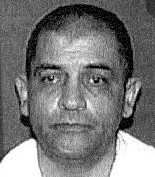
Jorge Villanueva
Murderer Brian Kevin Rosenfeld
Murderer · USA · 1985
Brian Kevin Rosenfeld Brian Kevin Rosenfeld was sentenced to three concurrent l…
23 victims
Brian Kevin Rosenfeld
Murderer · USA · 1985
Brian Kevin Rosenfeld Brian Kevin Rosenfeld was sentenced to three concurrent l…
23 victims
 Russell Ellwood
Murderer · USA · 1991
Russell Ellwood was a former taxi driver. Authorities suspected him of killing…
20 victims
Russell Ellwood
Murderer · USA · 1991
Russell Ellwood was a former taxi driver. Authorities suspected him of killing…
20 victims
 Robert Martines Perez
Murderer · USA · 1994
Name: Robert Martines Perez · Other name used in proceedings: Robert Martinez P…
15 victims
Robert Martines Perez
Murderer · USA · 1994
Name: Robert Martines Perez · Other name used in proceedings: Robert Martinez P…
15 victims
 Billy Frank Vickers
Murderer · USA · 1993
Billy Frank Vickers Vickers was executed by lethal injection in Texas on Januar…
14 victims
Billy Frank Vickers
Murderer · USA · 1993
Billy Frank Vickers Vickers was executed by lethal injection in Texas on Januar…
14 victims
 Lovelle Mixon
Murderer · USA · 2009
Lovelle Mixon was a convicted felon who was wanted on a no-bail warrant for a p…
4 victims
Lovelle Mixon
Murderer · USA · 2009
Lovelle Mixon was a convicted felon who was wanted on a no-bail warrant for a p…
4 victims
 Paul Rougeau
Murderer · USA · 1978
Paul Rougeau was executed by lethal injection in Texas on May 3, 1994. He was c…
1 victim
Paul Rougeau
Murderer · USA · 1978
Paul Rougeau was executed by lethal injection in Texas on May 3, 1994. He was c…
1 victim
 Rebecca Emmanuel
Murderer · Nigeria · 2008
Rebecca Emmanuel Rebecca Emmanuel was a Nigerian woman who was sentenced to dea…
1 victim
Rebecca Emmanuel
Murderer · Nigeria · 2008
Rebecca Emmanuel Rebecca Emmanuel was a Nigerian woman who was sentenced to dea…
1 victim
 David Hebbert Hard
Homicide · USA · 1984
Dorothy Biggs was a resident of the tiny Lincoln County community of Eddyville.…
1 victim
David Hebbert Hard
Homicide · USA · 1984
Dorothy Biggs was a resident of the tiny Lincoln County community of Eddyville.…
1 victim
- Gender
- male
- Country
- USA
- Location
- Harris County, Texas, USA
- Date of birth
- December 18, 1954
- Age at first offence
- 40
- Characteristics
- rape
- Victim profile
- Maria Jova Montiel (female, 79)
- Method of murder
- Strangulation
- Date(s) of murder
- August 28, 1994
- Years active
- 1994
- Date of arrest
- October 24, 1994
- Status
-
Sentenced to death
Sentenced to death on November 1, 1996
Background
Jorge Villanueva was tried for the 1994 murder of an elderly neighbor, Maria Jova Montiel. Paramedics found Montiel’s body in her bloody bed after she was strangled and bludgeoned to death. Neighbors later erected a shrine on Montiel’s front porch with candles and a cross constructed from the aluminum cans she collected to make a living.
Neighbours identified Villanueva as a suspect during the initial canvassing of the neighborhood for clues and suspects. Villanueva lived across the street from Montiel with his wife and children.
Villanueva had lived in Houston since the early 1980s. He was described as a McAllen native with an 11th-grade education. Before living in Houston, he had worked as a migrant worker between the Rio Grande Valley and Michigan.
In the initial police report, neighbors described Villanueva as a “troublemaker” and “neighborhood drunk.” Villanueva said he got fresh scratches on his face from clearing brush and from a cat. According to his own attorney, Villanueva also was a heroin user. His record included DWI, burglary and an injury to a child charge for which he received a probated sentence.
The offence
On a Sunday in August 1994, an anonymous call brought the Houston Fire Department to Montiel’s Sixth Ward home just after noon. The caller said something about “an accident,” then abruptly hung up.
Inside Montiel’s wood-frame duplex, paramedics found Montiel’s nude body on her bed. They found a deep laceration on her forehead and a large pool of blood under her head. She had been struck with a bottle, raped and strangled.
Investigation
Detectives canvassed the neighborhood for clues and suspects and people soon pointed to Jorge Villanueva. Police took Villanueva into custody that afternoon but released him three days later while they waited for the HPD crime lab to analyze evidence found at the crime scene.
Two months later, police had DNA results showing a statistical likelihood that Villanueva was the killer.
Villanueva later maintained that he confessed to Montiel’s murder only after being smacked in the mouth by a homicide detective. He also pointed to a gap from a missing left front tooth as evidence that he had been hit before signing the confession he said he did not write.
A preliminary test, known as luminol reaction, had been performed by the crime lab on one of Villanueva’s shoes and was said to indicate the presence of blood. A report by Dr. Elizabeth Johnson later noted that luminol “reacts positively to numerous other substances including but not limited to all substances containing metal ions such as rust, fertilizers and fungicides, bleach, and certain plant extracts.”
Johnson also said HPD lab analysis of pubic hairs found at the scene was insufficient because Joseph Chu tested the hairs at only one genetic region, while up to seven genetic regions could have been tested. With a single-region match, Johnson said 4.9% of Caucasians, 5.3% of blacks and 3.4% of Hispanics also could have matched, and the limited identification offered by the test would have matched 136,000 people in Harris County.
Johnson said Chu suggested the hairs originated from a Hispanic person and that this was “a serious bias in reporting and testimony.” Johnson reported:
“By reporting the evidence as a `match' to the defendant and giving the defendant's frequency within his own ethnic group and no other statistics, Mr. Chu is potentially misleading jurors to believe that the killer had to be Hispanic and that (Villanueva) was probably the killer.”
Johnson also reported that the lab had not analyzed two pubic hairs that matched neither Villanueva nor Montiel and that the hairs were never forwarded to the lab’s DNA section, which she described as “ignoring solid physical evidence that someone other than (Villanueva) may have been the murderer and left that evidence at the scene.”
An independent audit of the HPD lab in December cited the lab’s tendency to report statistics for evidence only for the race of the suspect as a serious and common problem. Johnson was described as believing these red flags should have triggered alarms within the district attorney’s office.
The case was identified as one of 1,300 getting a hard second look in the wake of the burgeoning scandal at the Houston Police Department crime lab. Evidence retesting had been ordered in nearly 200 more cases. A private lab that had been for the past several months retesting DNA evidence in cases originally processed by the HPD crime lab confirmed problems including poor record-keeping to sloppy science and structural problems that could contaminate evidence. The department suspended in-house testing in December after the independent audit uncovered those problems.
Most recently, the 22 criminal state district judges asked Rosenthal, now the elected district attorney, to recuse himself and his office from any grand jury investigations into problems at the crime lab.
Houston police contracted with local DNA lab Identigene to do retesting. For cases already designated for a retest, results were known in only six; in five of those six cases, test results confirmed the HPD lab analysis. The other set resulted in Josiah Sutton being freed.
Arrest
In October 1994, after completion of the analysis of DNA evidence found at Montiel’s home, police rearrested Villanueva and took him to the department’s southeast substation on Mykawa. At that location, he said he was placed in an interrogation room and questioned by homicide investigators E.T. Yanchak and B.R. Baker.
Villanueva said Yanchak told him “that I was going to tell them how it happened,” and that Villanueva replied: “And I told him that I didn't know anything.”
Villanueva admitted that after a Saturday of heavy drinking, he had gone across the street to drop off his beer cans for Montiel’s recycling stash. He said he occasionally mowed Montiel’s lawn and did other chores for her, and sometimes she paid him and sometimes she did not. He said:
“She'd give me money later and say, `Go get yourself a cold one,' ” and he described looking into her home: “I saw her laying down in bed. Then I began hollering at her so she could hear me. But she did not answer. So I left the beer cans there and went back home ... and told my wife that I thought something might be wrong with the old lady. But she told me to stay away, so I stayed away.”
Villanueva said the police did not accept his account despite the DNA hair evidence and that detectives pushed for a confession while they took turns writing on a computer in the room. He said Yanchak presented him with typewritten pages and threatened him:
“He told me, `Either you're going to sign this paper, or I'm going to whip you,' ” and Villanueva responded: “And I told him to go for it.”
Villanueva said the detective hit him in the mouth, loosening a front tooth that he later pulled in prison. Yanchak denied the accusation through a department spokesman.
Trial
In a move described as unusual, Villanueva took the stand and told jurors that his confession had been coerced and that he had been beaten during interrogation.
After 8 days of testimony, the jury took only a few hours to reach a guilty verdict and 2 more to sentence Villanueva to death.
Sentencing
The jury sentenced Jorge Villanueva to death. He was sentenced to death on November 1, 1996.
Appeals
Jorge Villanueva’s case was the subject of appeal and was later identified as one of 1,300 cases getting a hard second look. Appellate attorney Les Ribnik had latched onto HPD analyses as a main element for appeal in 1998, and Ribnik hired Dr. Elizabeth Johnson to review the lab work.
Susan Crump, one of Villanueva’s appellate attorneys, said:
“There were so many problems with his (case),” and also: “Not that we know for sure that he's innocent. But what happened was a mockery of justice.”
Other details
Legal representation and courtroom decisions
State District Judge Denise Collins initially assigned Allen Isbell and Gilbert Villareal, two seasoned capital murder litigators, to Villanueva’s case. Villanueva fired them. The judge then appointed Anthony Osso and Gerry Guerinot, described as well-versed in capital defense. Villanueva fired them as well.
Villanueva said:
“Mr. Guerinot told me that they had enough evidence to put me on death row,” and that Guerinot said: “He said they had a fingerprint, and that I was inside the house. And that they had a shoe print matching my shoes. He wanted to cuss me out. And I said, `You know what? I don't want you no more for my lawyer.' ”
Villanueva’s family raised money to hire Philip M. Campa, who had never handled a capital murder case. Ribnik’s appeal described Campa’s performance during Villanueva’s trial as a major subject.
In a brief included in Ribnik’s appeal, Osso said he met with Campa to offer assistance and allow Campa to review his files. Osso claimed he wanted to ensure Campa was up to speed on procedural issues and wrote:
“Mr. Campa advised me at this time that he was not familiar with these issues in death penalty cases and when I attempted to show him the pertinent statute he appeared to show little interest,”
Osso also wrote that he informed Campa that he needed to arrange for expert witnesses on DNA and other forensic issues. Osso said Campa contended there was not enough time before trial for him to arrange for such witnesses. Osso wrote:
“By this remark,” and: “it was evident that Mr. Campa mistakenly believed that the rules of civil procedure regarding expert witnesses applied to criminal prosecutions.”
Osso wrote that he explained the rules to Campa and that Osso had filed ex parte motions under seal so the state would not have access to the information. Osso wrote:
“At this point I explained to Mr. Campa that he was not required to designate experts and that I had filed ex parte motions under seal so that the state would not have access to this information. Mr. Campa then responded by telling me he would look into this matter.”
Osso also advised Campa of evidence suggesting Villanueva was coming off heroin when he signed the confession and that a psychiatrist with expertise in drug addiction could challenge the document. Osso concluded:
“Again, Mr. Campa showed little interest in the use of this type of expert,”
Campa maintained in his formal response that he mounted an aggressive defense. He said he made “every effort to bring myself up to speed on the case.” He also pointed out that Villanueva’s family had a good relationship with Montiel. Campa stated that he “consulted with a medical doctor regarding autopsy photos of the deceased” and that he “did do some independent research on DNA.”
Campa said he did not employ a private investigator, psychiatrist or DNA expert because his “client did not have the funds available.” Ribnik pointed out that the court had approved funding for defense experts while Osso was assigned to the case. Ribnik also stated:
“The file I received from him has no indication of notes (about DNA). No telephone notes. No written notes. No correspondence. Nothing to suggest that he had any contact whatsoever with any DNA expert, psychologist or any other kind of expert.”
In an interview with the Houston Chronicle, Campa said that if the prior attorneys had obtained funding, they should have followed through with the DNA testing themselves. He defended his work on the Villanueva case and noted that no appellate court had found anything wrong with his performance.
Interview with Villanueva while on death row
In the visitors’ area of the Polunsky Unit in Livingston, home to Texas’ death row, Villanueva sat behind a Plexiglas window. He held a two-way telephone so he could talk with an interviewer. Villanueva pointed to a gap from a missing left front tooth, which he said he lost after being hit by a detective just before signing the confession that he did not write.
Names appearing in the case narrative
The narrative included references to Houston Police Department homicide detectives E.T. Yanchak and B.R. Baker. It also referenced Assistant District Attorney Chuck Rosenthal, Assistant District Attorney Marie Munier, and District Judge Ted Poe. It mentioned that Chu declined to comment through an HPD spokesman. It referenced Josiah Sutton and his release after a conviction based on bogus DNA findings. It also referenced Dr. Elizabeth Johnson, Joe Durrett, and Assistant District Attorney Chuck Rosenthal’s role in the Durrett matter.
Outcome
Jorge Villanueva was sentenced to death on November 1, 1996.
Spotted an error, or have more information about this case?