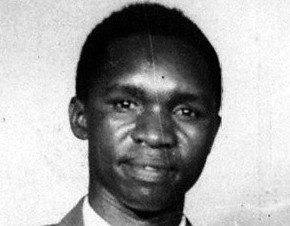
Joseph Kibweteere
Mass murderer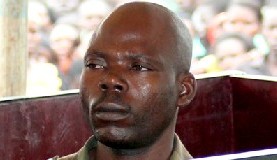 Patrick Okot
Mass murderer · Uganda · 2013
March 5, 2013 — Gunmen attacked Mbuya barracks to steal arms. · February 4, 201…
10 victims
Patrick Okot
Mass murderer · Uganda · 2013
March 5, 2013 — Gunmen attacked Mbuya barracks to steal arms. · February 4, 201…
10 victims
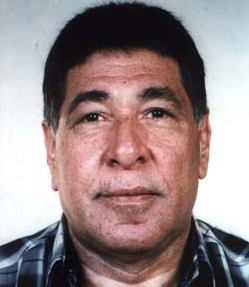 Gameel Al-Batouti
Mass murderer · USA · 1999
Gameel Al-Batouti (also rendered “Gamil ElBatouty” or “El Batouty” in U.S. offi…
216 victims
Gameel Al-Batouti
Mass murderer · USA · 1999
Gameel Al-Batouti (also rendered “Gamil ElBatouty” or “El Batouty” in U.S. offi…
216 victims
 Kim Dae-Han
Mass murderer · South Korea · 2003
Name: Kim Dae-Han · Age: 56 · Occupation/background: He was an unemployed forme…
198 victims
Kim Dae-Han
Mass murderer · South Korea · 2003
Name: Kim Dae-Han · Age: 56 · Occupation/background: He was an unemployed forme…
198 victims
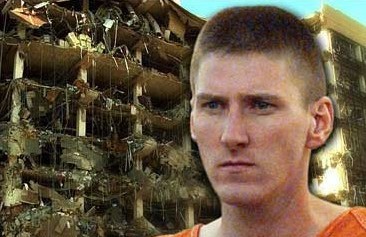 Timothy McVeigh
Mass murderer · USA · 1995
Timothy James McVeigh (April 23, 1968 – June 11, 2001) was a United States Army…
168 victims
Timothy McVeigh
Mass murderer · USA · 1995
Timothy James McVeigh (April 23, 1968 – June 11, 2001) was a United States Army…
168 victims
 Debra Gindorf
Murderer · USA · 1985
Debra Lynn Gindorf was charged by indictment with six counts of murder for inte…
2 victims
Debra Gindorf
Murderer · USA · 1985
Debra Lynn Gindorf was charged by indictment with six counts of murder for inte…
2 victims
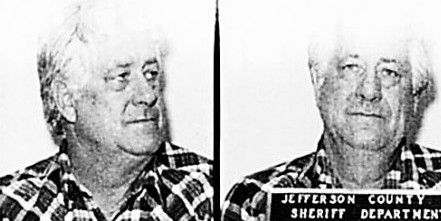 Thomas McCormick
Murderer? · USA · 1975
Thomas McCormick recruited homeless men from a Denver church mission to work on…
8 victims
Thomas McCormick
Murderer? · USA · 1975
Thomas McCormick recruited homeless men from a Denver church mission to work on…
8 victims
 Patricia Allanson
Murderer? · USA · 1974
Patricia Taylor Allanson Patricia Allanson was born in 1937. She grew up as “Pa…
3 victims
Patricia Allanson
Murderer? · USA · 1974
Patricia Taylor Allanson Patricia Allanson was born in 1937. She grew up as “Pa…
3 victims
 Glen Valance
Murderer · Australia · 1964
Glen Sabre Valance Glen Sabre Valance was executed by hanging on November 24, 1…
1 victim
Glen Valance
Murderer · Australia · 1964
Glen Sabre Valance Glen Sabre Valance was executed by hanging on November 24, 1…
1 victim
 George Waterfield Russell
Serial killer · USA · 1990
George Waterfield Russell (George Russell Jr.) was prosecuted in Washington. Ru…
3 victims
George Waterfield Russell
Serial killer · USA · 1990
George Waterfield Russell (George Russell Jr.) was prosecuted in Washington. Ru…
3 victims
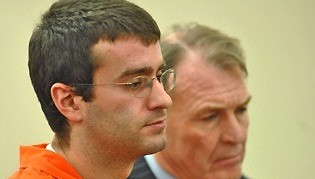 Christopher Porco
Murderer · USA · 2004
Christopher Porco (born July 9, 1983) was convicted of killing his father and a…
1 victim
Christopher Porco
Murderer · USA · 2004
Christopher Porco (born July 9, 1983) was convicted of killing his father and a…
1 victim
- Gender
- male
- Country
- Uganda
- Location
- Kanungu District, Uganda
- Date of birth
- 1932
- Age at first offence
- 68
- Characteristics
- —
- Victim profile
- Men, women and children
- Method of murder
- Poisoning - Fire
- Date(s) of murder
- March 2000
- Years active
- 2000
- Date of arrest
- —
- Status
-
Died in custody
On March 17, 2000, Kibweteere apparently died in the groups mass suicide
Case record: Joseph Kibweteere
Background
Joseph Kibweteere led a breakaway sect known as the Movement for the Restoration of the Ten Commandments of God in Uganda. The movement split from the Roman Catholic Church in Uganda and was described as a doomsday cult.
Many details of Joseph Kibweteere’s life and especially his death remained unclear. He came from a strongly pious Catholic background and was likely wealthy by Ugandan standards. He ran for political office in 1980 and had enough land to donate for a school of his own design. The Catholic school he founded and led was apparently orthodox and at that point he had a positive image in the community. In 1960, he married a woman who would prove to outlive him.
Uganda’s political and religious upheaval was described as likely influencing him, including religious movements that emphasized miracles and Marian apparitions. In 1984, he claimed to be experiencing sightings of the Virgin Mary. This vision had been brought to him by Credonia Mwerinde. In 1989, Credonia Mwerinde met Joseph and the two formed the Movement for the Restoration of the Ten Commandments of God, after she claimed she was looking to repent for her sins. Credonia was described as a prostitute, and her background included claimed experiences dating back further than Kibweteere. Credonia claimed that she could see the Virgin Mary when looking at a stone on the mountains. Her father claimed to have had a vision of his dead daughter Evangelista as early as 1960. His children and grandchildren would be affected by this.
After the death of Credonia Mwerinde’s father, he became leader of the group. The movement did not initially raise alarm in its early activities, and it remained for the most part an obscure figure in Uganda. It never formally split with the Catholic Church in some accounts. In contrast, other accounts described the movement as legally incorporated with this name in 1994.
The movement had goals to obey the Ten Commandments and preach the word of Jesus Christ. Members were taught that to avoid damnation in the apocalypse, one had to strictly follow the Commandments. The group discouraged talking for fear of breaking the Ninth Commandment, “Thou shalt not bear false witness against thy neighbor,” and on some days communication was only conducted in sign language. Fasts were conducted regularly, and only one meal was eaten on Fridays and Mondays. Sex was forbidden, as was soap.
The movement emphasized an apocalyptic end time. Its members were discouraged from talking and engaged in regular prayers. A hierarchy of visionaries was described, with Mwerinde at the top, and behind them former priests who served as theologians. The leaders held the group akin to Noah’s Ark, a ship of righteousness in a sea of depravity.
The movement stated dates where it would be the end of the world, and several of those dates passed without an apocalypse. Reportedly, Joseph Kibweteere stated that the year 2000 would be followed by “year 1 of the new world.” Some claims indicated the end would come in 1999 and that the 2000 suicide was caused by the failure of that prophecy. Other accounts described the end of the world as predicted for December 31, 1999, later revised, and then again described as March 17. The exact dates and expected apocalypse details were described as debated.
A sacred booklet titled A Timely Message from Heaven: The End of the Present Time emphasized the end time and was used by new members, who were required to study it and be trained in its text, reading it as many as six times. The movement taught that the Virgin Mary had a special role in the end and that she communicated with their leadership.
The movement and leadership
The movement was described as a breakaway sect founded by Credonia Mwerinde and Joseph Kibweteere in Uganda. It formed in the late 1980s after Mwerinde and Kibweteere claimed to have visions of the Virgin Mary. In some accounts, the movement was founded in 1989; other accounts gave 1994 as the founding year, and still other details were conflicting.
The five primary leaders were described as Joseph Kibweteere, Joseph Kasapurari, John Kamagara, Dominic Kataribabo, and Credonia Mwerinde.
In other descriptions of the movement, it was founded by excommunicated Roman Catholic priests including Joseph Kibweteere, Joseph Kasapurari, John Kamagara and Dominic Kataribabo, and by two excommunicated Roman Catholic nuns, along with Credonia Mwerinde. Estimates of the year of founding were described as conflicting. The movement was registered as a non-governmental organization in 1994 in one account and was registered as a religious NGO in 1994 in another account.
Kibweteere led an elite group of six men and six women deemed to be the “new apostles,” with an equal number of women due to emphasis on Mother Mary as instrumental in sweeping them toward heaven. The “new apostles” had an equal number of women, and the emphasis on Mother Mary was described as instrumental.
Facilities and community life
The group grew into a thriving community set in pineapple and banana plantations. Members lived communally on land bought by pooling profits from their property, which they sold when they joined the movement.
By 1997, according to a filing with the government, the movement’s membership was listed at nearly 5,000 people. Another set of estimates described membership before the deaths as ranging from 235 to about 650.
Members lived communally and had restrictions including discouragement of private property ownership. Some accounts described that converts surrendered personal clothing and academic qualifications to the cult.
In western Uganda, houses were built for recruitment, indoctrination and worship, and a primary school was established. In one account, education authorities closed the school down due to poor sanitation, low academic standards and violation of children’s rights. Another account said the government shut down the Catholic school and reopened it later in 1998 after it was shut down for insanitary conditions, use of child labor, and possibly kidnapping children.
In March 2000, the group began slaughtering cattle and buying massive amounts of Coca-Cola. These events were described as preparation for a feast before death.
Members reportedly avoided sex, used sign language or gestures, and practiced silence. They were described as living within tightly managed schedules. Some accounts described daily routines including prayer sessions and fasting days. Sunday was described as a “Day of the Lord” when no work or activity was permitted.
Claimed prophecies and preparation
The movement predicted the apocalypse would occur in the year 2000. In preparation, members sold clothes and cattle cheaply, and past members were re-recruited. All work in the fields ceased.
January 1, 2000 passed without the advent of the apocalypse, and the movement began to unravel. Questions were asked of Mwerinde and Kibweteere, and payments to the Church decreased dramatically. Ugandan police believed that some members rebelled and demanded the return of money.
After the failure of earlier dates, another date was immediately predicted. March 17 was described as the new end of the world and was described as a doomsday that would come “with ceremony, and finality” according to the New York Times. The movement held a huge party at Kanungu and roasted three bulls and drank 70 crates of soft drinks. Another party was planned for the eighteenth, which officials believed sect leaders had announced in order to mislead authorities as to their plans.
A member of the movement was quoted as saying: “The world ends next year. There is no time to waste. Some of our leaders talk directly to god. Any minute from now, when the end comes, every believer who will be at an as yet undisclosed spot will be saved.”
Investigation background and disputed interpretations
After the events, some interpretations differed between a mass suicide theory and a mass murder theory. The movement’s anticipated death on March 17 and preparation for it were described as common ground among narratives.
Some accounts described early indications that the deaths might have been mass suicide, including an initial report that members had applied gasoline and paraffin to their skin before the explosion and fire. Police investigation cast doubt on this sole witness, and it was stated that police found no signs of paraffin having been used at the church.
Other accounts described a growing indication that the deaths were mass murder rather than mass suicide. These accounts described the church as boarded up, windows and doors sealed, and additional bodies discovered buried in latrines and at other sites. Police ruled out a cult suicide after interviews and investigation and instead considered it to be a mass murder conducted by movement leadership. Witnesses were described as saying that movement leadership never spoke of mass suicide when preparing members for the end of the world.
A regional police commander Setphen Okwalinga was quoted as saying: “It's a criminal case; it's murder...”
Another quoted statement from an international warrant context described police beliefs treating the movement leader as a fugitive and all the deaths as murder: “Government officials are treating movement leader Kibwetere as a fugitive and all the deaths as murder.”
The offence: the March 17, 2000 events
On March 17, by coincidence St. Patrick’s day, Kibweteere apparently died in the group’s mass suicide. The exact time of death was unclear in some accounts, and he was initially rumored to have escaped. At the time, Ugandan authorities considered him a fugitive and mass-murderer because they believed he had escaped.
According to accounts describing the events as a mass murder, on the seventeenth, group members arrived at their church in Kanungu to pray and sing. Minutes later, nearby villagers heard an explosion and the building was gutted in an intense fire that killed all 530 in attendance, including dozens of children. The windows and doors of the building had been boarded up.
A huge party and purchases were described as preparation. Several days before, Dominic Kataribabo was seen buying 50 liters of sulfuric acid, which may have fueled the fire.
The five principal cult leaders—Joseph Kibweteere, Joseph Kasapurari, John Kamagara, Dominic Kataribabo, and Credonia Mwerinde—were assumed to have died in the fire in some accounts.
Discovery of bodies at multiple locations
After the church fire alerted Ugandan authorities, police investigated movement properties and discovered hundreds of bodies at sites across southern Uganda.
6 bodies were discovered sealed in the latrine of the Kanungu compound. 153 bodies were discovered at a compound in Buhunage. 155 bodies were discovered at Dominic Kataribabo’s estate at Rugazi, where they had been poisoned and stabbed. Another 81 bodies were discovered at lay leader Joseph Nymurinda’s farm. Forensics investigations indicated they had been murdered weeks before the church inferno.
In a later account, decomposition and forensic descriptions were described. Medical examiners determined that the majority of dead sect members had been poisoned. Early reports had suggested that they had been strangled based on the presence of twisted banana fibers around their necks. Later, it was reported that strangled victims were few.
Police searched all sites and concluded earlier estimates of nearly a thousand dead had been exaggerated, and the final death toll had settled at 778.
In one account, a later description by police included that those in the church died from an explosion caused by lit petrol, not bombs as earlier alleged. It was also stated that people put many lit containers of petrol around the church. Pathology reports were described as indicating those buried in cult buildings had first been poisoned by eating contaminated food and that those who took time to die were strangled after being weakened by poison.
Quantities and dates in later reporting
Different death toll figures were described across narratives:
- A count of 778 was described as final in July 28, 2000 reporting.
- Another description said the police concluded that earlier estimates had been exaggerated and that the final death toll had settled at 778.
- Other accounts described death toll increases including an estimate that it could exceed 1,000 and that police counted 330 skulls in the church, with some bodies converted to ash.
Police actions and warrants
After interviews and investigation, police ruled out a cult suicide and instead considered it a mass murder conducted by movement leadership. Police concluded that the failure of the doomsday prophecy led to a revolt among sect members and that leaders set a new date with a plan to eliminate their followers.
Police investigation described continued uncertainty about the whereabouts of the leaders. It was stated that the five principal cult leaders had never been apprehended, with police believing they died with their followers in Kanungu headquarters and later issuing an international warrant for their arrest.
Police later believed that Joseph Kibweteere and Credonia Mwerinde may still be alive and issued an international warrant for their arrest.
Government and public reaction
The Ugandan government responded with condemnation. President Yoweri Museveni was quoted describing the event as a “mass murder by these priests for monetary gain.” Vice president Dr. Speciosa Wandira Kazibwe was quoted: “These were callously, well-orchestrated mass murders perpetrated by a network of diabolic, malevolent criminals masquerading as religious people.”
On April 1, 2000, the government called a day of prayer on Sunday April 2 to console surviving relatives and assure the country that action was being taken in pursuit of the criminal perpetrators.
Continued uncertainty and alleged sightings
The authorities remained uncertain whether the movement’s leaders were among those who perished in the flames or had disappeared. Brigadier Ivan Koreta said: “We haven't picked up much more on the authors of these acts or about their whereabouts,”
Interpol warrants for six cult leaders were described as issued and remaining active. Reports included alleged sightings:
- Credonia Mwerinde was reportedly seen driving away from Kanungu in a pick-up truck.
- There were reports that Katirabaabo was seen in Nairobi and Kibwetere seen in Kisumu in Kenya; police were described as having checked but found nothing.
- Rumors related to the proximity of Kanungu to the border of Rwanda and the Democratic Republic of the Congo were described as fueling continued rumours of flight.
In later accounts, a journalist described finding “Kibetwere Spoiler Boy” marked on a wall at Ubungo Bus Terminal in Tanzania and described meeting a person alleged to be Joseph Kibwetere, though this was not treated as confirmed within the narrative.
In another narrative, it was stated that “There were families inside, even small children,” said by Jonathan Turyareeda, a police officer.
Police spokesperson Assuman Mugenyi was quoted in discussions about the investigation’s scope: “There is nothing else. We have searched everywhere,” and in a separate quotation: “We only got air.”
Other details: beliefs, conduct, and claimed practices
The movement’s rules included discouraging private ownership of property. Ordinary dress was prohibited, and members surrendered their clothes and were issued uniforms of black for recruits, green for those “who had seen the commandments,” and green and white for those “who were ready to die in the ark,” according to one account. Women covered their heads with veils of matching colours. Members were described as not allowed to wear shoes or sandals except for leaders, and those who contributed more money lived in relatively better housing.
Members observed strict silence, communicated using signs and writing, and minimized contact with outsiders. Visitors were restricted to a “visitors' zone.” In 1997, the cult started a primary school that was officially opened by District Commissioner Kita Gawera and later closed down due to poor sanitation, low academic standards and violation of children’s rights.
Some accounts described baptism practices including shaving the candidate and cutting nails and burning them, with the ashes dissolved in tea or water, and part of the ash mixed with anointing oils and smeared over the candidate’s body. The movement’s rosary practices were described, including two rosaries worn around the neck and a third carried in the hand, and at times a fourth hidden under garments.
The movement restricted medical care. Members were described as rarely spoke and used gestures due to fear of breaking the Ninth Commandment.
Disputed details included in narratives
The sources differed in details and disputed interpretations:
- Whether deaths were mass suicide or mass murder was disputed and debated across narratives.
- Exact leadership roles and whether all leaders died in the fire were contested.
- Police now believed Joseph Kibweteere and Credonia Mwerinde may still be alive while early reports assumed the five leaders died in the fire.
- The date and nature of the apocalypse they expected were described as debated.
Timeline
- 1980 — Joseph Kibweteere ran for political office.
- 1960 — Joseph Kibweteere married a woman who outlived him.
- 1984 — Kibweteere claimed to be experiencing sightings of the Virgin Mary.
- 1989 — Credonia Mwerinde met Joseph and they formed the Movement for the Restoration of the Ten Commandments of God.
- 1988 — Credonia Mwerinde’s father saw Jesus Christ, the Virgin Mary, and Saint Joseph.
- 1989 — New Vision ran an interview with a teenage member who said: “The world ends next year. There is no time to waste.
- 1998 — The Uganda government shut down the school on grounds including insanitary conditions, use of child labor, and allegations of kidnapping children, and later allowed it to reopen.
- January 1, 2000 — The apocalypse prediction failed and the movement began to unravel.
- March 17, 2000 — Joseph Kibweteere apparently died in the group’s mass suicide as followers were killed in a fire at the church in Kanungu; hundreds of bodies were later discovered across multiple sites.
- March 20, 2000 — The Boston Herald quoted Steven Hassan on the movement and said: “Most of them died willingly. But when you think about mind control, it wasn't their own will, it was their cult identity's will.”
- March 21, 2000 — By this date, six bodies had been removed from pits, including reports of bodies with stomachs slit open and a crushed skull.
- April 1, 2000 — The government called a day of prayer on Sunday April 2 to console surviving relatives.
- April 3, 2000 — Police were waiting for proper equipment and requested international aid in the form of expert forensic pathologists in one account.
- July 27-28, 2000 — Police said the majority of victims were poisoned; the final death toll was described as settled at 778.
- February 14, 2001 — Reporting described by some estimates as many as 1,000 people found murdered by the cult across the country and that churches were discovered with bodies including 55 pulled from a house.
- March 16, 2001 — AFP reported authorities remained uncertain whether leaders perished in flames or had disappeared.
- March 17, 2001 — A separate narrative used this date to mark the anniversary described as the leaders killing people on the day and police finding additional bodies in subsequent weeks.
- October 18, 2001 — “Kibwetere Sighted in Dar” was published describing an alleged sighting of Kibwetere in Tanzania.
- 2000-MAR-17 — The movement’s followers died in Kanungu in what was alternatively called a mass suicide or a homicide perpetrated by leaders, and mass graves were later discovered in various locations.
- 27 June, 2005 — Nathan Byamukama presented highlights of a Uganda Human Rights Commission report on the Kanungu Massacre.
Outcome
On March 17, 2000, Joseph Kibweteere apparently died in the group’s mass suicide. At the time, some authorities believed he escaped and treated him as a fugitive and mass-murderer. Later, police issued an international warrant for the arrest of movement leaders, including Joseph Kibweteere and Credonia Mwerinde, and police continued to search for them. Police concluded that the events involved a mass murder orchestrated by movement leadership rather than a cult suicide, after discovering evidence of bodies at multiple sites and forensic findings including poisoning and stabbing.
Aftermath
Early reports suggested strangulation; later forensic conclusions described poisoning as majority cause of death and that strangled victims were few. Police concluded the final death toll settled at 778 after searching sites. Government officials and international media coverage described the event as one involving a doomsday cult in Uganda and raised condemnation.
The Roman Catholic hierarchy publicly distanced itself from the tragedy. The country’s bishops said the group’s excommunicated leaders had “erred and broke the discipline of the church.” The sect’s members “were misled by obsessed leaders into an obnoxious form of religiosity completely rejected by the Catholic Church.”
Rumors circulated about human sacrifice and cannibalism in April 2000. The narrative also described fears of HIV/AIDS and other factors as possible influences on some followers.
Authorities remained under-funded and investigations were hampered. Police searched for remaining leaders and mass graves remained a focus of investigation. Some properties and compounds were guarded or described as haunted in local commentary, with ongoing uncertainty over what would be done with the compound.
Spotted an error, or have more information about this case?