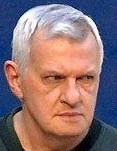
Bevan Von Einem
Murderer Christopher Flannery
Murderer · Australia · 1979
Christopher Dale Flannery (1949 - missing and believed murdered ca. May 9, 1985…
12 victims
Christopher Flannery
Murderer · Australia · 1979
Christopher Dale Flannery (1949 - missing and believed murdered ca. May 9, 1985…
12 victims
 Joseph Schwab
Murderer · Australia · 1987
Joseph Schwab was a German man who murdered five tourists in the Northern Terri…
5 victims
Joseph Schwab
Murderer · Australia · 1987
Joseph Schwab was a German man who murdered five tourists in the Northern Terri…
5 victims
 Lindsay Robert Rose
Murderer · Australia · 1984
Lindsay Robert Rose was sentenced to five consecutive sentences of life impriso…
5 victims
Lindsay Robert Rose
Murderer · Australia · 1984
Lindsay Robert Rose was sentenced to five consecutive sentences of life impriso…
5 victims
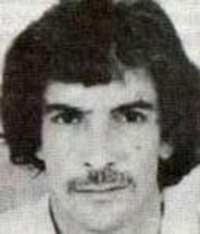 Keith Faure
Murderer · Australia · 1976
Keith George Faure was born in June 1951. He was an Australian career criminal…
4 victims
Keith Faure
Murderer · Australia · 1976
Keith George Faure was born in June 1951. He was an Australian career criminal…
4 victims
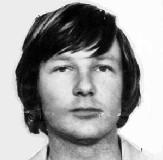 Samuel Leonard Boyd
Murderer · Australia · 1982
Samuel Leonard Boyd was sentenced to 5 consecutives sentences of life imprisonm…
4 victims
Samuel Leonard Boyd
Murderer · Australia · 1982
Samuel Leonard Boyd was sentenced to 5 consecutives sentences of life imprisonm…
4 victims
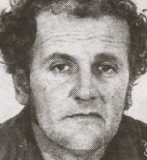 James Beauregard-Smith
Murderer · Australia · 1977
James Beauregard-Smith James George Beauregard-Smith was an Australian offender…
3 victims
James Beauregard-Smith
Murderer · Australia · 1977
James Beauregard-Smith James George Beauregard-Smith was an Australian offender…
3 victims
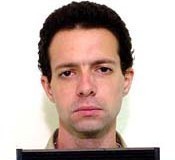 Clay Shrout
Mass murderer · USA · 1994
Clay Shrout Clay Shrout was a 17-year-old juvenile at the time of the May 26, 1…
4 victims
Clay Shrout
Mass murderer · USA · 1994
Clay Shrout Clay Shrout was a 17-year-old juvenile at the time of the May 26, 1…
4 victims
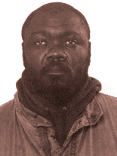 Eldridge Broussard
Homicide · 1988
Eldridge Broussard was the founder of the Ecclesia Athletic Association. Eldrid…
1 victim
Eldridge Broussard
Homicide · 1988
Eldridge Broussard was the founder of the Ecclesia Athletic Association. Eldrid…
1 victim
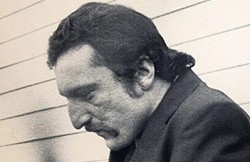 David Shearing
Mass murderer · Canada · 1982
David Shearing was arrested after police received a caller tip about him in a c…
6 victims
David Shearing
Mass murderer · Canada · 1982
David Shearing was arrested after police received a caller tip about him in a c…
6 victims
 Chelsea Richardson
Murderer · USA · 2003
Chelsea Richardson was convicted by a Tarrant County jury in connection with th…
2 victims
Chelsea Richardson
Murderer · USA · 2003
Chelsea Richardson was convicted by a Tarrant County jury in connection with th…
2 victims
 Thomas Beavers
Murderer · USA · 1990
May 1990 — Thomas Beavers broke into the home of Marguerite E. Lowery, raped he…
1 victim
Thomas Beavers
Murderer · USA · 1990
May 1990 — Thomas Beavers broke into the home of Marguerite E. Lowery, raped he…
1 victim
- Gender
- male
- Country
- Australia
- Location
- Adelaide, South Australia, Australia
- Date of birth
- 1945
- Age at first offence
- 34
- Characteristics
- rape, torture
- Victim profile
- Richard Kelvin, 15 / Boys and young men
- Method of murder
- Torture - Massive blood loss ( captive for five weeks)
- Date(s) of murder
- 1979 - 1983
- Years active
- 1979–1983
- Date of arrest
- November 3, 1983
- Status
-
Life imprisonment
Sentenced to life imprisonment with a non-parole period of 36 years in 1984
Case record: Bevan Spencer von Einem
Background
Bevan Spencer von Einem (born c.1945), also known as Bevan von Einem (with the last name sometimes spelled “Von Einem”), was an accountant by profession. He was based in Adelaide, South Australia. He was convicted in 1984 for the rape and murder of Richard Kelvin, a 15-year-old boy, and he was serving life imprisonment in the maximum security B-Division of Yatala Labour Prison.
Von Einem first came to prominent attention on the night of May 10, 1972. That night, two homosexual men were thrown into the River Torrens by a group of men. The river banks were a place for homosexuals to meet in secret, as homosexuality was still illegal in South Australia at that time. One of the men, Dr. George Duncan, drowned. The other man, Roger James, suffered a broken leg and was rescued out of the river by von Einem, who happened to be driving by at the time. Von Einem then took James to Royal Adelaide Hospital.
Over the next decade, rumours were rife that the group of men who threw the two men in the river were Vice Squad Police. On July 30, 1985, former Vice Squad officer Mick O’Shea revealed in The Advertiser newspaper that the group involved were Vice Squad officers and that there was a cover-up to protect them. A task force was set up. On February 5, 1986, three former police officers were charged with the manslaughter of Dr. Duncan; all were eventually cleared of the charges.
The offence: abduction, rape, torture, and murder of Richard Kelvin
At around 6 pm. on June 5, 1983, von Einem (along with other unknown persons) abducted Richard Kelvin in a North Adelaide street, about 60 metres from Kelvin’s home. Kelvin had just seen off a friend at a nearby bus stop on the corner of O’Connell and Marian Streets, North Adelaide, and was returning home for dinner. Several witnesses living close to Kelvin’s home heard cries for help, car doors slamming, and a car with a noisy exhaust speeding away.
Kelvin had a dog collar in his possession which was likely to have attracted von Einem’s attention. Von Einem then tortured, drugged, raped, and held Kelvin captive for five weeks. Kelvin was murdered and his body was dumped on an airstrip near One Tree Hill in the Adelaide Hills area, to the north-east of the city and close to where relatives of von Einem lived.
Kelvin’s clothed body was found by a geologist on July 24, 1983.
Investigation
The autopsy revealed that Kelvin had died from massive blood loss from an anal injury, likely caused by the insertion of a blunt object such as a beer bottle. Kelvin suffered bruising and injuries on his head and back, which were likely to have been caused by blows. Traces of four hypnotic drugs were found in Kelvin, including Mandrax and Noctec.
With drugs as their only firm lead at that stage, police began sifting through prescriptions for those drugs. During the search, police found a prescription for Mandrax issued to a “B. von Einem,” a name familiar to police as he had been questioned previously over the deaths of three young men and an alleged sexual assault of another.
Four days after the body was discovered, von Einem was questioned about the murder of Richard Kelvin by police. He initially claimed he had no knowledge of what happened to Kelvin and said that on the night of abduction he was in bed with the flu.
Police searched his home in the northern Adelaide suburb of Paradise and seized a bottle of Mandrax. Von Einem admitted the drugs were his and said he used them to help him sleep. He denied any other drugs, but police also seized a bottle of Noctec concealed on a ledge behind his wardrobe. Police took hair and blood samples, as well as carpets and other materials for testing.
As von Einem went on holiday in the Soviet Union and the United Kingdom during August and September of 1983, the case against him mounted up. Forensic investigators matched many fibres found on Kelvin’s clothing to those taken from von Einem’s home, and also matched hairs found that belonged to von Einem.
Forensics determined that Kelvin was murdered between July 8 and July 10, 1983 and was dumped at the airstrip no later than July 10.
Police raids on various locations around Adelaide linked to von Einem yielded few clues. Police also searched for a man who previously claimed to police during the investigation of the murder of Alan Barnes that von Einem was involved in his death and that he was a former associate of von Einem. The man, known as “Mr. B,” was located and informed police in detail about how he and von Einem picked up young male hitchhikers, gave them alcoholic drinks laced with hypnotic drugs, and took them to von Einem’s previous home in the Adelaide suburb of Campbelltown. Mr. B said the young men were abused overnight and sent home the next day. Mr. B provided further information about other associates of von Einem but claimed he took no part whatsoever in any murders.
Police questioned women and transsexuals who von Einem associated with, but they volunteered little information.
Arrest and charges
With enough evidence, together with information given by “Mr. B,” to indicate that Richard Kelvin was at von Einem’s home around the time of his death, police arrested and charged von Einem with murder on November 3, 1983. Von Einem still denied that he had ever come into contact with Kelvin.
Committal hearing and trial
The committal hearing to determine if there was sufficient evidence for von Einem to stand trial for murder began on February 20, 1984. Faced with evidence from prosecutors suggesting Kelvin was in his company, von Einem changed his alibi to claim he was in contact with Kelvin on June 5, 1983.
Von Einem said he was driving along O’Connell Street in North Adelaide looking for a parking spot to buy dinner. While looking for a parking spot in a side street, he said he nearly ran over Kelvin as Kelvin jogged in from his side. Von Einem claimed Kelvin had bisexual tendencies and said that the two then had a conversation about problems Kelvin had been having at school. Von Einem said Kelvin willingly got into the car and they drove to von Einem’s home. Von Einem said Kelvin stayed for two hours, after which von Einem dropped him off in the Adelaide CBD near a hospital and gave Kelvin $20 to catch a taxi home. Von Einem said it was the last time he saw Kelvin.
On May 25, 1984, Magistrate Nick Manos ordered von Einem to stand trial for the murder of Richard Kelvin.
The trial against Bevan Spencer von Einem for the murder of Richard Kelvin opened at the Supreme Court Building of South Australia on October 15, 1984 before Mr. Justice White. A jury of 12 people (seven women and five men) was selected and were agreed upon by the prosecution and defence.
Von Einem pleaded not guilty. His defence was led by barrister Barry Jennings and assisted by Helena Jasinski, who was von Einem’s solicitor from the start of the police’s investigation during the previous year. The prosecution was led by Brian Martin QC (who was Chief Justice of the Supreme Court of the Northern Territory at the time noted in the material), with assistance from Paul Rofe (now the recently retired Director of the Department of Public Prosecutions).
The prosecution opened their case by taking the jury to the various sites around Adelaide that were important to the trial. Over the first week, the prosecution called various witnesses to the stand.
Richard Kelvin’s parents, girlfriend, and best friend testified that Kelvin was an average 15-year-old who would not willingly get into a car with a stranger. They also testified that Kelvin was heterosexual and had no homosexual or bisexual tendencies, and that he was wearing the dog collar as a prank.
People living close to Kelvin’s home testified that they heard noises and commotion corresponding to the abduction on the night of June 5 at around 6 pm.
Forensic pathologists testified about injuries to Kelvin’s head and anus and the likely cause of his death. Pharmacists gave evidence of the excessive amount of different hypnotic drugs von Einem had been prescribed: 5172 tablets and capsules of six different brands between December 15, 1978 and August 10, 1983. They also showed that von Einem often had prescriptions issued from different chemists on the same day or during the same weeks.
Police who worked on the case also testified about their investigation since they first questioned him about the murder, including a claim that von Einem’s bedroom appeared to have been unusually cleaned “extensively”.
Forensic scientists testified about when Kelvin died and when his body was dumped. A leading entomologist testified, from the larvae cycle of flies on the body and from the larvae cycle of flies on a dead dog nearby, that Kelvin’s body must have been dumped on the airstrip near One Tree Hill on July 10, 1983.
Forensic scientists also testified about hair and fibre samples collected that were linked to von Einem. Hairs from von Einem were found on and inside Kelvin’s clothing. Of 925 fibre samples found on Kelvin’s clothing, 250 came from von Einem’s home environment, with seven from Kelvin’s home.
The scientists stated that if von Einem’s story was true, then there should have been a very small amount or even none of the fibres and hair samples from that night still on Kelvin’s clothing after 36 hours, let alone after five weeks.
During cross-examination, the defence floated a theory that after von Einem’s last contact with Kelvin, Kelvin was abducted by other people, stored his clothing for five weeks, then later murdered him and re-dressed him. The forensic scientists conceded it was a possible scenario but conceded, on recross-examination, that it would still be unlikely given how fibres and hair transfer over time.
The prosecution then rested their case.
The defence opted for von Einem to give an unsworn statement from the dock rather than sworn evidence from the witness box. In his unsworn statement, von Einem detailed his alibi about his activities between June 5 and July 11, 1983. He again claimed that on June 5 he picked up Kelvin in North Adelaide, drove him to his home, and then dropped him off in the Adelaide CBD. He said he was sick with flu for the next week and did not return to work until June 14.
Von Einem said he was “quite sketchy on his activities” after that, but said he remembered what he did on July 10, 1983 when the body was dumped. He claimed he was at a relative’s birthday party with his mother for most of that evening; after dropping off a friend on the way home, he went straight to bed and went to work the next day.
Von Einem addressed the noisy exhaust heard during the abduction by stating that the exhaust on his Ford Falcon was less than two years old and in good condition. He said he sold the Ford Falcon on July 16, 1983 to raise money for his overseas trip.
He closed his unsworn statement again claiming his innocence.
The defence called various witnesses to corroborate von Einem’s story. The witnesses included colleagues and friends to testify that von Einem was unwell and at home during the first week of Richard Kelvin’s captivity. The defence also called the geologist who discovered Kelvin’s body on July 24 and who recalled that he was walking in the same area on July 10 during the early afternoon and the body was not there at that stage.
Other defence witnesses included the woman who purchased von Einem’s Ford Falcon and detailed the condition of the car. The defence also called the relative who hosted the birthday party on July 10, who said that von Einem and his mother arrived at 5:30 pm and left at 10:30 pm. Photographs of the party that included von Einem were tendered to the court.
Finally, the defence called von Einem’s mother about her son’s activities over the weekend when Richard Kelvin was kidnapped. Under cross-examination, the prosecution showed inconsistencies in her testimony compared to earlier statements she made to police about von Einem’s whereabouts on the weekend of June 4–5. This weakened von Einem’s case, since it highlighted that von Einem changed his account in the previous February of what happened on the night of June 5, 1983.
In summation, the prosecution stated that the evidence proved von Einem’s story contained lies and inconsistencies, and that he murdered (with the help of others) Richard Kelvin. The prosecution said von Einem’s admission of picking up Kelvin showed he was in contact with him on June 5, the fibres and hairs showed von Einem was with him at the time of, or just before, the time of death, and the drugs showed von Einem was with Kelvin between those times. The prosecution also responded to doubts about when on July 10 the body was dumped by suggesting that von Einem could have dumped it very late on July 10 or in the early morning of July 11 before he went to work for the day.
The defence stated in its summary that the prosecution had failed to prove beyond reasonable doubt that von Einem was guilty of murder and failed to establish the exact cause of Kelvin’s death, so the jury must give von Einem the benefit of the doubt.
Mr. Justice White delivered his summation, and in the early afternoon of November 5, 1984, the jury retired to consider its verdict.
Verdict and sentencing
In 7½ hours of deliberation, the jury returned a verdict. Bevan Spencer von Einem was found guilty of the murder of Richard Kelvin. He was automatically sentenced to life at Yatala Labour Prison. Mr. Justice White imposed a non-parole period of 24 years.
Under South Australian law, a third of the non-parole period could be taken off for good behaviour. The Attorney-General of South Australia appealed the leniency of the non-parole period. On March 29, 1985, the Criminal Courts of Appeal in South Australia increased the non-parole period to 36 years, described as a record at the time in that state. The earliest von Einem could be released on parole was therefore October 31, 2008.
Appeals
The defence team appealed the conviction to the Criminal Courts of Appeal in South Australia and requested that a new trial be set. The basis for the appeal was evidence about Kelvin’s heterosexuality, references to von Einem’s own heterosexuality during the trial, and the negative impact this might have had on the jury. The appeal also argued that Mr. Justice White in his summation did not include testimony from von Einem’s relative about her attendance at the birthday party on the day Kelvin’s body was dumped.
The Criminal Courts of Appeal rejected the appeal, stating the trial was conducted fairly and just throughout. The court conceded that Mr. Justice White should have included the evidence relating to the birthday party.
Other murder-related matters: “The Family” murders and further investigations
Bevan Spencer von Einem was the leading suspect in the unsolved murders of four other young men between 1979 and 1982. The four murdered were Alan Barnes in June 1979, Neil Muir in August 1979, Peter Stogneff in August 1981, and Mark Langley in February 1982.
In February 1988, State Coroner Kevin Ahern ordered an inquest into the deaths of these four young men. On March 24, 1988, the State Coroner’s findings stated that the manner and circumstances of the four murders were very similar to those in the case of Richard Kelvin, particularly the murders of Barnes and Langley.
The reward for any information leading to an arrest for the murders was increased to $250,000, and later increased to $500,000 in September 1989.
Following the inquest, police investigated and attempted to locate von Einem’s former associates. During 1989, media interest in the four unsolved murders increased, with extensive news coverage in Adelaide about who was involved. The media dubbed those involved “The Family,” an alleged group of homosexual child sexual abusers possibly involving high-profile Adelaide establishment figures. Police who worked on the cases believed that the group did not involve any high-profile people in Adelaide.
On August 28, 1989, von Einem gave his one and only interview from prison to The Advertiser journalist Dick Wordley. In the interview, von Einem again pleaded his innocence in the murder of Richard Kelvin and of the four other young men. He regretted taking his lawyer’s advice to keep silent during the early stages of the Kelvin investigation. He hinted he could name people who could help police but feared for his life if he did. He also claimed his life had been threatened once by two police officers who ordered him not to give evidence in the inquest into the death of Dr. George Duncan in 1972.
Shortly after the interview, police interviewed “Mr. B” again, who was living in Sydney. “B” gave a statement about the Alan Barnes murder that convinced prosecutors to grant him immunity if von Einem was brought to trial. With “B”’s statement and similar-evidence links from the Richard Kelvin case, police arrested von Einem at Yatala Labour Prison on September 15, 1989 for the murder of Alan Barnes. On November 10, 1989, von Einem was also arrested for the murder of Mark Langley.
Police were never able to obtain enough evidence for charges in the murders of Neil Muir and Peter Stogneff. In the case of Muir, an Adelaide doctor was tried for his murder in 1980 but was found not guilty.
Committal proceedings and withdrawals: Alan Barnes and Mark Langley
The committal hearing to determine whether von Einem should stand trial for the murders of Barnes and Langley began on March 5, 1990 before magistrate David Gurry. Von Einem pleaded not guilty to both murders. His defence counsel immediately claimed it would be an abuse of justice to order him to stand trial due to mass coverage in the media. Defence counsel at this stage consisted of barrister Mark Griffin with assistance from Marie Shaw.
The prosecution was led again by Brian Martin QC, assisted by Tom Birchall. The prosecution relied on evidence from the Richard Kelvin murder, arguing the crime details were strikingly similar to the murders of Barnes and Langley. The prosecution also relied on evidence from former associates about von Einem picking up boys hitchhiking and sexually abusing them, and “B”’s evidence that von Einem was in the company of Barnes shortly before Barnes’ murder.
“B” also made allegations of von Einem being involved in the unexplained Beaumont children disappearance in 1966, as well as the disappearance of two girls at the Adelaide Oval in 1973. These allegations were unable to be proven.
Another witness claimed he had seen von Einem and Barnes together drinking in the weeks before Barnes’ death. Samples taken from Barnes’ body showed sedative drugs were present.
Little evidence was presented for the murder of Mark Langley, because prosecutors felt proving von Einem murdered Barnes would naturally follow that he murdered Langley as well.
On May 11, 1990, Magistrate Gurry ordered von Einem to stand trial for the two murders of Alan Barnes and Mark Langley.
Von Einem’s defence counsel appealed the decision and launched an abuse-of-process action in the Supreme Court of South Australia to obtain a permanent stay of proceedings, arguing that huge media interest would prevent a fair trial. Proceedings began on June 19, 1990 before Justice Kevin Duggan. On December 17, 1990, Justice Duggan released findings. He ordered von Einem to stand trial but expressed concerns about most of the prosecution’s evidence.
Pre-trial hearings began on December 19, 1990 in the Supreme Court of South Australia, with Justice Duggan presiding. After Justice Duggan’s findings two days earlier, the prosecution decided to try von Einem separately for the murders of Alan Barnes and Mark Langley. Justice Duggan ruled evidence relating to the Richard Kelvin murder and evidence from von Einem’s various associates and hitchhikers was inadmissible. The judge ruled that “B”’s evidence could be heard, but with defence allowed to question the evidence while it was being given.
On advice from the Attorney-General of South Australia, prosecutors withdrew the charge for the murder of Mark Langley on December 21, 1990. The prosecution attempted to continue with the murder charge for Alan Barnes, but because of problems admitting enough evidence about von Einem picking up hitchhikers, the final charge was withdrawn on February 1, 1991. The prosecution, on the advice of the Attorney-General, entered a nolle prosequi for the Alan Barnes murder charge.
Beaumont children and related allegations at the committal hearing
At the committal hearing, evidence was described as involving von Einem’s alleged connection with the Beaumont children disappearance. The material reports that “Mr B” alleged von Einem told him he had abducted the Beaumont children, had “connected them up” and “did some brilliant surgery on them,” and that one child had died. The material also states the bodies had been dumped at Moana or Myponga, south of Adelaide.
The material further reports: “He also told me he picked up two children at the football.”
It also reports that a suppression order meant the evidence from the committal hearing could not be published in South Australia, but that the evidence was published in other Australian states. When the suppression order was lifted in South Australia, it was described as being printed on the front page of the Adelaide Advertiser. The material also reports that “Mr Beaumont,” speaking from home, said police had kept him updated and quoted: “I don’t know what to believe. I don’t know any more than you.”
The material also reports that Mrs Beaumont was not available to comment.
The material reports doubts and criticism of “Mr B”’s evidence. It states that “Mr B” gave no more evidence of von Einem’s involvement with the Beaumont children disappearance or the Oval abduction, and that no other witness supported it. The material reports that “Mr B”’s evidence was attacked as weak and inconsistent. It also reports that he admitted having been a drug user and having a poor memory, and that he refused to sign the statement he made to detectives in Sydney, with the statement described as:
There were a few reasons. Nerves, concern about my own safety and there was no legal obligation to sign, so I didn't.
It also reports conflicting testimony from “Mr B”’s sister, Claire, who said “Mr B” arrived at her house and said “I've just seen a murder”, claiming to have witnessed Barnes being thrown from a bridge. The material states that “Mr B,” in turn, said Claire was “just a little bit dizzy.”
The material reports that it was pointed out “Mr B” failed to mention the Beaumont children when he spoke to police in 1979 and 1983, and that magistrate Mr. Gurry said:
As I sit here I still have, ringing in my ears, Mr B's admission in court that in terms of his obligations in this matter "the court comes last", and the fact that much of what he says may be inherently improbable, given normal expectations of human behaviour.
It further reports that questioned by Mr Mark Griffin, defence counsel for von Einem, “Mr B” said:
You're not wrong. You haven't had to carry this shit around for 10 years. You have got no idea what I have been going through. It's not funny not being able to walk out of your own front door and go to the shop on your own, sit here and face crap like [name suppressed] sitting in the body of the court. The mental torture I am going through, not being able to sleep at night, getting two or three hours sleep a night and having to come in here and face you every day. It's not fun. It has been like this for me for 11 years. I have given a lot of consideration to the relatives of the families; they deserve to know what really happened.
The material describes that on Thursday, 10 May 1990, von Einem was committed to stand trial.
A search was described as being made of the Myponga Reservoir based on “Mr B”’s testimony, with nothing found.
Outcome for Barnes and Langley charges
The material states that Bevan Spencer von Einem was never tried for the murders of Alan Barnes and Mark Langley. It reports that a legal ruling barred use of evidence from the earlier murder trial, which made it impossible to establish a connection between the two murders and the Richard Kelvin murder conviction. It also states that this weakened the case and reduced the prospect of a conviction, leading to abandonment of charges. It reports that the murders of Alan Barnes and Mark Langley remain unsolved. It also reports that police described “Mr B”’s evidence as “extremely fanciful,” later describing concerns about relying on his evidence.
It states that von Einem had never been tried for any murder other than the murder of Richard Kelvin.
Child pornography and prison-related events
On 25 January 2008, The Advertiser reported that von Einem would not answer charges of possessing child pornography for at least another two months.
On 7 December 2007, the ABC reported that von Einem had been granted a further adjournment before answering charges of possessing child pornography. On 1 November 2007, the ABC reported that after 24 years behind bars, von Einem was eligible to apply for parole, and that South Australian Premier Mike Rann vowed to enforce new legislation so von Einem would never leave prison alive.
On 27 July 2007, it was announced that von Einem was transferred from the maximum security B-Division of Yatala Labour Prison to Port Augusta Prison.
On 14 June 2007, the ABC reported that von Einem had been charged with producing and possessing child pornography, with police alleging he handwrote three fictitious stories describing sexual acts between a child and a man. The material states his lawyer believed a handwriting analysis would clear von Einem.
On 4 February 2007, the ABC reported that von Einem was charged over commercial dealings during incarceration, including selling hand-painted greeting cards.
On 11 August 2007, The Australian reported that detectives were calling for information to establish the identity of a young man seen in Seven Network’s news archive in the days after the Beaumont children disappearance, describing a resemblance to a youthful Bevan Spencer von Einem.
On 13 August 2007, the Seven Network followed with a story that a man standing next to the von Einem lookalike in archived film matched the police sketch of the suspect seen with the Beaumonts at the beach on the day of their disappearance.
In 2006, on 26 November 2006, it was revealed von Einem had been prescribed Cialis by a prison doctor in 2003. On 12 November 2006, the Sunday Mail reported that von Einem was receiving preferential treatment by some prison officials at Yatala Labour Prison, described as including home-cooked meals and use of a mobile telephone. On 29 October 2006, The Australian reported von Einem had been selling hand-painted greeting cards to prison officers for $20 each. On 29 January 2006, the Sunday Mail reported von Einem was being investigated for allegedly raping an inmate several times at Yatala Labour Prison.
On January 29, 2006, the Sunday Mail report stated he was being investigated for allegedly raping an inmate several times at Yatala Labour Prison.
On 28 March 2008, the ABC reported that child pornography found in von Einem’s cell was determined not to have been written by von Einem and that fingerprints did not match. It also reports defence lawyer Sam Abbott said he expected the Director of Public Prosecutions to drop the most serious charge of producing the material, and that if not, he would argue there was no case to answer. It also reports that von Einem was excused from attending court hearings to avoid an “unpleasant” three-hour drive with other inmates.
On 4 May 2008, it was announced an Adelaide chiropractor who fled Australia while being investigated for involvement in the Family Murders was being sought in Europe by police. The chiropractor was reported as a former associate of von Einem.
On 13 April 2008, it was announced police conducting fresh investigations into the unsolved Family murders would quiz transvestites who had information that could assist the inquiry, and that some were former associates of von Einem and likely to provide valuable information.
On 27 April 2008, it was announced police were set to travel overseas to interview several key witnesses.
On 6 June 2008, it was announced prosecutors dropped one charge of producing child pornography, while von Einem remained facing possession charges.
On 18 September 2008, it was announced prosecutors dropped allegations that von Einem wrote stories of child pornography in his jail cell.
On 28 October 2008, it was announced police hoped one of four suspects in the “Family” sex murders would come forward to help solve the case after the State Government doubled a reward to $1 million. This announcement came days after Major Crime detectives interviewed von Einem from his prison cell.
In 2009, on 27 May 2009, von Einem pleaded guilty to possessing child pornography, described as the first time he had confessed to a crime. On 24 June 2009, he was sentenced to a further 3 months for possession of child pornography.
On 1 January 29, 2006, the Sunday Mail reported he was being investigated for allegedly raping an inmate several times at Yatala Labour Prison.
Other details
In January 1983, the material describes Kelvin’s dog collar as being worn as a prank, and the jury heard evidence about the dog collar and abduction noises.
The material also reports on alternate trial content and evidence about fibres and hairs, including the numbers of fibre samples from Kelvin’s clothing and the portion from von Einem’s home environment.
The material characterises the case and related murders as “The Family Murders,” and reports speculation that there might be a group up to ten people collectively engaged in “deviant practises.” It also reports debate about whether “The Family” existed and about the involvement of any high-profile establishment figures.
It also reports that Detective Superintendent Rob Lean said in 1987:
We still feel that Von Einem is the principal person behind the murders. But he refuses to talk to us.
The material also states that “Bevan Von Einem home last updates contact” appeared at the end of the material and that it contained no additional case facts beyond what had already been described.
Spotted an error, or have more information about this case?