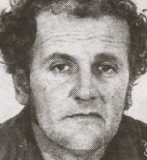
James Beauregard-Smith
Murderer Christopher Flannery
Murderer · Australia · 1979
Christopher Dale Flannery (1949 - missing and believed murdered ca. May 9, 1985…
12 victims
Christopher Flannery
Murderer · Australia · 1979
Christopher Dale Flannery (1949 - missing and believed murdered ca. May 9, 1985…
12 victims
 Bevan Von Einem
Murderer · Australia · 1979
Bevan Spencer von Einem (born c.1945), also known as Bevan von Einem (with the…
5 victims
Bevan Von Einem
Murderer · Australia · 1979
Bevan Spencer von Einem (born c.1945), also known as Bevan von Einem (with the…
5 victims
 Joseph Schwab
Murderer · Australia · 1987
Joseph Schwab was a German man who murdered five tourists in the Northern Terri…
5 victims
Joseph Schwab
Murderer · Australia · 1987
Joseph Schwab was a German man who murdered five tourists in the Northern Terri…
5 victims
 Lindsay Robert Rose
Murderer · Australia · 1984
Lindsay Robert Rose was sentenced to five consecutive sentences of life impriso…
5 victims
Lindsay Robert Rose
Murderer · Australia · 1984
Lindsay Robert Rose was sentenced to five consecutive sentences of life impriso…
5 victims
 Keith Faure
Murderer · Australia · 1976
Keith George Faure was born in June 1951. He was an Australian career criminal…
4 victims
Keith Faure
Murderer · Australia · 1976
Keith George Faure was born in June 1951. He was an Australian career criminal…
4 victims
 Samuel Leonard Boyd
Murderer · Australia · 1982
Samuel Leonard Boyd was sentenced to 5 consecutives sentences of life imprisonm…
4 victims
Samuel Leonard Boyd
Murderer · Australia · 1982
Samuel Leonard Boyd was sentenced to 5 consecutives sentences of life imprisonm…
4 victims
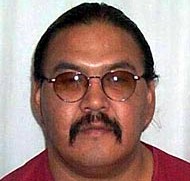 Clifford Sleigh
Murderer · Canada · 1992
September 6, 1992 — Corinne Gustavson (“Punky”) was kidnapped from her north Ed…
1 victim
Clifford Sleigh
Murderer · Canada · 1992
September 6, 1992 — Corinne Gustavson (“Punky”) was kidnapped from her north Ed…
1 victim
 Eric Lynn Ferrell
Murderer · USA · 1987
Eric Lynn Ferrell was convicted of murdering his 72-year-old grandmother and hi…
2 victims
Eric Lynn Ferrell
Murderer · USA · 1987
Eric Lynn Ferrell was convicted of murdering his 72-year-old grandmother and hi…
2 victims
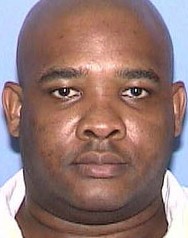 Shannon Charles Thomas
Murderer · USA · 1993
Shannon Charles Thomas was executed by lethal injection in Texas on November 16…
3 victims
Shannon Charles Thomas
Murderer · USA · 1993
Shannon Charles Thomas was executed by lethal injection in Texas on November 16…
3 victims
 Sara Kruzan
Homicide · USA · 1994
Sara Jessimy Kruzan was born on January 8, 1978. She was raised by her mother i…
1 victim
Sara Kruzan
Homicide · USA · 1994
Sara Jessimy Kruzan was born on January 8, 1978. She was raised by her mother i…
1 victim
- Gender
- male
- Country
- Australia
- Location
- Woodside, South Australia, Australia
- Date of birth
- 1943
- Age at first offence
- 34
- Characteristics
- rape
- Victim profile
- Sandra Holland, 32, and her sons Craig, 9, and Scott, 11
- Method of murder
- Strangulation - Drowning
- Date(s) of murder
- July 13, 1977
- Years active
- 1977
- Date of arrest
- —
- Status
-
Imprisoned
Sentenced to life imprisonment on March 16, 1978; released on parole on April 1, 1994; sentenced to 12 years in prison on November 25, 1994
Case identification
James Beauregard-Smith
Background
James George Beauregard-Smith was an Australian offender who was convicted of murdering Craig Alan Holland. He had an affair with Sandra Holland for some months before the murder. Sandra Holland told him that she did not want to see him again and was returning to her husband. The killings involved Sandra Holland and her sons Craig Holland and Scott Holland.
The offence
On or about 13 July 1977, James George Beauregard-Smith murdered Craig Alan Holland, a nine-year-old child. It appeared that, as part of the one incident, he also murdered two other victims: Sandra Holland (the boy’s mother) and Thomas Scott Holland (the boy’s brother).
During an argument, Beauregard-Smith struck Sandra Holland. She fell and became unconscious. He strangled her. Craig ran into the room, and Beauregard-Smith took Craig back to the bathroom where Craig’s brother Scott was having a bath. Beauregard-Smith drowned both boys in the bath.
The bodies of Sandra Holland and Scott Holland were found buried under leaves and branches at Woodside. Craig Holland’s body was found under the floorboards of the family home.
While out on parole, Beauregard-Smith committed rape at Cuddly Creek on 8 April 1994, a week or so after his release on parole.
The sentencing judge described the rape sentencing conduct as Beauregard-Smith taking the victim to a remote area and subjecting her to “a series of violent acts.” The sentencing judge said:
"Quite obviously your acts were premeditated. Your conduct shows you are a man capable of violent acts. The agony and trauma which the young lady has suffered was apparent over the long period in which she gave her evidence. It is quite impossible to assess the harm which your atrocious actions have caused."
Beauregard-Smith maintained that the sexual arrangements with Ms Grice were consensual.
Investigation
The bodies were located as follows: Sandra Holland and Scott Holland were found buried under leaves and branches at Woodside, and Craig Holland was found under the floorboards of the family home.
Arrest
On 10 November 1992, Beauregard-Smith was convicted and sentenced to imprisonment for one year for escaping from custody.
Trial
Murder
On 16 March 1978, a jury convicted Beauregard-Smith of murdering Craig Alan Holland. The trial judge sentenced him to imprisonment for life.
The judgment record also stated that the offences were committed on or about 13 July 1977.
Beauregard-Smith denied the offences charged during the trial but later admitted the murder of all three victims.
Rape and indecent assault
On 15 November 1994, Beauregard-Smith was convicted of one count of rape and two counts of indecent assault. The offences occurred at Cuddly Creek on 8 April 1994, about a week or so after release on parole.
On 25 November 1994, he was sentenced on the count of rape to a head sentence of twelve years’ imprisonment, and convicted without penalty on the counts of indecent assault. On appeal, the sentence for rape was reduced to eight years.
Sentencing
Murder
On 16 March 1978, the trial judge sentenced Beauregard-Smith to imprisonment for life.
On 15 September 1989, an order fixed a non-parole period for the murder conviction. The non-parole period was set at 22 years commencing on 16 July 1977, the date Beauregard-Smith was first taken into custody.
Escape from custody
Parole and related release
Beauregard-Smith was released on home detention on 6 May 1993. He was released on parole on 1 April 1994. The parole period was fixed at ten years to expire on 31 March 2004, recommended to the Governor pursuant to the previous s 66(3) of the Correctional Services Act 1982.
Appeals
The appeal regarding the rape sentence reduced the sentence for the conviction for rape from twelve years to eight years. The record also described that, following appeal against sentence, the sentence for rape was reduced by the Court of Criminal Appeal in February 1995.
Other court proceedings: non-parole period for rape sentence and life sentence
The record described an application under s 32(3) of the Criminal Law (Sentencing) Act 1988 for an order fixing a non-parole period in respect of a life sentence for murder and a sentence of twelve years’ imprisonment for rape reduced to eight years on appeal.
Section 75 of the Correctional Services Act 1982 operated to cancel parole in respect of the life sentence for murder as from the imposition of the sentence for rape and indecent assault. Because there was no non-parole period in force at that point, Beauregard-Smith sought the fixation of a non-parole period under s 32(3).
Psychiatric and psychological evidence
The court received reports prepared by Dr K P O’Brien (dated 23 November 1998 and 8 January 1999) and heard evidence from Dr O’Brien in relation to his reports. The court also admitted a report dated 12 November 1999 from Dr Bruce Westmore. Psychological testing was undertaken by Mr John Bell, a senior clinical psychologist of the South Australian Forensic Health Service.
Dr O’Brien report of 23 November 1998 included the statement:
"Mr Beauregard-Smith does not suffer from any form of active mental illness in the form of a psychosis (a break with reality) or of thought disorder. He does not suffer from a clinical depression, an abnormal level of anxiety or any obvious cognitive impairment. It is likely that he suffers from a personality disorder and, essentially, this diagnosis is made on his longitudinal record and his apparent inability (like many prisoners) to benefit and profit from the experience of incarceration ... It would appear that themes relating to control and early gratification of his needs, particularly sexual, dominated at the time of his previous release and may be important factors to be still taken into account by reviewing authorities ..."
The report continued:
"Mr Beauregard-Smith continues to be a rather enigmatic man. As always, he presents quite favourably and to the best of my knowledge his institutional record is again exemplary. In contrast, his criminal record is disturbing and suggests a propensity to engage in sudden and significantly aggressive acts of, although not exclusively, a sexual nature. He does not suffer from a form of formal mental illness but it is very probable, on the basis of his life history, that he suffers from a personality disorder with significant anti-social features. He may well warrant a diagnosis of anti-social personality disorder or even that of a psychopath or sexual psychopath."
Dr O’Brien said he would be loathe to confirm a diagnosis of psychopath or sexual psychopath without recent and thorough psychological testing. The report stated:
"The results of such testing, in conjunction with clinical psychiatric review, may well give some more firm pointers about this man's real personality and, by implication, the risks attached should he be released. I would be prepared to re-evaluate him again once such testing has been concluded and the results available."
Mr Bell’s report included the statement:
"an implication of the diagnosis of psychopathy is that few intervention techniques have claimed great success in promoting significant therapeutic change in such individuals."
Mr Bell said he was unaware of any such intervention available in this state. He also referred to intensive assessment:
"There would be a requirement to intensively and comprehensively assess him in advance of this, with the requirement of review and outcome data being monitored. The implications of other profile scores, specifically the strong tendency to create a positive impression of himself, may lead to any such evaluation being invalid and in order for that this[sic] not to be the case, would require Mr Beauregard-Smith to change the habitual style which has been present since early childhood."
Mr Bell concluded:
"With the same consideration in mind any consideration for future parole conditions, which I respectfully recommend should not be considered until any such consistent rehabilitative change has been effected, should be strictly supervised with collateral confirmation being required for any statements that Mr Beauregard-Smith makes with regard to important factors such as his employment standing, relationship formation, friendship groups, accommodation and activities."
Dr O’Brien report of 8 January 1999 included:
"The obtaining and interpretation of collateral information is an important part of the process in conducting ... [an assessment of personality]."
It also stated:
"As Mr Bell has indicated, Mr Beauregard-Smith obtained a score which is above the cut-off level for the diagnosis of psychopathy. In other words as a result of testing data, the diagnosis of Psychopathy is confirmed."
Under the heading “Discussion,” Dr O’Brien said:
"Given Mr Beauregard-Smith's previous criminal history and anti-social behaviour, together with his most recent conviction (which he denies) and coupled with the results of psychological testing, the diagnosis of psychopathy, with all its implications is, in my view, established."
Dr O’Brien stated:
"Notwithstanding any improvement that may have been made in more recent years, it is my view that at least some of the characteristics of psychopathy still remain relatively unaltered. He [Mr Beauregard-Smith] will remain at risk, therefore, at some level to the community, notwithstanding his protestations to the contrary. Unfortunately, given the nature of psychopathy there is little reassuring information either in clinical practice or the literature that psychiatric/psychological intervention will materially alter that situation. There is a body of professional opinion that believes that with the passage of time, and with age, a degree of maturation (and implied stability) accrues. Given the fact that Mr Beauregard-Smith re-offended shortly after returning into the community after many years in gaol, it is difficult to escape the conclusion that he did not particularly profit from that experience."
Dr Bruce Westmore’s report included:
"The age of this man, his recent offence, the duration over which he has offended and the nature and severity of his previous offences, particularly the homicides, are all factors which I believe indicate that Mr Beauregard-Smith represents an ongoing risk to the community at worst and at best, an unknown risk to the community. Precisely where he is on this spectrum cannot be answered in my view, principally because he has not had access to the necessary psychiatric and psychological treatments and assessments to understand his complex psychology more comprehensively. Until that is done he remains as Dr O'Brien reports in November 1998, 'a rather enigmatic man.' Risks to the community cannot be excluded at this time although I would agree with the opinions expressed by Dr O'Brien, Mr Bell and the Parole Board that if he is to be released, he requires a trial of psychological and psychiatric assessments and therapy, this to enable the mental health professionals to reach a definitive diagnosis about him and to see what impact treatment might have on him. I would not recommend that Mr Beauregard-Smith be released on parole at this time unless it is correct that there are back up legal mechanisms available to for example the Parole Board, to continue his detention should it become apparent after appropriate assessments and therapy that he remain a continuing and possibly long term risk to the community. Mr Beauregard-Smith may have to accept that the final psychiatric recommendation is that he never be released, this if it is felt he represents an unacceptable risk to the community. If such back up mechanisms are available however then I would recommend that he be considered for a non-parole period. This will enable him to move to an environment where I understand he might be more able to access appropriate ongoing assessments. I am also quite uncertain how any internal psychological changes which may occur in this man are going to be reliably assessed. It is unlikely significant clinical changes will be seen. Psychological tests may be useful as part of this longitudinal assessment. Because of the very serious nature of his previous behaviours, the uncertainty about his current psychological condition and the equal uncertainty about what ongoing risk he poses to the community, I would recommend that such assessments and treatments remain in place for at least two years and possibly longer. It is difficult to be more precise about the time required for this assessment to be completed as much will depend on how often he can be seen by therapists, what treatment services and facilities are offered to him in a general sense and what progress if any he makes during the course of those treatments."
Evidence given by Dr O’Brien in cross-examination
In cross-examination, Dr O’Brien was asked about intervention. He replied:
"if one scans the world literature on intervention or therapy in respect of personality disorders, it is not very reassuring."
Dr O’Brien testified about intervention available through correctional services, stating:
"to his knowledge what had been made available to the applicant by the Correctional Services Department had been courses dealing with, for example, anger management and victim awareness."
He also said:
"unless there is meaningful intervention in that area and the change can be validated, nothing really will change."
Dr O’Brien gave evidence on the nature of risk and age-related change, including:
"I really cannot make a comment. I don't know if he falls into that category or not. All I know is that after many years in gaol, he re-offended as soon as the shackles of supervision were lessened, and that does not give me a great deal of confidence."
and:
"It wasn't provided, but one doesn't know that, even if it was provided, whether that would have been sufficient to render him more safe to the community. That is an unanswerable question at the present time."
Dr O’Brien described limitations of predicting risk outside prison:
"... what we know about Mr Beauregard-Smith is that he does very well in gaol, so you really can't make any reliable predictions about Mr Beauregard-Smith on his gaol experience because it is uniformly good. It is on the outside that Mr Beauregard-Smith is the problem, it is not in gaol, and that's the difficulty with predictions."
Dr O’Brien also gave evidence about what programmes would be required, stating:
"he would want to know who were actually conducting the courses and what level of training and experience and supervision such persons may have had."
He further stated:
"Such courses could not be funded from the present budget of the Department of Corrective Services."
He said:
"I would not even contemplate post-release programmes until he had all the evidence that the pre-release programmes had actually done something worthwhile."
and:
"... what we know about Mr Beauregard-Smith is that he does very well in gaol, so you really can't make any reliable predictions ..."
He said of post-release structure:
"In the case of post-release programmes there would have to be very tight supervision because the external structure that exists in a gaol would then be gone."
Dr O’Brien gave evidence about a pre-release programme, stating:
"at the very least there should be a pre-release programme implemented with respect to the applicant but that such a programme does not exist at the present time."
Other witnesses and programme evidence
Mr A W Patterson testified about Beauregard-Smith’s good conduct while in Mobilong Gaol. He said Beauregard-Smith was much older than the average prisoner and could exert influence for good among inmates of the gaol.
Mr G S Glanville testified that he first met the applicant in or about 1988 when he was secretary of the Corrective Services Advisory Council, a charitable organisation, through which he came to meet the applicant. He said that in or about 1992 Beauregard-Smith occupied a pre-release centre at Northfield known as “The Cottages”. He testified that at that centre, Beauregard-Smith was allowed out into the community on day release.
Glanville testified that while at “The Cottages,” Beauregard-Smith caught a bus to Adelaide and attended the Offenders Aid Rehabilitation Service office on Halifax Street, Adelaide. Glanville said these arrangements commenced in the early part of 1993.
Glanville also testified that Beauregard-Smith received a job assisting on a delivery van collecting donated goods and delivering beds and other property to people in need, and that none of this work was supervised by any prison officer. He testified that on 6 May 1993 Beauregard-Smith was released on home detention and resided full-time with his then wife.
Glanville further testified that Beauregard-Smith later left Offenders Aid and obtained a full-time paid position with St Vincent de Paul without supervision by any Correctional Services Officer.
Ms J A Townsend testified as a social worker employed by the Department of Correctional Services. She said she managed Beauregard-Smith’s file while he was in Yatala Labor Prison and while he was at “The Cottages” at Northfield. She testified that she believed no treatment was provided between May 1993 and Beauregard-Smith’s arrest in April 1994.
Townsend testified that after sentencing in 1994, Beauregard-Smith participated in the anger-management programme, the domestic violence programme and the victim awareness programme. She testified that there were six core programmes including drug and alcohol, cognitive skills and literacy and numeracy, in addition to the programmes she had already referred to. She said Beauregard-Smith was a willing participant.
She described an ongoing programme dealing primarily with social skills, and said he participated in this programme.
Townsend testified that release programmes required a non-parole period to obtain a low security classification and access to low security prisons or “The Cottages.” She testified that because Beauregard-Smith did not have a sentence plan, he was to remain in Mobilong Prison as long as no non-parole period had been set.
She testified that favourable comments were received about his work with a minimum of personal supervision in the kitchen, the bakehouse, the boot-shop, the brickyard, the gardens, the clothing store and numerous other areas.
Townsend testified:
"Q Given your involvement with Mr Beauregard-Smith and your knowledge of the system at Mobilong, are you able to say whether or not there is any scope for further development, useful scope for further development, personal development, for Mr Beauregard-Smith within Mobilong. A We have, apart from offering him a psychiatrist and psychologist, not a lot of further personal development in the medium security prison."
She also said:
"Q Do you think his own development would benefit from a sentence plan. A In relation to re-socialisation, yes, I do believe so."
In cross-examination by counsel for the Director of Public Prosecutions, Townsend said:
"Q Do I understand you correctly that the only way a prisoner can get into the pre-release centre is to have a non-parole period set. A That's right."
She also stated:
"Q It's for the last 12 months of their sentence that they're eligible for pre-release centre. A Technically, yes."
and:
"Q Without having a non-parole period set, they cannot be considered for pre-release centre. A That's right."
Ms Jeannette Padman testified as Senior Social Worker at Mobilong Prison. She said one of her duties was to run programmes including drug and alcohol programmes, a victim awareness programme, an anger management programme and a domestic violence programme. She testified that she would run a one-to-one programme with persons not suitable for group programmes, while programmes generally ran in groups of about 3 to about 15 persons.
Padman said a number of programmes had been conducted in relation to the applicant but conducted on a group rather than on a one-to-one basis. She agreed that as things stood the applicant could not progress out of medium security without a non-parole period. She testified:
"She replied that it was very difficult to re-socialise somebody "when you haven't got an outside"."
She also said:
"They had no facility to actually take somebody outside the prison and that the prison was neither designed nor staffed for that."
Padman testified about the involvement of the Prisoner Assessment Committee:
"A. I would be involved, but the Prisoner Assessment Committee would be more involved."
She described the Prisoner Assessment Committee membership as ranging from community corrections, an Aboriginal community representative, a prison system representative, victims’ awareness area representatives, victims of crime, and police, and she said the committee was under the Minister.
In cross-examination, counsel asked whether there was an obstacle to completing a re-socialisation programme because one could not go into low security without a non-parole period. Padman replied:
"A That's correct. It would be very foolish of the prison system to put a person into low security unless they have a release date set because they are a security risk, and there are many people that get caught in this area. I mean people without a bottom, as we call it, are one of the ones but also a person who is required for deportation is another one, it would be very silly to put them into low security."
She later explained the obstacle as policy:
"Q At the present time it is policy because we have had some problems which have reverberated, unfortunately, on a whole lot of things. It is not law, no."
and testified that until a non-parole period was set, the rehabilitation was limited:
"A That is correct."
She also said the applicant’s ability to access low security would depend on factors including behaviour in prison:
"Now that can be also his behaviour in prison; if a person is escaping on a regular basis, his ability to access lower security would be minimised."
Timeline
- 13 July 1977 (on or about) — Beauregard-Smith murdered Craig Alan Holland; the record also described murders of Sandra Holland and Thomas Scott Holland as part of the one incident.
- 10 November 1992 — Beauregard-Smith was convicted and sentenced to imprisonment for one year for escaping from custody.
- 15 September 1989 — The Supreme Court fixed a non-parole period of 22 years commencing on 16 July 1977 for the murder conviction.
- 6 May 1993 — Beauregard-Smith was released on Home Detention.
- 1 April 1994 — Beauregard-Smith was released on parole.
- 8 April 1994 — Beauregard-Smith raped a girl at Cuddly Creek.
- 15 November 1994 — Beauregard-Smith was convicted of one count of rape and two counts of indecent assault.
- 25 November 1994 — Beauregard-Smith was sentenced on the count of rape to a head sentence of twelve years’ imprisonment; he was convicted without penalty on the counts of indecent assault.
- 16 March 1978 — A jury found Beauregard-Smith guilty of murdering nine-year-old Craig Alan Holland; he was sentenced to imprisonment for life.
- 16 July 1977 — Beauregard-Smith was first taken into custody; the non-parole period in 1989 was fixed to run from this date.
- 31 March 2004 — The parole period fixed for the murder sentence was set to expire on this date.
- April 1, 1994 — Beauregard-Smith was released on parole.
- November 25, 1994 — Rape sentencing occurred (head sentence of twelve years’ imprisonment).
- February 1995 — The Court of Criminal Appeal reduced the rape sentence to eight years.
Outcome
A non-parole period was fixed in relation to Beauregard-Smith. The court ordered:
"a non-parole period of 15 years be fixed in relation to the applicant, such period to be deemed to have commenced on 25 November 1994, the date when the applicant was sentenced in relation to the conviction for rape."
The court stated that it fixed the non-parole period after considering the psychiatric and psychological evidence, the role of non-parole in enabling progression through security levels, and the victim impact material.
Aftermath
Victim impact statements from members of the Holland family and Ms Grice were received by the court. The court described that the individuals continued to suffer over 20 years later. The record also stated that, while originally denying the murders, Beauregard-Smith eventually confessed to the crime. It further stated that, for the rape, he maintained that the sexual arrangements with Ms Grice were consensual.
Other details
The judgment record cited and discussed multiple provisions and case authorities, including: Criminal Law (Sentencing) Act 1988 s 32; Correctional Services Act 1982 s 67 and s 75; Criminal Law (Sentencing) Act 1988 s 30; and Correctional Services Act 1982 s 66. The record also referenced cases including R v Miller (unreported), Postiglione v The Queen, Veen v The Queen (No 2), R v Stewart, The Queen v Bugmy, The Queen v Shrestha, The Queen v von Einem, R v Bednikov, and others.
Spotted an error, or have more information about this case?