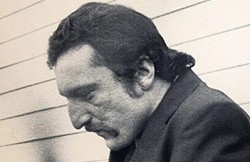
David Shearing
Mass murderer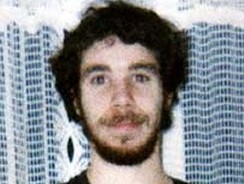 Marc Lepine
Mass murderer · Canada · 1989
Marc Lépine committed a shooting at the École Polytechnique engineering school…
14 victims
Marc Lepine
Mass murderer · Canada · 1989
Marc Lépine committed a shooting at the École Polytechnique engineering school…
14 victims
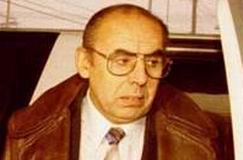 Roger Warren
Mass murderer · Canada · 1992
Roger Warren was convicted of 9 counts of second-degree murder in connection to…
9 victims
Roger Warren
Mass murderer · Canada · 1992
Roger Warren was convicted of 9 counts of second-degree murder in connection to…
9 victims
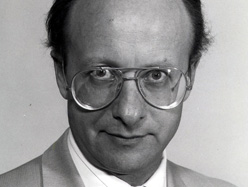 Valery Fabrikant
Mass murderer · Canada · 1992
Valery Fabrikant was a former associate professor of mechanical engineering at…
4 victims
Valery Fabrikant
Mass murderer · Canada · 1992
Valery Fabrikant was a former associate professor of mechanical engineering at…
4 victims
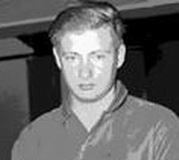 Victor Ernest Hoffman
Mass murderer · Canada · 1967
Victor Ernest Hoffman (born 1946; died May 21, 2004) was found not guilty by re…
9 victims
Victor Ernest Hoffman
Mass murderer · Canada · 1967
Victor Ernest Hoffman (born 1946; died May 21, 2004) was found not guilty by re…
9 victims
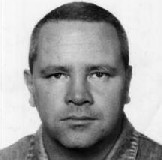 Wade Frankum
Mass murderer · Australia · 1991
Wade Frankum Committed suicide by shooting himself the same day; in 1991 Wade F…
7 victims
Wade Frankum
Mass murderer · Australia · 1991
Wade Frankum Committed suicide by shooting himself the same day; in 1991 Wade F…
7 victims
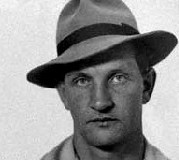 Donald Staley
Murderer · Canada · 1946
Donald Staley was a Canadian army veteran. He was 29 years old and was of Brace…
2 victims
Donald Staley
Murderer · Canada · 1946
Donald Staley was a Canadian army veteran. He was 29 years old and was of Brace…
2 victims
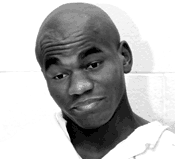 Edwin Debrow
Homicide · USA · 1991
Edwin Debrow Jr. was convicted in 1992, at age 12, of a fatal shooting during a…
1 victim
Edwin Debrow
Homicide · USA · 1991
Edwin Debrow Jr. was convicted in 1992, at age 12, of a fatal shooting during a…
1 victim
 Ivo Colon
Murderer · USA · 1998
Ivo Colon was convicted of capital felony murder and murder in connection with…
1 victim
Ivo Colon
Murderer · USA · 1998
Ivo Colon was convicted of capital felony murder and murder in connection with…
1 victim
- Gender
- male
- Country
- Canada
- Location
- Wells Gray Park, British Columbia, Canada
- Date of birth
- 1959
- Age at first offence
- 23
- Characteristics
- child molester, rape, sexual abuse, torture
- Victim profile
- George, 66, and Edith Bentley, 59, their daughter Jackie Johnson, 40, son-in-law Bob, 44, and grandchildren Janet, 13, and Karen, 11
- Method of murder
- Shooting
- Date(s) of murder
- August 2, 1982
- Years active
- 1982
- Date of arrest
- November 19, 1983
- Status
-
Life imprisonment
Pleaded guilty to six counts of murder on April 16, 1984; sentenced the next day to six concurrent terms of life imprisonment with no possibility of parole for 25 years
Case record: David Shearing
Background
David Shearing was arrested after police received a caller tip about him in a case involving the disappearance of six family members who had been camping in British Columbia.
Shearing came from a family that was described as respectable. His father, since deceased, had once been a prison guard, and his brother a sheriff. Shearing graduated from high school and completed a heavy mechanic’s course.
A later report said that Shearing now went by his mother’s maiden name, Ennis, and that he had changed his surname to Ennis between 1984 and 1995. It also said he married Heather, a resident of Prince Albert, Sask., in 1995, and that he was serving his sentence in prison.
The offence
On Aug. 6-13, 1982, Shearing came across the Bentley and Johnson families during their camping trip in the forests behind Clearwater and secretly watched them. During that week, he shot the adults and disposed of their bodies.
Police said Shearing shot and killed 11-year-old Karen Johnson on Aug. 16, 1982. They said he shot and killed 13-year-old Janet Johnson on Aug. 17, 1982.
Shearing shot dead George Bentley, 66, and Edith Bentley, 59, of Port Coquitlam, B.C., along with Jackie Johnson, 40, Bob Johnson, 44, and their grandchildren Janet Johnson, 13, and Karen Johnson, 11, as the families camped in Wells Gray Provincial Park.
After the four adults were killed, Shearing held the two girls captive for days and sexually assaulted them before shooting them. Investigators later described that Shearing kept the girls alive after the deaths of their parents and grandparents. A prison guard was mentioned as supervising prisoners fishing on the river, and Shearing hid the girls behind a door when the guard came to the cabin.
Shearing loaded the bodies of the parents and grandparents into the Johnson family car and placed the two girls’ bodies in the trunk. He then set the car ablaze near Clearwater. Investigators later said he torched the camper unit after driving it to Trophy Mountain.
The children’s remains were described as heavily burned. Police said the burned-out vehicle contained incinerated bodies of the four missing adults, and that the girls’ bodies were found with very little left, with skull fragments, and that intense heat had been generated using an accelerant.
The case was described as a “mass murder” that sparked a national police search.
Victims
The victims were:
- George Bentley, 66, of Port Coquitlam, B.C.
- Edith Bentley, 59, of Port Coquitlam, B.C.
- Jackie Johnson, 40, of Kelowna
- Bob Johnson, 44, of Kelowna
- Janet Johnson, 13
- Karen Johnson, 11
Investigation
After the camping trip, Bob Johnson did not report for work at his place of employment. He had previously not missed a day of work, and he was reported missing to police.
Searches focused on Wells Gray Park, where the families had planned to rendezvous. The massive search did not turn up any sign of the families.
On Sept. 13, a mushroom picker told police he had come across a burned-out vehicle deep in the park similar to the one driven by Bob Johnson. Police examined the burned-out vehicle and found the incinerated bodies of the four missing adults inside among melted glass and metal. Investigating RCMP officers, led by Sgt. Michael Eastham, examined the vehicle. The adults had been shot in the head with a .22 calibre weapon, and the bodies had been cremated.
Sgt. Eastham examined the trunk of a “79 Plymouth” and said he viewed the burned remains of what had once been two young girls. The description said there was very little left of the children, with skull fragments visible.
After police received information that a camper fitting the Bentleys’ description had been seen in North Battleford, Saskatchewan, driven by two French-speaking males, police pursued a trail that later proved to be false. Other sightings indicated the unit was heading east, and because the occupants spoke French, it was assumed they were making their way to Quebec.
Police constructed an exact duplicate of the Bentleys’ camper and arranged for it to be driven across the country in the hope someone would remember a similar vehicle. Mounties traveled holding press conferences to publicize its arrival and placed an aluminum boat on top of the duplicate camper. The wanted camper unit was reported seen by 1,300 individuals, but nothing came of the effort.
Later, investigators located what they felt was the murder site, about 20 km from where the burned Johnson car was found, in an area known as Old Bear Creek Prison Site. Police located .22 calibre shell casings and beer caps of a brand known to be favoured by Bob Johnson. Full bottles of the same brand of beer were discovered cooling in a nearby stream. Two sticks with sharp ends, probably used by the two girls to roast marshmallows, were also found.
Police said they received 13,000 tips regarding the case.
Arrest and questioning
On Oct. 18, 1983, two forest rangers came across the truck/camper on Trophy Mountain, about 20 km from the murder site and about 30 km from where the Johnsons’ car was located. Police figured a local man was involved because of the location of the truck and the remote sideroads.
One caller told police about David Shearing. Police learned that the 23-year-old Shearing had been involved in a hit-and-run death a year earlier and had apparently beaten the rap. Police learned Shearing had previously been in trouble with the law: he had been arrested for assault, drinking and driving, and drug possession.
Police located Shearing in Tumbler Ridge, north of Kamloops, where he was to appear in court in a few days on a possession of stolen property charge. Shearing was taken into custody for questioning.
Investigators had little hard evidence but felt Shearing was their man.
During questioning by Sgt. Eastham, Shearing broke down. He revealed how he had stalked the victims at their campsite and said he first shot all four adults with his .22. Investigators said the two girls were shot dead in their tent. Investigators later described that the bodies of the adults were placed in the Johnsons’ car and that the girls’ bodies were placed in the trunk. Police said Shearing went home and returned next day to drive the car to the location where it was eventually found, and that he torched it there. Police said he later returned for the camper unit and drove it to Trophy Mountain, where it was also set on fire. Investigators said Shearing said he looted the camper of anything he thought was valuable and that police later recovered many of the items he had stolen, most at his parents’ ranch.
Shearing was taken to the three pertinent sites, where he reenacted his crimes.
In another account, Shearing was arrested on Saturday, Nov. 19, and was charged with six counts of murder. He confessed after being taken in for questioning. He told investigators he had seen the six camping alone one night in a clearing just off the highway on his way home from work, and said he went back a second night with a .22-calibre rifle and killed them all. He said he did not know why.
Investigators said they had doubts that Shearing had told them the whole story, but the Crown proceeded, and Shearing was convicted and given the maximum sentence.
Trial
Shearing pleaded guilty to six counts of murder on April 16, 1984 in B.C. Supreme Court. The guilty plea was to six counts of second-degree murder in one account.
Sentencing
On April 17, 1984, Shearing was sentenced to six concurrent terms of life imprisonment with no possibility of parole for 25 years.
Parole and subsequent developments
The case was described as having long since faded from public memory, and retired Sgt. Mike Eastham said he was worried that would work in Shearing’s favour should he apply for early release.
A later report said that under the Criminal Code’s “faint hope” clause, lifers could apply to have eligibility reduced after serving 15 years, and that Shearing had passed that benchmark in April. It also said Shearing had not applied yet at that time.
A report on Oct. 21, 2008 said Shearing would have his first chance at parole that week. It said he pleaded guilty to murdering six people, including girls aged 11 and 13, their parents and their grandparents, while they camped near Wells Gray Provincial Park in August 1982. That report said the case sparked a Canada-wide hunt as RCMP drove a replica truck and camper across the country seeking tips, and that the burned-out hulk was found hidden on a mountain less than 40 km from where the family was shot to death. The report stated Shearing was arrested in November 1983 and that five months later he was sentenced to 25 years in prison without parole. It also said he was scheduled to appear before the parole board at Alberta’s Bowden Institution, where he was serving his life sentence.
Another report said Shearing was eligible for a legislated full parole review on Oct. 22, 2008, and that he had applied for day parole, which would also be reviewed at the same hearing.
On Oct. 23, 2008, the Edmonton Journal reported that the National Parole Board denied both day and full parole after three hours of questioning. It quoted Dave Scott, a member of the board, stating: “The board's decision today is to deny both day and full parole,” and it said Shearing could again apply for full parole in two years.
The parole hearing included victim-impact statements. Kelly Nielsen, the girls’ cousin, described the search as a “never-ending nightmare” and said: “That was a start of a never-ending nightmare,” and it reported that Nielsen remembered her aunt repeating over the phone: “They're all dead, all six of them.” Michelle Botelho said: “You have ruined my life,” and added: “I will never know the man my father was (before) his heart was ripped out of his chest.” Shearing apologized in 25 years, reading: “My crime was an enormous, brutal and inexcusable tragedy ... resulting in tremendous loss to the community that I can never make up for,” and stating: “It makes me hate to be in my own skin.”
Other participants at the parole hearing included relatives. Shelley Boden said: “Don't listen to anything he says. He has no remorse,” and Botelho said: “It was like looking at the devil,” and: “He's a waste of a body.”
At the hearing, Shearing said he started having violent sexual fantasies at age 15 and said he would sometimes be so preoccupied he would be on “autopilot” throughout the day. He also said: “I thought it was normal for a man to think that way.” He said he had never met the family before he slaughtered them. He told the parole board that he kept the girls alive for six days and molested Janet. He said he shot them in the back of their heads after she started to cry when he hit her, and the report quoted him saying: “At that point, I lost the excitement that I had felt. I wasn't able to continue any further in the sadistic part of it.”
A report said that when RCMP first interviewed Shearing, he confessed to killing the family but said he killed all six at once. It also said he told investigators he noticed the family one day and went back the next day and killed them.
At the hearing, Shearing was said to be accompanied by Heather Ennis, who spoke at the end on his behalf, stating: “I have seen so much change in this man since we met (in 1993) ... I know the man's heart is in the right place and I'm just here to back him up.”
Shearing was said to have told the hearing he was scared he would be found and that he loaded the girls’ bodies into their family vehicle and burned them. The report also said he asked for day parole, starting with brief escorted trips out for therapy groups and eventually job interviews.
A petition was circulated in Westbank to keep Ennis from being released. Residents said they wanted to do something when they heard he was coming up for parole. Dorene Lander said: “The community didn't know what to do when we heard he was coming up for parole,” and: “We wanted to do something.” She said: “When he was sentenced, it seemed like a long time, but it's not.” The petition was signed by 9,320 people and was sent to the parole board at the end of August.
Art Johnson, 76, was described speaking about his family’s tragedy after losing his best friend when his younger brother Bob was killed and his sister Elaine Woods lost her twin. The report quoted Johnson saying: “I just hope the petition makes a difference,” “What he did was so terrible,” and “And what he did to those two little girls, that's the part that tears you apart.” It also reported that the petition was sent up from Westbank to the parole board.
Timeline
- Aug. 2, 1982 — Bob Johnson and the Bentleys left Kelowna to meet the Bentleys; all six family members were later found dead
- Aug. 6-13, 1982 — Shearing came across the Bentley and Johnson families, watched them, and shot the adults and disposed of their bodies during the camping period
- Aug. 6, 1982 — Edith called a second daughter to say they were enjoying their holiday
- Aug. 16, 1982 — Shearing shot and killed 11-year-old Karen Johnson, according to Sgt. Mike Eastham
- Aug. 17, 1982 — Shearing shot and killed 13-year-old Janet Johnson, according to Sgt. Mike Eastham
- Aug. 23, 1982 — Police were contacted when Bob Johnson did not return to work from holidays as scheduled, and an extensive search began
- Sept. 13, 1982 — A burned-out Johnson family vehicle was located and incinerated remains of six people were found
- Sept. 14, 1982 — Police found six .22-calibre shell casings at the old Bear Creek prison camp, later identified as the murder site
- Oct. 18, 1983 — A truck/camper was found on Trophy Mountain
- Nov. 19, 1983 — Shearing was arrested in Tumbler Ridge and was taken in for questioning
- April 16, 1984 — David Shearing pleaded guilty to six counts of murder
- April 17, 1984 — David Shearing was sentenced to six concurrent terms of life imprisonment with no possibility of parole for 25 years
- 1984 to 1995 — Shearing changed his surname to Ennis
- 1995 — Ennis married Heather, a Prince Albert, Sask. resident
- Oct. 21, 2008 — Shearing was reported as scheduled for his first chance at parole
- Oct. 22, 2008 — Ennis was reported as eligible for a legislated full parole review and had applied for day parole
- Oct. 23, 2008 — The National Parole Board denied both day and full parole
Other details
A “TIMELINE OF A TRAGEDY . . . AND THE KILLER'S BID FOR FREEDOM” said:
- 1980: David Shearing ran over a body on the Wells Gray Road and did not stop to confirm whether the person was dead or alive; details only came out when he was sentenced for the Johnson-Bentley murders
- Shearing was said to have moved to Tumbler Ridge four months earlier and had been living there by Nov. 19, 1983
One report said the “wanted camper unit” was reported seen by 1,300 individuals and that police received 13,000 tips.
In an account tied to police re-enactments, RCMP Const. Ken Leibel hiked through the bush to a fishing cabin and found carved initials in the wall near a second set of initials, “JJ,” for 13-year-old Janet Johnson. The report quoted Leibel reflecting on it: “That's how close everyone was to them,” and: “There's some things that just stick with you.”
A letter from prison to a childhood pal was mentioned, stating that Ennis asked whether the people of Clearwater still hated him, and that the friend did not respond.
Another report said a “pool of relatives” and community members gathered names on a petition asking that Shearing not be released, and that in two months almost 10,000 people signed.
Retired Sgt. Mike Eastham described the crime as “one of the worst crimes in Canadian history” and said: “to me, (Shearing's) no different than Clifford Olson or Charles Manson.” He also said: “If people don't pay attention, he's going to get out,” and: “I was in the RCMP for 35 years and for 35 years I had to keep my mouth shut.” In relation to parole, he said: “If ever released, he could kill again.”
At a meeting before trial, Eastham was quoted addressing Shearing while Shearing was in a police holding cell. Eastham said: “You know why I'm here, David,” and: “I think you sexually abused those girls before you killed them.” Eastham said: “You told me some time ago that you would consider telling me the rest of the story after you were sentenced.” He added: “We'll, I'm here to collect, David, and I'm not taking no for an answer.”
Eastham was also quoted saying: “I was in the RCMP for 35 years and for 35 years I had to keep my mouth shut.” A separate quote attributed to Eastham said: “He's never shown one indication of remorse ... he's one of the big guys in the big house because he's a murderer and he's having a good time there,” and: “It makes me hate to be in my own skin.”
The definitive account of the tragedy and the investigation was said to be available in Eastham’s book, “The Seventh Shadow.”
Spotted an error, or have more information about this case?