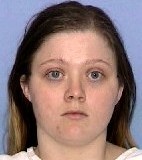
Chelsea Richardson
Murderer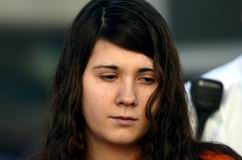 Miranda Barbour
Murderer · USA · 2013
Miranda Barbour, 19, defendant. · Elytte Barbour, 22, defendant and husband of…
100 victims
Miranda Barbour
Murderer · USA · 2013
Miranda Barbour, 19, defendant. · Elytte Barbour, 22, defendant and husband of…
100 victims
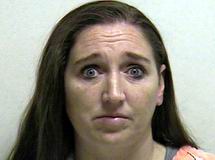 Megan Huntsman
Murderer · USA · 1996
Megan Huntsman was 40 at sentencing. She was a mother of three children who wer…
6 victims
Megan Huntsman
Murderer · USA · 1996
Megan Huntsman was 40 at sentencing. She was a mother of three children who wer…
6 victims
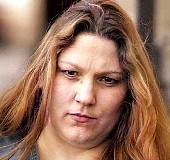 Angela Johnson
Murderer · USA · 1993
Angela Jane Johnson was convicted in federal court of aiding and abetting the m…
5 victims
Angela Johnson
Murderer · USA · 1993
Angela Jane Johnson was convicted in federal court of aiding and abetting the m…
5 victims
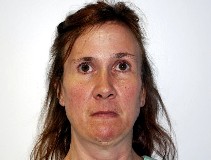 Michele Kalina
Murderer · USA · 1996
Michele Kalina pleaded guilty to murder for one of five infants she initially w…
5 victims
Michele Kalina
Murderer · USA · 1996
Michele Kalina pleaded guilty to murder for one of five infants she initially w…
5 victims
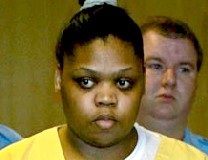 Tiffany Hall
Murderer · USA · 2006
Tiffany Hall was 24 when she was charged in September 2006. She later entered a…
5 victims
Tiffany Hall
Murderer · USA · 2006
Tiffany Hall was 24 when she was charged in September 2006. She later entered a…
5 victims
 Banita Jacks
Murderer · USA · 2007
Banita Jacks was a Washington, DC resident convicted of murdering her four daug…
4 victims
Banita Jacks
Murderer · USA · 2007
Banita Jacks was a Washington, DC resident convicted of murdering her four daug…
4 victims
 Johnson Greybuffalo
Murderer · USA · 1994
Johnson Wade Greybuffalo was born April 21, 1974. He was a full-blooded Ojibwa.…
1 victim
Johnson Greybuffalo
Murderer · USA · 1994
Johnson Wade Greybuffalo was born April 21, 1974. He was a full-blooded Ojibwa.…
1 victim
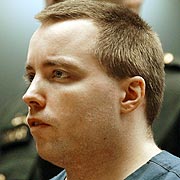 Jeffrey Mailhot
Serial killer · USA · 2003
Jeffrey Mailhot lived in Woonsocket and was described by neighbours as a “nice…
3 victims
Jeffrey Mailhot
Serial killer · USA · 2003
Jeffrey Mailhot lived in Woonsocket and was described by neighbours as a “nice…
3 victims
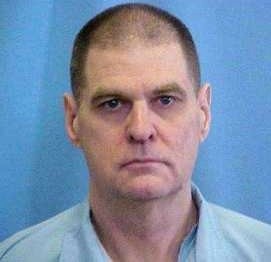 Cecil Sutherland
Murderer · USA · 1987
Cecil Sutherland was convicted of aggravated kidnaping, aggravated criminal sex…
1 victim
Cecil Sutherland
Murderer · USA · 1987
Cecil Sutherland was convicted of aggravated kidnaping, aggravated criminal sex…
1 victim
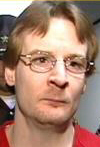 Frederick Michael Baer
Murderer · USA · 2004
Frederick Michael Baer was sentenced to death on June 9, 2005. Aggravating circ…
2 victims
Frederick Michael Baer
Murderer · USA · 2004
Frederick Michael Baer was sentenced to death on June 9, 2005. Aggravating circ…
2 victims
- Gender
- female
- Country
- USA
- Location
- Mansfield, Tarrant County, Texas, USA
- Date of birth
- March 26, 1984
- Age at first offence
- 19
- Characteristics
- convicted rapist, murder-for-hire, domestic violence, drugs
- Victim profile
- Rick, 46, and Suzanna Wamsley, 46 (her boyfriend's parents)
- Method of murder
- Shooting - Stabbing with knife
- Date(s) of murder
- December 11, 2003
- Years active
- 2003
- Date of arrest
- April 7, 2004
- Status
-
Sentenced to death
Sentenced to death on August 10, 2005; death sentence reduced to a life sentence with eligibility for parole after serving 40 years
Case overview
Chelsea Richardson was convicted by a Tarrant County jury in connection with the December 11, 2003 murders of her boyfriend’s parents, Rick and Suzanna Wamsley, and received a sentence of death. Her death sentence was later reduced to a life sentence following action by the Texas Court of Criminal Appeals affecting the punishment phase.
Background
Chelsea Richardson was a 27-year-old woman by the time her death sentence was reduced. Her mother, Celia Richardson, said afterward that she still believed her daughter to be innocent and described the outcome as “swept under the carpet” after an error-filled police investigation and trial.
Richardson was the first woman in Tarrant County to receive the death sentence. Relatives attended a hearing connected to the sentencing agreement that resulted in the reduction to life imprisonment.
In the accounts describing the case, authorities said Richardson and her boyfriend, Andrew Wamsley, together with Susana Toledano, killed the couple so that Andrew Wamsley could inherit his parents’ $1.56 million estate. The motive described in the appellate opinion was to divide the Wamsleys’ substantial estate and insurance proceeds that Andrew would inherit.
Richardson’s attorneys filed appeals seeking commutation of her sentence to life.
The offence
Victims
Rick Wamsley was a 46-year-old white male. Suzanna Wamsley was a 46-year-old white female.
Conduct and criminal scheme
Richardson and three co-defendants entered the residence of the two victims in Tarrant County, Texas, where Richardson and co-defendants fatally shot and stabbed both victims.
In the description of the planning and attempts, Richardson and Andrew Wamsley and Susana Toledano plotted to murder Andrew’s parents. The plans included staging a robbery where the Wamsleys were killed, placing balloons filled with caustic chemicals in the gas tank of the Wamsleys’ vehicle, cutting the vehicle’s brake lines to cause an accident, and shooting the vehicle while the Wamsleys were traveling in it, which the conspirators believed would cause it to explode. The conspirators later settled on a plan to travel alongside the Wamsleys’ vehicle and shoot its gas tank with a gun obtained from Hilario Cardenas.
Two earlier murder attempts were described as having been bungled before the final killing. On the final attempt, Toledano testified that Richardson encouraged her to shoot Suzanna Wamsley as she lay asleep on the living room couch, and Richardson shoved Toledano into the room to get her going. Toledano shot Suzanna Wamsley in the head, killing her instantly. Toledano then fired at Rick Wamsley as he charged toward her, hitting him in the right temple. Rick forced Toledano back into the living room and fell on top of her, causing her to drop the gun. Andrew Wamsley intervened trying to force Rick off of Toledano, while Richardson joined the fray by shooting Rick in the back.
The appellate opinion described Rick as pleading to know why it was happening, with Richardson stabbing his hand with a knife taken from the kitchen. Toledano then stabbed him in the back with another kitchen knife as he lay on the ground, after which Rick Wamsley died and the trio fled.
Weapons and injuries (as described)
Authorities said Rick Wamsley was shot in the head and back and stabbed 21 times. Authorities said Suzanna Wamsley died from a gunshot wound to the head and was stabbed 18 times after she died.
Another description included that an autopsy report said Suzy was shot in the left ear with a large-caliber weapon and then stabbed at least 18 times in the chest and neck. It described that Rick was shot in the face and back and stabbed numerous times, and that police found two sets of bloody shoeprints throughout the living room, dining room and entryway. It stated there was no sign of forced entry and nothing appeared to be missing. It stated an autopsy revealed several hairs clutched in Mr. Wamsley’s hand, but no other physical evidence was found.
Investigation
DNA and evidence
Authorities went months without solid evidence and then got a break in March 2004 when tests matched Susana Toledano’s DNA to the hair found clasped in Rick Wamsley’s hand.
The appellate opinion described the evidence as supporting Richardson’s intentional participation in the planning and final execution of the murders, including participation in failed attempts and presence during, encouragement, and participation in the final killing.
Grand jury and false alibi
When Richardson, Andrew Wamsley, and Toledano were called before the grand jury, the account described them lying about where they had been when the Wamsleys were murdered.
Richardson convinced Jeremy Lavender, described as a mentally challenged nineteen-year-old, to provide her and her friends with a false alibi. When Jeremy’s story failed to withstand police scrutiny, he admitted providing the false alibi at Richardson’s request.
Prior attempt details
A narrative portion described an earlier failed attempt to attack the Wamsleys’ vehicle, including an attempt to shoot at the gas tank of the Wamsleys’ Jeep Laredo. It stated a bullet hit the Jeep but Susana was unable to shoot the gas tank and Andrew’s family was uninjured. It described that police were called but uncovered no leads and that the plan changed to killing the Wamsleys at home after the failed attempt.
The narrative also described that late one night Richardson, Andrew, and Susana entered the Wamsleys’ house so that Susana could shoot Andrew’s sleeping parents, but that Susana decided she could not go through with the plan and the group snuck out of the house. It stated that on December 9, 2003, Susana received a text message from Chelsea that they had to murder the Wamsleys that night. The narrative also stated that on December 10, 2003, Chelsea coached Susana after they entered the house.
911 call and police arrival
A narrative portion stated that an open line 911 call originated from the Wamsleys’ house at about 11:40 p.m. On arrival a few minutes later, no one responded from inside. It described that the police noticed the garage door and the door leading from the garage into the kitchen were open, and then discovered the bodies of Mr. and Mrs. Wamsley.
Arrest and pretrial
Arrest dates and locations (as described)
Authorities arrested Susana in Illinois on April 5, 2004. The narrative portion stated she was arrested after DNA matching.
Police arrested Hilario Cardenas in Arlington the next day after Susana’s statements, as described.
The narrative portion stated that Andrew and Chelsea were arrested on April 7 in the parking lot outside a Chicken Express near her home.
In-jail actions
While in jail awaiting trial, Richardson discussed her involvement in the Wamsleys’ murders with several inmates and attempted to convince them to testify on her behalf. She began calling one inmate “mom” and passed her a note the day after the trial began instructing her to memorize Richardson’s false alibi and rewrite it in her own words.
Trial
Commencement and verdict
Richardson’s trial began in May 2005, as described in a narrative account. In the appellate court opinion, it stated that a jury convicted Richardson of a capital murder committed on December 11, 2003.
The jury convicted Richardson of capital murder in less than three hours in one account. Another account stated the jury deliberated for just more than two hours before sentencing Richardson.
Evidence presented at punishment
At the punishment stage, the State sought the death penalty. Evidence included a letter from Chelsea to Andrew written the day after they had shot at the family’s vehicle in Burleson. The letter exposed Chelsea’s manipulation of Andrew to believe that his family did not love or trust him and that she was the only person on whom he could rely.
The narrative account described that the jury took just over two hours to sentence Chelsea to death, based on the brutal, premeditated murders out of greed and evidence of Richardson’s manipulation of others and the danger she posed to society. It described Richardson being considered a “danger to society” and her being the first female sentenced to death in Tarrant County, later followed by Lisa Coleman.
The appellate opinion addressed arguments raised on appeal and concluded the judgment and sentence of death were affirmed.
Sentencing
Death sentence
Richardson was sentenced to death at the punishment stage after being convicted of capital murder.
Her death sentence was later reduced, and under the new sentence she was described as needing to serve 40 years before being eligible for parole, with credit for time served.
Parole eligibility after reduction
After the sentencing agreement was accepted, Richardson was eligible for parole after serving 40 years, and she would receive credit for time served.
Appeals
Texas Court of Criminal Appeals (punishment phase misconduct)
The Texas Court of Criminal Appeals ruled that the punishment phase of Richardson’s trial was affected by misconduct by a former prosecutor who withheld evidence from the defense.
The appellate materials further described that Richardson raised eight points of error on appeal, including:
- challenges to sufficiency of the evidence,
- evidentiary objections regarding Kathryn Norton's testimony,
- constitutional challenges to the death penalty scheme and instructions, including arguments under Ring v. Arizona and Apprendi v. New Jersey, and
- a claim that the use of pancuronium bromide to carry out her execution violated the Eighth Amendment, which the appellate court found not ripe for review.
The appellate court concluded that the points of error were without merit and affirmed the judgment and sentence of death.
Later reduction to life sentence via sentencing agreement
A later hearing described the reduction of Richardson’s death sentence to a life sentence after the sentencing agreement reached by prosecutors and Richardson’s defense attorney was accepted by a visiting judge.
The narrative account described that the State’s highest criminal court overturned the death sentence in a November 2011 ruling, and that the hearing occurred after that decision.
Richardson’s defense attorney Robert Ford was quoted as saying: “I hope it sends the message that this kind of cheating won't be tolerated,” Ford said.
The district attorney Joe Shannon, who took office after Mike Parrish retired, was quoted in a written statement: “As I have often stated, this office will not be a party to the infliction of death as a punishment when there is even an appearance of impropriety on the part of a prosecutor who formerly worked in this office,” Shannon said in a written statement. “If the death penalty is to be used, it must be obtained legally, fairly and honestly and without the hint of possible injustice.”
Ford was also quoted regarding costs: “It probably cost Tarrant County and the state courts in the millions [of dollars] when you consider the cost of all the trials, appeals, everything.”
Outcome
Richardson’s death sentence was reduced to a life sentence. Under the revised sentence, she was described as being eligible for parole after serving 40 years, with credit for time served.
Richardson’s attorneys had sought to have her sentence commuted to life.
Other details
Co-defendants and related case context (as described)
- Andrew Wamsley received a life sentence, with his conviction and life sentence affirmed by the Second District of Texas Court of Appeals on March 13, 2008, as described.
- Susana Toledano struck a deal with prosecutors and testified against the others, and the narrative described that she was serving a life sentence for murder and would not be eligible for parole until she served 30 years in prison.
- Hilario Cardenas was described as having had charges pending for his role in conspiring to murder the Wamsleys in one narrative account, and in another narrative account he pled guilty to conspiracy to commit murder and received a 50 year sentence with parole eligibility in 2014.
- The narrative described that Andrew Wamsley, Richardson, and Susana Toledano were nineteen years old when they murdered Andrew’s parents after months of planning and failed attempts.
Dates and ages included in the case record
The case received date was 08/10/2005. Richardson’s age when received was 21. Richardson’s education level (highest grade completed) was 12. The date of offense was 12/11/2003. Richardson’s age at the time of the offense was 19. The case record also listed prior occupation as laborer and prior prison record as none.
Additional named individuals and details mentioned
- Mike Parrish, described as a former prosecutor who withheld evidence from the defense.
- Joe Shannon, described as Tarrant County District Attorney who took office after Parrish retired in 2008.
- Robert Ford, Richardson’s attorney.
- Jeremy Lavender, described as a mentally challenged nineteen-year-old who provided a false alibi at Richardson’s request.
- Kathryn Norton, who testified from jail based on contact arrangements involving her father.
- Detective Barbara Slayton-Bell, identified as victims assistance coordinator with the Mansfield police, and quoted in a letter mentioned in the narrative.
- Warren St. John and Terry Barlow, identified as Richardson's attorneys referenced in the narrative.
- Page Simpson, identified as a Tarrant County prosecutor in a quoted statement.
Quotations included
Tarrant County prosecutor Page Simpson was quoted as saying: “It was an incredibly brutal and frightening crime scene.”
Chelsea Richardson’s attorney Robert Ford was quoted:
Richardson’s attorney Robert Ford was quoted:
Tarrant County District Attorney Joe Shannon was quoted:
Richardson’s defense counsel Robert Ford was quoted on family reaction: “They wanted her to walk away completely free, and that just wasn't a possibility,” he said. “I know that they're relieved she's going to move off Death Row.”
Celia Richardson, Richardson’s mother, was quoted: she still believed her daughter to be innocent, and she said she felt that her daughter was being “swept under the carpet” after an error-filled police investigation and trial.
Trial court and appellate delivery information (as stated)
The appellate opinion stated: DELIVERED: January 23, 2008 DO NOT PUBLISH
It also stated it affirmed the judgment of the trial court and addressed multiple points of error raised by Richardson.
Spotted an error, or have more information about this case?