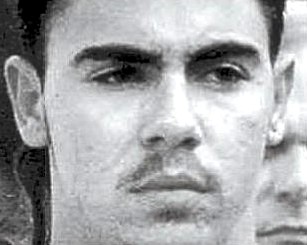
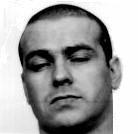
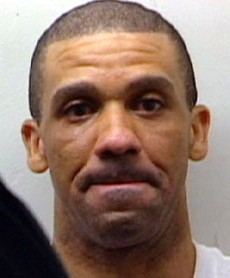
Thomas Beavers
Murderer Brian Kevin Rosenfeld
Murderer · USA · 1985
Brian Kevin Rosenfeld Brian Kevin Rosenfeld was sentenced to three concurrent l…
23 victims
Brian Kevin Rosenfeld
Murderer · USA · 1985
Brian Kevin Rosenfeld Brian Kevin Rosenfeld was sentenced to three concurrent l…
23 victims
 Yahweh ben Yahweh
Murderer · USA · 1980
Yahweh ben Yahweh was born and legally named Hulon Mitchell Jr. (October 27, 19…
23 victims
Yahweh ben Yahweh
Murderer · USA · 1980
Yahweh ben Yahweh was born and legally named Hulon Mitchell Jr. (October 27, 19…
23 victims
 Russell Ellwood
Murderer · USA · 1991
Russell Ellwood was a former taxi driver. Authorities suspected him of killing…
20 victims
Russell Ellwood
Murderer · USA · 1991
Russell Ellwood was a former taxi driver. Authorities suspected him of killing…
20 victims
 Robert Martines Perez
Murderer · USA · 1994
Name: Robert Martines Perez · Other name used in proceedings: Robert Martinez P…
15 victims
Robert Martines Perez
Murderer · USA · 1994
Name: Robert Martines Perez · Other name used in proceedings: Robert Martinez P…
15 victims
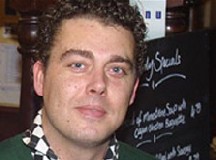 Mark Dixie
Murderer · United Kingdom · 2005
Mark Philip Dixie — defendant Sally Anne Bowman — victim; British model Lewis S…
1 victim
Mark Dixie
Murderer · United Kingdom · 2005
Mark Philip Dixie — defendant Sally Anne Bowman — victim; British model Lewis S…
1 victim
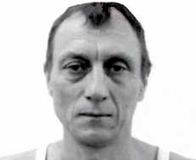 Anatoly Biryukov
Serial killer · Russia · 1977
Anatoly Nikolaevich Biryukov (Russian: Анатолий Николаевич Бирюков) was a Russi…
5 victims
Anatoly Biryukov
Serial killer · Russia · 1977
Anatoly Nikolaevich Biryukov (Russian: Анатолий Николаевич Бирюков) was a Russi…
5 victims
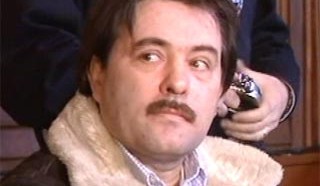 Jean-Pierre Roux-Durrafourt
Mass murderer · Franc e · 2001
Jean-Pierre Roux-Durrafourt was a former soldier and had been in trouble severa…
4 victims
Jean-Pierre Roux-Durrafourt
Mass murderer · Franc e · 2001
Jean-Pierre Roux-Durrafourt was a former soldier and had been in trouble severa…
4 victims
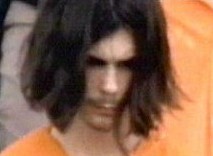 James Ellison Rouse
Homicide · USA · 1995
November 15, 1995 — Jamie Rouse, a 17-year-old student at Richland High School,…
2 victims
James Ellison Rouse
Homicide · USA · 1995
November 15, 1995 — Jamie Rouse, a 17-year-old student at Richland High School,…
2 victims
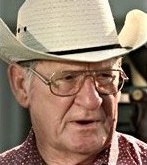 Bobby Frank Cherry
Mass murderer · USA · 1963
Bobby Frank Cherry was convicted in 2002 for the 16th Street Baptist Church bom…
4 victims
Bobby Frank Cherry
Mass murderer · USA · 1963
Bobby Frank Cherry was convicted in 2002 for the 16th Street Baptist Church bom…
4 victims
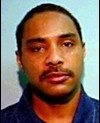 Tyrone Earl Walton
Murderer · USA · 1987
Tyrone Earl Walton was convicted in 1988 of two counts of aggravated murder, on…
1 victim
Tyrone Earl Walton
Murderer · USA · 1987
Tyrone Earl Walton was convicted in 1988 of two counts of aggravated murder, on…
1 victim
- Gender
- male
- Country
- USA
- Location
- Hampton City, Virginia, USA
- Date of birth
- 1971
- Age at first offence
- 19
- Characteristics
- rape, robbery
- Victim profile
- Marguerite E. Lowery, 61
- Method of murder
- Suffocation with a pillow
- Date(s) of murder
- May 1, 1990
- Years active
- 1990
- Date of arrest
- 1 year after
- Status
-
Executed
Executed by lethal injection on December 11, 1997 in Virginia
Timeline
- May 1990 — Thomas Beavers broke into the home of Marguerite E. Lowery, raped her, and suffocated her with a pillow; he took jewelry, vandalized the house, stole her car, and set fire to it.
- 1991 — Beavers was arrested in the rape of another neighbor who was not killed.
- 1992 — Beavers was convicted.
- May 1, 1990 — Thomas Beavers was convicted of capital murder and sentenced to death for the killing of his neighbor Marguerite Lowery.
- Dec 11, 1997 — Beavers was executed by lethal injection at the Greensville Correctional Center; he was pronounced dead at 9:07 p.m.
- Earlier Thursday (year not stated) — The U.S. Supreme Court voted 7-2 to deny Beavers’ request for a stay, with John Paul Stevens and Ruth Bader Ginsburg dissenting.
- Later (year not stated) — Chief Justice William H. Rehnquist denied an emergency request from Beavers’ lawyer, Mark Olive.
Background
Thomas Beavers lived in the Hampton neighborhood where Marguerite E. Lowery, a retired school cafeteria manager, was slain at her home.
Beavers was only 19 at the time of the crime and had no significant adult criminal record.
Beavers’ appeal contended he had brain damage and had suffered from an abusive childhood, and that the jury that convicted him was never told about his brain damage. Beavers also argued that his attorneys should have obtained mental health evidence that could possibly have altered the verdict.
Beavers grew up with a schizophrenic mother who, as a result of her illness, did not adequately provide for him and often abused him.
The offence
On May 1990 (and also described as May 1, 1990), Marguerite E. Lowery, 61, was asleep when Beavers broke into her home. She woke up when she heard a noise and went to investigate.
Beavers grabbed Lowery, raped her, and suffocated her with a pillow. He took jewelry from her dresser, vandalized the house, stole her car, and set fire to it.
Lowery was started to scream after Beavers was heard. In Beavers’ account, when he removed the pillow, Lowery took several gasps for air and then stopped moving all together. Beavers contended he never intended to kill Lowery and that he was only trying to quiet her down.
Beavers was arrested a year later in the rape of another neighbor who was not killed.
Police found some of Lowery’s jewelry in Beavers’ bedroom.
When Beavers was caught, he told authorities he would probably rape again if set free.
Investigation
Police found some of Marguerite Lowery’s jewelry in Beavers’ bedroom.
Arrest
Trial
Beavers was convicted in 1992 and sentenced to death for the May 1, 1990 killing of his neighbor Marguerite Lowery.
Beavers was charged with capital murder and was also charged with raping the woman.
Beavers’ attorneys pointed to testimony by the medical examiner. The medical examiner testified that there were no signs of physical violence. Beavers’ attorneys believed the witness died of cardiac arrhythmia, brought on by a preexisting heart condition.
During his trial, Beavers received a court-appointed psychiatrist who provided no sufficient evidence that Beavers had any mental health problems at the time of the crime.
Appeals
Beavers sought a stay from the U.S. Supreme Court. The high court voted 7-2 to deny Beavers’ request for a stay, with John Paul Stevens and Ruth Bader Ginsburg dissenting.
Later, Chief Justice William H.
Beavers’ clemency petition contended that mental health professionals who examined him prior to his trial did not do a competent job. Beavers’ appeal contended that the jury that convicted him was never told about his brain damage.
Beavers argued that if his attorney had been competent during the trial he would have obtained mental health evidence which would possibly have altered the verdict.
The U.S. Court of Appeals, Fourth Circuit denied Beavers’ appeal that his attorney acted incompetently. The court conceded that “evidence of a defendant's mental impairment may diminish his blameworthiness for his crime” yet also stated that mental health may also “indicate that there is a possibility that he will be dangerous in the future.” On that basis, the court upheld the death sentence.
Beavers also appealed because the state trial court refused to allow one of his attorneys to withdraw from the case. He also appealed because the court failed to remove a juror who stated she would vote for the death penalty if he was convicted. He also argued that the trial court did not “guide adequately the discretion of jurors in considering mitigating evidence.”
Beavers also argued that his original trial should have resulted in a mistrial after disputed and damaging evidence was given by a police officer who questioned Beavers after he was arrested. While on the stand, the police officer was handed documents by the prosecutors to refresh his memory about a statement which Beavers allegedly made during questioning. The police officer testified that Beavers had admitted his guilt by stating, “he had no other choice but to do what he had done because [the victim] could identify him.”
The defense raised an objection which was sustained, and the judge instructed the jury to strike the testimony from their minds. The defense requested a mistrial, but the judge denied it and Beavers was convicted.
In the denial of his appeal, the court wrote:
“Even if we were to conclude that Beavers is correct that the failure to grant a mistrial under these circumstances was an error of constitutional dimension, relief would not be appropriate.”
Sentencing
Beavers was convicted of capital murder and sentenced to death for the May 1, 1990 killing of his neighbor Marguerite Lowery.
Beavers argued on these grounds that the death penalty was cruel and excessive punishment in his case, while the state of Virginia disagreed.
Outcome
Beavers’ clemency request was denied. A statement denying Beavers’ request for clemency was attributed to Gov. George Allen:
“Beavers does not claim innocence in his clemency petition,” Allen said in a statement denying Beavers’ request for clemency. "...I find nothing in the record or from other sources that would justify my intervention in the case."
Allen said that five experts, including one hired by Beavers’ defense team, examined Beavers prior to his trial and all found him competent to stand trial. Allen said the examination included an MRI for possible brain abnormalities.
Allen also said that a more recent MRI exam found no substantial evidence supporting Beavers’ claim advanced as a basis for clemency:
“The experts who performed a much more recent MRI exam of Beavers found no substantial evidence that would support the claim now advanced by Beavers as a basis for clemency,” Allen said.
Beavers lived in the Hampton neighborhood where Marguerite E. Lowery was slain at her home. Beavers was executed by lethal injection on December 11, 1997.
Aftermath
At the Greensville Correctional Center, Beavers was pronounced dead at 9:07 p.m.
Beavers lifted his head and stared through a window into a room filled with witnesses as the first chemicals that would kill him were administered. He then began crying, asked for forgiveness, and laid his head back down.
In a statement made by Beavers moments earlier, he told his family and friends he loved them:
“God bless them. I'm sorry for what I did. God bless them all,” he said.
Spotted an error, or have more information about this case?