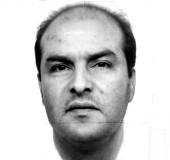
Martin Sauceda Vega
Murderer Brian Kevin Rosenfeld
Murderer · USA · 1985
Brian Kevin Rosenfeld Brian Kevin Rosenfeld was sentenced to three concurrent l…
23 victims
Brian Kevin Rosenfeld
Murderer · USA · 1985
Brian Kevin Rosenfeld Brian Kevin Rosenfeld was sentenced to three concurrent l…
23 victims
 Marvin Gray
Murderer · USA · 1975
Marvin Gray was convicted killer who claimed responsibility for 23 slayings and…
23 victims
Marvin Gray
Murderer · USA · 1975
Marvin Gray was convicted killer who claimed responsibility for 23 slayings and…
23 victims
 Yahweh ben Yahweh
Murderer · USA · 1980
Yahweh ben Yahweh was born and legally named Hulon Mitchell Jr. (October 27, 19…
23 victims
Yahweh ben Yahweh
Murderer · USA · 1980
Yahweh ben Yahweh was born and legally named Hulon Mitchell Jr. (October 27, 19…
23 victims
 Russell Ellwood
Murderer · USA · 1991
Russell Ellwood was a former taxi driver. Authorities suspected him of killing…
20 victims
Russell Ellwood
Murderer · USA · 1991
Russell Ellwood was a former taxi driver. Authorities suspected him of killing…
20 victims
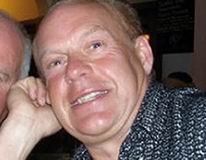 Derrick Bird
Mass murderer · United Kingdom · 2010
Derrick Bird committed a killing spree on 2 June 2010 in the county of Cumbria,…
12 victims
Derrick Bird
Mass murderer · United Kingdom · 2010
Derrick Bird committed a killing spree on 2 June 2010 in the county of Cumbria,…
12 victims
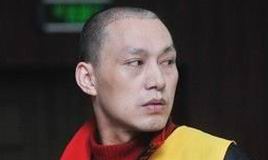 Zhou Youping
Serial killer · China · 2009
Zhou Youping was a Chinese karaoke singer who organized sexually abusive chokin…
6 victims
Zhou Youping
Serial killer · China · 2009
Zhou Youping was a Chinese karaoke singer who organized sexually abusive chokin…
6 victims
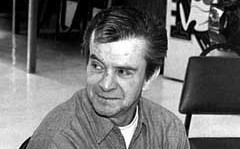 Carroll Edward Cole
Serial killer · USA · 1948
Carroll Edward Cole, also known as “Eddie,” was born in Sioux City, Iowa on May…
15 victims
Carroll Edward Cole
Serial killer · USA · 1948
Carroll Edward Cole, also known as “Eddie,” was born in Sioux City, Iowa on May…
15 victims
 Guy Martel
Spree killer · France
Guy Martel killed seven people and wounded five others in a shooting spree thro…
7 victims
Guy Martel
Spree killer · France
Guy Martel killed seven people and wounded five others in a shooting spree thro…
7 victims
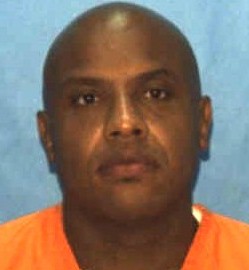 Toney Deron Davis
Murderer · USA · 1992
Toney Deron Davis (DOB: 03/12/70) was tried in the Fourth Judicial Circuit, Duv…
1 victim
Toney Deron Davis
Murderer · USA · 1992
Toney Deron Davis (DOB: 03/12/70) was tried in the Fourth Judicial Circuit, Duv…
1 victim
- Gender
- male
- Country
- USA
- Location
- Caldwell County, Texas, USA
- Date of birth
- October 17, 1945
- Age at first offence
- 40
- Characteristics
- murder for hire, financial gain
- Victim profile
- James Williams Mims, 36 ( his lover's husband )
- Method of murder
- Shooting ( .22 caliber handgun)
- Date(s) of murder
- July 27, 1985
- Years active
- 1985
- Date of arrest
- January 2, 1988 ( surrenders )
- Status
-
Executed
Executed by lethal injection in Texas on January 26, 1999
Case record: Martin Sauceda Vega
Background
Martin Sauceda Vega was executed by lethal injection in Texas on January 26, 1999.
At the time of the July 1985 killing, Vega was under mandatory state supervision after serving only one week of a two year sentence for aggravated robbery. That conviction came after previous prison terms for burglary and drug dealing, with him serving half of an eighteen year sentence on the drug charge.
Vega was from Luling, Texas. The location of the murder victim’s body was outside of Luling on a Caldwell County road.
People involved
- Martin Sauceda Vega — offender; capital murder defendant; later confessed; executed.
- James Williams Mims (36) — victim; shot eight times with a .22 caliber handgun; skull fractured; body left on a Caldwell County road; police said Vega’s killer also tried to drown him.
- Linda Mims — James Williams Mims’s wife; Vega eventually married her; prosecutors determined she was involved through the alleged hiring plot; indicted and arrested; made bond after a few hours; charges were dismissed; Linda refused to testify in court.
- Jennifer — James Mims’s daughter; watched Vega die and commented on his statement.
- William “Bill” Rugeley — defense attorney.
- Jeff Van Horn — prosecuting attorney.
- Shirley Barnard — witness who testified during the punishment phase of Vega’s trial that Vega raped her at gunpoint; had a sexual assault charge dropped after inability to locate the victim to testify; later a felon-in-possession charge was tried based on alleged gun use; Vega was acquitted of the felon-in-possession charge and the lesser included offense of unlawful possession of a handgun.
- Lindsey Thomas — mentioned in connection with alleged conflicts with Barnard’s testimony.
- Sheriff Mike Bading — discovered the body after a report of a homicide in July 1985.
- Charles Kimbrough — an attorney who had represented Vega during his felon-in-possession trial and later appeared in appellate litigation.
- J.R. Urbanovsky — criminologist who prepared a report for the Texas Department of Public Safety.
- Jerry E. Smith — circuit judge who wrote the appellate opinion in Vega v. Johnson.
The offence
James William Mims was found dead outside of Luling on July 27, 1985. Police said the killer also tried to drown him.
Vega later confessed that he plotted the slaying for a $30,000 portion of Mims’s insurance. Prosecutors said they were not able to corroborate Vega’s claims and never charged the woman in her husband’s slaying.
Vega’s punishment-phase testimony and trial narrative included that Vega was having an affair with Mims’s wife, Linda, at the time of the murder. They married only three months after Mims’s death, and then quickly divorced.
Vega was condemned for beating James William Mims and shooting him eight times with a .22-caliber handgun. The U.S. Supreme Court refused an emergency request to halt Vega’s punishment.
Method and injuries (as described in the case record)
After sheriff’s officers arrived following the homicide report in July 1985, they recovered several items belonging to Mims, including a comb, a screwdriver-type key chain, a pocket knife, and some change. The record states that they also found three spent .22 caliber cartridges. Mims’s skull had been hit with a blunt object, possibly a handgun, and he had been shot eight times. His shirt was saturated with blood, and the rest of his clothes were wet from a source other than blood. One bullet passed through his lung, aorta, and heart, probably causing his death. Two .22 caliber bullets were removed from his body and analyzed.
Vega explained that the victim was wet because of a failed attempt to drown him.
Investigation
In July 1985, after receiving a report of a homicide, Sheriff Mike Bading discovered the body of James Mims lying alongside a road. Bading and other officers arriving at the same time recovered items belonging to Mims and found three spent .22 caliber cartridges. The record states that Mims’s skull had been hit with a blunt object, possibly a handgun, and he had been shot eight times.
The murder went unsolved for 2 and a half years before Vega walked into the police department in Luling and confessed. The record states that Vega signed documents confessing and led authorities to the gun.
Arrest / custody events
Vega confessed to the murder in January 1988. The record states that Vega received Miranda warnings before confessing.
Linda Mims was indicted and arrested but made bond after only a few hours in jail.
Trial
Charges and representation
In February 1988, Vega was indicted for capital murder, charged with shooting Mims for the promise of remuneration. William Rugeley was appointed to represent Vega.
The trial court found that Vega’s confession and related statements were made voluntarily and were legally admissible at trial.
Vega filed a pro se motion to dismiss Rugeley in August 1988 because they did not agree and could not see eye to eye, and Vega claimed he had funds to hire his own attorney. At a hearing held in October, the court informed Vega that Rugeley would continue to represent him until Vega retained counsel, at which time Rugeley would be removed. Vega did not indicate afterward that he had employed counsel.
In January 1989, eleven days before trial, Rugeley filed a motion to withdraw, stating Vega had refused to communicate with him. The court allowed Vega to state his position, which was that Rugeley had told him to plead guilty even though he was innocent. The court refused to remove Rugeley at that late date.
Verdict
The jury found Vega guilty. The record states that Vega was convicted and sentenced to death.
Vega testified only at the punishment phase, where the state introduced evidence of previous extraneous offences as aggravating factors.
Extraneous offences introduced at punishment
During the punishment phase of the 1989 capital murder trial, the state called Shirley Barnard to testify to the alleged rape at gunpoint, emphasizing Vega’s future dangerousness.
The record states that in 1984 Vega had been indicted on a sexual assault charge against Shirley Barnard, but the charge was later dropped when the government was unable to locate the victim to testify. Instead, the government proceeded to trial on a felon-in-possession charge based on Vega’s supposed use of a gun in the alleged rape. Vega was acquitted of this charge and of the lesser included offence of unlawful possession of a handgun.
The record states that the jury asked to re-examine the evidence of the firearm trial and Barnard’s testimony.
Evidence of other crimes and psychiatric evaluation
The record states that witnesses were called and gave testimony of offences by Vega that included rape, kidnapping, burglary, heroin delivery, several weapons charges and others.
Vega was examined by a psychiatrist, and was considered competent to stand trial. The record also describes that Vega was fairly intelligent and knew the difference between right and wrong, but was not a normal everyday person. His counsel said the court had a low threshold of mental capacity.
Actions relating to trial strategy
Vega insisted on pleading his innocence. He also tried to have his attorneys fired, claiming he was tired of their lies. His paranoid delusions were described as appearing to get the best of him.
Vega’s defense attorneys tried to persuade him to plead guilty as he had already confessed, to lessen his sentence. The record states that Vega refused to testify against Linda Mims in court, and insisted she was innocent too. The attorneys had made a deal that if Vega testified against his ex-wife, he would receive life in prison.
Linda Mims’s case
Linda Mims was indicted and arrested but made bond after a few hours in jail. The record states that all charges were dismissed because there was no evidence without Vega’s testimony. Linda refused to testify in court, and the prosecuting attorney said she claimed the Fifth Amendment and that he could not force her to testify.
Confession details
The record states that Vega confessed to the murder in January 1988, stating that Linda Mims had encouraged him to murder her husband and promised to marry him afterward and to give him $30,000 of the $150,000 life insurance proceeds. The record also states that Vega did marry her and enjoyed substantial sums of money obtained from insurance proceeds.
Vega revealed the location of the alleged murder weapon, a .22 caliber handgun. The weapon, along with cartridges allegedly fired by the handgun but not found at the murder scene, were at the specified location and presented at trial.
Vega explained the wet clothing as the result of a failed attempt to drown the victim. Vega insisted Linda Mims be arrested immediately upon his confession. The record states that Vega made one statement in his handwriting and signed it in the presence of two officers, and subsequently made other statements containing details of the events relating to the murder.
Sentencing
Vega was found guilty of capital murder and sentenced to death.
His sentence was upheld three times. He spent almost 10 years on death row before being executed on January 26, 1999.
Appeals
U.S. Court of Appeals for the Fifth Circuit
Vega sought habeas corpus relief from a sentence of death. The federal district court denied relief.
The United States Court of Appeals for the Fifth Circuit decision states that it affirmed the denial of habeas relief because most claims were “entirely meritless” and the others were barred by Teague v. Lane.
The opinion (Jerry E. Smith, Circuit Judge) described that Vega confessed to a murder-for-hire and raised multiple federal constitutional issues.
Due process / conflict-of-interest claim (appellate-stage involvement)
Vega argued due process was violated by allowing Charles Kimbrough, an attorney who had represented Vega during his felon-in-possession trial, to participate at the appellate stage only. Vega argued this made the murder trial fundamentally unfair.
The opinion discussed types of conflict-of-interest claims, including multiple representation and switching sides, and it concluded that Teague barred the relief requested.
Collateral estoppel claim
Vega argued collateral estoppel prevented the state from introducing, at the penalty phase, evidence of possession of a handgun and sexual assault. The opinion stated that collateral estoppel requirements under double jeopardy did not preclude the government from relitigating issues when a lower standard of proof applied, and it discussed that extraneous offences offered at the punishment phase need not be proven beyond a reasonable doubt.
Appointment of new counsel
Vega claimed the trial court erred by failing to appoint new counsel when he called to the court’s attention a conflict with appointed counsel. The opinion described the alleged conflict as a strategy disagreement about pleading guilty versus asserting innocence and stated the claim was meritless.
Self-representation on appeal
Vega argued the state court erred by refusing his request to represent himself on appeal. The opinion stated that a defendant had a right to submit briefs pro se on appeal, but held that Vega’s claim was barred by Teague in the circumstances described.
Ineffective assistance of counsel
Vega’s claims of ineffective assistance included allegations that counsel failed to move for a directed verdict at the close of the government’s evidence on the ground that the confession was not properly corroborated, and that counsel erred by failing to file a motion for new trial on collateral estoppel grounds regarding sexual assault evidence. The opinion stated that both claims failed.
Brady claim relating to Shirley Barnard indictment
Vega argued the state failed to disclose that Shirley Barnard had a pending felony indictment. The opinion discussed the Brady standard and concluded the claim failed because the information was not material exculpatory evidence and Vega did not demonstrate the prosecution knew or should have known of it.
Collateral challenge to death eligibility and actual innocence assertions
Vega asserted that because he was innocent of the unadjudicated extraneous aggravated sexual assault and the St. Louis murder alleged during the capital punishment phase, his conviction and death sentence needed to be vacated. The opinion stated that at best he made a claim that he was ineligible for the death penalty and that his actual innocence claim failed because he did not raise new evidence demonstrating innocence of those alleged offenses.
The opinion addressed references to a “rape report” held inadmissible at trial but considered at an evidentiary hearing in August 1994, a report admitted at trial prepared by criminologist J.R. Urbanovsky, and alleged conflicts between Barnard’s testimony and Lindsey Thomas’s testimony. The opinion stated that any information that could have affected the jury’s conclusion regarding the alleged sexual assault was either available or excluded as a matter of law and that it had no basis for setting aside the verdict.
The opinion also rejected Vega’s assertion of innocence of a St. Louis murder to which he had confessed, noting that the opinion said it could not be certain because Vega failed to specify what evidence he relied upon.
The Fifth Circuit opinion concluded: “We therefore AFFIRM the denial of habeas corpus relief.”
Outcome
Vega’s execution occurred on January 26, 1999 in Huntsville. The record states that he was pronounced dead at 6:22 p.m., seven minutes after the lethal drugs began flowing into his arms.
Last statement
“I really don’t have much to say. All I want to say is that when the state introduced my sister and my niece as state witnesses, it’s not that they testified against me. The thing is, my lawyers would not subpoena anyone, so they allowed the state to subpoena them to paint a picture to the jury that my own sister and niece was testifying against me. Linda is innocent of this. I am innocent of this. Now all you all are seeing in the process a perfect example of ol’ freaky deaky Bill Clinton when he signed that anti-terrorism law to shorten the appeals. This is a conspiracy. They used false testimony of a woman that said I had raped her, when the test showed that the foreign pubic hair that was found on her body belonged to no one in that room. They found a drop of sposmosa in the crotch of her pants that was tied to blood type B. My blood type is A. Now the same woman there they brought to testify against this murder case. That woman was under indictment for possession of methamphetamine, delivery of methamphetamine. She could have gotten out of both of those cases. Yet, she swore under oath that she had never been in trouble with the law and none of that mattered. So what does that make this great state? A very high-priced prostitute that sells itself, called justice, to the highest bidder. I am being charged under article 19.83 of the Texas Penal Code of murder with the promise of remuneration. That means they got to have three people, the one that paid, the one that killed, and the deceased. And the alleged remunerator is out on the streets, so how come I’m being executed today, without a remunerator? This is a great American justice. So if you don’t think they won’t, believe me they will. Ain’t no telling who gonna be next. That’s all I have to say. Especially for the people of the deceased, Sims is innocent and so am I. So the murder is still not there. Today you are a witness, the state ( cough ). Bye.”
Aftermath / comments
Jennifer, James Mims’s daughter, said:
“I thought it was crazy,” Jennifer said of Vega’s statement after watching the inmate die. “It was just off the charts. ”Martin was always the type to take everything and make himself look like a victim. And even in his dying breath he wanted himself to look like a victim, although he’s not.”
The record also included quotations from defense attorney William “Bill” Rugeley and prosecuting attorney Jeff Van Horn:
“The insurance company did refuse to pay Linda for her husband’s death for over a year because she was a suspect in his murder. Linda sued the company to make them pay, and they finally paid her off because she was never charged,” defense attorney William “Bill” Rugeley said.
“She claimed the Fifth Amendment, and I couldn’t force her to testify,” prosecuting attorney, Jeff Van Horn, said.
“Vega had been tried for a series of crimes in Bastrop before, but had been dismissed because the victims were not found to testify,” Van Horn said. “We found one victim that he had beaten and called her to the case to prove how dangerous this man was.”
“Something must have gotten into him,” Jeff Van Horn, who prosecuted Vega, said. “He confessed, not only in the classical sense of giving a written and videotaped confession, ... he led them to recovery of some of the evidence.”
“It was a really vicious murder for totally inappropriate reasons - if there are any reasons that are appropriate,” Van Horn said. “And collecting insurance proceeds and living happily ever after with the deceased’s wife is certainly not a legitimate reason.”
“It’s definitely about time,” Van Horn said. “Ten years is long enough. It’s time for the sentence to be carried out.”
“He was extremely paranoid,” said Rugeley. “He thought everyone was against him.”
Spotted an error, or have more information about this case?