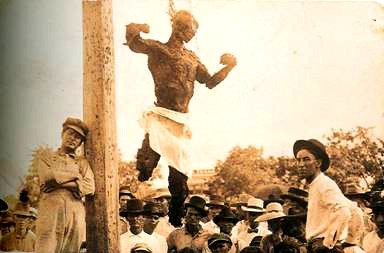
Jesse Washington
Homicide Edward Brian Capetillo
Homicide · USA
Edward Brian Capetillo was a Latino male who was 17 years of age at the time of…
1995 victims
Edward Brian Capetillo
Homicide · USA
Edward Brian Capetillo was a Latino male who was 17 years of age at the time of…
1995 victims
 Jack Kevorkian
Homicide · USA · 1990
Jack Kevorkian (born May 26, 1928) was a controversial American pathologist. He…
130 victims
Jack Kevorkian
Homicide · USA · 1990
Jack Kevorkian (born May 26, 1928) was a controversial American pathologist. He…
130 victims
 David Koresh
Homicide · USA · 1993
David Koresh (born Vernon Wayne Howell; August 17, 1959 – April 19, 1993) led t…
79 victims
David Koresh
Homicide · USA · 1993
David Koresh (born Vernon Wayne Howell; August 17, 1959 – April 19, 1993) led t…
79 victims
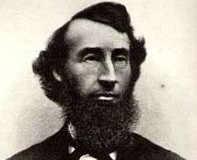 Nathaniel Gordon
Homicide · USA · 1860
Nathaniel Gordon (c.1834 – February 21, 1862) was the first and only American s…
29 victims
Nathaniel Gordon
Homicide · USA · 1860
Nathaniel Gordon (c.1834 – February 21, 1862) was the first and only American s…
29 victims
 Steven Sueppel
Mass murderer · USA · 2008
Steven Sueppel (charged former Hills Bank and Trust Company executive; resident…
5 victims
Steven Sueppel
Mass murderer · USA · 2008
Steven Sueppel (charged former Hills Bank and Trust Company executive; resident…
5 victims
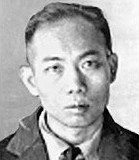 Gee Jon
Murderer · USA · 1921
Gee Jon was executed by asphyxiation-gas in Nevada on February 8, 1924. He was…
1 victim
Gee Jon
Murderer · USA · 1921
Gee Jon was executed by asphyxiation-gas in Nevada on February 8, 1924. He was…
1 victim
 Kevin Lee Hough
Murderer · USA · 1985
Kevin Lee Hough was executed by lethal injection in Indiana on May 2, 2003. He…
3 victims
Kevin Lee Hough
Murderer · USA · 1985
Kevin Lee Hough was executed by lethal injection in Indiana on May 2, 2003. He…
3 victims
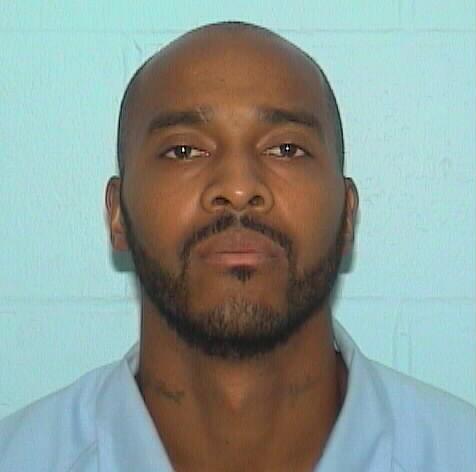 Anthony Townser
Murderer · USA · 1993
Anthony Townser Anthony Townser was sentenced to 75 years in prison in Illinois…
3 victims
Anthony Townser
Murderer · USA · 1993
Anthony Townser Anthony Townser was sentenced to 75 years in prison in Illinois…
3 victims
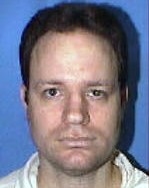 Robert Lookingbill
Murderer · USA · 1984
12:30 to 1:30 a.m. on December 5, 1989 — Robert Andrew Lookingbill knocked on t…
3 victims
Robert Lookingbill
Murderer · USA · 1984
12:30 to 1:30 a.m. on December 5, 1989 — Robert Andrew Lookingbill knocked on t…
3 victims
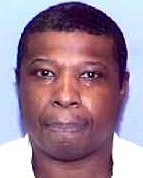 Denard Manns
Murderer · USA · 1998
1998-11-18 — Denard Manns entered the home of Michelle Robson in Killeen and se…
1 victim
Denard Manns
Murderer · USA · 1998
1998-11-18 — Denard Manns entered the home of Michelle Robson in Killeen and se…
1 victim
- Gender
- male
- Country
- USA
- Location
- Waco, Texas, USA
- Date of birth
- 1899
- Age at first offence
- 17
- Characteristics
- juvenile, mutilation, rape, torture
- Victim profile
- Lucy Frier, 53
- Method of murder
- B ludgeoned to death
- Date(s) of murder
- May 8, 1916
- Years active
- 1916
- Date of arrest
- Same day
- Status
-
Lynched (mutilation and burning) by a White American mob, an incident known as the Waco Horror, on May 15, 1916
Background
Jesse Washington was an African American farmhand from Waco, Texas. He was 17 years old. He was illiterate and branded “feeble-minded”.
The lynching of Jesse Washington became known nationally as the “Waco Horror.” It involved mutilation and burning by a White American mob. The mutilation and burning of 17-year-old Washington received perhaps the greatest notoriety of the 492 lynchings that occurred in Texas between 1882 and 1930.
The offence
Lucy Fryer, the wife of a white farmer, was found bludgeoned to death in the doorway of her seed house. Lucy Fryer was 53 years old. She lived in Robinson, Texas, a community seven miles south of Waco.
Jesse Washington confessed to both rape and murder.
Investigation
Arrest and transfer were described as part of attempts to prevent mob action until the accused could have his day in court.
Jesse Washington was transferred to the Dallas County Jail by McLennan County sheriff Samuel S. Fleming.
Arrest
Jesse Washington was arrested on May 8, 1916.
Trial
Jesse Washington’s trial began in Waco on May 15, 1916, in the Fifty-fourth District Court. Judge Richard I. Munroe presided over a courtroom filled to capacity.
A jury of 12 white men deliberated for only four minutes before returning a guilty verdict and assessing the death penalty. Before law officers could remove Washington from the courtroom, a group of white spectators surged forward and seized the convicted youth.
Sentencing
After the guilty verdict, the jury assessed the death penalty.
Outcome
Jesse Washington was lynched by a White American mob and mutilated and burned on May 15, 1916.
A chain was thrown around Washington’s neck before he was dragged toward the City Hall, where another group of vigilantes had gathered to build a bonfire. The leaders of the mob threw Washington onto a pile of dry goods boxes under a tree and poured coal oil over his body.
The chain around Washington’s neck was thrown over a limb of the tree. Several men lowered his body onto the pile of combustibles and ignited a fire.
An observer wrote: “Washington was beaten with shovels and bricks (...) was castrated, and his ears were cut off. A tree supported the iron chain that lifted him above the fire (...) Wailing, the boy attempted to climb up the skillet hot chain. For this, the men cut off his fingers.”
Two hours later, some men placed the burned corpse in a cloth bag and pulled the bundle behind an automobile to Robinson. They hung the sack from a pole in front of a blacksmith’s shop for public viewing.
Later that afternoon, constable Les Stegall retrieved the remains and turned them over to a Waco undertaker for burial. It was stated that lynching violated Texas law, but no members of the mob were prosecuted.
Other details
A postcard showing the burned body of Jesse Washington, Waco, Texas, 1916 stated on the back: “This is the barbecue we had last night. My picture is to the left with a cross over it. Your son, Joe.”
A foreman of Washington’s jury criticized local law officers for failing to prevent the lynching. A special committee of Baylor University faculty passed resolutions denouncing mobs.
A. T. Smith, an African American journalist and editor of the Paul Quinn Weekly, was arrested and convicted of criminal libel after he printed allegations that Lucy Fryer’s husband had committed the murder.
Other blacks in the Waco area condemned the Fryer killing and remained conciliatory toward the white population.
Press coverage included condemnation of the lynching by The Nation, The New Republic, and The New York Times, while only a few Texan newspapers denounced the Waco mob. The Houston Post, Houston Express, Austin American, and San Antonio Express printed critical editorials, but the Dallas newspapers made few comments. The Waco Morning News expressed regret for the incident but resented what it called the “wholesale denunciation of the South and the people of Waco” by the national press.
The most important demonstration of outrage came from the National Association for the Advancement of Colored People (NAACP). It launched a full-scale investigation of the affair and used the incident as a cause célèbre in the organization’s crusade for a federal antilynching bill. It was stated that a photographer’s pictures of the lynching strengthened the argument.
It was stated that although the American entrance into World War I delayed the NAACP campaign until 1919, the “Waco Horror” remained a vivid indication that although the frequency of lynchings had begun to decline in the United States after 1900, incidents that still occurred often were characterized by extreme barbarity.
People mentioned
- Jesse Washington — 17-year-old African American farmhand from Waco, Texas.
- Lucy Fryer — 53-year-old wife of a white farmer; victim found bludgeoned to death in Robinson, Texas.
- Samuel S. Fleming — McLennan County sheriff who transferred Washington to the Dallas County Jail.
- Richard I. Munroe — judge presiding over Washington’s trial in the Fifty-fourth District Court.
- Les Stegall — constable who retrieved Washington’s remains and turned them over to a Waco undertaker for burial.
- A. T. Smith — African American journalist and editor of the Paul Quinn Weekly; arrested and convicted of criminal libel.
- Lester Gibson — African-American county commissioner in Waco; said: “I had been hearing about it all of my life,” and “It’s a wound that has not healed in the mindset of the African-American community. It’s going to continue to be passed on from generation to generation. I think that the only thing that can basically bring McLennan County together is some reconciliation of the matter.”
- Ray Meadows — Waco county commissioner; said: “It’s a very ugly part of history,” and “I regret that it happened, but as far as me coming out to apologize…I didn’t have anything to do with it.”
- Joe — the postcard addressee implied by the postcard text: “Your son, Joe.”
Spotted an error, or have more information about this case?