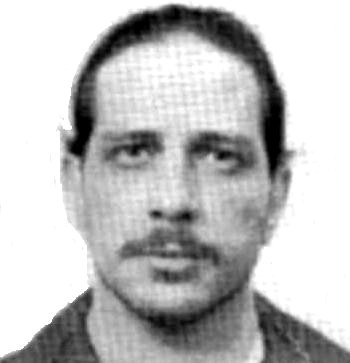
Kevin Lee Hough
Murderer Brian Kevin Rosenfeld
Murderer · USA · 1985
Brian Kevin Rosenfeld Brian Kevin Rosenfeld was sentenced to three concurrent l…
23 victims
Brian Kevin Rosenfeld
Murderer · USA · 1985
Brian Kevin Rosenfeld Brian Kevin Rosenfeld was sentenced to three concurrent l…
23 victims
 Marvin Gray
Murderer · USA · 1975
Marvin Gray was convicted killer who claimed responsibility for 23 slayings and…
23 victims
Marvin Gray
Murderer · USA · 1975
Marvin Gray was convicted killer who claimed responsibility for 23 slayings and…
23 victims
 Yahweh ben Yahweh
Murderer · USA · 1980
Yahweh ben Yahweh was born and legally named Hulon Mitchell Jr. (October 27, 19…
23 victims
Yahweh ben Yahweh
Murderer · USA · 1980
Yahweh ben Yahweh was born and legally named Hulon Mitchell Jr. (October 27, 19…
23 victims
 Russell Ellwood
Murderer · USA · 1991
Russell Ellwood was a former taxi driver. Authorities suspected him of killing…
20 victims
Russell Ellwood
Murderer · USA · 1991
Russell Ellwood was a former taxi driver. Authorities suspected him of killing…
20 victims
 Denis Waxin
Serial killer · France · 1985
Denis Waxin Denis Waxin was sentenced to life in prison (minimum 30 years) on M…
3 victims
Denis Waxin
Serial killer · France · 1985
Denis Waxin Denis Waxin was sentenced to life in prison (minimum 30 years) on M…
3 victims
 Natashay Ward
Murderer · USA · 2005
Natashay Ward was charged in connection with the deaths of her three children:…
3 victims
Natashay Ward
Murderer · USA · 2005
Natashay Ward was charged in connection with the deaths of her three children:…
3 victims
 Robin Lee Row
Murderer · USA · 1992
Robin Lee Row was convicted of aggravated arson and three counts of murder for…
3 victims
Robin Lee Row
Murderer · USA · 1992
Robin Lee Row was convicted of aggravated arson and three counts of murder for…
3 victims
 Jarvis Catoe
Serial killer · USA · 1935
Jarvis Theodore Roosevelt Catoe was convicted of killing a woman in Washington…
8 victims
Jarvis Catoe
Serial killer · USA · 1935
Jarvis Theodore Roosevelt Catoe was convicted of killing a woman in Washington…
8 victims
 Linda Carty
Murderer · USA · 2001
Linda Anita Carty (age 42 at crime; DOB: 10-5-1958), defendant; woman possessin…
1 victim
Linda Carty
Murderer · USA · 2001
Linda Anita Carty (age 42 at crime; DOB: 10-5-1958), defendant; woman possessin…
1 victim
- Gender
- male
- Country
- USA
- Location
- Allen County, Indiana, USA
- Date of birth
- August 17, 1959
- Age at first offence
- 26
- Characteristics
- robbery, torture, abuse, drug addict
- Victim profile
- Antoni Bartkowiak / Ted Bosler, 49, and Gene Rubrake, 56
- Method of murder
- Shooting ( .45 automatic pistol)
- Date(s) of murder
- October 27/November 6, 1985
- Years active
- 1985
- Date of arrest
- —
- Status
-
Executed
Executed by lethal injection in Indiana on May 2, 2003
Case overview
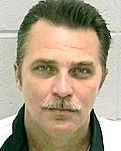
Kevin Lee Hough was executed by lethal injection in Indiana on May 2, 2003. He had been convicted of the 1985 murders of Ted Bosler and Martin “Gene” Rubrake in their home in Fort Wayne, and he was sentenced to death. He also was convicted of the torture and murder of Antoni Bartkowiak, for which he received a 60-year sentence. Hough maintained his innocence in all three murders.
Timeline
- May 2, 2003 — Kevin Hough was executed by lethal injection in Indiana.
- April 17, 2003 — An Indianapolis Star article described Hough’s final chance to make a personal plea to the Indiana Parole Board and recounted the status of his appeals.
- November 6, 1985 — Kevin Hough and his brother, Duane Lapp, went to the home of Ted Bosler and Gene Rubrake and killed both men by shooting them with a .45 caliber automatic pistol.
- October 27, 1985 — Kevin Hough told his friend Juan Fernandez that “Tonight’s the night to hit Greg Nicola’s house,” and Hough later participated in the robbery attempt that resulted in the torture and murder of Antoni Bartkowiak.
- November 1986 — Kevin Hough was tried and convicted for the murder of Antoni Bartkowiak.
- 1985 — Kevin Hough received a death sentence for the murders of Ted Bosler and Martin “Gene” Rubrake.
- 1990 — Hough’s direct appeal to the Indiana Supreme Court was affirmed in Hough v. State, 560 N.E.2d 511 (1990).
- 1997 — Hough’s petition for post-conviction relief was decided in Hough v. State, 690 N.E.2d 267 (1997).
- 2001 — The U.S. Court of Appeals affirmed in Hough v. Anderson, 272 F.3d 878 (2001).
- 2003 — The U.S. Supreme Court denied Hough’s final appeal and refused to stop his execution.
- 1998 — Hough’s appeal was pending with U.S. District Court in Indianapolis since 1998.
The offences
Murder of Ted Bosler and Martin “Gene” Rubrake (Fort Wayne, Indiana)
Kevin Hough was convicted of the knowing or intentional murder of Martin Eugene Rubrake and Theodore G. Bosler. The facts showed that Ted Bosler and Gene Rubrake lived together at 1127 West Wayne Street in Fort Wayne, Indiana.
On November 6, 1985, Kevin Hough and his brother, Duane Lapp, went to the home of Bosler and Rubrake and killed both of them by shooting them with a .45 caliber automatic pistol.
Witness Don Maley testified he had known Hough for about three months and on that date saw him at about 5:00 p.m. Maley and Hough went to the vicinity of the victims’ house and walked around the area. Maley asked what the trip was all about. Hough told Maley his cousin was renting from “two guys” and when his cousin couldn’t pay the rent the two guys had taken his “stuff” and Hough was going to get it back for him. Maley asked why Hough hadn’t done it when they were in the neighborhood. Hough said there were some people there and he would have to go back later.
Later that evening Maley again saw Hough, who told him: “I went back to that house tonight and pulled a gun on those guys and one of those guys lunged at me and I shot him. I told the other guy to get on the ground and I shot him through the back.” Hough also told Maley he had taken some rings from the two men. Bosler and Rubrake were known to wear jewelry frequently but their rings were not found after their deaths.
Duane Lapp testified he and Hough went to the victims’ residence at about 7:50 p.m. By a circuitous route they walked to the corner of Wayne and College where Rubrake was taking groceries out of a car. Hough talked to Rubrake and offered to help carry the groceries into the house, and the men went inside. Bosler joined them. They went downstairs into the basement where Hough pulled a .45 caliber automatic pistol from his shoulder holster, pointed it at the two men and told them to hit the floor.
Lapp testified the older man swung at Hough with a television remote control and Hough shot him in the chest. The younger man dropped to the floor and Hough shot him in the back. Hough also shot the older man in the face. Hough and Lapp started up the stairs; Hough walked back down to retrieve a container of beer and the remote control, both of which had his fingerprints on them. On his way up the stairs, Hough stepped on the older man’s face. Hough and Lapp walked back to the car, went to Maley’s house, and then returned to Hough’s residence, arriving there at about 8:47 p.m.
Hough told his sister, Joyce Hough, between 9:00 and 9:30 p.m. on November 6 that he had “walked into a set-up” and had killed two people.
Before leaving the home, Hough took a beer can and remote control that he thought might have his fingerprints and removed several rings from the bodies of Bosler and Rubrake. As he left, he stepped on Rubrake’s face.
After the killings, Hough dropped his brother off and then almost immediately moved to Indianapolis.
Murder, torture, and robbery of Antoni Bartkowiak (Indiana)
Hough also was convicted in connection with the torture and murder of Antoni Bartkowiak. Prosecutors said Hough used a cattle prod to torture Bartkowiak before shooting him.
Eleven days earlier than the Bosler/Rubrake murders, on October 27, 1985, Hough and two other men went to rob a home. Bartkowiak answered the door. Hough stuck a handgun into Bartkowiak’s abdomen, made him lie on the floor and handcuffed his hands behind his back. After ransacking the house, Hough used a cattle prod to torture and question Bartkowiak about possible cocaine in the house. Hough then took Bartkowiak to the basement and shot him in the back of the head.
The U.S. Court of Appeals described the lead-up to the Bartkowiak murder in more detail. Hough told his friend Juan Fernandez: “[t]onight’s the night to hit Greg Nicola’s house.” Then Hough, Fernandez, and another man, Donald Maley, went to the home of Greg Nicola to evaluate the prospects of robbing the house. Hough directed Fernandez to park approximately three to four blocks away on another street; Hough and Maley left the car and went to the house. When Antoni Bartkowiak answered the door, Hough stuck a .45 caliber handgun into his stomach and backed him into the residence. Hough made Bartkowiak lie down on the floor and handcuffed Bartkowiak’s hands behind his back.
The appellate court described that Hough discovered a semi-automatic weapon and shells in the house and handed them to Maley. Hough then told Maley to hold it against Bartkowiak and use it if necessary. Hough searched the house and after ransacking it, Hough questioned Bartkowiak about cocaine he believed was in the residence. When Bartkowiak denied knowledge of the cocaine, Hough used a device to inflict electric shocks on Bartkowiak. Hough and Maley then took Bartkowiak to the basement. En route downstairs, Hough instructed Maley to return to the main floor to get a cushion from the couch. Once in the basement, Hough forced Bartkowiak to lean over a rollaway bed. Hough took the cushion, placed it over the back of Bartkowiak’s head and shot Bartkowiak.
After the murder, Hough and Maley returned to the car and left for home. Hough took two bags of stolen items to the basement of the house and emptied the contents. Hough gave Maley $80 and stated that it came from Bartkowiak’s wallet. Hough also told Maley he could have the shotgun, but Maley declined. After Maley complained he had not gotten his share, Maley left. Later, Hough told Fernandez he had found an additional $400 but did not wish to divide it with Maley because Maley had not done his part. A few days later, Hough gave Fernandez the .25 caliber semi-automatic weapon and told him to dispose of it. Fernandez disposed of it.
Hough was tried and convicted for the murder of Bartkowiak in November 1986. He received a 60-year sentence for the Oct. 27, 1985 torture and murder of Antoni Bartkowiak.
Investigation and arrest
The materials included no separate arrest narrative.
Trial
Charging and jury findings for Bosler and Rubrake
Hough was charged in the Allen Superior Court, Criminal Division, with the knowing or intentional murder of Martin Eugene Rubrake and Theodore G. Bosler. The state also filed an Application for Death Sentence.
The jury found Hough guilty of both counts of murder and further recommended the death penalty be imposed.
The trial court found Hough guilty of the two murders, found sufficient aggravating factors peculiar to Hough and the crimes which outweighed mitigating circumstances that existed, and imposed the death penalty.
Evidence and trial issues raised on direct appeal
On direct review, six issues were presented for review, including:
- violation of Hough’s constitutional rights when members of the victims’ families stood up to be introduced during the sentencing hearing, and inclusion in the presentence report of letters and opinions of the victims’ family members;
- refusal of the court to appoint experts to assist Hough in the preparation of his case;
- alleged improper foundation and chain of custody of items of evidence;
- permitting the application for death penalty to contain an allegation of robbery;
- error in using statutory aggravating circumstances against him during sentencing; and
- erroneous jury instructions used during sentencing.
The Indiana Supreme Court’s decision in Hough v. State, 560 N.E.2d 511 (1990) held:
- introduction of victims’ family members to judge during sentencing was not improper;
- defendant was not entitled to court-appointed psychologist;
- application for death penalty properly contained allegation of robbery. The judgment was affirmed. Shepard, C.J., filed an opinion concurring in result. DeBruler, J., filed an opinion concurring in result in part and dissenting in part. Dickson, J., filed an opinion concurring in part and dissenting in part.
Sentencing
Hough was sentenced to death for the murders of Ted Bosler and Gene Rubrake.
For the torture and murder of Antoni Bartkowiak on Oct. 27, 1985, Hough received a 60-year sentence.
Appeals and post-conviction litigation
Direct appeal: Hough v. State, 560 N.E.2d 511 (1990)
Hough’s direct appeal was decided in Hough v. State, 560 N.E.2d 511 (1990), where the Supreme Court affirmed the convictions and death penalty.
Post-conviction relief: Hough v. State, 690 N.E.2d 267 (1997)
Hough filed a petition for post-conviction relief. The Allen County Superior Court granted the state’s motion for summary judgment and denied the petition. Hough appealed. The Supreme Court in Hough v. State, 690 N.E.2d 267 (1997) held:
- defense counsel’s failure to make numerous objections was not ineffective assistance;
- defendant did not establish that counsel’s failure to procure psychologist for penalty phase was ineffective assistance;
- evidentiary hearing was not required on defendant’s claim concerning psychologist;
- trial court properly considered mitigating factors;
- trial court’s jury instructions at sentencing phase did not violate defendant’s constitutional rights. The Supreme Court affirmed.
Federal habeas corpus: Hough v. Anderson, 272 F.3d 878 (2001)
Hough filed a petition for a writ of habeas corpus in the district court after exhausting state remedies. The district court denied the petition but granted a certificate of appealability. In Hough v. Anderson, 272 F.3d 878 (2001), the U.S. Court of Appeals affirmed the district court’s judgment.
The appellate decision summarized facts of both the Bosler/Rubrake murders and the Bartkowiak murder described above.
Clemency, parole hearing, and final proceedings
Indiana Parole Board hearing
Hough had a final chance to make a personal plea to the Indiana Parole Board. The hearing was at the Indiana State Prison.
During the hearing, a Parole Board member asked Hough: “Your guess is as good as mine,” and Hough responded asking for his sentence to be commuted to life in prison. Hough said he didn’t kill anyone and said, “I wasn't there.” He also told the board that he and his 16-year-old brother went to buy marijuana that night and then went their separate ways. Hough told the board that his younger brother, Duane Lapp, testified against him during the trial, but Hough said he went to a friend's party later that night and did not commit the murders.
Valerie Parker, a board member and licensed psychotherapist, remarked: “It's a heck of a thing to have three murder convictions hanging over your head and to say you didn't do any of those.” Hough responded that his trial attorneys were incompetent and did not challenge the evidence at his trial. Hough’s attorney, Joey Mogul, said before the hearing: “He has received abysmal legal representation.”
In his clemency petition, Hough’s attorneys pointed out that Hough’s two part-time public defenders failed to adequately represent him. The materials also stated that Hough’s conviction was affirmed by the Indiana Supreme Court and that he exhausted his appeals.
Hough’s family and the victims’ families were at the hearing. Hough said of the victims’ families: “I have thought about that a lot,” and also stated: “It's pretty harsh. They said they wanted the judge to kill me. I do have compassion for other people, but I'm not the one who killed their family (members).”
Governor’s denial and U.S. Supreme Court refusal to stop execution
Wednesday, Gov. Frank O'Bannon denied Hough’s request to have his death sentence commuted to life in prison.
The materials stated that the U.S. Supreme Court denied Hough’s final appeal Thursday and refused to stop his execution, ending 17 years of appeals.
Execution details and statements
The materials stated that Hough received a lethal injection just after midnight at the Indiana State Prison and was pronounced dead at 12:25 a.m.
Hough said shortly before he was put to death: “I hope the victims' families get some measure of satisfaction,” and “Hopefully, their grief won't be as much.”
The materials stated that prison officials said Hough was pronounced dead at 12:25 a.m. and that he spent Thursday afternoon talking with his daughter, mother, grandmother and aunts. The materials quoted John Stainthorp, Hough’s attorney: “He actually has dealt with this whole situation with great dignity,” and also quoted that his client “is obviously concerned (that) he didn't get adequate representation of justice.” The materials stated that Hough expected to spend his last hours with a Catholic priest.
Outcome
Hough was executed by lethal injection in Indiana on May 2, 2003.
He had been condemned in connection with the 1985 murders of two Fort Wayne men. The materials stated he was executed after the U.S. Supreme Court refused to stop his execution and that this was the first condemned inmate to be put to death this year in Indiana and the 10th overall since Indiana resumed capital punishment in 1981.
Other details
The materials described Hough’s prior convictions for trespass and burglary and noted that he received abysmal legal representation arguments from his current attorneys and his clemency petition.
The materials also stated that Hough had numerous prior convictions for trespass and burglary. The materials further stated that Hough maintained his innocence in all 3 murders, while prosecutors maintained the described role in the three murders.
The materials described family connections: Hough’s sister Joyce Hough; and that he spent time with his daughter, mother, grandmother and aunts before/around the time of execution.
The materials referenced Hough’s fiancee, Noreen Akers, when describing movement to Indianapolis after the Bosler/Rubrake murders.
Spotted an error, or have more information about this case?