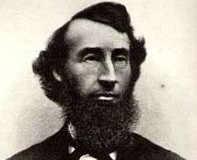
Nathaniel Gordon
Homicide Edward Brian Capetillo
Homicide · USA
Edward Brian Capetillo was a Latino male who was 17 years of age at the time of…
1995 victims
Edward Brian Capetillo
Homicide · USA
Edward Brian Capetillo was a Latino male who was 17 years of age at the time of…
1995 victims
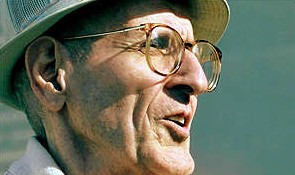 Jack Kevorkian
Homicide · USA · 1990
Jack Kevorkian (born May 26, 1928) was a controversial American pathologist. He…
130 victims
Jack Kevorkian
Homicide · USA · 1990
Jack Kevorkian (born May 26, 1928) was a controversial American pathologist. He…
130 victims
 David Koresh
Homicide · USA · 1993
David Koresh (born Vernon Wayne Howell; August 17, 1959 – April 19, 1993) led t…
79 victims
David Koresh
Homicide · USA · 1993
David Koresh (born Vernon Wayne Howell; August 17, 1959 – April 19, 1993) led t…
79 victims
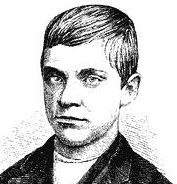 Jesse Pomeroy
Homicide · USA · 1874
Jesse Pomeroy was sentenced to death on two counts in 1876. His sentence was co…
10 victims
Jesse Pomeroy
Homicide · USA · 1874
Jesse Pomeroy was sentenced to death on two counts in 1876. His sentence was co…
10 victims
 Tucker Cipriano
Murderer · USA · 2012
Tucker Cipriano was the oldest son in the Cipriano family and was adopted when…
1 victim
Tucker Cipriano
Murderer · USA · 2012
Tucker Cipriano was the oldest son in the Cipriano family and was adopted when…
1 victim
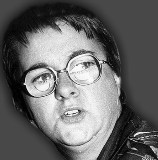 Carol Bundy
Murderer · USA · 1980
Carol Bundy was an American serial killer. She was known as Carol M. Bundy and…
2 victims
Carol Bundy
Murderer · USA · 1980
Carol Bundy was an American serial killer. She was known as Carol M. Bundy and…
2 victims
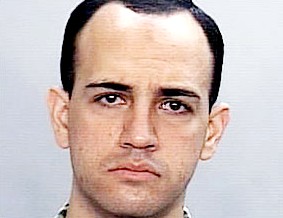 Steven Arthur Rios
Murderer · USA · 2004
Steven Arthur Rios was a police officer with the Columbia Police Department. A…
1 victim
Steven Arthur Rios
Murderer · USA · 2004
Steven Arthur Rios was a police officer with the Columbia Police Department. A…
1 victim
 Ned Kelly
Murderer · Australia · 1878
Edward “Ned” Kelly (June 1854 or 1855 – 11 November 1880) was an Irish Australi…
6 victims
Ned Kelly
Murderer · Australia · 1878
Edward “Ned” Kelly (June 1854 or 1855 – 11 November 1880) was an Irish Australi…
6 victims
- Gender
- male
- Country
- USA
- Location
- In the Sea - New York, USA
- Date of birth
- 1834
- Age at first offence
- 26
- Characteristics
- abuse
- Victim profile
- Men, women and children
- Method of murder
- Overcrowding, filth, disease
- Date(s) of murder
- July-August 1860
- Years active
- 1860
- Date of arrest
- August 8, 1860
- Status
-
Executed
Executed by hanging in New York on February 21, 1862
Case information
Nathaniel Gordon (c.1834 – February 21, 1862) was the first and only American slave trader to be tried, convicted and executed “for being engaged in the Slave Trade” in accordance with the Piracy Law of 1820.
Background
Gordon was born in Portland, Maine. He engaged in the business many years prior and had always eluded justice.
He loaded 897 slaves aboard his ship Erie at Sharks Point, Congo River, West Africa on August 7, 1860. He was captured by the USS Mohican 50 miles from port on August 8, 1860.
The offence
The slave trade was pronounced piracy by law for forty years, and engaging in it was a capital offense.
Evidence described the voyage as involving a large number of enslaved people crowded on the main deck and suffering during the entire voyage. During the passage of fifteen days, twenty-nine of the sufferers died and were thrown overboard.
Investigation
Lieutenant Henry D. Todd, U.S.N. gave evidence that the ship Erie was discovered by the United States steamer Mohican on the morning of August 8, 1860. He said the Erie was about fifty miles outside of the River Congo, on the West Coast of Africa, standing to the northward, with all sail set, flying the American flag, and that a gun from the Mohican brought her to.
Todd went on board around noon and took command of the prize. He found 897 enslaved people on board the Erie, described as men, women, and children ranging from the age of six months to forty years. The description also stated that they were half children, one-fourth men, and one-fourth women, and so crowded on the main deck that “one could scarcely put his foot down without stepping on them.” The hold stench was described as fearful and the filth and dirt on their persons as indescribably offensive.
Arrest and capture
The ship Erie was captured by the USS Mohican. The capture occurred 50 miles from port.
Trial
After “one hung jury and a new trial,” Gordon was convicted November 9, 1861 in the circuit court in New York City.
The material stated that Gordon was arrested, tried, and mainly through the energy of District-Attorney Smith convicted and sentenced to death. The conviction and sentencing are described as occurring in November 1861, including a statement that Judge William Shipman convicted Gordon and also sentenced him to hang.
The record stated that Gordon’s friends and supporters approached President Lincoln “to commute the said sentence of the said Nathaniel Gordon to a term of imprisonment for life.”
Quotations
“Cut a lock of hair from my head and give it to my wife.”
“Then taking a ring from his finger, he requested that that also should be sent to his wife in remembrance of her husband.”
Sentencing and reprieve
Gordon was sentenced to death by hanging on February 7, 1862.
President Abraham Lincoln issued a stay of Gordon’s execution, setting the new date for February 21, 1862. It was stated that Gordon was granted a two week respite so that he could have “the necessary preparation for the awful change which awaits.” Lincoln’s respite was described as temporary.
The material further stated that Lincoln made clear that the respite was only temporary to allow Gordon time for his final preparations, and that Lincoln ordered the “said day when the said sentence shall be executed.”
Attempted suicide and prison arrangements
The evening before the execution, Gordon unsuccessfully attempted suicide with strychnine poison. The material described that keepers were alarmed about three o’clock A.M. on Friday morning by Gordon being suddenly seized with convulsions, and that it was evident he was suffering from the effects of poison.
Dr. Simmons, the prison physician, was sent for and stimulants were administered to produce a reaction. Drs. James R. Wood and Hodgman were also in attendance and assisted in resuscitating Gordon. By means of the stomach-pump and the use of brandy, Gordon was sufficiently recovered to be able to articulate. From eight o’clock onward, physicians had hope of saving Gordon’s life, and he gradually recovered though he was subject to fainting fits for hours afterward.
When sensible, Gordon begged the doctors to let him alone, preferring “to die by his own hand rather than suffer the ignominy of a public execution.”
The material stated that it had not been satisfactorily ascertained how or in what manner Gordon procured the poison. It said the symptoms were evidently those of strychnine and that the only way the keepers could account for the presence of the poison was its introduction in the cigars which Gordon had smoked so freely the night before. It also stated that on Thursday Gordon was compelled to undergo a rigid search, his clothing was changed entirely, and he was placed in a new cell.
A few minutes after eleven o’clock, it was apparent to Gordon that the execution would take place notwithstanding his attempt at suicide. He sent for Marshal Murray and said he had something of a private nature to communicate. Marshal Murray was asked if anything could be done to alleviate his sufferings. Gordon raised himself slowly, with much difficulty, and made the hair and ring requests quoted above. The official was described as leaving the unhappy man to his fate.
Execution
At 12 o’clock, Marshal Murray notified Gordon through Mr. Draper that the hour had arrived. Gordon expressed surprise and said he thought he had two hours more in which to live.
A clergyman entered the cell and prayed with him. Deputy Marshal Borst aided him in dressing and gave him a large drink of clear whisky. Gordon’s arms were tied and the black cap was put carelessly on one side of his head. He was carried on the deputy’s shoulders to a chair in the corridor.
The material stated that Gordon was not sober, and that the effect of the poison required whisky enough to keep him alive till the necessary moment. It stated he sat lollingly in the chair, gazing listlessly around, while the Marshal read the former reprieve to him. After the reprieve was read, he was helped to his feet and held there while the Marshal read to him “the death-warrant.”
Gordon then looked around with a senseless smile, asked for some more whisky, and received it. The procession was formed and Gordon walked upheld by the Marshals toward the scaffold.
At the scaffold, Gordon said: “Well, a man can't die but once; I'm not afraid.”
The cap was drawn over his whitened, meaningless features, and the noose-knot was carefully adjusted under his ear. He stood waiting until, with a jerk, he went high in the air and fell to the length of the rope. The material stated that the body swayed hither and thither for a few moments and then all was quiet. It stated: “No twitchings, no convulsions, no throes, no agonies.” It also stated: “His legs opened once, but closed again, and he hung a lump of dishonored clay.”
Appeals
The material described that Gordon had “one hung jury and a new trial,” and it stated that he was convicted November 9, 1861 in the circuit court in New York City.
Outcome
Gordon was executed by hanging in New York on February 21, 1862.
Other details
The material stated that the hanging of Gordon on Friday, 21st February, in this city, was for being engaged in the slave-trade. It stated that “The Administration of Mr. Lincoln has turned over a new leaf in this respect” and that “Henceforth the slave-trade will be abandoned to the British and their friends.”
It also stated that Gordon was probably the most successful and one of the worst of the individuals engaged in the trade.
The material stated that, between 1837 and 1860, seventy-four cases relating to the slave trade had been tried in the United States, and that very few men were convicted and even then received only light sentences.
It stated that Gordon was the first man ever to be executed for this crime, and that participation in the slave trade had been punishable by death since 1820.
Lincoln was described as refusing to grant clemency, and that “Lincoln Refuses to Commute Sentence of Execution for Slave Trading.”
The material stated that “Within a year of Gordon's execution a whirlwind of anti-slavery measures were enacted including the abolition of slavery in Washington, D.C., the Confiscation Acts, and the Emancipation Proclamation.”
It stated that Gordon was survived by his wife, son and mother.
Timeline
- 8 August 1860 — The ship Erie was discovered by the USS Mohican; Lieutenant Henry D. Todd boarded and took command of the prize.
- 9 November 1861 — Gordon was convicted in the circuit court in New York City.
- 7 February 1862 — Gordon was sentenced to death by hanging.
- 21 February 1862 — Gordon was executed by hanging in New York.

Spotted an error, or have more information about this case?