
Obie Weathers
Murderer Russell Ellwood
Murderer · USA · 1991
Russell Ellwood was a former taxi driver. Authorities suspected him of killing…
20 victims
Russell Ellwood
Murderer · USA · 1991
Russell Ellwood was a former taxi driver. Authorities suspected him of killing…
20 victims
 Robert Martines Perez
Murderer · USA · 1994
Name: Robert Martines Perez · Other name used in proceedings: Robert Martinez P…
15 victims
Robert Martines Perez
Murderer · USA · 1994
Name: Robert Martines Perez · Other name used in proceedings: Robert Martinez P…
15 victims
 Billy Frank Vickers
Murderer · USA · 1993
Billy Frank Vickers Vickers was executed by lethal injection in Texas on Januar…
14 victims
Billy Frank Vickers
Murderer · USA · 1993
Billy Frank Vickers Vickers was executed by lethal injection in Texas on Januar…
14 victims
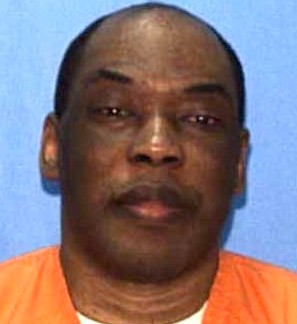 Sonny Boy Oats
Murderer · USA · 1979
Name: Sonny Boy Oats, Jr. DOB: 05/25/57 Case identifiers: DC# 051769, Fifth Jud…
2 victims
Sonny Boy Oats
Murderer · USA · 1979
Name: Sonny Boy Oats, Jr. DOB: 05/25/57 Case identifiers: DC# 051769, Fifth Jud…
2 victims
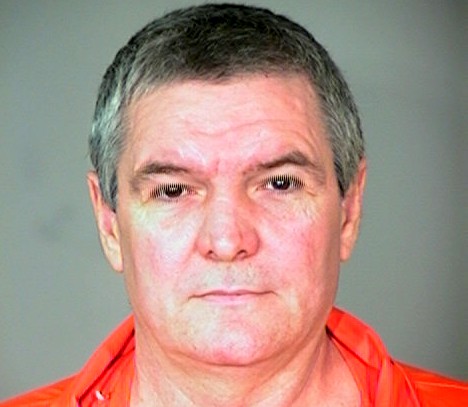 Richard Stokley
Murderer · USA · 1991
Richard Dale Stokley was a male, Caucasian, born 09/09/1952. He had a height of…
2 victims
Richard Stokley
Murderer · USA · 1991
Richard Dale Stokley was a male, Caucasian, born 09/09/1952. He had a height of…
2 victims
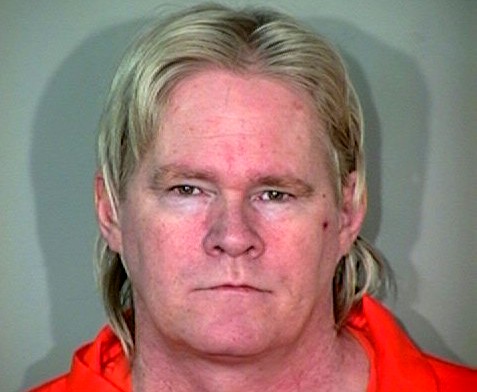 George Kayer
Murderer · USA · 1994
Defendant: George Kayer · Defendant race: Caucasian · Victim: Delbert L. Haas ·…
1 victim
George Kayer
Murderer · USA · 1994
Defendant: George Kayer · Defendant race: Caucasian · Victim: Delbert L. Haas ·…
1 victim
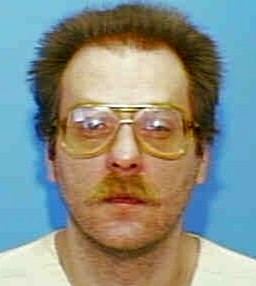 John Joseph Fautenberry
Serial killer · USA · 1990
John Joseph Fautenberry was a former Oregon truck driver. Fautenberry was broug…
6 victims
John Joseph Fautenberry
Serial killer · USA · 1990
John Joseph Fautenberry was a former Oregon truck driver. Fautenberry was broug…
6 victims
- Gender
- male
- Country
- USA
- Location
- Bexar County, Texas, USA
- Date of birth
- August 11, 1981
- Age at first offence
- 19
- Characteristics
- robbery, convicted rapist, history of mental illness, mentally ill
- Victim profile
- Ted Church (bartender)
- Method of murder
- Shooting
- Date(s) of murder
- February 4, 2000
- Years active
- 2000
- Date of arrest
- February 15, 2000
- Status
-
Sentenced to death
Sentenced to death on September 13, 2001
Case information
- Name: Obie Weathers
- TDCJ number: 999396
- Date of birth: 08/11/1981
- Age at the offense: 18
- Date received: 09/13/2001
- Age (when received): 20
- Education level: 11
- County: Bexar
- Race: (appellant)
- Gender: Male
- Hair color: Black
- Height: 6 ft 0 in
- Weight: 254
- Eye color: Brown
- Native county: Native
- Native state: Texas
- Prior prison record: None
- Prior occupation: laborer (Bexar)
Timeline
- 02/04/2000 — Obie D. Weathers entered a bar in San Antonio and demanded money from the adult white male bartender; after the bartender refused, Weathers shot him, resulting in his death.
- 02/15/2000 — Officers from the San Antonio Police Department arrested the appellant at his place of employment pursuant to a warrant on charges of aggravated robbery and aggravated sexual assault; during execution, he resisted and a struggle ensued; after arrest, detectives transported him to the police station and conducted interviews.
- 09/13/2001 — The trial judge sentenced the appellant to death following the jury’s answers to the special issues.
- May of 2001 — The appellant was convicted of capital murder.
- October 22, 2003 — The Court of Criminal Appeals delivered the opinion and affirmed the judgment of the trial court.
The offence
On 02/04/2000 in San Antonio, Weathers entered a bar and demanded money from the adult white male bartender. The bartender refused and Weathers shot him, resulting in his death.
The written statements also included admissions to the robbery of Ernest Johnson, the robbery at Pierce's Ice House, and the shooting and killing of Ted Church.
The interview also addressed an uncharged robbery and murder of Norma Petrash; Weathers initially denied committing the Petrash murder and later confessed to the robbery and murder of Petrash.
Investigation
On February 15, 2000, officers from the San Antonio Police Department arrested the appellant at his place of employment pursuant to a warrant on charges of aggravated robbery and aggravated sexual assault. When the officers attempted to execute the arrest warrant, he resisted, and a struggle ensued. Both the officers and the appellant sustained injuries from the struggle. After the officers finally managed to arrest him, they transported him to the police station.
Detectives Thomas Matjeka and Danny Gonzales interviewed the appellant at the police station. Gonzales advised the appellant of his rights before the interview began, asked if he understood them, and the appellant responded by asking:
"You mean I can call a lawyer if I want?"
Gonzales told the appellant that he could call a lawyer at any time, remain silent, or continue speaking with police. The appellant stated that he understood, and that ended the discussion regarding his question. He did not request an attorney.
The detectives continued with the interview and eventually reduced the appellant’s oral statements to a single written statement. In that statement, the appellant confessed to the robbery of Ernest Johnson, the robbery at Pierce's Ice House, and the shooting and killing of Ted Church.
During the interview, the detectives also questioned the appellant about the uncharged robbery and murder of Norma Petrash. At first, the appellant denied he committed the Petrash murder and claimed that an associate of his, a man by the name of "Old School," went into the house and shot Petrash while he waited outside the house on the porch steps. Then the appellant told the detectives he did not understand why he was being accused of the Petrash murder, and that he felt that he should not admit to it because his mother told him never to admit to anything he did not do.
Matjeka told the appellant that he should be a man and admit to what he had done. The appellant then asked Matjeka:
"What you said about a lawyer earlier, what would a lawyer tell me to do?"
Matjeka stated that certain lawyers would tell him to stop talking to police and not tell them anything else, but that some lawyers would tell him to simply tell the truth. Matjeka told the appellant he could not say what a lawyer would tell him to do because he did not know who his lawyer would be. After these statements, Matjeka asked if he still understood his rights and if he wanted to continue to talk. The appellant replied that he did and did not request an attorney. The interview continued and eventually the appellant confessed to the robbery and murder of Petrash, and the detectives reduced this confession to a written statement.
Arrest
The appellant resisted when officers attempted to execute the arrest warrant, and a struggle ensued; both officers and the appellant sustained injuries from the struggle. After arrest, the officers transported him to the police station.
Trial
Charge and conviction
In May of 2001, the appellant was convicted of capital murder under Tex. Penal Code § 19.03(a).
Sentence
Pursuant to the jury’s answers to the special issues set forth in Texas Code of Criminal Procedure Article 37.071, sections 2(b) and 2(e), the trial judge sentenced the appellant to death under Art. 37.071 § 2(g). The trial court imposed the death sentence.
Direct appeal and issues raised
The appellant’s direct appeal to the Court of Criminal Appeals was automatic under Art. 37.071 § 2(h). The appellant raised five points of error. The Court affirmed.
Appeals
I. Custodial statements
The appellant claimed the trial court erred in denying his pre-trial motion to suppress his inculpating custodial statements to the police, arguing (1) officers violated his Fifth Amendment right to have an attorney present during questioning and (2) the statements did not comply with Texas Code of Criminal Procedure Article 38.22. The first point of error concerned his first custodial statement admitted during the guilt phase, and the third point of error concerned his second custodial statement admitted during the punishment phase. Points of error one and three were overruled.
Article 38.22 analysis
Article 38.22 required written statements to be inadmissible unless warnings on the face of the statement included the right to remain silent, that anything said may be used against him at trial or in court, the right to an attorney present or to advise him during questioning, the provision of an attorney before questioning if he could not afford one, and the right to terminate the interview at any time. The face of the statement also had to show waiver of these rights.
The Court found that both statements contained the necessary statutory warnings and complied with Article 38.22.
Fifth and Fourteenth Amendment analysis
The Court described that the Fifth and Fourteenth Amendments required custodial interrogation to be preceded by notice of the right to remain silent and the right to have an attorney present during questioning. It discussed Edwards v. Arizona, Miranda v. Arizona, and Davis v. United States requirements for invocation of the right to counsel, as well as Dinkins v. State.
The Court held that the appellant’s statements did not constitute unambiguous, unequivocal requests for an attorney. It explained:
- The first statement, “You mean I can call a lawyer if I want?”, was a question clarifying understanding of rights read to him.
- The second statement, “What you said about a lawyer earlier, what would a lawyer tell me to do?”, was practically identical to a statement held insufficient to invoke counsel in Dinkins.
The Court also noted that officers responded to both ambiguous statements with clarifying questions to determine whether the appellant actually wanted an attorney, and the appellant affirmatively responded each time and did not request an attorney. The Court concluded the trial court properly admitted both statements.
II. Failure to request limiting instructions
The appellant contended in his second point of error that he received ineffective assistance of counsel because his attorney failed to request either a limited admissibility instruction or a reasonable doubt instruction regarding uncharged misconduct offered into evidence by the State. The Court applied the two-prong test from Strickland v. Washington and required a showing of deficient performance and prejudice.
The appellant relied on Ex parte Varelas, where the Court held that jurors should be instructed on the limits on the use of evidence of extraneous acts if the defendant requested it. The Court discussed limiting instructions and beyond-a-reasonable-doubt instructions, stating that under Varelas it could be error to deny such requested instructions.
The Court distinguished Varelas from the appellant’s case and held the appellant failed to demonstrate prejudice from counsel’s failure to request instructions. Point of error two was overruled.
III. Eighth Amendment claim
In his fourth point of error, the appellant claimed the Texas death penalty scheme violated the Eighth Amendment ban against cruel and unusual punishment. The Court stated that identical arguments had been addressed and rejected by the Court before and that the appellant gave no reason to revisit. Point of error four was overruled. The decision cited Sells v. State and Ladd v. State.
IV. Lesser-included offense instruction
In his fifth point of error, the appellant contended the trial court erred by failing to instruct the jury on the lesser-included offense of felony murder. The Court applied the Royster test as refined in Rousseau v. State and discussed that felony murder is a lesser-included offense of capital murder, with the distinguishing element between felony murder and murder being the intent to kill.
The Court explained that capital murder includes an intentional murder committed during the course of committing an enumerated offense in the statute, while felony murder includes an unintentional murder committed during the course of a felony, with the culpable mental state supplied by the underlying felony. The Court stated that a felony murder instruction would be warranted if there was some evidence the appellant intended to commit the robbery but not to cause the death.
The appellant cited a portion of his first custodial statement supporting the argument. The Court reproduced the quoted statement verbatim:
I was told [sic] all the black folks to just mind their own business and then I robbed the place. I took some money from a white dude and some from the cash register. It was about a hundred something dollars. There was some white guy sitting down at the bar and I knew he was going to do something. He was acting like he was drunk. I started backing away to leave when the white guy grabbed me and started wrestling with me kind of like y'all did when y'all arrested me only y'all got the job done. He started wrestling me and I just let loose with the gun about two or three times. I was kind of scared, that's why I shot the man. My - my mind was gone at the time so that's why I shot him. To get him off me so I could leave.
The Court found that nothing in the statement demonstrated or even implied that the appellant intended only to rob the decedent. It stated that while the statement could explain why he shot Church, it did not show he did not knowingly or intentionally cause the death. It also noted the jury was instructed on the lesser-included offense of murder under Texas Penal Code Section 19.02(b)(1) and rejected it.
The Court further addressed the appellant’s argument that his first written statement only confessed to felony murder, and rejected it by explaining that “in the course of committing” included conduct occurring in an attempt to commit, during the commission of, or in immediate flight after the attempt or commission of the offense.
Point of error five was overruled.
Outcome of the appeal
The Court affirmed the judgment of the trial court. The Court delivered the opinion on October 22, 2003.
Outcome
The appellate court affirmed the trial court’s judgment. The appellant had been sentenced to death on September 13, 2001 after a May 2001 conviction of capital murder.
Other details
Identification of the decedent(s) and interview note
- Ted Church was the decedent referred to as still alive at the time of the interview, but not expected to survive; he eventually died from his wounds on March 2, 2003.
- The police were unable to locate anyone by the name "Old School".
- The appellant also wrote a greeting and described experiences on Texas Death Row, identifying himself as “Obie D. Weathers III # 999396” and referencing “Polunsky Unit 3872 F.M. 350 South Livingston, TX 77351 USA.”
- The co-defendants were listed as none.

Spotted an error, or have more information about this case?