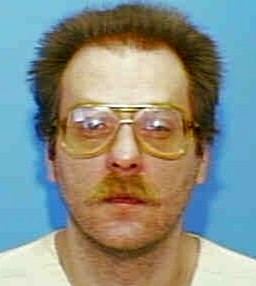
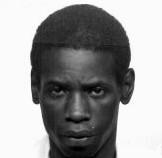
John Joseph Fautenberry
Serial killer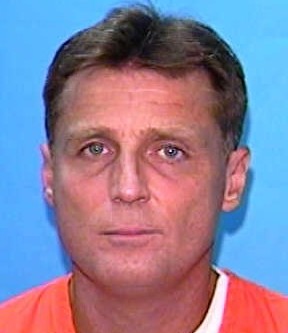 Glen Edward Rogers
Serial killer · USA · 1993
Glen Edward Rogers was a spree killer whose cross-country rampage in 1994-95 le…
70 victims
Glen Edward Rogers
Serial killer · USA · 1993
Glen Edward Rogers was a spree killer whose cross-country rampage in 1994-95 le…
70 victims
 Michael Swango
Serial killer · USA · 1981
Michael Swango (Joseph Michael Swango) was a physician and American serial kill…
60 victims
Michael Swango
Serial killer · USA · 1981
Michael Swango (Joseph Michael Swango) was a physician and American serial kill…
60 victims
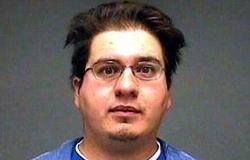 Efren Saldivar
Serial killer · USA · 1989
Efren Saldivar (born 30 September 1969) was an American serial killer who murde…
50 victims
Efren Saldivar
Serial killer · USA · 1989
Efren Saldivar (born 30 September 1969) was an American serial killer who murde…
50 victims
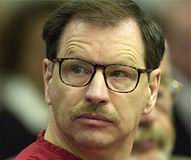 Gary Ridgway
Serial killer · USA · 1982
Gary Leon Ridgway Ridgway was born 18-February-1949 in Salt Lake City, UT. He w…
49 victims
Gary Ridgway
Serial killer · USA · 1982
Gary Leon Ridgway Ridgway was born 18-February-1949 in Salt Lake City, UT. He w…
49 victims
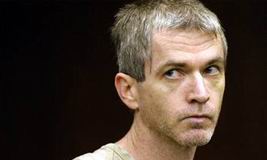 Charles Cullen
Serial killer · USA · 1984
Charles Cullen (born February 22, 1960) was a former nurse and the most prolifi…
45 victims
Charles Cullen
Serial killer · USA · 1984
Charles Cullen (born February 22, 1960) was a former nurse and the most prolifi…
45 victims
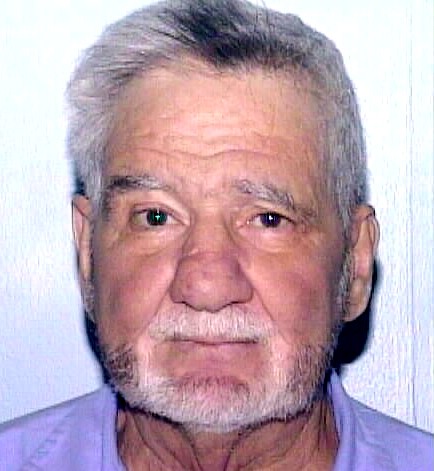 Edmund Lopes
Murderer · USA · 1966
Edmund Lopes was a Baptist minister. After being sentenced for murdering his wi…
2 victims
Edmund Lopes
Murderer · USA · 1966
Edmund Lopes was a Baptist minister. After being sentenced for murdering his wi…
2 victims
 Gaylon Walbey
Murderer · USA · 1993
Gaylon George Walbey Jr. was the defendant in a capital-murder case. · The appe…
1 victim
Gaylon Walbey
Murderer · USA · 1993
Gaylon George Walbey Jr. was the defendant in a capital-murder case. · The appe…
1 victim
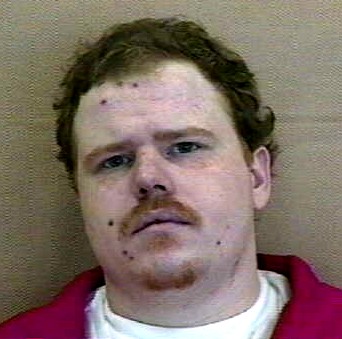 Frank Ray Chandler
Murderer · USA · 1992
Frank Ray Chandler was executed by lethal injection in North Carolina on Novemb…
1 victim
Frank Ray Chandler
Murderer · USA · 1992
Frank Ray Chandler was executed by lethal injection in North Carolina on Novemb…
1 victim
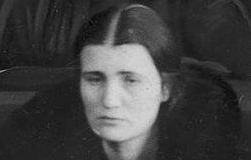 Rita Gorgonowa
Murderer · Poland · 1931
Rita Gorgonowa Rita Gorgonowa was also known by the real name Emilia Margerita…
1 victim
Rita Gorgonowa
Murderer · Poland · 1931
Rita Gorgonowa Rita Gorgonowa was also known by the real name Emilia Margerita…
1 victim
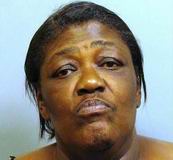 Luvenia Spates
Murderer · Alabama · 2011
Luvenia Spates Luvenia Spates was sentenced to 30 years in prison on September…
1 victim
Luvenia Spates
Murderer · Alabama · 2011
Luvenia Spates Luvenia Spates was sentenced to 30 years in prison on September…
1 victim
- Gender
- male
- Country
- USA
- Location
- Alaska/Ohio/New Jersey/Oregon, USA
- Date of birth
- J uly 4, 1963
- Age at first offence
- 27
- Characteristics
- robbery, truck driver, fugitive
- Victim profile
- 5 men and 1 woman
- Method of murder
- Shooting / St abbing with knife
- Date(s) of murder
- 1990 - 1991
- Years active
- 1990–1991
- Date of arrest
- —
- Status
-
Executed
Executed by lethal injection in Ohio on July 14, 2009
Case record: John Joseph Fautenberry
Background
John Joseph Fautenberry was a former Oregon truck driver.
Fautenberry was brought into Juneau District Court on March 18, 1991, for his arraignment on murder charges.
Fautenberry was also described as a former over-the-road truck driver and as a drifter.
The offence
Between November 1990 and March 1991, Fautenberry committed five murders in four states: Alaska, Oregon, Ohio, and New Jersey.
He committed the killing connected to Hamilton County, Ohio, on February 17, 1991.
November 1990 (Oregon)
In early November 1990, Fautenberry met Donald Nutley at a truck stop outside Portland, Oregon, and the two men went target shooting together. After they finished and were leaving the range, Fautenberry shot Nutley in the head and stole $10,000 from him. Nutley’s body was not located until April 1991.
Early February 1991 (New Jersey)
In early February 1991, Fautenberry traveled from Rhode Island to Ohio and arrived at the Pilot Truck Plaza in Hunterdon County, New Jersey. He was out of money and in need of gasoline to continue his trip. There he met Gary Farmer, who offered to provide food and money in exchange for sex. Fautenberry got into the cab of Farmer’s truck, shot Farmer in the head with a .22 caliber handgun, and took his wallet. Fautenberry left the body in the truck and completed his trip to Cincinnati, Ohio.
February 17, 1991 (Ohio)
On February 17, 1991, after another brief stay in Cincinnati, Fautenberry left his sister’s residence on foot in search of money. He walked down Highway 125 in the eastern suburbs of Cincinnati, stopped at the on-ramp to Interstate 275, and began hitchhiking.
Joseph William Daron, a father of two young children, stopped his vehicle and offered Fautenberry a ride. Daron intended to travel only ten miles north to his home in Milford, Ohio, but, upon learning that Fautenberry wanted to go north to Columbus, Ohio, he drove Fautenberry an extra ten miles and dropped him near the intersection of Interstate 275 and Interstate 71, which goes directly to Columbus.
As Fautenberry exited Daron’s vehicle, he reached back into the car and shot Daron twice in the right side of his chest with a .22 caliber handgun.
After the shooting, Fautenberry drove Daron’s car south to Cincinnati, and threw Daron’s body into a wooded area on the north bank of the Ohio River. The body was eventually found more than a month later by local authorities. Fautenberry took Daron’s car, wallet, briefcase, wristwatch, and Bible, and used the dead man’s vehicle, cash, and credit cards to return to Oregon.
One account described that Daron took Fautenberry to the intersection of I-275 and I-71 and that Fautenberry then shot him twice in the right side of his chest.
Another account stated that Fautenberry walked down Highway 125 and hitchhiked on I-275 near Ohio 125 when he was picked up by Joseph Daron Jr., 46, of Milford, on February 17, 1991. It also stated that after driving to a nearby restaurant, as Fautenberry was getting out, he reached back in and shot Daron with a .22 caliber pistol.
Fautenberry then drove the truck to a wooded area near the Ohio River, dumped the body, then used the truck and credit cards to return to Oregon.
February 24, 1991 (Oregon)
Fautenberry arrived in Portland, Oregon, on February 24, 1991, and spent the next few days at the Oregon coast with some old friends and acquaintances, including a woman named Christine Guthrie.
Guthrie accompanied Fautenberry back to Portland from the coast. Along the way, they stopped on an old logging road. Fautenberry escorted Guthrie to a secluded portion of the woods, shot her three times in the back of the head, and stole her bank card.
After withdrawing cash from her bank account, Fautenberry traveled to Juneau, Alaska.
Guthrie’s body was not discovered until April 1991.
March 13, 1991 (Alaska)
On March 13, 1991, Fautenberry met Jefferson Diffee at a local bar. The two men went to Diffee’s apartment. While there, Fautenberry beat Diffee, handcuffed him, and fatally stabbed him seventeen times, resulting in his death.
Fautenberry was later arrested in Alaska for the murder of Diffee.
Investigation
Local police discovered Fautenberry’s fingerprints at the scene of the crime in Alaska.
After being arrested in Alaska, Fautenberry confessed to the murders of four people: Nutley, Farmer, Daron, and Guthrie.
On March 16, 1991, Alaska police arrested Fautenberry for the murder of Diffee. The police searched Fautenberry’s storage locker and hotel room and found Daron’s briefcase, wristwatch, and Bible.
On March 17, 1991, while in police custody, Fautenberry called Federal Bureau of Investigation (FBI) Agent Larry Ott and left a message indicating that he wanted to talk. Agent Ott went to the jail, informed Fautenberry of his Miranda rights (which Fautenberry subsequently waived), and recorded Fautenberry’s confession to the murders of Nutley, Farmer, Daron, and Guthrie.
Fautenberry accurately described the wounds inflicted upon each victim, and indicated that robbery was the motive for each killing.
A few days later, Fautenberry called his old girlfriend, Olivia Priest-Herndon, and told her that he was “only after . . . money” and that he “did it so he gotta pay the price now.”
Fautenberry also confessed to Tom Nelson of the Portland Police Department, informing Nelson where the bodies of Nutley and Guthrie were located.
Arrest
After being arrested by Alaska police, Fautenberry ultimately pled guilty to the charge of first-degree murder in connection with Diffee’s death.
Fautenberry was later transferred to Hamilton County, Ohio.
Plea and convictions
Fautenberry pleaded no contest on July 23, 1992.
In Hamilton County, Ohio, a five-count indictment charged Fautenberry with:
- two counts of aggravated murder pertaining to the death of Daron,
- aggravated robbery,
- theft of a motor vehicle,
- and theft of a credit card.
The aggravated murder charges included two specifications:
- killing Daron while committing aggravated robbery, attempting to commit the offense of aggravated robbery, or fleeing immediately after committing or attempting to commit the offense of aggravated robbery;
- that Fautenberry possessed a firearm when he committed the murder.
The second aggravated murder charge included specifications:
- the murder was part of a course of conduct involving the purposeful killing of or attempt to kill two or more persons; and
- that Fautenberry possessed a firearm while committing the offense.
Fautenberry waived his right to a trial by jury and electing to be tried by a three-judge panel.
On July 23, 1992, the three-judge panel accepted Fautenberry’s no-contest pleas to each of the five charges and the specifications. The panel then considered the admitted facts and evidence and found him guilty as to all counts.
The prosecution presented evidence including the murder weapon, other physical evidence, and transcripts of Fautenberry’s confessions to Agent Ott, Officer Nelson, and Ms. Priest-Herndon.
After reviewing the evidence, the court concluded beyond a reasonable doubt that Fautenberry was guilty of all counts and specifications and accepted his plea.
Sentencing
In September 1992, the three-judge panel held a sentencing hearing. The panel imposed the death penalty for the aggravated murder.
Consecutive sentences were imposed for the other offenses, except those offenses that were merged.
Fautenberry received the following convictions:
- Count 1: Aggravated Murder (Death)
- Count 3: Aggravated Robbery (10-25 yrs)
- Count 4: Grand Theft (2-10 yrs)
- Count 5: Grand Theft (1 1/2 - 5 yrs)
A sentencing chronology in the case record included:
- Date of Sentencing: 09-16-92
- Presiding Judge: William J. Morrissey Jr.
- Additional judges named: William S. Matthews, Gilbert Bettman
Fautenberry’s mitigating evidence at the mitigation hearing included testimony from Fautenberry, Dr. Nancy Schmidtgoessling, and friends who knew Fautenberry well.
The friends included Louise Corcoran (a long-time friend of Fautenberry’s family), Ms. Priest-Herndon (Fautenberry’s former girlfriend with whom he had lived), and Mary Theresa Slayback (a friend with whom Fautenberry lived during his early twenties).
Six law-enforcement officers testified during the mitigation phase for the prosecution.
Larry Ott, a special agent with the FBI, and state officers Detective Thomas Nelson and Investigator Walter Bowman testified that Fautenberry cooperated by confessing and providing information about where bodies and evidentiary items could be located.
During the mitigation hearing, the defense psychologist Dr. Nancy Schmidtgoessling testified that Fautenberry’s performance on psychological tests indicated an average range of intelligence with no signs of organic impairment, and that he spent his childhood in an environment of dysfunctional, abusive relationships where he was frequently abused, humiliated, rejected, and abandoned. She also testified that he carried extreme feelings of worthlessness, distrust, and suppressed rage. She described a mixed personality disorder with narcissistic and antisocial tendencies and testified that he did not suffer from a “mental disease or defect,” as used in Ohio law.
Fautenberry chose to make an unsworn statement to the court during the mitigation hearing in which he described childhood memories, physical and emotional abuse, and alcohol and drugs beginning in high school. He stated that this contributed to everything “falling apart” in November 1990 just before he killed Donald Nutley. He expressed sorrow and requested a life sentence so he could have an opportunity to work with other children of abuse.
In weighing the mitigation evidence, the Ohio Supreme Court described the three-judge panel’s conclusion as imposing little or no weight to statutory mitigating factors.
The Ohio Supreme Court recounted the trial court’s findings that aggravating factors outweighed mitigating factors beyond a reasonable doubt and concluded that the death sentence was appropriate.
Appeals
Direct appeal (Ohio Supreme Court)
On July 5, 1995, the Ohio Supreme Court affirmed Fautenberry’s conviction and death sentence on direct appeal.
The case citation included:
- State v. Fautenberry, 72 Ohio St.3d 435, 650 N.E.2d 878 (Ohio 1995) (Direct Appeal)
The decision included discussion of alleged error in admission of victim-impact statements and other constitutional challenges. It affirmed the convictions and upheld the sentence of death.
Post-conviction review (Ohio Supreme Court)
The record included a post-conviction review citation:
- State v. Fautenberry, 78 Ohio St.3d 320, 677 N.E.2d 1194 (Ohio 1997) (PCR)
That decision addressed an application to reopen based on claim of ineffective appellate counsel and affirmed denial, holding:
- defendant was not entitled to reopen case to bring claim of ineffectiveness of appellate counsel absent good cause for failing to file application within 90 days after journalization of Court of Appeals decision affirming conviction;
- appellate counsel's ineffectiveness before Court of Appeals could have been raised in prior motion for reconsideration filed before Supreme Court and thus was barred by res judicata;
- judge's endorsement of denial of application for reopening did not indicate a judicial determination to deny application as required for impartiality claim.
The record also included the Sixth Circuit habeas decision:
- Fautenberry v. Mitchell, 515 F.3d 614 (6th Cir. 2008) (Habeas)
The Sixth Circuit affirmed the denial of habeas relief.
Federal habeas proceedings
The case record contained a timeline for federal proceedings:
- On 4/11/05, the federal district court denied Fautenberry’s petition for a writ of habeas corpus.
- On 5/11/05, Fautenberry filed a notice of appeal to the 6th Circuit.
- On 1/5/06, the district court granted Fautenberry’s motion for a certificate of appealability.
- On 5/16/06, the 6th Circuit issued a briefing schedule.
- On 8/18/06, the 6th Circuit granted Fautenberry’s motion to extend briefing and issued a revised briefing schedule.
- On 12/13/06, the State filed its final brief.
- On 12/26/06, Fautenberry filed his final brief and final reply brief.
Clemency and final stay requests
The Ohio Board of Parole voted unanimously to recommend that Governor Ted Strickland deny clemency, and the governor denied clemency.
A clemency chronology included:
- On July 8, 2009, Ohio governor Ted Strickland denied a clemency request from Fautenberry.
Fautenberry’s 11th-hour request for a neuro-psychological examination was rejected by two federal courts and by the U.S. Supreme Court.
The U.S. Supreme Court denied Fautenberry’s request to delay execution about an hour before the injection was to take place.
The U.S. Supreme Court also denied a stay Tuesday without comment.
The 6th U.S. Circuit Court of Appeals refused to overturn a U.S. district court ruling denying a state-paid expert.
Fautenberry filed a motion for reconsideration, and Judge James Graham in Columbus, Ohio again rejected the argument on Saturday.
Outcome
Fautenberry was executed in Ohio by lethal injection.
On July 14, 2009, he was pronounced dead at 10:37 a.m. at the Southern Ohio Correctional Facility in Lucasville.
The record stated that:
- He was sentenced to death for the slaying of Joseph Daron Jr., 46, of Milford, in February 1991.
- He also confessed to killing a total of five people in four states: Alaska, Oregon, Ohio, and New Jersey.
- He had no final statement and did not make a final statement when asked.
- He shook his head “no” when technicians asked whether he wanted to say any final words.
Aftermath
Rachel Daron, Joseph Daron’s daughter, did not witness the execution and attended with her mother, Sandy Bronner, in a waiting room. Charlene Farmer of Springfield, Tennessee witnessed the execution.
The injection took about 31 minutes after prison staff began hooking him to intravenous tubes, and the lethal drugs were described as taking about 13 minutes.
Twenty eyewitnesses, including family of victims, defense attorneys, a prosecutor, pastor, news reporters, and prison workers, witnessed the execution. Seven prison officers and the warden oversaw the execution.
Fautenberry requested a special meal consisting of two eggs sunny-side up, fried potatoes, two pieces of fried bologna, four pieces of wheat bread, two pieces of wheat toast with butter, four slices of tomato, a side of lettuce and mayonnaise, two Three Musketeers candy bars, and two packages of Reese’s peanut butter cups.
The record also noted an inmate number and date of birth:
- Inmate#: OSP #A279-989
- DOB: July 4, 1963
- Inmate: JOHN FAUTENBERRY
- Institution: Southern Ohio Correctional Facility
- Also referenced transfer: from Ohio State Penitentiary in Youngstown to Southern Ohio Correctional Facility in Lucasville on Monday prior to execution.
Spotted an error, or have more information about this case?