Raymond Robert Clark
Murderer Ervil LeBaron
Murderer · USA · 1972
Ervil Morrell LeBaron (1925 to August 16, 1981) was the leader of a polygamous…
35 victims
Ervil LeBaron
Murderer · USA · 1972
Ervil Morrell LeBaron (1925 to August 16, 1981) was the leader of a polygamous…
35 victims
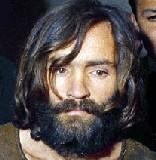 Charles Manson
Murderer · USA · 1969
Charles Milles Manson (born November 12, 1934) was an American criminal and mus…
9 victims
Charles Manson
Murderer · USA · 1969
Charles Milles Manson (born November 12, 1934) was an American criminal and mus…
9 victims
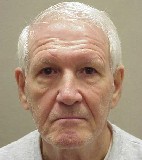 Robert Reldan
Murderer · USA · 1974
Name: Robert Reldan Robert Reldan was sentenced to life in prison on two counts…
8 victims
Robert Reldan
Murderer · USA · 1974
Name: Robert Reldan Robert Reldan was sentenced to life in prison on two counts…
8 victims
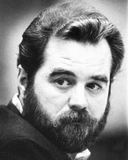 Dennis Duane Webb
Murderer · USA · 1973
Defendant: Dennis Duane Webb · Victims: John Rainwater and Lori Rainwater · Cou…
7 victims
Dennis Duane Webb
Murderer · USA · 1973
Defendant: Dennis Duane Webb · Victims: John Rainwater and Lori Rainwater · Cou…
7 victims
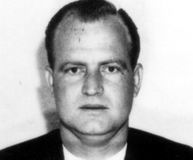 Gary Gene Tison
Murderer · USA · 1967
Gary Gene Tison was serving life sentences at the Arizona state prison. He had…
7 victims
Gary Gene Tison
Murderer · USA · 1967
Gary Gene Tison was serving life sentences at the Arizona state prison. He had…
7 victims
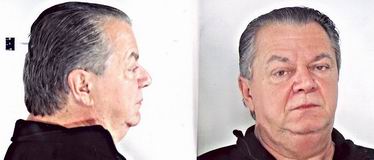 Joseph Massino
Murderer · USA · 1974
Joseph Charles “Big Joey” Massino (born January 10, 1943), also known as “The L…
7 victims
Joseph Massino
Murderer · USA · 1974
Joseph Charles “Big Joey” Massino (born January 10, 1943), also known as “The L…
7 victims
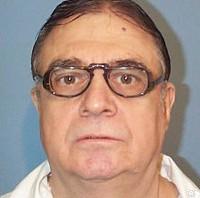 Tommy Arthur
Murderer · USA · 1982
Tommy Arthur was sentenced to death on December 5, 1991. · February 1, 1982 (9:…
1 victim
Tommy Arthur
Murderer · USA · 1982
Tommy Arthur was sentenced to death on December 5, 1991. · February 1, 1982 (9:…
1 victim
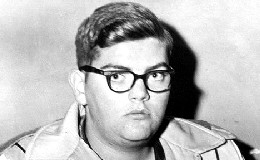 Lowell Lee Andrews
Murderer · USA · 1958
Name: Lowell Lee Andrews Date of execution: November 30, 1962 Status: Executed…
3 victims
Lowell Lee Andrews
Murderer · USA · 1958
Name: Lowell Lee Andrews Date of execution: November 30, 1962 Status: Executed…
3 victims
 Clifton McCree
Mass murderer · USA · 1996
Clifton McCree was a black man who had worked for the city as part of a beach c…
5 victims
Clifton McCree
Mass murderer · USA · 1996
Clifton McCree was a black man who had worked for the city as part of a beach c…
5 victims
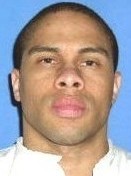 Marion Dudley
Mass murderer · USA · 1992
June 20, 1992 — Marion Butler Dudley and three men drove from Tuscaloosa, Alaba…
4 victims
Marion Dudley
Mass murderer · USA · 1992
June 20, 1992 — Marion Butler Dudley and three men drove from Tuscaloosa, Alaba…
4 victims
 Margaret Rudin
Murderer · USA · 1994
Margaret Rudin (born May 31, 1943) was an American woman convicted in the Decem…
1 victim
Margaret Rudin
Murderer · USA · 1994
Margaret Rudin (born May 31, 1943) was an American woman convicted in the Decem…
1 victim
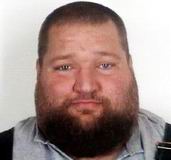 Harlan Drake
Murderer · USA · 2009
September 11, 2009 — James Lawrence Pouillon was shot dead in front of Owosso H…
2 victims
Harlan Drake
Murderer · USA · 2009
September 11, 2009 — James Lawrence Pouillon was shot dead in front of Owosso H…
2 victims
- Gender
- male
- Country
- USA
- Location
- Pinellas County, Florida, USA
- Date of birth
- 1941
- Age at first offence
- 23
- Characteristics
- kidnapping, robbery, drugs
- Victim profile
- 14-year-old boy / David Drake, 40 (scrap metal dealer)
- Method of murder
- Shooting
- Date(s) of murder
- 1964 / April 27, 1977
- Years active
- 1964–1977
- Date of arrest
- —
- Status
-
Executed
Executed by electrocution in Florida on November 19, 1990
Case summary
Raymond Robert Clark (49) was executed on November 19, 1990. He was executed for the April 27, 1977 shooting murder of scrap metal dealer David Drake in Pinellas County. Clark formulated a plan to kidnap someone for ransom. He abducted David Drake from a bank parking lot and left in the victim's car with his teenage lover, Ty Johnston, following in Clark’s vehicle. After stopping at a secluded area, Clark made the victim disrobe and write a check for five thousand dollars. Clark then tied the victim's hands behind his back, marched him into the bushes, and shot him twice in the head. Unable to cash the victim's check, Clark and Johnston abandoned the victim's car.
Clark thereafter became concerned about being charged with kidnapping Johnston and drove Johnston back to California. Two weeks later, but before the victim's body was discovered, Clark was back in Florida and made several phone calls to the victim's son asking for money for the victim's safe return. A trace of the calls led to Johnston, who, on being returned to Florida, implicated Clark and led authorities to the body.
A jury convicted Clark of first-degree murder and recommended that he be sentenced to death. The trial court agreed and imposed a death sentence. The Florida Supreme Court affirmed both the conviction and sentence in Clark v. State, 379 So.2d 97 (Fla. 1979). The Supreme Court denied certiorari in Clark v. State, 450 U.S. 936 (1981).
Clark later pursued postconviction and federal proceedings. The Florida courts denied his motions for postconviction relief, and federal habeas review ultimately resulted in an affirmance of the denial of relief.
Timeline
- April 27, 1977 — David Drake was abducted from a bank parking lot, taken to a secluded spot, and shot twice in the head.
- September 8, 1988 — Raymond Robert Clark, Appellant, v. State of Florida, Appellee was decided per curiam after a prisoner for whom a death warrant had been signed appealed the trial court's denial of his third motion for postconviction relief.
- March 13, 1985 — The Governor of Florida signed Clark's death warrant.
- April 12, 1985 — Clark filed a petition for a writ of habeas corpus pursuant to 28 U.S.C. § 2254 in the United States District Court for the Middle District of Florida.
- April 27, 1977 — Clark and Ty Johnston parked Clark's Chevrolet Blazer in the parking lot of a bank and awaited the owner of a white Cadillac.
- 1987 — The police traced later calls and arrested Clark's 16-year-old companion, Ty Johnston; Johnston later pleaded guilty to murder and testified against Clark. Johnston was paroled in 1987 after serving nine years of a 25-year sentence.
- December 15, 1987 — A federal appellate decision affirmed the denial of the district court’s habeas petition in Raymond Clark, Petitioner-Appellant, v. Richard L. Dugger, Secretary, Florida Department of Corrections, et al.
- November 19, 1990 — Clark was executed by electrocution in Florida at 7:07 A.M. at Florida State Prison.
The offence
In need of money, Clark formulated a plan to kidnap someone at a bank and demand money from that person. On April 27, 1977, Clark and Ty Johnston, a juvenile who lived with Clark, parked Clark's Chevrolet Blazer in the parking lot of a bank and awaited the owner of a white Cadillac.
When David Drake returned to his automobile, he was abducted by Clark. Clark got into the passenger's side of the Cadillac and ordered his victim to drive to a deserted area. After over an hour of driving, Drake was made to park in a secluded spot. He was ordered at gunpoint to get out of the vehicle. Clark commanded Drake to disrobe to his undershorts and forced Drake to write a check on his personal account payable to cash in the amount of $5,000. Clark tied the victim's hands behind his back with wire, marched Drake into the bushes, forced him to kneel down, and shot Drake twice in the back of the head.
After the killing, Clark and Johnston drove back into town where they attempted to cash the victim's check. They drove the Cadillac to a secluded location where they wiped it down to eliminate any fingerprints. Over the next few weeks, Clark made threatening phone calls to Drake's son demanding $10,000 for his father's safe return.
Clark later called concerns about being charged with kidnapping Johnston and drove Johnston back to California. Two weeks later, before the victim's body was discovered, Clark was back in Florida and made several phone calls to the victim's son asking for money for the victim's safe return.
People involved
- Raymond Robert Clark (49) — Defendant; convicted of first-degree murder; sentenced to death; executed by electrocution in Florida on November 19, 1990.
- David Drake (scrap metal dealer; 49-year old businessman) — Victim; abducted from a bank parking lot; shot twice in the head.
- Gregory Drake (38) — Victim’s son; among the witnesses at the execution.
- Ty Johnston (teenage lover; 16-year-old companion; juvenile who lived with Clark) — Clark's teenage lover/companion; abducted victim with Clark’s plan; returned to Florida after tracing of calls; implicated Clark; pleaded guilty to murder and testified against Clark; paroled in 1987 after serving nine years of a 25-year sentence.
- Donna (widow of David Drake) — The victim’s widow said: "I want him executed. He's ruined my life. He's ruined my son's life."
- Bob Martinez — Governor who asked that Gregory Drake be allowed to witness the execution.
- Bob Macmaster — Department of Corrections spokesman.
- Justice Thurgood Marshall — Dissenter on the Supreme Court’s vote on emergency requests for a delay in the execution; described as opposing the death penalty in all circumstances.
- Martin Murry — Co-counsel who assisted Susan Schaeffer.
- Susan Schaeffer — Trial counsel who directed Clark's defense; later testified at a Rule 3.850 hearing about her opinion and actions.
- Dr. Henninger — Provided an opinion that Clark was insane at the time of another murder in California; his opinion was presented to the jury by stipulated statement.
- Jean DuPree — Mentioned as a potential witness; the defense feared calling DuPree could be harmful.
- Jean DuPree’s daughter — Mentioned as the subject of a conversation tape between Clark and Johnston.
- Dr. Henry Krop (Director of Community Behavioral Services in Gainesville, Florida) — Conducted a 1985 examination of Clark; concluded Clark may have been under emotional distress at the time of the offense.
- Richard L. Dugger (Secretary, Florida Department of Corrections) — Respondent in federal appeal.
- Tom Barton (Superintendent, Florida State Prison) — Respondent in federal appeal.
- Robert A. Butterworth (Attorney General, State of Florida) — Respondent in federal appeal.
- Circuit judges — Before TJOFLAT, VANCE and KRAVITCH; VANCE wrote the opinion.
Investigation and identification
Clark and Johnston attempted to cash the victim’s $5,000 check after the killing. Clark made threatening phone calls to Drake's son demanding $10,000 for the victim’s safe return. The police traced later calls and arrested Ty Johnston. Johnston was returned to Florida and implicated Clark. Johnston’s implication led authorities to the body.
Trial
Sentencing
Clark received a death sentence for the murder conviction. In the federal appellate proceedings, the sentencing details were described as: sentenced to death for the murder conviction; sentenced to life imprisonment for the kidnapping conviction and 15 years imprisonment for the extortion conviction, with the sentences to run consecutively.
During the penalty phase, the trial court gave instructions listing the mitigating circumstances that the jury may consider as statutory mitigating circumstances. The prosecutor suggested that circumstances outside the statutory list could not be considered. During closing argument, the prosecutor stated: "Now, let's see if those mitigating circumstances outweigh those aggravating circumstances. Number one, [listing the statutory mitigating circumstances]."
Appeals
Florida Supreme Court
The Florida Supreme Court affirmed Clark’s conviction and sentence in Clark v. State, 379 So.2d 97 (Fla. 1979).
Supreme Court
State, 450 U.S. 936 (1981)*.
Third motion for postconviction relief (Florida)
Raymond Robert Clark, Appellant, v. State of Florida, Appellee was decided per curiam on September 8, 1988 after Clark appealed the trial court's denial of his third motion for postconviction relief.
Postconviction and habeas in federal court
Clark filed for postconviction relief pursuant to Florida Rule of Criminal Procedure 3.850. After an evidentiary hearing, his Rule 3.850 motion was denied, and the Florida Supreme Court affirmed in Clark v. State, 460 So.2d 886 (Fla. 1984).
After the governor signed Clark’s first death warrant, Clark filed a second Rule 3.850 motion, raising issues including the trial court's refusal to appoint a confidential psychiatric expert for the defense and ineffective assistance of counsel. The Florida courts again denied relief and the Florida Supreme Court affirmed in Clark v. State, 467 So.2d 699 (Fla. 1985). A stay of execution was denied.
Clark then filed a petition for habeas corpus with a federal district court, which denied the petition. On appeal, the eleventh circuit granted a stay, but after further consideration the circuit court affirmed the district court’s denial.
Outcome
The appellate court affirmed the district court’s denial of habeas relief and affirmed the judgment.
Other details
Conviction history for prior murder
The proceedings described that this was not Clark’s first murder. In 1964, Clark killed a 14-year-old boy with whom he had a homosexual affair. The cited case was People v. Clark, 252 Cal. App. 2d 524, 60 Cal. Rptr. 524 (Ct. App. 1967).
Execution details and witness account
A convicted murderer, Raymond Robert Clark, was executed in Florida's electric chair on November 19, 1990. He died at 7:07 A.M. at Florida State Prison. Among the two dozen witnesses was Gregory Drake, 38, the son of Clark’s victim, David Drake. Bob Macmaster said Bob Martinez had asked that Gregory Drake be allowed to witness the execution.
The Supreme Court voted 8 to 1 to reject two emergency requests for a delay in the execution. The dissenter was Justice Thurgood Marshall.
Clark exhausted his legal appeals on Sunday prior to the execution.
Extortion and kidnapping sentencing descriptions in federal proceedings
In the federal appellate proceedings, Clark was convicted of first degree murder, kidnapping, and extortion by a jury in Pinellas County, Florida. Following the penalty phase, Clark was sentenced to death for the murder conviction, to life imprisonment for the kidnapping conviction, and to 15 years imprisonment for the extortion conviction, with the sentences running consecutively.
Issues raised in federal habeas review
In the federal appellate proceedings, Clark presented six issues initially for review:
- whether refusal to appoint a psychiatrist to assist the defense violated Clark’s constitutional rights;
- whether refusal to order the jury to retire from its deliberations coerced a verdict in violation of Clark’s constitutional rights;
- whether Clark was denied effective cross-examination of a key witness in violation of the sixth amendment;
- whether refusal to grant a motion for a bill of particulars in preparation for the sentencing phase denied him due process;
- whether Clark was denied a proper proportionality review in violation of the eighth and fourteenth amendments;
- whether Clark was denied effective assistance of counsel in violation of his sixth amendment rights.
A supplemental brief raised an additional issue:
- whether the trial court improperly restricted consideration of nonstatutory mitigating circumstances during the penalty phase.
Trial judge and jury deliberation events
The jury began deliberations at 2:30 p.m. on September 23, 1977 and continued until it reached a verdict at 2:17 a.m. The jurors never made any request to postpone their deliberations. Clark moved on two occasions to have the jury retire for the evening; these motions were denied. The trial judge expressed concern that it might be prejudicial to the defendant or the State to intrude upon deliberations at that time and noted that a note suggesting a break might be misconstrued by the jury as intimidation to arrive at a verdict more hastily than they normally would.
Cross-examination of Ty Johnston
The defense sought to cross-examine Ty Johnston concerning his juvenile record and his past treatment by a psychiatrist or psychologist. The trial court did not permit Clark to pursue this line of questioning. The appellate proceedings noted that Johnston's juvenile records were in the possession of the State of California, and Clark conceded the trial judge lacked access to these records and could not force California to produce them.
Bill of particulars
Clark filed a motion for a statement of particulars of the aggravating circumstances on which the State would rely for the sentencing phase. After a brief hearing, the court denied the motion. The appellate proceedings discussed that under Florida law a defendant had no right to advance notice of the aggravating circumstances and that the Florida sentencing statute sufficiently particularized the aggravating circumstances in a capital case by listing eight specific factors in Fla. Stat. Sec. 921.141 (1975).
Ineffective assistance claims and counsel testimony
The appellate proceedings addressed claims that trial counsel, Susan Schaeffer, failed to give reasonable professional assistance. Susan Schaeffer later testified: "It was my candid opinion, having talked with Mr. Clark, that he was quite competent. In fact, I found him to be, and still do, to be an intelligent man. He was, in my candid opinion, having dealt with numerous defendants, some of whom, I believe, to be not competent, I believed he was competent to stand trial. I did not believe, after discussing this with him, there was any issue as to his competency at the time of the offense at all, and I felt that to pursue this in a fashion that would allow the State to know the facts of the case as related to me by Mr. Clark, which is the only way that the evaluation could have been done, would have been detrimental to this case."
The appellate proceedings stated that Schaeffer introduced newspaper articles discussing the case, called various media experts as witnesses, and presented two affidavits filed by local attorneys concerning a venue motion; that the trial judge excluded any potential juror with any knowledge of the case; and that based on her efforts and strategic choice, no fault could be found.
The appellate proceedings also stated that Schaeffer and co-counsel Martin Murry were in frequent contact with Clark, visited him in jail on numerous occasions, and spent countless hours discussing his life and background. The appellate proceedings said Schaeffer never discussed a potential insanity defense because she had no reason to believe such a defense was possible, and she believed any defense involving Clark testifying would likely lead Clark to convict himself.
The appellate proceedings further described that Schaeffer investigated potential testimony about Ty Johnston’s culpability and concluded that certain witnesses were "equivocating" and that their testimony was not very strong; Schaeffer chose to forego their testimony to gain the right to rebut in closing arguments. The appellate proceedings quoted: '"In reviewing ineffective assistance of counsel claims, we do not sit to second guess considered professional judgments with the benefit of 20/20 hindsight."'
Penalty phase mitigation limitation discussion
The appellate proceedings discussed Hitchcock v. Dugger and Lockett v. Ohio and said instructions were virtually identical to those in Hitchcock. The appellate proceedings also stated that the prosecutor and trial judge improperly restricted the jury to statutory mitigating circumstances, but concluded any error was harmless beyond a reasonable doubt under Chapman v. California because there were no nonstatutory mitigating circumstances introduced. The appellate proceedings discussed that Clark's counsel made a tactical decision that any testimony at the penalty phase could only prove harmful, and that Clark failed to introduce any mitigating evidence whatever beyond a stipulated statement about Dr. Henninger’s opinion.
The appellate proceedings stated it appeared that the only evidence introduced during the penalty phase was the stipulation that Dr. Henninger believed Clark was insane at the time of another murder Clark had committed in California, and that the evidence served to rebut an aggravating factor.
References to location and procedure
Clark was convicted of crimes in Pinellas County, Florida, and the execution occurred at Florida State Prison in Florida.
Quoted execution widow statement
Donna said: "I want him executed. He's ruined my life. He's ruined my son's life."
Spotted an error, or have more information about this case?