
Clayton Weatherston
Murderer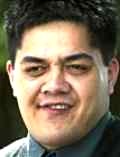 William Dwane Bell
Murderer · New Zealand · 2001
William Dwane Bell (born 1978) was a convicted murderer in New Zealand. Bell wa…
3 victims
William Dwane Bell
Murderer · New Zealand · 2001
William Dwane Bell (born 1978) was a convicted murderer in New Zealand. Bell wa…
3 victims
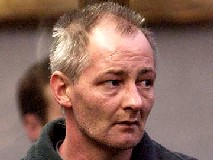 Bruce Howse
Murderer · New Zealand · 2001
Bruce Howse was the partner of Charlene Aplin and the stepfather of Saliel Apli…
2 victims
Bruce Howse
Murderer · New Zealand · 2001
Bruce Howse was the partner of Charlene Aplin and the stepfather of Saliel Apli…
2 victims
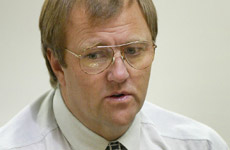 Mark Edward Lundy
Murderer · New Zealand · 2000
Mark Edward Lundy was the husband and father of the victims Christine Marie Lun…
2 victims
Mark Edward Lundy
Murderer · New Zealand · 2000
Mark Edward Lundy was the husband and father of the victims Christine Marie Lun…
2 victims
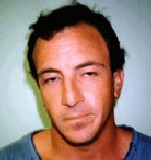 Scott Watson
Murderer · New Zealand · 1998
Scott Watson (born 28 June 1971) was a New Zealander who was convicted in May 1…
2 victims
Scott Watson
Murderer · New Zealand · 1998
Scott Watson (born 28 June 1971) was a New Zealander who was convicted in May 1…
2 victims
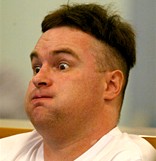 Antonie Dixon
Murderer · New Zealand · 2003
Antonie Ronnie "Tony" Dixon (1968 – 4 February 2009) · 21 January 2003 — Dixon…
1 victim
Antonie Dixon
Murderer · New Zealand · 2003
Antonie Ronnie "Tony" Dixon (1968 – 4 February 2009) · 21 January 2003 — Dixon…
1 victim
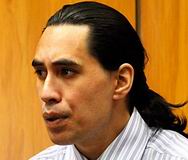 Gavin Gosnell
Murderer · New Zealand · 2011
Gavin Gosnell was 28 at the time of sentencing and was accused of murdering Chr…
1 victim
Gavin Gosnell
Murderer · New Zealand · 2011
Gavin Gosnell was 28 at the time of sentencing and was accused of murdering Chr…
1 victim
 Ernest Lotches
Murderer · USA · 1992
Ernest Noland Lotches was tried in Oregon for conduct connected to events in Po…
1 victim
Ernest Lotches
Murderer · USA · 1992
Ernest Noland Lotches was tried in Oregon for conduct connected to events in Po…
1 victim
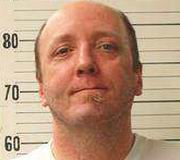 Robert Leach
Murderer · USA · 1999
Robert L. Leach, Jr. was convicted in a capital case of two counts of first deg…
2 victims
Robert Leach
Murderer · USA · 1999
Robert L. Leach, Jr. was convicted in a capital case of two counts of first deg…
2 victims
 John Duty
Murderer · USA · 2001
John Duty was convicted after a guilty plea in the District Court of Pittsburg…
1 victim
John Duty
Murderer · USA · 2001
John Duty was convicted after a guilty plea in the District Court of Pittsburg…
1 victim
- Gender
- male
- Country
- New Zealand
- Location
- Dunedin, Otago Region, South Island, New Zealand
- Date of birth
- January 9, 1976
- Age at first offence
- 32
- Characteristics
- —
- Victim profile
- Sophie Kate Elliott, 22 (his ex-girlfriend)
- Method of murder
- Stabbing with knife (216 times)
- Date(s) of murder
- January 8, 2008
- Years active
- 2008
- Date of arrest
- Same day
- Status
-
Life imprisonment
Sentenced to life imprisonment with a minimum non-parole period of 18 years on September 15, 2009
Case identification
Clayton Weatherston
Background
Sophie Kate Elliott was born 11 June 1985 and was 22 years old at the time of the offence. Clayton Weatherston was born 9 January 1976 and was 22? (also reported as 33 in trial coverage) at the time of the killing.
Sophie Elliott and Clayton Weatherston had a romantic relationship lasting around six months, which ended prior to her death. Witnesses described the relationship as troubled.
Weatherston had worked as an economics tutor at the University of Otago and also taught Elliott. Elliott completed an honours degree in economics.
On the day she died, Sophie Elliott was packing to relocate to Wellington the next day and start a job at the New Zealand Treasury.
Lesley Elliott was Sophie Elliott’s mother. Gil Elliott was identified as her husband. Chris Elliott was identified as Sophie Elliott’s brother. Nick was identified as Sophie Elliott’s brother (11 years older), living in Sydney.
The offence
On 9 January 2008, Sophie Kate Elliott was stabbed to death by ex-boyfriend Clayton Robert Weatherston in Dunedin, New Zealand.
At around 12:30 pm on 9 January 2008, Sophie Elliott and her mother Lesley were at the family home in the suburb of Ravensbourne northeast of the city centre when Weatherston arrived unannounced, saying he had a farewell present.
A short time later Lesley Elliott heard her daughter screaming.
Weatherston was found locked in Sophie Elliott’s bedroom by a New Zealand Police officer responding to a 111 call from Lesley Elliott.
When asked what he had done, Weatherston told the officer: “I killed her”.
Weatherston’s account included that he was provoked by the emotional pain of a tumultuous six month relationship with Elliott and because she had attacked him with a pair of scissors.
The jury was told that Weatherston had admitted stabbing Elliott with a knife, and using scissors “at the end”.
Investigation
A New Zealand Police officer responded to a 111 call from Lesley Elliott and found Weatherston locked in Sophie’s bedroom.
Constable John Cunningham gave evidence about what he said Weatherston told him at the scene:
- Cunningham asked Weatherston, “What have you done?” and Weatherston replied: “I killed her”.
- Cunningham asked Weatherston, “Why did you kill her?” and Weatherston replied: “The emotional pain she has caused me over the past year”.
- Cunningham asked what he had killed Elliott with, and Weatherston said a knife.
- When Cunningham asked where the knife was, Weatherston replied: “Probably under her”.
- When asked about a pair of scissors Cunningham found between Elliott’s legs, Weatherston replied: “I used them at the end”.
- Cunningham asked whose blood was on his arms, legs and face, and Weatherston replied: “A little bit mine, mostly hers.”
- When asked who he had killed, Weatherston said: “It is Sophie Kate Elliott. Eleventh of June, 1985.”
- Cunningham described Weatherston as calm and reserved and said it appeared he was not shaking or agitated.
- Cunningham said Weatherston complied when directed to lie face-down on the floor.
Detective John MacDade gave evidence on Weatherston’s demeanour on the day Elliott was killed. MacDade said Weatherston was “lucid, coherent, calm and not agitated”.
A video of a police interview with Weatherston was shown to the jury. In the interview, Weatherston said: “I have no trouble being honest, [but] I’m not sure if I should have a lawyer here.” With a lawyer present, he declined to answer the allegation he had killed Elliott.
Forensic evidence and injuries
Forensic pathologist Martin Sage performed the autopsy the next day.
Dr Sage found Elliott died from blood loss. Two wounds pierced her heart and one lung. Other wounds to her neck and throat severed the main artery and the major vein. Dr Sage said such wounds were “inevitably lethal”, even with expert treatment, and described them as “torrential bleeding”.
Dr Sage found 216 separate injuries, mostly stab wounds from a knife blade, with some inflicted by scissors. There were also seven blunt force injuries.
Dr Sage described defensive wounds. He said: “Those indicate, unequivocally, the victim was alive and capable of some activity at least for the initial part of the attack.”
Dr Sage said the attack targeted aspects of beauty and was intended to disfigure.
He told the court about the number and pattern of injuries, saying the attack was persistent, determined and focused because:
- it was persistent due to the number of wounds and that the assault must have taken some minutes,
- it was determined because inflicting so many wounds required “purposeful activity for some considerable time”,
- it was focused because many wounds were directed at disfiguring the young woman.
Justice Judith Potter warned jurors that photographs they would see were “unavoidably graphic” and asked them to approach the evidence in a dispassionate and clinical way.
Witness evidence
Lesley Elliott testified about hearing screaming, kicking and belting of the door, and then opening it to find her daughter dead. She said Weatherston was “kneeling, sort of straddled over her”, stabbing her violently in the chest. She testified:
- “Sophie was dead. Clayton was still stabbing her,”
- “She was lying in the corner of her bedroom, just inside the door. She was dead white and her eyes were staring.”
- “Clayton continued to stab her in the chest. He was straddled over her legs.”
- “It was quite obvious. His arm was going up and down like this,”
- “I thought he was going right through her and that was what the rhythmic noise was.”
Lesley Elliott also testified that she thought Clayton was raping her and described sounds and timing during the attack. She said: “In my mind, I thought Clayton was raping her,” and described Sophie making two gasping sounds followed by no more noise other than “this horrible thumping”.
A 111 call recording was mentioned in relation to suppression from the jury at trial. Lesley Elliott stated that Weatherston’s counsel, Judith Ablett-Kerr, would successfully argue for the 111 call evidence to be suppressed from the jury, but not because it was too emotional to listen to.
Trial
At the end of a week-long depositions hearing during May 2008 in the Dunedin High Court, Weatherston pleaded not guilty and was committed for trial by two justices of the peace.
The trial moved to the Christchurch High Court for suppressed reasons and was scheduled to start on 22 June 2009.
Weatherston was represented by Judith Ablett-Kerr QC. Ablett-Kerr argued a defence of provocation.
Two psychiatrists appeared for the defence and said Weatherston had narcissistic personality disorder.
The knife used in the attack came from Weatherston’s kitchen. The defence stated he carried it concealed all the time for self-defence.
Weatherston’s trial involved a five-week trial. After five-week trial, the jury returned a guilt verdict on 22 July.
Weatherston pleaded guilty to manslaughter at the start of a month-long trial and denied murder. He admitted stabbing Elliott 216 times in an attack in the bedroom of her Dunedin home on January 9.
The jury returned a verdict on 22 July.
Sentencing
On 15 September 2009, Justice Judith Potter sentenced Weatherston to life imprisonment with a minimum non-parole period of 18 years.
Justice Potter said she believed the killing was deliberate and controlled and rejected the defence that Weatherston was provoked.
A sentencing report from the probation service said it was difficult to assess if there was any long-term risk of Weatherston harming another person because he had not shown any remorse and was unable to control his negative feelings towards Miss Elliott. The report also said Weatherston had said his violence was the result of a unique set of circumstances in his relationship with Miss Elliott.
Justice Potter took into account the continued attack and mutilation of Miss Elliott’s body after her death.
Justice Potter said: “I am in no doubt this murder was committed with a high level of brutality and callousness.”
The sentence was passed in the High Court at Christchurch at 12.17pm.
Appeals
On 13 October 2009, Weatherston’s lawyers filed an appeal, claiming there was a “lynch mob” mentality over his actions.
On 7 April 2011, Weatherston’s lawyer Robert Lithgow QC appealed the 2009 verdict before the Court of Appeal on seven grounds. The grounds included that Weatherston did not receive a fair trial due to widespread media coverage, with the magazine Listener attacking the provocation defence.
Lithgow also argued that comments made by Law Commission deputy president Warren Young unduly influenced the Christchurch jury, and challenged the use of photographs of the wounds Weatherston inflicted on Elliott as exhibits.
The Crown prosecutor Cameron Mander dismissed these arguments, citing that the jury had been instructed to ignore media coverage of the case and that Young’s attack on provocation could not be linked specifically to the Elliott murder.
Elliott’s parents and Sensible Sentencing Trust spokesman Garth McVicar criticized the appeal.
Three Court of Appeal judges reviewed the 2009 trial and verdict and on 17 June 2011 denied the appeal on all seven grounds. They said Judge Potter had sufficiently instructed the jury to ignore media coverage, and that the use of the photographs did not undermine the trial’s fairness.
Weatherston sought leave of the Supreme Court to appeal the Court of Appeal’s denial, but it rejected this on 13 September 2011.
Weatherston’s defence, not including the Supreme Court request, cost approximately NZD269,000 in legal aid.
Other details
Weatherston’s comments at trial included that he believed Elliott had a contrived legacy and that he was “not Sophie's biggest fan because of the relationship”. He said she was “an attempted murderer or [had committed] an attempted assault”.
Weatherston also wrote: “This is a rough ride and its not looking like getting any easier.” and added: “Am expecting a lot of ill will.”
Dr David Chaplow told the trial that Weatherston had features of anxiety disorder and personality features of narcissism and obsessionality. Chaplow said Weatherston had “suffered no disease of the mind” at the time of the killing.
Chaplow said: “In spite of good advice from many quarters, he was unable to let go, wanting to have the last word, make his point by humiliation, and so we had the final tragedy,”
Psychiatrist Dr Jubilee Rajiah assessed Weatherston on 9 January. Dr Rajiah believed he was a high risk of suicide and recommended he be placed under constant observation while in custody.
Lesley Elliott later released extracts from her book “Sophie’s Legacy” dated 10 June 2011, describing her relationship with Sophie, Sophie’s packing and clothing, and her account of the day of the killing. In the extracts, Lesley Elliott wrote:
- “I knew that Wednesday, 9 January 2008 was going to be a day of mixed emotions as I was helping Sophie with her final packing before she shifted north to Wellington.”
- “But our cherished time together was soon shattered in the cruellest way imaginable.”
- “That was the last hug we had.”
- “He had a grin on his face. ‘Is Sophie in? I have something for her.’”
- “And as I raced back up the stairs I dialled 111, but have no recollection of doing so.”
- “I immediately thought Clayton was raping Sophie on the bed and it was the headboard banging against the wall.”
- “Then no more noise other than this horrible thumping.”
- “On getting the door open I saw poor Sophie lying on the floor and I knew instantly she was dead.”
- “Weatherston was kneeling, sort of straddled over her, stabbing her violently in the chest.”
The Sophie Elliott Foundation was launched on 6 October 2010 to warn and educate young women about signs of an abusive relationship.
The trustees included Kristin Dunne-Powell, who suffered abuse at the hands of high-profile sports presenter Tony Veitch.
The foundation aimed to raise money to fund a nation-wide primary prevention programme and to support local community initiatives aligning with the foundation.
On 10 June 2011, Sophie Elliott’s parents launched the book “Sophie Elliott—A Mother’s Story of Her Family’s Loss and Their Quest For Change” to present her side of the story while warning young women of the dangers of domestic violence.
Spotted an error, or have more information about this case?