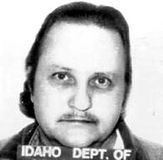
James Edward Wood
Murderer Brian Kevin Rosenfeld
Murderer · USA · 1985
Brian Kevin Rosenfeld Brian Kevin Rosenfeld was sentenced to three concurrent l…
23 victims
Brian Kevin Rosenfeld
Murderer · USA · 1985
Brian Kevin Rosenfeld Brian Kevin Rosenfeld was sentenced to three concurrent l…
23 victims
 Russell Ellwood
Murderer · USA · 1991
Russell Ellwood was a former taxi driver. Authorities suspected him of killing…
20 victims
Russell Ellwood
Murderer · USA · 1991
Russell Ellwood was a former taxi driver. Authorities suspected him of killing…
20 victims
 Robert Martines Perez
Murderer · USA · 1994
Name: Robert Martines Perez · Other name used in proceedings: Robert Martinez P…
15 victims
Robert Martines Perez
Murderer · USA · 1994
Name: Robert Martines Perez · Other name used in proceedings: Robert Martinez P…
15 victims
 Billy Frank Vickers
Murderer · USA · 1993
Billy Frank Vickers Vickers was executed by lethal injection in Texas on Januar…
14 victims
Billy Frank Vickers
Murderer · USA · 1993
Billy Frank Vickers Vickers was executed by lethal injection in Texas on Januar…
14 victims
 Alice Wynekoop
Murderer · USA · 1933
Name: Alice Wynekoop Alice Wynekoop was sentenced to 25 years in prison on Marc…
1 victim
Alice Wynekoop
Murderer · USA · 1933
Name: Alice Wynekoop Alice Wynekoop was sentenced to 25 years in prison on Marc…
1 victim
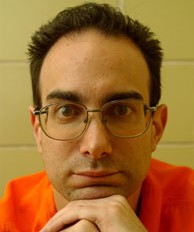 Martin Tankleff
Homicide · USA · 1988
Martin (“Marty”) Tankleff (born August 29, 1971) was a Long Island, New York re…
2 victims
Martin Tankleff
Homicide · USA · 1988
Martin (“Marty”) Tankleff (born August 29, 1971) was a Long Island, New York re…
2 victims
 Nikolai Dzhumagaliev
Serial killer · URSS · 1979
Nikolai Dzhumagaliev (Russian: Николай Джумагалиев; born 1952) was a serial kil…
9 victims
Nikolai Dzhumagaliev
Serial killer · URSS · 1979
Nikolai Dzhumagaliev (Russian: Николай Джумагалиев; born 1952) was a serial kil…
9 victims
 Paul Leslie Snider
Murderer · USA · 1980
Paul Leslie Snider committed suicide by shooting himself the same day. Paul Les…
1 victim
Paul Leslie Snider
Murderer · USA · 1980
Paul Leslie Snider committed suicide by shooting himself the same day. Paul Les…
1 victim
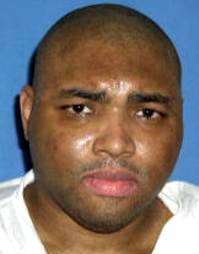 Jermaine Herron
Murderer · USA · 1997
Defendant: Jermaine Herron · Gender: Male · Race: Black · Age: 27 (executed); 1…
2 victims
Jermaine Herron
Murderer · USA · 1997
Defendant: Jermaine Herron · Gender: Male · Race: Black · Age: 27 (executed); 1…
2 victims
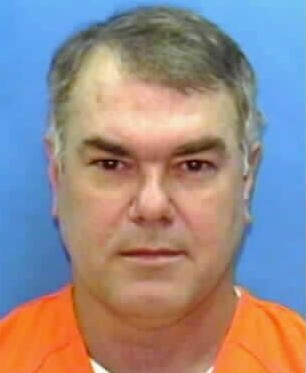 Thomas Dewey Pope
Murderer · USA · 1981
Thomas Dewey Pope (DOB: 01/29/49) was prosecuted in the Seventeenth Judicial Ci…
3 victims
Thomas Dewey Pope
Murderer · USA · 1981
Thomas Dewey Pope (DOB: 01/29/49) was prosecuted in the Seventeenth Judicial Ci…
3 victims
- Gender
- male
- Country
- USA
- Location
- Louisiana/Idaho, USA
- Date of birth
- December 9, 1947
- Age at first offence
- 46
- Characteristics
- serial rapist, sexual mutilation, dismemberment
- Victim profile
- Jeralee Underwood, 11 ( newspaper delivery girl)
- Method of murder
- Shooting ( .22 caliber pistol)
- Date(s) of murder
- June 29, 1993
- Years active
- 1993
- Date of arrest
- J uly 6, 1993
- Status
-
Died in custody
Sentenced to death in Idaho on January 14, 1994; died in prison on January 30, 2004
Case record: James Edward Wood
STATUS and post-sentence events
James Edward Wood was sentenced to death in Idaho on January 14, 1994. He died in prison on January 30, 2004, while awaiting execution. Prison officials said a heart attack was the likely cause, and they were awaiting a coroner's review.
Wood did not have an execution date. His appeal was before the state Supreme Court.
The victim and the offence
Jeralee Underwood resided in Pocatello, Idaho with her family. On June 29, 1993, Wood was visiting the home of a customer on Jeralee's paper route when she came by to make a collection. Wood followed Jeralee when she left, detained her with a false story, and forced her into his automobile.
Wood held Jeralee captive for over a day. During that period, he sexually molested her. Wood then shot Jeralee in the head with a .22 caliber pistol and hid her body by covering it with brush.
After the shooting and hiding of the body, Wood returned to the site of the murder. He undressed the corpse and mutilated the body by removing the sex organs and severing the arms, head, and legs. He threw the clothing and body parts into the Snake River. The body was later recovered, with the exception of the right hand and right calf.
Wood pleaded guilty to killing Jeralee Underwood. Jeralee had been kidnapped in 1993 as she collected money from customers on her newspaper route in Pocatello.
Investigation and confession
Wood was arrested about a week after the slaying. After interrogation by Police Detective Shaw, he confessed to the kidnapping, attempted rape and murder of Jeralee.
During the interrogation, Wood also confessed to raping other local girls, to committing several robberies and other killings, and to an attempted murder.
Wood led authorities to Jeralee's body, which had been thrown into the Snake River.
Wood repeatedly admitted the Underwood slaying to investigators and the news media. He initially demanded to be executed.
Arrest and charges
On July 6, 1993, Wood was arrested and charged with kidnapping Jeralee Underwood.
On July 7, 1993, Wood was arraigned, and the law firm of Whittier, McDougall, Souza, Murray and Clark was appointed as public defender. A preliminary hearing on the kidnapping charge was set for July 16, 1993.
On July 12, 1993, an Amended Complaint was filed charging Wood with twelve felonies, including the first-degree murder and kidnapping of Jeralee and several other kidnappings, rapes, and armed robberies. The public defender was also appointed to represent Wood on the Amended Complaint. Whittier served as lead counsel.
Pre-trial proceedings and media restrictions
Motions were filed by the public defender on July 12, 1993, including motions for discovery, for continuance of the preliminary hearing, and a waiver of statutory time.
On August 9, 1993, Whittier filed a Motion to Limit Visitation intended to restrict media contact with Wood as he made statements to members of the press that were detrimental to his defense. The motion was granted, and an order issued providing that representatives of the media would only be allowed to phone or visit Wood with the prior approval of Whittier.
The Sheriff refused to honor Whittier's request to remove a telephone from Wood's cell, which Wood used to call members of the press despite Whittier's efforts to persuade him not to speak to the media.
While Wood awaited arraignment, Whittier drafted a three-page contract for Wood's signature for the rights to write a book about Wood and to obtain movie rights. Whittier did not sign the contract and testified that the contract was a hoax. Whittier testified that he organized the contract as a ruse to get Wood to stop talking to the media.
At approximately the same time, Whittier organized a press conference at which Wood gave a televised confession to the murder of Jeralee and to other serious charged and uncharged crimes.
Wood was bound over to the district court after he waived a preliminary hearing.
Arraignment and plea
Wood was arraigned on August 31, 1993, in district court and entered pleas of not guilty to all counts alleged in the Information. A jury trial was set for December 7, 1993.
The district court granted defense motions for an investigator and psychiatric examination. Hearings on other defense motions were set for September 14, 1993.
On September 13 or 14, Whittier tape recorded a conversation he had with Wood concerning his plea. In that conversation, Wood indicated he wished to change his plea to guilty but said he wanted to have the psychiatric examination completed in order to determine his competency to aid in his own defense before he pled guilty. During this conversation, Whittier told Wood that he represented to the court and prosecution that Wood was competent.
After a recess at the September 14 hearing and prior to the completion of the psychiatric evaluation, Wood returned to court, withdrew his prior pleas of not guilty, and entered guilty pleas to one count of first-degree murder, one count of first-degree kidnapping, and two counts of rape. The remaining charges were dismissed without prejudice.
The district court accepted the guilty pleas and ordered a presentence investigation (PSI). The report of defense's psychiatric expert, Dr. Vicky Gregory, was ordered to be included in the PSI. Whittier did not object.
Sentencing
A sentencing hearing was held on December 7, 1993. Whittier presented no mitigating evidence. Dr. Gregory testified in aggravation for the prosecution.
On January 13, 1994, the court issued its decision on the defense's objections to the information in the presentence report, which did not include an objection to the admission of Dr. Gregory's report.
On January 14, 1994, the district court issued its findings concerning consideration of the death penalty and sentenced Wood to death for the murder of Jeralee.
The court also imposed consecutive terms of fixed life on each of the kidnapping and rapes to which Wood had pled guilty.
On January 16, 1994, Whittier appealed the sentence of death.
Post-conviction relief proceedings
On February 7, 1994, Whittier filed a Petition for Post-Conviction Relief, alleging that Wood's death sentence was unconstitutional for reasons related to felony murder.
On February 25, 1994, Whittier filed a motion to dismiss the notice of appeal. The court ordered that the ruling on the motion to dismiss the appeal would be reserved and appeal proceedings suspended. The matter was remanded to the district court for a determination of whether Wood was competent to dismiss his appeal.
The motion to dismiss the appeal was withdrawn. Whittier withdrew as counsel for Wood and current counsel was appointed. Counsel filed an Amended Petition for Post-Conviction Relief on June 20, 1994.
Several depositions were taken, and extensions were granted as post-conviction counsel continued to investigate and prepare. A district judge eventually denied any further extensions and commenced the post-conviction review trial.
The district judge denied all relief in the post-conviction proceeding. Wood appealed this decision.
Issues raised on appeal and the court’s rulings
Judge Winmill recusal / participation
Wood argued that Judge Winmill should have recused himself without motion from either party because he had close ties to the victims, the lead investigator and other participants in the case.
Wood pointed to the fact that Detective Shaw, the victim and her family, and two of the lawyers in the firm appointed to represent Wood all attended the same church. Wood also argued that the judge saw the victim's father on a regular basis and that the judge was required to assess credibility of fellow church members and to rule on admissibility of evidence concerning a purported church doctrine offered to impeach members who claimed they had never heard of “blood atonement.”
The court reviewed whether Judge Winmill had an affirmative duty to recuse himself because of affiliations with the Underwoods and mutual church membership. It addressed the Code of Judicial Conduct and concluded there was no abuse of discretion in hearing the case. It found no indication that Judge Winmill had “personal knowledge of disputed evidentiary facts.” It also found that church affiliation alone was not a reasonable basis for questioning impartiality.
Ineffective assistance of counsel claims
The court considered claims of ineffective assistance of counsel under Article I, § 13 of the Idaho Constitution and referenced federal standards including Cuyler v. Sullivan and Strickland v. Washington. The court described the presumption of competent trial counsel and required showings of deficient performance and prejudice.
Failure to move to disqualify Judge Winmill
The court concluded counsel’s decision not to move to disqualify Judge Winmill was based on a rational tactical decision and would not be second-guessed on review.
Failure to move to suppress Wood’s statements
Wood argued ineffective assistance based on failure to litigate suppression issues, including:
- challenges to arrest and search warrants allegedly issued based upon a twenty to thirty minute off-the-record discussion between the magistrate, Shaw and the prosecutor; and
- a contention that Wood was not given Miranda warnings until approximately one hour after his arrest.
The district court determined Wood did not show a basis to invalidate arrest warrants and search warrants and that probable cause had been shown. The district court found off-the-record discussion could not alter the conclusion that the record established probable cause. It also found Wood made no incriminating statements until after he waived Miranda rights and signed the waiver of rights form.
The court concluded Wood had not shown resulting prejudice from the failure to file a motion to suppress and therefore had not established ineffective assistance on these points.
Facilitation of the press conference
Whittier arranged for a press conference at which Wood made incriminating statements. The court found that Whittier’s conduct in this regard fell below an objective standard of reasonableness. However, the court found Wood did not meet the second element because Wood had already confessed to Detective Shaw and had already admitted to members of the press that he killed Jeralee.
Waiver of preliminary hearing
Wood argued it was ineffective assistance to waive the preliminary hearing without obtaining concessions from the prosecution. The court found no showing of what concessions Wood might have obtained, that Wood wanted to waive the preliminary hearing, and that there was no showing counsel’s performance fell below an objective standard or that the result would have been different.
Entry of guilty plea
The court found the district court determined Wood wanted to plead guilty. It found evidence that Wood would have preferred the psychological evaluation completed before entering the plea, but Wood elected to proceed before that time. It found no evidence that delaying the plea would have had any effect on the outcome. The court concluded there was no basis to find Whittier could have prevented Wood from pleading guilty.
Failure to present mitigating evidence
Whittier did not present mitigating evidence at sentencing. The district court noted Whittier's efforts were minimal and he did not employ a mitigation specialist or attempt a detailed investigation. The court concluded Wood had not shown ineffective assistance on this claim.
Failure to object to Dr. Gregory’s report and testimony
The court found Whittier’s failure to object to the inclusion and use of Dr. Gregory's report and to the prosecution’s calling Dr. Gregory as a witness at sentencing fell below an objective standard of reasonableness and that Wood established prejudice. It held that the aggravating factor based on Dr. Gregory’s findings was vacated.
Motion to dismiss the appeal without Wood’s consent
Whittier moved to dismiss the appeal without Wood’s consent. The court found this action fell below an objective standard of reasonableness because it jeopardized Wood’s rights. It concluded, however, that it did not affect the outcome because the present appeal preserved all rights Wood might have and Wood lost nothing as a consequence.
Conflict of interest claims
Wood claimed Whittier had conflicts of interest precluding effective representation, including:
- associations with the Underwood family by other members of the public defender's firm;
- Whittier's personally held religious beliefs allegedly conflicting with his representation of Wood; and
- an alleged financial interest created by the book and movie contract Whittier drafted.
The court described standards for conflict of interest claims and prejudice, including presumed prejudice only upon demonstration that counsel actively represented conflicting interests and that an actual conflict adversely affected performance.
Relationships between members of Whittier’s firm and the Underwood family
Wood cited facts including claims that Murray was Underwood’s spiritual leader until five or six months before Jeralee was abducted, that Murray saw the Underwoods at least one time if not three to four times per week for years, that Mrs. Murray provided comfort and meals after the abduction, that Murray participated in a search team, that Murray and Souza were at the police station during interrogation to assist the Chief of Police in breaking news of Jeralee’s death, and that Murray expressed a view that the firm should have nothing to do with representing Mr. Wood because Murray was very close to the Underwood family. Wood also cited that Murray offered condolences and emotional support at the onset of representation and that Murray and Souza were consulted by Mr. Underwood in their roles as lawyers.
The court concluded Wood failed to show that personal associations with the Underwoods by members of the firm who did not participate in the defense affected Whittier’s representation.
Book and movie rights contract
Wood argued the book and movie rights contract raised a question of whether Whittier had a financial interest. The court described that Whittier did not sign the contract and testified he did not intend to obtain any rights through it. The district court found no actual conflict of interest because Whittier never signed the contract and had no intention of acquiring rights under it, and that the conflict did not adversely affect representation.
The district court concluded it did not influence defense strategy and that Whittier conducted the defense to diminish “the glare of publicity” and did not attempt to sensationalize the case to increase value.
The court concluded Wood had not shown the right to effective assistance of counsel was violated on this basis.
Whittier’s personal beliefs
The court concluded Wood did not show that Whittier had personal beliefs constituting a conflict of interest interfering with representation.
Additional financial and expert assistance requests
Wood claimed Whittier erred by applying for investigative and expert assistance in open court with notice to the prosecutor and argued for ex parte procedure. The court concluded Idaho Code § 19-852 did not guarantee ex parte application and that notice to the prosecutor did not deny due process. It found no ineffective assistance in making requests for assistance in open court with notice.
Wood also argued that the district court should have appointed a “money judge” to rule on requests for funding. The court noted Idaho’s process required the trial court to inquire into needs and circumstances and determine whether adequate defense would be available without requested aid, and that the statute did not provide for a “money judge.” It concluded there was no constitutional infirmity and no ineffective assistance for failing to seek appointment of another judge.
Vacating the aggravating factor based on Dr. Gregory
The court explained that before sentencing, the district judge ordered a presentence investigation under Idaho Criminal Rule 32 and that Rule allowed a presentence investigator to recommend a psychological evaluation while the decision to order it was for the sentencing judge. The court addressed privileges under Idaho Rule of Evidence 503 relating to confidential communications with psychotherapists and concluded Whittier’s failure to object fell below an objective standard of reasonableness. It also concluded Whittier’s failure to object to the prosecution calling Dr. Gregory as a witness at sentencing also fell below that standard.
The district court had found an aggravating factor under I.C. § 19-2515(g)(8) based on a “propensity to commit murder” finding and relied on Dr. Gregory's findings. The court described the aggravating factor and quoted the district court’s statement accepting Dr. Gregory’s conclusions that the defendant’s “sexual paraphilias cannot be treated and will escalate in intensity, frequency and violence” and that “the Antisocial Personality Disorder cannot be treated,” and that “Mr. Wood poses an extreme risk of danger for the public. He also poses a high risk for other inmates and should be isolated from the general prison population.”
Because the court found the errors, it held Wood had established that but for counsel’s errors, the result would have been different, and vacated the aggravating factor set forth in I.C. § 19-2515(g)(8).
Constitutionality of Idaho’s death penalty statutory scheme
The court found Idaho’s statutory scheme for consideration of the death penalty was constitutional and referenced Godfrey v. Georgia and other Idaho precedents. It addressed Wood’s claims that:
- Idaho’s scheme violated state and U.S. constitutions;
- the (g)(7) aggravator was over broad, arbitrary, and violated due process and double jeopardy; and
- duplication of elements between aggravator and first-degree murder violated constitutional protections.
The court concluded the intentional killing of a young child could be an aggravating factor making a defendant death eligible, and that the aggravator was not over broad or arbitrary due to the narrowing function provided by mitigating evidence.
The court referenced Lowenfield v. Phelps and concluded duplication of an element did not make the sentence constitutionally infirm. It also stated the Idaho Legislature had narrowed the class of murders punishable by death.
Application of the death penalty statutes to Wood
The court addressed whether the death penalty statutes were applied unconstitutionally to Wood and described three aggravating factors found by the district court: I.C. § 19-2515(g)(6), (g)(7), and (g)(8). It found:
- The district court’s findings of aggravating factors I.C. § 19-2515(g)(6) and (g)(7) were constitutional.
- The aggravating factor I.C. § 19-2515(g)(8) was vacated due to improper evidence.
Aggravating factor (g)(6): utter disregard for human life
The court reviewed the standard requiring the aggravator be limited to the “highest, the utmost, callous disregard for human life, i.e., the cold-blooded pitiless slayer.” In finding it, the district court considered Wood’s post-murder conduct seven days subsequent to the murder, describing his use of Jeralee’s body for sexual gratification, his callous termination of her life, and his sexual abuse and mutilation of her body.
The court quoted the district court’s finding that circumstances surrounding the murder, including use of her body for his own sexual gratification, followed by callous termination, and sexual abuse and mutilation, exhibited the highest, the utmost disregard for human life and were the acts of a cold-blooded pitiless slayer.
The court explained that post-mortem conduct could be considered in analyzing the (g)(6) aggravator and discussed authority rejecting exclusion of post-mortem conduct in some jurisdictions while affirming consideration under its own statutory interpretation.
Overlap between aggravators and other arguments
The court noted it had vacated the (g)(8) finding, making it unnecessary to address some overlap arguments. It also addressed Wood’s claim that the district court erred when it considered the same evidence relating to the (g)(5) aggravator in finding (g)(6) and concluded these factors were not duplicative. It cited State v. Charboneau and State v. Fain in explaining distinct kinds of culpability.
The court stated that once a statutory aggravating circumstance was properly found, the court could impose death if mitigating circumstances did not outweigh that aggravator.
Aggravating factor (g)(7): especially heinous, and notice arguments
Wood claimed he received insufficient notice the (g)(7) aggravating factor could be applied because he was charged with premeditated murder and not murder committed in the course of a felony. The court rejected the claim, citing that on September 14, 1993, the district court advised Wood that the death penalty was a possible sentence for the crimes charged and that a guilty plea questionnaire asked: “What is the maximum prison sentence that you may receive for each crime?” with Wood responding, “LIFE IN PRISON OR DEATH SENTENCE.”
The court also discussed the information filed against Wood charging a violation of I.C. § 18-4003(a) and concluded sufficient facts were pled to provide notice that his offense would fall within the first-degree murder provisions referenced by the statute.
Aggravating factor (g)(8) and harmlessness discussion
The court stated it was unnecessary to address constitutional challenges to I.C. § 19-2515(g)(8) applied to Wood due to its evidentiary ruling. It also referenced a sentencing judge’s statement that, absent Dr. Gregory’s input, the court could not conclude it would not have sentenced Wood to death, and that only one aggravating factor needed to be proven beyond a reasonable doubt under Idaho law. The court concluded the erroneously admitted testimony and report did not contribute to the decision to impose the death penalty.
Time and financial assistance for post-conviction trial
Wood argued he was not allowed enough time and financial assistance to prepare for the trial of the petition for post-conviction relief. The court described the standard for reviewing continuances and denials of additional financial assistance.
The court reviewed a sequence of appointments and scheduling events, including appointment of counsel on April 1, 1994, and a request for forty-two days to file an amended petition and for trial not to be scheduled until mid-August. The district court granted requests ordering amended petition filing by May 13, 1994 and scheduling trial for August 16, 1994, later rescheduling to October 18, 1994, then to November 29, 1994, then resuming January 13, 1995, then to resume February 22, 1995, and then continued until March 3, 1995.
The court recorded that trial began on November 29 after which, after six days, Wood’s attorney advised the court there would be two or three additional witnesses not immediately available due to scheduling problems. It recorded requests for continuance related to experts being not ready to testify and requests for additional funds for testing. It recorded a denied continuance request immediately prior to February 22 to retain another expert witness. It recorded that at March 3, counsel indicated Wood would not be called as a witness and there were no other witnesses at that time, after which the district court indicated the record was closed.
The court concluded there was adequate time and money to prepare and that the district court did not abuse discretion in denying continuances and additional financial assistance.
Motions to disqualify and denial
Wood moved to disqualify Judge Winmill on July 11, 1994 pursuant to I.R.C.P 40(d) and I.C.R. 25. Judge Winmill denied the motions. The appellate court reviewed for abuse of discretion and cited that where the sentencing judge can perform the proper legal analysis, the motion should be denied. The court concluded there was no showing of actual bias or prejudice and no abuse of discretion.
Deposition requests in post-conviction proceedings
Wood sought to depose the prosecuting attorney to obtain recollection of plea bargaining discussions between the prosecutor and trial counsel Monte Whittier. The district court denied the request and Wood did not cite authority for the right. The court reported that opposing counsel depositions are limited when no other means exist to obtain the information, the information is relevant and not privileged, and it is crucial. The court concluded the district court properly denied the request because information was available from Whittier and Wood failed to establish the information was crucial.
Wood also sought to take a discovery deposition of the court, claiming a need to depose the district judge due to an unreported meeting held between district judge, defense counsel and prosecutor shortly before the guilty plea. The court denied the request. It referenced a prohibition against judge testimony in trial and described reasons including that inquiry would call into question the judge’s thought process and require recusal if the deposition proceeded. It also found no showing of relevant facts not otherwise available.
Presence at an unreported meeting
Wood claimed the district court violated his constitutional right to be present at an unreported meeting held in chambers between the district judge, defense counsel and the prosecutor. The court described the standard that a defendant has a right to be present at all stages if absence could under some set of circumstances be harmful. It concluded Wood’s absence was not harmful and that the district court did not render decisions affecting Wood’s rights as a result of the meeting. It concluded Wood’s guilty plea was the result of an informed, voluntary decision rather than the unreported meeting.
LDS church doctrine evidence and related rulings
In post-conviction relief, the defense sought to admit exhibits and testimony of James Spence, a minister and former member of the L.D.S. Church, to impeach a statement by Whittier that he had not heard of “blood atonement.”
Spence gave examples of “blood atonement,” including a sermon by Brigham Young quoting: “There are sins that men commit for which they cannot receive forgiveness in this world or in that which is to come; and if they had their eyes opened to see their true condition, they would be perfectly willing to have their blood spilt upon the ground; and the smoke thereof might ascend to heaven as an offering for their sins.”
The defense theory was that the doctrine of “blood atonement” influenced members of the church, including Whittier, and that church members who denied knowledge of blood atonement were lying and concealing influences motivating them in dealings with Wood.
The district court sustained the State’s objection to the admission of Spence’s testimony and exhibits, ruling they were not relevant. The district court ruled the only relevant religious beliefs were those of Wood and anyone who discussed religion with him prior to sentencing, and that general teachings of the L.D.S. Church were not relevant. It found Spence could not speak to the issue of what Wood, Whittier, or other members of the Whittier firm believed regarding the doctrine, and found exploration beyond that not relevant.
The appellate court concluded there was no due process violation in excluding the evidence.
Wood also argued the district court had a conflict of interest in ruling on the evidence. The court concluded those issues had been addressed and the judge did not have a conflict of interest.
Automatic sentence review and final disposition
The court described mandatory review under I.C. § 19-2827(c), including determining whether death was imposed under the influence of passion, prejudice, or other arbitrary factor; whether evidence supports findings of a statutory aggravating circumstance; and whether the sentence is excessive.
It concluded death was imposed under no arbitrary factor and was based on Wood’s voluntary guilty plea substantiated by facts in the record. It concluded evidence supported the judge’s findings as to aggravating circumstances under I.C. § 19-2515(g)(6) and (g)(7).
It stated the Idaho Legislature amended I.C. § 19-2827(c)(3) in 1994, making the term “excessive” meaningless. It therefore declined to undertake any consideration of excessiveness beyond independent review to determine whether the district court’s finding and weighing of aggravating and mitigating factors were supported by the record.
The court affirmed the judgment imposing the death penalty because it concluded the district court properly applied two aggravating factors. It vacated the district court's finding of the third aggravating factor under I.C. § 19-2515(g)(8) for reasons involving improper evidence. It concluded remand was unnecessary because the district court determined that even if the finding regarding § 19-2515(g)(8) was improper, the sentence would have been the same. It affirmed the decision denying post-conviction relief.
Other details: counsel, case identifiers, and procedural references
The appeals were identified as STATE v. WOOD, State of Idaho, Plaintiff-Respondent, v. James E. WOOD, Defendant-Appellant, Nos. 21057, 22375. The substituted opinion indicated withdrawal of a prior opinion dated June 19, 1998. The text included that the appeal was of a death sentence imposed upon a plea of guilty for the murder of Jeralee Underwood, an eleven-year-old girl.
Appellate attorney Rolfe Kehne conceded that winning an acquittal would be extremely difficult but suggested a legitimate case could be made for life in prison over execution.
The ruling referenced Justice Gerald Schroeder as the author of the opinion. It also stated TROUT, C.J., and SILAK, J., concur, and that McDEVITT, J., sat but did not participate because of retirement.
A concurring opinion included that the concurrence was in all of the court’s opinion except part IX, with disagreement concerning the application of the aggravating factor contained in I.C. § 19-2515(g)(6), citing State v. Fain.


Spotted an error, or have more information about this case?