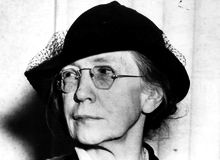
Alice Wynekoop
Murderer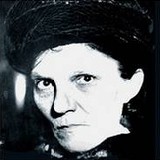 Martha Wise
Murderer · USA · 1924
Martha Wise (born 1885; died June 28, 1971), also known as “the Borgia of Ameri…
3 victims
Martha Wise
Murderer · USA · 1924
Martha Wise (born 1885; died June 28, 1971), also known as “the Borgia of Ameri…
3 victims
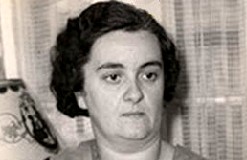 Mary Frances Creighton
Murderer · USA · 1923
Mary Frances Creighton (c. 1898 - July 16, 1936) was a housewife and was execut…
3 victims
Mary Frances Creighton
Murderer · USA · 1923
Mary Frances Creighton (c. 1898 - July 16, 1936) was a housewife and was execut…
3 victims
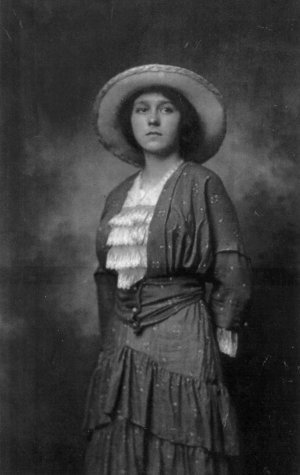 Inez Palmer
Murderer · USA · 1926
Inez Palmer — defendant; lived at the Stout farmhouse and pleaded guilty to a f…
2 victims
Inez Palmer
Murderer · USA · 1926
Inez Palmer — defendant; lived at the Stout farmhouse and pleaded guilty to a f…
2 victims
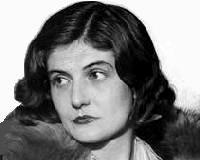 Winnie Ruth Judd
Murderer · USA · 1931
Winnie Ruth Judd (January 29, 1905 – October 23, 1998) was a Phoenix, Arizona m…
2 victims
Winnie Ruth Judd
Murderer · USA · 1931
Winnie Ruth Judd (January 29, 1905 – October 23, 1998) was a Phoenix, Arizona m…
2 victims
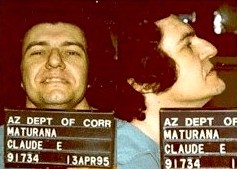 Claude Eric Maturana
Murderer · USA · 1990
Claude Eric Maturana was a French national in Arizona. He was held as an inmate…
1 victim
Claude Eric Maturana
Murderer · USA · 1990
Claude Eric Maturana was a French national in Arizona. He was held as an inmate…
1 victim
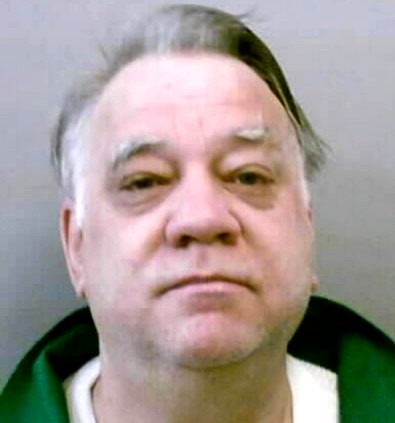 Luke Williams
Murderer · USA · 1991
Luke Williams was convicted of murdering his wife, Linda Williams, and his 12-y…
2 victims
Luke Williams
Murderer · USA · 1991
Luke Williams was convicted of murdering his wife, Linda Williams, and his 12-y…
2 victims
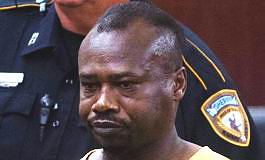 David Conley
Mass murderer · USA · 2015
David Ray Conley III was the main suspect in a mass shooting in northern Harris…
8 victims
David Conley
Mass murderer · USA · 2015
David Ray Conley III was the main suspect in a mass shooting in northern Harris…
8 victims
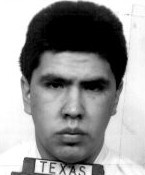 Oswaldo Soriano
Homicide · USA · 1992
Oswaldo Soriano Oswaldo Soriano was sentenced to death on May 6, 1994. His deat…
1 victim
Oswaldo Soriano
Homicide · USA · 1992
Oswaldo Soriano Oswaldo Soriano was sentenced to death on May 6, 1994. His deat…
1 victim
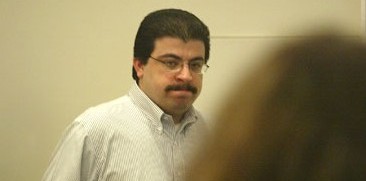 Alejandro Avila
Murderer · USA · 2002
Alejandro Avila was convicted of kidnapping, murder, and sexual assault in the…
1 victim
Alejandro Avila
Murderer · USA · 2002
Alejandro Avila was convicted of kidnapping, murder, and sexual assault in the…
1 victim
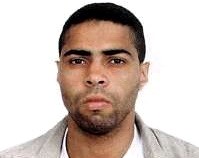 Jackie Arklöv
Murderer · Sweden · 1999
Jackie Arklöv was sentenced to life imprisonment. Jackie Arklöv (born June 6, 1…
2 victims
Jackie Arklöv
Murderer · Sweden · 1999
Jackie Arklöv was sentenced to life imprisonment. Jackie Arklöv (born June 6, 1…
2 victims
- Gender
- female
- Country
- USA
- Location
- Chicago, Cook County, Illinois, USA
- Date of birth
- 1870
- Age at first offence
- 63
- Characteristics
- to collect insurance money, history of mental illness
- Victim profile
- Rheta Gardner Wynekoop (her daughter-in-law)
- Method of murder
- Chloroformed and shot to death
- Date(s) of murder
- November 21, 1933
- Years active
- 1933
- Date of arrest
- 2 days after
- Status
-
Died in custody
Sentenced to 25 years in prison on March 19, 1934; she served just 14 years and died in 1955 at age 84
Case details
Name: Alice Wynekoop
STATUS and sentence
Alice Wynekoop was sentenced to 25 years in prison on March 19, 1934. She served just 14 years. She survived until 1955, dying at age 84.
Background
Alice Wynekoop was a physician and was described as a pioneering female physician and a prominent suffragette who advocated for women and children. She practiced medicine in a basement office in a 16-room brick mansion on Chicago’s West Side.
Her son was Earle Wynekoop. Earle’s father, Dr. Frank Wynekoop, died in 1929.
Rheta (Rheta Gardner Wynekoop) was the daughter-in-law who was killed. She was described as 22 years old and as having left her family in Indianapolis at age 18 to marry Earle Wynekoop, described as a scion of a Chicago medical family.
A boarder living in the house was Enid Hennessey, described as a teacher in the John Marshall High school and a boarder in the sixteen-room house for ten years.
Alice Wynekoop’s daughter was Dr. Catherine Wynekoop, described as a resident pediatrician at the Cook County hospital who did not live with the family.
A physician Dr. John M. Berger of Oak Park had known Dr. Wynekoop for more than fifteen years.
A psychiatrist Harry Hoffman was described as a Chicago shrink who suggested that Dr. Wynekoop had “an accentuated affection for Earle.” Another psychiatrist and the topic of mental issues were discussed, including the idea of a possible “Œdipus complex,” described as exaggerated maternal feeling.
Rheta’s father was Burdine Gardner, described as an Indianapolis businessman. Coroner Frank J. Walsh asked about insurance in connection with an inquest.
A family undertaker was Thomas J. Ahern, who summoned police and later appeared as a witness.
The offence
Rheta Wynekoop was found dead on an examination table in Alice Wynekoop’s basement office/operating room. She was described as being clad in stockings and a slip gathered at her waist, with her body covered by a sheet. A single bullet had pierced her back, and the killer left a .32-caliber revolver beside the body.
Autopsy findings in the narrative included that the manner of death was homicide and the cause was listed as gunshot wound, hemorrhage, and shock. Further tests indicated the presence of chloroform. The thorax was described as filled with blood, and this was characterized as indicating she was alive when shot.
During inquest proceedings, the jury returned a verdict that Rheta died of shock and hemorrhage from a bullet fired in her back and recommended that Alice Wynekoop be held to the grand jury on a murder charge.
Investigation and evidence
Police found, beside the body, a revolver that was wrapped in gauze and described as the murder weapon. The pistol was described as belonging to Earle.
A bottle of chloroform was pointed out at the scene, and an anesthetic mask was described as being in plain view.
Police found a letter in feminine handwriting under a pile of other papers in Dr. Wynekoop’s bedroom on the second floor. The letter was dated “Sunday night” and written in pencil. It read verbatim:
“Precious: I’m choked. You are gone--you have called me up--and after ten minutes or so I called and called. No answer. Maybe you are sleeping. You need to be, but I want to hear your voice again tonight--I would give anything I have--to spend an hour in real talk with you tonight--and I cannot--good night”
Police later learned of telegrams and messenger activity relating to Earle. A telegram from Earle had been sent from Peoria at 3:47 p. m. on the day of the murder and was received at the house by Miss Hennessey at 7:55 o’clock. Another messenger, John Brennock, had called with it at 4:27 p. m. The narrative states there was no response when he rang the doorbell, although lights were seen burning in the basement and on the first floor.
Names and relationships
- Alice Wynekoop — defendant; physician; mother-in-law of Rheta Wynekoop.
- Rheta Gardner Wynekoop — victim; daughter-in-law of Alice Wynekoop; 22 years old.
- Earle Wynekoop — Rheta’s husband; son of Alice Wynekoop.
- Enid Hennessey — boarder in the sixteen-room house; witness mentioned.
- Dr. Catherine Wynekoop — Alice Wynekoop’s daughter; resident pediatrician at Cook County hospital.
- Thomas J. Ahern — undertaker.
- Policemen Arthur R. March and Walter Kelly of Fillmore street station — officers who arrived.
- Dr. John M. Berger — physician from Oak Park who had known Dr. Wynekoop.
- Captain Stege — questioned Dr. Wynekoop after the inquest.
- Dr. Harry A. Hoffman — director of the Criminal court behavior clinic; testified about the confession episode.
- Assistant State’s Attorney Dougherty / Prosecutor Charles Dougherty — prosecution described as presenting evidence and arguments.
- Judge Joseph B. David — described as the judge in the January jury selection and trial process.
- Judge Harry B. Miller — described as the judge for the Feb. 19 retrial.
- Coroner Frank J. Walsh — coroner who asked about insurance during an inquest process.
- Burdine Gardner — Rheta’s father; Indianapolis businessman.
- W. Russell O’Banion — Western Union messenger.
- John Brennock — messenger mentioned in telegram delivery activity.
- Miss Julia McCormick — elderly agent for the New York Life Insurance company.
- Walker — described as another son who, along with Catherine, assisted in testimony.
- Veronica Duncan — neighbor at 3408 Monroe street who saw Rheta alive at 3 p. m.
Trial
A trial process included jury selection and presentation of evidence.
The narrative states that on Jan. 15, 1934, the state began presentation of its evidence, represented by Assistant State’s Attorney Dougherty. As evidence was presented, Alice Wynekoop suffered five heart attacks, and a climax occurred when she collapsed after Dr. Hoffman’s testimony. Dr. Hoffman testified about the statement made after she was questioned. It included a quotation attributed to Dr. Hoffman about her answer:
“I asked her why she did it,” Dr. Hoffman said in a low, vibrant voice.
“Her answer was, 'I did it to save the poor dear.'”
Her collapse resulted in a mistrial.
A retrial was held on Feb. 19, before Judge Harry B. Miller. The narrative states she passed her sixty-third birthday in jail on Feb. 1, and she was brought into court in a wheel chair. Policemen March and Kelly testified, and Thomas J. Ahern was described as an important witness. Miss Hennessey testified for the state.
Earle was described as not appearing in court during the trial, but Catherine and Walker provided testimony on their mother’s behalf. The jury required only a few minutes to determine Dr. Alice’s guilt, with deliberations described as closing quickly.
Verdict and retirement times were described in the narrative: they retired at 6:15 p. m. March 6, 1934 and were agreed on the verdict at 7:15 p. m. A juror was quoted about their vote:
“We took a vote on 25 years,” said a juror. “Ten hands went up, and, with a little urging, the other two. We had reached our verdict.”
Sentencing
The narrative states that the jury convicted Alice Wynekoop of murder but spared her life at trial, and she was later sentenced to 25 years, with sentencing described in the case status as occurring on March 19, 1934. She served just 14 years.
Confession and statements attributed in the narrative
Before arrest, Alice Wynekoop told authorities an account blaming the killing on a burglar and thieves. The narrative described her later confession as including a detailed sequence, including chloroform administration and subsequent actions.
She also provided a confession narrative during questioning that included statements describing her actions and rationale. The narrative includes a signed/dictated confession portion; the key confession began with the statement:
“Rheta was concerned about her health and frequently weighed herself, usually stripping for that purpose.”
The confession then included verbatim descriptions:
“On Tuesday November 21, after luncheon, at about 1:00, she decided to go down to the loop to purchase some sheet music that she had been wanting.”
“She was given money for this purpose, and laid it on the table. She decided to weigh before dressing to go downtown. I went to the office.”
Further in the confession narrative:
“She was sitting on the table practically undressed and suggested that the pain in her side was troubling her more than usual.”
“She complained of considerable soreness, also severe pain and tenderness. She thought she would endure the examination better if she had a little anesthetic.”
“Chloroform was conveniently at hand and a few drops were put on a sponge.”
“She breathed it very deeply. I asked her if I was hurting her, and she made no answer.”
“Inspection revealed that respiration had stopped. Artificial respiration for about twenty minutes gave no response. Stethoscopic examination revealed no heart beat.”
The confession further included:
“Wondering what method would ease the situation best of all, and with the suggestion offered by the presence of a loaded revolver, further injury being impossible, with great difficulty one cartridge was exploded at a distance of some half dozen inches from the patient.”
“The gun dropped from the hand.”
“The scene was so overwhelming that no action was possible for a period of several hours.”
The narrative also included statements attributed to other individuals, including prosecutor and psychiatrists. It included a quote attributed to Prosecutor Charles Dougherty:
“She had brought down upon herself in one frantic moment of greed or unnatural love the edifice of the career she had built for 30 years.”
It also included testimony attributed to Alice Wynekoop’s explanation in the narrative:
“I was stunned. I realized my career was at stake. Suddenly I gave thought to the gun that was in my desk.”
“She grew quiet, and I found that her heart had stopped,” Dr. Wynekoop said.
She said fired the shot to cover up “a professional mistake.”
Insurance and financial motive details
The narrative described Alice Wynekoop as having taken out life insurance policies on Rheta weeks before the murder. It described that she stood to collect $12,000.
The inquest and insurance details in the narrative included:
- It was stated that Rheta had no insurance initially, and that she tried to obtain policies from several companies but negotiations fell through.
- It was then described that Rheta had been insured for $5,000 with the New York Life Insurance company, with a double indemnity clause in case of death by violence, and that Dr. Alice Wynekoop was the beneficiary.
- Another double indemnity policy for $1,000 named Earle and Catherine as beneficiaries.
- It stated that Alice obtained the larger one against Rheta’s life a month before the murder, and she paid the first premium despite her grim financial situation, including being described as owing her grocer, butcher, and undertaker.
- The narrative gave a described bank balance of $26 on Oct. 31, and a $3,500 mortgage on the Monroe street home.
- It described an undertaker’s unpaid bill for the funeral of an adopted daughter, Mary Louise, who died in March, 1930.
- It described that Rheta’s death resulted in insurance negotiations and evidence at trial.
A quote from Coroner Walsh in the narrative was included as:
“Did Rheta have any insurance?” Coroner Walsh asked.
The narrative also described Alice Wynekoop’s testimony in the confession and also her position that she obtained policies out of anxiety for Rheta’s health.
During trial, Miss Julia McCormick testified about a $10,000 double indemnity policy on Rheta’s life, which her company changed to $5,000. She conceded she had not seen Rheta during negotiations.
Other events and allegations described in the narrative
The narrative described a relationship context involving other women:
- Shopgirl Priscilla Wittle stepped forward to announce she was Earle Wynekoop’s fiancée.
- Margaret McHale, who worked at the 1933 Chicago World’s Fair, made bigger headlines by saying she, too, was Earle’s girl.
- McHale had a diamond engagement ring described as the same love stone Earle had given Rheta Gardner in 1929.
The narrative also described that police found an unmailed note which Alice said she wrote to her son, and that police characterized it as a love note.
In addition, the narrative described:
- The police learned Dr. Wynekoop had taken out insurance policies on Rheta.
- Earle was flagged down in Kansas City and informed he was a widower, and later he was said to have returned to Chicago.
- Earle initially announced to police, “I killed my wife and I did it alone.”
- Police confirmed Earle was out of town at the hour of the murder.
The narrative also included described details about the crime scene clothing and physical observations:
- Rheta was described as nude save for a pink slip rolled about the waist, a chemise, and stockings.
- Policeman March removed the blanket and described that blood was oozing from the mouth and dropping to the floor.
- The two sheets beneath the body were described as saturated with blood, and a damp folded towel was described under the mouth.
Timeline
- 1929 — Dr. Frank Wynekoop died of heart disease.
- Oct. 20 — Thieves broke into the Monroe street home and took $100; drugs were taken.
- Oct. 31 — Bank balance was described as $26.
- March 1930 — Adopted daughter Mary Louise died in March 1930 (funeral referenced by an unpaid undertaker’s bill).
- Nov. 21, 1933 — Rheta Wynekoop was found dead in Alice Wynekoop’s basement operating room; the narrative also described police being dispatched after Alice phoned the local precinct and that the scene was at 3406 West Monroe street.
- Jan. 1934 — A trial date in January included two thousand gawkers and proceedings postponed a month while she recuperated.
- Feb. 1 — Alice Wynekoop passed her sixty-third birthday in jail.
- Feb. 19 — A retrial began before Judge Harry B. Miller after a mistrial.
- Mar. 6, 1934 — Jury retired at 6:15 p. m. and reached agreement on the verdict at 7:15 p. m.
- March 19, 1934 — Alice Wynekoop was sentenced to 25 years in prison.
- 1955 — Alice Wynekoop died at age 84.
Outcome
Alice Wynekoop was convicted of murder. She received a sentence of 25 years in prison.
Aftermath
She served just 14 years and died in 1955 at age 84.
Other details
The narrative included descriptions of Alice Wynekoop’s health and trial circumstances, including that she was described as aged and ill and that she suffered heart attacks during the first trial. It also stated that when she collapsed, there was a mistrial.
The narrative included testimony and observations:
- It described that she told police she had “loved Rheta as if she were one of my own.”
- It described her statement to police when she told reporters, “This is the happiest moment of my life,” in the context of rumored confession activity.
- It described an additional statement to another reporter: “I never touched Rheta save in love.”
Spotted an error, or have more information about this case?