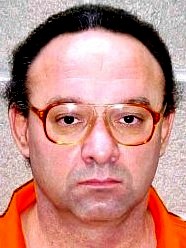
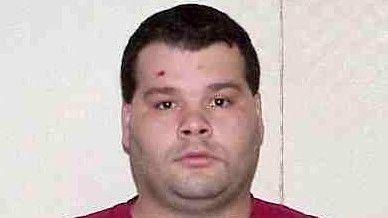
Joseph Wood
Murderer Brian Kevin Rosenfeld
Murderer · USA · 1985
Brian Kevin Rosenfeld Brian Kevin Rosenfeld was sentenced to three concurrent l…
23 victims
Brian Kevin Rosenfeld
Murderer · USA · 1985
Brian Kevin Rosenfeld Brian Kevin Rosenfeld was sentenced to three concurrent l…
23 victims
 Yahweh ben Yahweh
Murderer · USA · 1980
Yahweh ben Yahweh was born and legally named Hulon Mitchell Jr. (October 27, 19…
23 victims
Yahweh ben Yahweh
Murderer · USA · 1980
Yahweh ben Yahweh was born and legally named Hulon Mitchell Jr. (October 27, 19…
23 victims
 Russell Ellwood
Murderer · USA · 1991
Russell Ellwood was a former taxi driver. Authorities suspected him of killing…
20 victims
Russell Ellwood
Murderer · USA · 1991
Russell Ellwood was a former taxi driver. Authorities suspected him of killing…
20 victims
 Robert Martines Perez
Murderer · USA · 1994
Name: Robert Martines Perez · Other name used in proceedings: Robert Martinez P…
15 victims
Robert Martines Perez
Murderer · USA · 1994
Name: Robert Martines Perez · Other name used in proceedings: Robert Martinez P…
15 victims
 Shawnfatee Bridges
Murderer · USA · 1996
Shawnfatee M. Bridges was sentenced to death on February 23, 1998. On Saturday,…
2 victims
Shawnfatee Bridges
Murderer · USA · 1996
Shawnfatee M. Bridges was sentenced to death on February 23, 1998. On Saturday,…
2 victims
 John D. Hall
Murderer · USA · 1994
John D. Hall was sentenced to death for the murder of his estranged wife, Billi…
1 victim
John D. Hall
Murderer · USA · 1994
John D. Hall was sentenced to death for the murder of his estranged wife, Billi…
1 victim
 Thomas Selmayr
Murderer · Germany · 2011
March 21, 2011 — Police investigated the deaths of two girls, aged eight and 11…
2 victims
Thomas Selmayr
Murderer · Germany · 2011
March 21, 2011 — Police investigated the deaths of two girls, aged eight and 11…
2 victims
 John Richard Blackwelder
Murderer · USA · 2000
John Richard Blackwelder was a white male inmate. He was born on December 10, 1…
1 victim
John Richard Blackwelder
Murderer · USA · 2000
John Richard Blackwelder was a white male inmate. He was born on December 10, 1…
1 victim
 Theodore Gregory
Murderer · USA · 1948
Theodore W. Gregory was executed at the Nevada State Prison on January 29, 1951…
1 victim
Theodore Gregory
Murderer · USA · 1948
Theodore W. Gregory was executed at the Nevada State Prison on January 29, 1951…
1 victim
 William Baker
Mass murderer · USA · 2001
William D. Baker, 66, returned to the Navistar International engine plant in Me…
4 victims
William Baker
Mass murderer · USA · 2001
William D. Baker, 66, returned to the Navistar International engine plant in Me…
4 victims
- Gender
- male
- Country
- USA
- Location
- Pima County, Arizona, USA
- Date of birth
- December 6, 1958
- Age at first offence
- 31
- Characteristics
- domestic violence, revenge
- Victim profile
- His ex-girlfriend, Debbie Dietz, 29, and her father, Gene Dietz, 55
- Method of murder
- Shooting (.38 caliber revolver)
- Date(s) of murder
- August 7, 1989
- Years active
- 1989
- Date of arrest
- Same day (wounded by police)
- Status
-
Sentenced to death
Sentenced to death on July 2, 1991.
Case Overview
Joseph Wood was an Arizona state prisoner who was sentenced to death on July 2, 1991.
Timeline
- August 7, 1989 — Wood walked into a Tucson automotive paint and body shop owned and operated by the Dietz family and shot Gene Dietz in the chest with a .38 caliber revolver, killing him. Wood then shot Debra Dietz once in the abdomen and once in the chest, killing her. Wood fled the building after the killings.
- February 19, 1991 — Trial started.
- February 25, 1991 — A jury returned guilty verdicts.
- July 2, 1991 — Wood was sentenced to death for each murder conviction.
- 1994 — The Arizona Supreme Court affirmed Wood’s convictions and sentences in State v. Wood, 180 Ariz. 53, 881 P.2d 1158.
- May 6 — Dale Baich wrote to the Arizona Department of Corrections after inquiry letters; the Department responded indicating it would use the new two-drug protocol on Wood if the warrant were granted and that it had chosen the amounts based on declarations and sworn testimony in “the Ohio Execution Protocol litigation.”
- May 9 — Dale Baich responded again to request additional information including drug manufacturer information, lot numbers and expiration dates, and copies of the documents from the Ohio litigation.
Background
Wood and his 29-year-old ex-girlfriend, Debbie Dietz, had been involved in a turbulent relationship for 5 years, with numerous breakups and several domestic violent incidents. Debbie was working at a local body shop owned by her family.
The offence
Shooting of Gene Dietz
On August 7, 1989, Wood walked into the shop and shot Gene Dietz, age 55, in the chest with a .38 caliber revolver, killing him.
Gene Dietz’s 70-year-old brother was present and tried to stop Wood, but Wood pushed him away and proceeded into another section of the body shop.
Shooting of Debbie Dietz
Wood went up to Debbie, placed her in some type of hold, and shot her once in the abdomen and once in the chest, killing her.
After shooting Debra, Wood left the building.
Attempted or threatened violence toward officers
Two police officers approached Wood and ordered him to drop his weapon. After Wood placed the weapon on the ground, he reached down and picked it up, and pointed it at the officers. The officers fired, striking Wood several times. Wood was transported to a local hospital where he underwent extensive surgery.
Investigation and prosecution
A grand jury indicted Wood on two counts of first degree murder and two counts of aggravated assault against the officers who subdued him.
The prosecuting attorney was Thomas Zawada. The presiding judge at trial was G. Thomas Meehan.
Trial
Charges and verdict
Wood was convicted in Superior Court (Pima) of two counts of first-degree murder and two counts of aggravated assault.
Wood did not testify. He did not dispute his role in the killings but argued he acted impulsively and without premeditation.
Trial evidence and disputed issues
The Arizona Supreme Court described the relationship and prior domestic violence as part of the evidence:
- The relationship between Wood and Debra (Debbie) had been tumultuous since 1984 and increasingly marked by Wood’s abusive and violent behavior.
- Eugene Dietz (Debra’s father, also killed) generally disapproved of the relationship but did not actively interfere, and the Dietz family often included Wood in dinners and other activities.
- Several times Eugene refused to let Wood visit Debra during business hours while she was working at the shop.
- Wood told Eugene he would “get him back” and that Eugene would “be sorry.”
Debra sought to end the relationship after a fight during the 1989 July 4th weekend, leaving her apartment and moving in with her parents with the statement: “I don't want any more of this.” After Debra left, Wood ransacked and vandalized the apartment and she obtained an order of protection against him on July 8, 1989. In the following weeks, Wood repeatedly tried to contact Debra at the shop, her parents’ home, and her apartment.
The Arizona Supreme Court also described phone messages:
- Wood left ten messages on Debra’s apartment answering machine on the night of Friday, August 4, 1989.
- Some contained threats, including: “Debbie, I'm sorry I have to do this. I hope someday somebody will understand when we're not around no more. I do love you babe. I'm going to take you with me.”
Events at the shop
Debra and Eugene drove together to work early on Monday morning, August 7, 1989, and began working in different areas of the shop. Six other employees were also present that morning.
A Tucson Police officer saw Wood driving in a suspicious manner near the shop at 8:50 a.m., slowed her patrol car, and made eye contact as Wood left his truck and entered the shop.
Eugene was on the telephone in an area where three other employees were working. Wood waited for Eugene to hang up, drew a revolver, and approached to within four feet of him. Other employees shouted for Wood to put the gun away. Without saying a word, Wood fatally shot Eugene once in the chest and then smiled. The police officer called for more officers when she saw this from her patrol car.
The Arizona Supreme Court’s description included that Wood left the shop but quickly returned and again pointed his revolver at Eugene, who was supine.
Donald Dietz, an employee and Eugene’s seventy-year-old brother, struggled with Wood. Wood ran to the area where Debra had been working. Debra had apparently heard an employee shout that her father had been shot and was trying to telephone for help when Wood grabbed her around the neck from behind and placed his revolver directly against her chest. Debra struggled and screamed: “No, Joe, don't!”
Another employee heard Wood say: “I told you I was going to do it, I have to kill you.”
Wood called Debra a “bitch” and shot her twice in the chest.
Sentencing
After an aggravation and mitigation hearing, the trial court sentenced Wood to death for each murder and to imprisonment for the assaults.
Trial court findings at sentencing
The trial court entered a special verdict pursuant to A.R.S. § 13–703(D). The trial court found two aggravating circumstances beyond a reasonable doubt:
- (1) Wood was convicted of one or more other homicides, as defined in A.R.S. § 13–1101, committed during the commission of each offense.
- (2) In the commission of the offenses, Wood knowingly created a grave risk of death to another person or persons in addition to the victims.
The trial court found mitigating circumstances and concluded they were not sufficient to call for leniency.
Mitigating circumstances discussed
The Arizona Supreme Court stated that the following mitigating circumstances existed but were insufficiently substantial to call for leniency:
- Impulsive personality exacerbated by drug and alcohol abuse (“little, if any” weight).
- History of substance abuse (“little, if any” weight).
- Lack of criminal history as found by the court but with insufficient mitigating weight.
The Arizona Supreme Court stated that Wood failed to prove by a preponderance of the evidence the existence of:
- (G)(1) Significant Impairment [mental or alcohol/drugs].
- (G)(2) Duress.
- (G)(4) Death not reasonably foreseeable.
- Difficult childhood/family history.
The trial court’s special verdict stated:
- “Lack of any prior felony convictions and any other mitigating circumstances set forth in the presentence report, including all testimony presented by the psychiatrist ... [in] mitigations [sic] of sentence. Including the chemical substance abuse problems which you have suffered from, the Court finds that ... [the] mitigating circumstances are not sufficiently mitigating to outweigh the aggravating factors found by this Court beyond a reasonable doubt.”
The sentencing transcript citation given was R.T., July 12, 1991, at 32.
The Arizona Supreme Court noted that the trial court declined to find the “especially heinous, cruel or depraved manner” aggravator under A.R.S. § 13–703(F)(6).
Appeals
Arizona Supreme Court direct appeal
Wood appealed automatically. The Arizona Supreme Court affirmed his convictions and sentences, and upheld that the aggravating circumstances outweighed mitigating circumstances requiring imposition of the death penalty.
State v. Wood was cited as:
- State v. Wood, 180 Ariz. 53, 881 P.2d 1158 (1994).
The Arizona Supreme Court addressed trial and sentencing issues including:
- Admission of evidence of Wood’s prior violent acts against Debra as relevant to premeditation and motive.
- Admission of Debra Dietz’s statements about fear of Wood and desire to end the relationship under the then-existing state of mind exception.
- Erroneous admission of a neighbor’s testimony that Debra told her that Wood threatened her life, but the court found the error harmless.
- Sufficiency of evidence for aggravated assault convictions.
- Prosecutorial misconduct claims on various evidentiary matters, including cross-examination of experts and related issues.
- A challenge related to plea bargaining being allegedly influenced by victims’ family.
- Aggravating circumstances findings under A.R.S. § 13–703(F)(3) (grave risk of death to others) and § 13–703(F)(8) (multiple homicides), which were upheld.
The Arizona Supreme Court described the aggravated assault evidence as not requiring the officers to testify to subjective fear of imminent physical harm; it held the jury could infer apprehension or fear from circumstantial evidence, including that Wood grabbed his revolver and began to aim at officers despite orders not to do so.
Habeas corpus proceedings
Wood later sought federal habeas corpus relief after his state-court convictions for murder and aggravated assault and his death sentence were upheld on direct appeal.
The United States District Court for the District of Arizona denied the habeas petition (denied in 2007 as stated) and denied a motion to alter or amend judgment (also stated).
The United States Court of Appeals for the Ninth Circuit affirmed denial of habeas relief (Wood v. Ryan, cited with appellate holdings).
The Ninth Circuit described procedural history including:
- Direct appeal affirmed in 1994.
- United States Supreme Court denial of certiorari: Wood v. Arizona, 515 U.S. 1147 (1995), and a petition for rehearing denied: Wood v. Arizona, 515 U.S. 1180 (1995).
- State post-conviction review petitions filed in 1996 and 2002, both denied.
- Federal habeas petition filed in 1998 with an amended petition later that year.
- District court procedural status orders and merits denial in 2007, as stated in the provided material.
The Ninth Circuit holdings included that prosecutorial misconduct claims did not warrant relief, that certain brief references did not deprive Wood of a fair trial, that cross-examining lay witness testimony about mental state did not render trial fundamentally unfair, that aggregate misconduct allegations did not establish a due process violation, that some claims were not fairly presented to the Arizona Supreme Court, that Wood did not receive ineffective assistance of counsel, and that he was not entitled to an evidentiary hearing on federal habeas review.
§ 1983 execution information litigation
Wood filed a § 1983 action seeking information from the Arizona Department of Corrections regarding the method of his execution.
The United States District Court for the District of Arizona denied Wood’s motion for preliminary injunction, and Wood appealed.
The Ninth Circuit reversed and granted a conditional preliminary injunction staying Wood’s execution until Arizona provided specified information.
The Ninth Circuit described that Wood was scheduled to die by lethal injection on July 23, 2014.
Pre-injunction correspondence and Department response
The Ninth Circuit described four letters inquiring about execution method information. Dale Baich was identified as sending letters.
Baich’s inquiries included questions about:
- the two-drug protocol, including how amounts were chosen;
- the name and manufacturer of both drugs;
- the source of the drugs;
- the credentials of those who would administer them;
- similar information concerning the Pentobarbital protocol; and
- how long the Department planned to look for that drug.
The Department responded on May 6 indicating:
- it would use the new two-drug protocol on Wood if the warrant were granted;
- it had chosen amounts based on declarations and sworn testimony in “the Ohio Execution Protocol litigation”;
- the drugs would be domestically obtained and FDA-approved; and
- it would not release other identifying information, citing Arizona’s confidentiality law, Ariz. Rev. Stat. § 13–757.
The Department also indicated:
- the qualifications of the IV team had not changed since updating protocol in 2012;
- it would continue to look for a source of pentobarbital indefinitely.
Baich responded on May 9 requesting:
- drug manufacturer information;
- lot numbers and expiration dates for the two drugs; and
- copies of the actual documents in the Ohio litigation upon which the Department relied in devising its new protocol.
The Ninth Circuit’s holding granted a conditional preliminary injunction staying execution until Arizona provided:
- (a) the name and provenance of the drugs to be used in the execution, and
- (b) the qualifications of the medical personnel,
with the restriction that the information provided would not give the means by which the specific individuals could be identified. Once that information was provided, the injunction was to be discharged without more and execution could proceed.
A dissent by Bybee stated disagreement, including that the remedy and claimed First Amendment access right were unprecedented.
Other details
Prior threats and statements
The Arizona Supreme Court described that Wood told Eugene he would “get him back” and that Eugene would “be sorry.”
After the murders, the Arizona Supreme Court described that Wood repeatedly said: “if he and Debra couldn't be together in life, they would be together in death.”
Victims and family names preserved in the record
- Debbie Dietz (Debra Dietz) was 29 years old.
- Gene Dietz was 55 years old.
- Gene Dietz’s brother, Donald Dietz, was 70 years old.
- Eugene Dietz is referenced as Debra’s father and was also killed.
Sentencing outcome in the legal history provided
The legal outcome remained that Wood was sentenced to death and that the Arizona Supreme Court affirmed his death sentences following direct appeal.

Spotted an error, or have more information about this case?