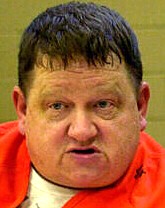
John Richard Blackwelder
Murderer Russell Ellwood
Murderer · USA · 1991
Russell Ellwood was a former taxi driver. Authorities suspected him of killing…
20 victims
Russell Ellwood
Murderer · USA · 1991
Russell Ellwood was a former taxi driver. Authorities suspected him of killing…
20 victims
 Robert Martines Perez
Murderer · USA · 1994
Name: Robert Martines Perez · Other name used in proceedings: Robert Martinez P…
15 victims
Robert Martines Perez
Murderer · USA · 1994
Name: Robert Martines Perez · Other name used in proceedings: Robert Martinez P…
15 victims
 Billy Frank Vickers
Murderer · USA · 1993
Billy Frank Vickers Vickers was executed by lethal injection in Texas on Januar…
14 victims
Billy Frank Vickers
Murderer · USA · 1993
Billy Frank Vickers Vickers was executed by lethal injection in Texas on Januar…
14 victims
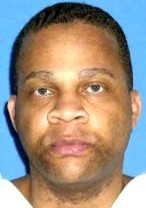 William Wyatt
Murderer · USA · 1997
William Wyatt was a Black, male corrections officer who was scheduled to be exe…
1 victim
William Wyatt
Murderer · USA · 1997
William Wyatt was a Black, male corrections officer who was scheduled to be exe…
1 victim
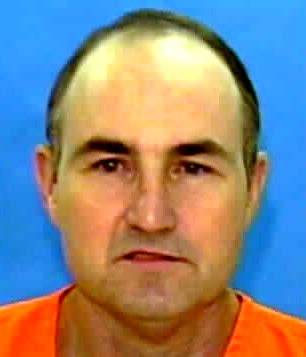 Larry Eugene Mann
Murderer · USA · 1980
Larry Eugene Mann (also known as Larry E Mann and Larry Eugene Mann) was a whit…
1 victim
Larry Eugene Mann
Murderer · USA · 1980
Larry Eugene Mann (also known as Larry E Mann and Larry Eugene Mann) was a whit…
1 victim
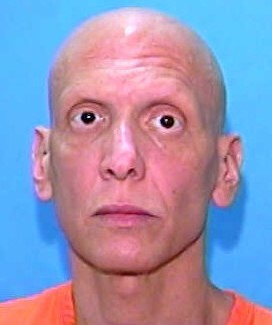 Manuel Pardo
Spree killer · USA · 1986
Manuel Pardo, Jr. was a former police officer who was convicted of nine counts…
9 victims
Manuel Pardo
Spree killer · USA · 1986
Manuel Pardo, Jr. was a former police officer who was convicted of nine counts…
9 victims
 James Duquette
Murderer · USA · 1980
James Duquette Jr. was convicted of murder and was also sentenced in connection…
2 victims
James Duquette
Murderer · USA · 1980
James Duquette Jr. was convicted of murder and was also sentenced in connection…
2 victims
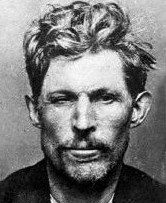 Guillaume Seznec
Murderer? · France (during a business trip from Brittany to Paris) · 1923
Guillaume Seznec was a Breton sawmill owner who was convicted of the murder of…
1 victim
Guillaume Seznec
Murderer? · France (during a business trip from Brittany to Paris) · 1923
Guillaume Seznec was a Breton sawmill owner who was convicted of the murder of…
1 victim
- Gender
- male
- Country
- USA
- Location
- Columbia County, Florida, USA
- Date of birth
- December 10, 1954
- Age at first offence
- 46
- Characteristics
- child molester, alcohol
- Victim profile
- Raymond Wigley, 39 (inmate)
- Method of murder
- Strangulation with a piece of the cord
- Date(s) of murder
- May 6, 2000
- Years active
- 2000
- Date of arrest
- Same day
- Status
-
Executed
Executed by lethal injection in Florida on May 26, 2004
Case record: John Richard Blackwelder
Background
John Richard Blackwelder was a white male inmate. He was born on December 10, 1954, and he weighed 294 pounds at the time of the Florida Department of Corrections entry. His height was 5'08'' and his hair was brown; his eyes were blue.
At the time of the murder of fellow inmate Raymond D. Wigley, Blackwelder was housed at Columbia Correctional Institution. At the time of the murder, Wigley was serving a life sentence for first degree murder.
Blackwelder was serving a life sentence following a 1998 conviction for child molestation of a 10-year-old. He had been convicted in 1975 and served time for Sexual Battery.
Blackwelder also had prior incarceration history in Florida, including multiple sexual battery offenses and related offenses. The prior incarceration history included:
- 10/31/75 SEX BATT/CARNAL INTERC. U/18
- 9/10/1979 MIAMI-DADE 16Y
- 5/1/1996 SEX BAT BY ADULT/VCTM UNDER 12
- 7/1/1998 ST. LUCIE 9701758 LIFE
- 5/1/1996 SEX BAT BY ADULT/VCTM UNDER 12(ATTEMPTED)
- 7/1/1998 ST. LUCIE 9701758 30Y
- 5/1/1996 LEWD ASLT/SEX BAT VCTM<16
- 7/1/1998 ST. LUCIE 9701758 15Y
- 5/1/1996 LEWD ASLT/SEX BAT VCTM<16 (repeated multiple times) A note stated that Blackwelder was incarcerated for the above offenses at the time of the murder of fellow inmate Raymond Wigley.
Blackwelder was identified as DC #069574.
Other details: identity, custody, and legal roles
- Current facility listed: Florida State Prison.
- Third Judicial Circuit, Columbia County, Case #00-513.
- Sentencing judge: The Honorable E. Vernon Douglas.
- Attorney, Criminal Trial: Victor Africano, Esq. (Private; Assigned by the Court).
- Attorney, Direct Appeal: W.C. McClain (Assistant Public Defender).
- Collateral Appeals: George W. Blow, III (Registry date listed in the entry as 08/06/01 in the case information block).
- Date of offense listed in the entry: 05/06/00.
- Date of sentence listed in the entry: 08/06/01.
- Commission on Capital Cases updates information regularly (as a disclaimer in the entry).
Timeline
- 05/06/00 — Blackwelder killed fellow inmate Raymond D. Wigley at Columbia Correctional Institution.
- 03/15/00 — Blackwelder pled guilty to first-degree murder (with the understanding that the State would seek the death penalty).
- 05/11/00 — The defendant was indicted on: Count I: First-Degree Murder.
- 06/13/01 — Upon advisory sentencing, the jury voted for imposition of the death penalty by a 12 to 0 majority.
- 08/06/01 — Blackwelder was sentenced: Count I: First-Degree Murder — Death.
- 09/13/01 — Appeal filed.
- 07/03/03 — The Florida Supreme Court affirmed the conviction and sentence of death.
- 07/14/03 — Blackwelder filed a motion in the State Circuit Court to shut down any future appeals, dismiss any defense attorneys assigned to his case, and waive his right to an Executive Clemency Hearing.
- 05/25/04 — Blackwelder’s execution was scheduled after a 24-hour stay; a delay was tied to an accusation later addressed by DNA evidence.
- 05/26/04 — Blackwelder was executed by lethal injection in Florida.
The offence
Blackwelder pleaded guilty to first-degree, premeditated murder of Raymond D. Wigley.
At the time of the murder, both men were inmates at Columbia Correctional Institution. In May 2000, Blackwelder and Wigley engaged in a consensual sexual encounter. Blackwelder did not want a sexual relationship with Wigley but knew Wigley would harass him for sex, so Blackwelder decided to murder him.
Blackwelder prepared for the killing by positioning several pieces of cord in accessible locations around the bunk beds in his cell.
On May 6, 2000, Wigley went to Blackwelder’s cell asking for sex. Blackwelder feigned agreement so that Wigley would consent to being tied to the bed. Wigley disrobed and permitted Blackwelder to tie his hands and feet to the bed and to tie a hand towel over his mouth. Blackwelder knelt on Wigley’s mid-back, reached for one of the hidden cords, and strangled him.
Wigley pleaded with Blackwelder “not to do this” and stated, “I'll do anything.” The Florida Supreme Court’s per curiam summary stated that it took ten minutes for Wigley to die.
Blackwelder then turned himself in and alerted prison authorities about the murder. He advised officers that there was “a dead one in there.”
During the criminal investigation evidence described:
- The body arrived completely nude with a white cloth tied around the neck.
- The crime scene included multiple strips of cloth attached to the bottom of the bunk, and one strip located underneath the mattress.
- The cause of death was strangulation as the result of a homicide, with hemorrhages in both eyes consistent with strangulation.
- Floro opined that a furrow around the neck had abrasions or scratches caused by Wigley’s attempt to loosen the ligature.
Investigation and evidence
A correctional officer supervisor, Sergeant Timothy Saxon, was approached by Blackwelder, who said, “You can go ahead and take me to jail, Sarge. I just killed a fagot in my cell.”
Saxon had another correctional officer handcuff Blackwelder, and he proceeded to Blackwelder’s cell. In the cell, Saxon found the body of Thomas Wigley face down on the bottom bunk partially covered with a sheet.
Shawn Yao, a crime laboratory analyst, examined and photographed the crime scene and introduced photographs of the cell, the bed, and the body as State’s Exhibits 13-21. Yao took cloth strips into evidence as State’s Exhibits 24-26.
Dr. Bonifacio Floro, a forensic pathologist, performed the autopsy on Wigley and testified to findings consistent with strangulation.
Jack Schenck, a correctional officer performing the criminal investigation, interviewed Blackwelder multiple times. Blackwelder provided statements, including:
- Soon after the homicide, Blackwelder advised that he killed Wigley to stop Wigley from sexually harassing him.
- Blackwelder initially described that the relationship started as friendship and that there was no sex involved at first. He described that Wigley kept asking for oral sex, and that Blackwelder agreed once but did not want sexual acts thereafter.
- Blackwelder described being sexually harassed by other inmates for four months and seeking psychological help. He described receiving a disciplinary report for making a verbal threat and deciding he would deal with the problem himself rather than seek help.
A string used in the killing had been in place under the mattress for a couple of days, and Blackwelder said he prepositioned it because he believed Wigley would not stop bothering him.
Blackwelder denied that he killed for a watch and denied that he took it except that Wigley did not need it anymore. The investigation included that Blackwelder took Wigley’s watch after killing him.
The State introduced letters Blackwelder wrote after the homicide. The letters were addressed to the State Attorney, FDLE, the Governor, and a newspaper. The letters included:
- Letters to the State Attorney including a riddle about the watch and urging the State Attorney to get him to trial.
- A letter to the FDLE urging that the State Attorney be pressured to get Blackwelder to trial or there would be other murders in the prison system.
- A letter to a named FDLE agent referencing misinformation Blackwelder sent about the Adam Walsh case and stating he had a dream about “a crop duster spraying a purple haze over a crowded NFL football game in Florida.”
- Three letters to the Governor: one requesting a pardon to be released to seek revenge on eleven others in the community, one relating the crop duster dream, and a third admitting he killed Wigley and planned the murder for days.
- A letter sent to the Ft. Pierce News Tribune that was described as in substance the same as the letter to the Governor.
In the letter admitting he planned the murder, Blackwelder explained that he had a life sentence with no chance of release and described it as a license to kill. He stated there was no advantage or disadvantage to kill inmates or staff when you had a life sentence, and he indicated that other inmates with life sentences would show whether there was reason not to kill in prison. The letter stated he had vowed to kill 13 people who caused him to be imprisoned for life and would kill inmates or staff as substitutes, and it mentioned the crop duster dream. He also stated that he prayed for the death penalty and that if he received death he would not kill anyone else.
The State introduced, via a stipulation, Blackwelder’s prior convictions: sexual battery on a child under 12; attempted sexual battery on a child under 12; and five counts of lewd and lascivious or indecent act on a child under 16.
Arrest and custody events
Blackwelder immediately sought to enter death-row status after the homicide by pleading guilty to first-degree murder. The record described him as turning himself in and reporting the killing to correctional staff.
Trial and plea
Blackwelder pled guilty to the first-degree, premeditated murder of Raymond D. Wigley with the understanding that the State would seek the death penalty. The prosecutor related the factual basis for the plea, and the defense agreed that the State could establish a prima facie case.
The prosecutor’s factual basis statement included:
“Basically, the state stands ready to prove that the defendant, in his cell at Columbia Correctional Institution here in Columbia County, tied inmate Raymond Wigley in a four-point restraints into -- on the bottom bunk that was in that cell, that he then took a ligature and tied it around the neck of 6 Mr. Wigley and compressed that ligature to the point that he killed Mr. Wigley by strangulation. At that point he then left the cell, leaving the body in the cell, went and reported his conduct to a correctional officer. The FDLE and the Office of the Inspector General were summoned to the scene. Since that time Mr. Blackwelder has given a full and complete taped statement in which he admitted to premeditating the murder of Mr. Wigley and describing how he committed that murder. That complete taped statement was made after a full and complete advisal of his Miranda rights. A transcript of that statement is in the court file. Since that time Mr. Blackwelder has written a number of letters which contain what the State contends to be admissions to the -- to the -- to the homicide. And that’s basically the evidence that the state stands ready to prove to prove the premeditated homicide. When we get to the penalty phase, we’ll be offering a tremendous amount of additional evidence as it relates to the circumstances of the homicide. But that’s enough to prove the premeditated murder. (R4:746-747)”
Circuit Judge E. Vernon Douglas accepted the plea and scheduled the case for a penalty phase trial. The court ordered a psychological examination and a presentence investigation at the request of the defense.
A jury was impaneled for the penalty phase. The jury recommended a death sentence with a 12 to 0 vote, and the trial court imposed a sentence of death.
Sentencing
The trial court found four aggravating circumstances as proven:
- The homicide was committed while Blackwelder was under a sentence of imprisonment.
- Blackwelder had been previously convicted of a violent felony.
- The homicide was especially heinous, atrocious, or cruel.
- The homicide was committed in a cold, calculated and premeditated manner.
The trial court addressed mitigation, including both statutory and nonstatutory mitigation.
Statutory mitigating factors discussed:
- Blackwelder was under the influence of extreme mental or emotional disturbance at the time of the crime; the factor was given little weight based on a finding that Blackwelder suffered antisocial personality disorder.
- The factor that the victim was a participant in the crime was rejected.
- Blackwelder acted under extreme duress or substantial domination of another; the factor was rejected.
- Blackwelder’s capacity to appreciate the criminality of his conduct or to conform his conduct to legal requirements was substantially impaired; the factor was found and given little weight based on antisocial personality disorder.
Nonstatutory mitigating factors discussed:
- Blackwelder’s relationship with his parents; found and given little weight.
- Blackwelder’s history of sexual abuse as a child; found and given little weight.
- Blackwelder’s history as friendly, loving and helpful to friends and family; rejected.
- Blackwelder’s mental impairments; found and given little weight based on antisocial personality disorder.
The sentencing order gave slight weight to each mitigating circumstance and found that any aggravator, standing alone, would outweigh all mitigation.
Appeals
The Florida Supreme Court case was listed as: Blackwelder v. State, 851 So. 2d 650 (Fla. 2003), FSC #SC01-2058.
On July 3, 2003, the Florida Supreme Court affirmed the conviction and sentence of death.
The Florida Supreme Court addressed claims in the direct appeal. Blackwelder argued that the jury’s advisory sentence was not the product of adversarial testing because he actively sought jurors with pro-death penalty views. He also argued that the trial court erred because it copied portions of the State’s sentencing memorandum nearly verbatim in its sentencing order. The Florida Supreme Court found these claims procedurally barred because Blackwelder did not preserve them for appeal and also found them lacking in merit.
Blackwelder also argued that the prior violent felony aggravator should have been stricken because his prior crimes were not violent per se. The Florida Supreme Court noted that Blackwelder was convicted of capital sexual battery and attempted capital sexual battery, which the court described as unarguably crimes of violence.
Blackwelder further argued that Florida’s capital sentencing scheme was unconstitutional under Ring v. Arizona, specifically alleging that each proposed aggravating circumstance should have been submitted in the indictment, presented to a jury, and found by individual unanimous verdicts. The Florida Supreme Court denied relief and affirmed.
The Florida Supreme Court also noted that the conviction was supported by sufficient evidence and withstood a proportionality review, even though Blackwelder did not raise those issues.
After the Florida Supreme Court affirmed on July 3, 2003, Blackwelder filed a motion on July 14, 2003, to shut down any future appeals, dismiss any defense attorneys assigned, and waive his right to an Executive Clemency Hearing.
Blackwelder also filed motions relating to ending the fight against his execution; the later execution delay followed a 24-hour stay after an accusation that was addressed by DNA evidence.
Outcome
The Florida Supreme Court affirmed Blackwelder’s sentence of death and conviction.
Blackwelder’s execution proceeded by lethal injection in Florida on May 26, 2004 at Florida State Prison in Raiford.
The execution occurred after a 24-hour delay. The delay was described as being connected to an accusation that another inmate had confessed to killing Wigley, and the Florida Department of Law Enforcement used DNA evidence to disprove the letter to the state attorney general’s office. Blackwelder was executed after the stay was lifted.
Blackwelder was described as having received a lethal injection and being pronounced dead at 6:13 p.m. EDT.
The entry also stated that Blackwelder was the 59th murderer executed in Florida since 1976.
Aftermath: last meal, last statement, and final words
Blackwelder’s final meal was pizza with cheese, onions, green peppers, ground beef and mushrooms; a salad with lettuce, tomatoes, green peppers, cheese and ranch dressing with a coke.
Blackwelder’s final words were:
“I'm glad I get to go home. I'm proud to be a Christian, and I thank Jesus for saving me and allowing me to go home. Amen.”
Additional factual statements and reported positions included in the record
In media interviews described within the case text, Blackwelder said he killed Wigley to ensure he would get the death penalty because he could not stand the idea of spending his life in prison without parole and he could not commit suicide.
Blackwelder said he manipulated the state, killing Wigley to ensure he would get the death penalty because he could not stand the idea of spending his life in prison without parole, but could not commit suicide.
Blackwelder made statements expressing his desire for execution and opposition to being left alive in prison. In one interview description, he stated, “I will be glad tomorrow to lay on the gurney and tomorrow you (Gov. Jeb Bush) will get another kill.”
Blackwelder apologized for the murder but stated it was the only way to manipulate the state to get the death penalty. He stated, “I am sorry for killing Wigley, but to get what I wanted I had to,” and also stated in a separate reported remark, “I am sorry for what I've done; now I have to pay the price.”
In relation to his last meal delay, the text included a reported account that Blackwelder chuckled at the delay and was not given a second last meal.
The text included reported psychologist claims that Blackwelder had been diagnosed as having impulse control disorder, anti-social personality disorder, and pedophilia, and it included a statement that Blackwelder claimed he was innocent of sexually assaulting a 10-year-old boy in St. Lucie County.
Legal docket references included in the record
Florida Supreme Court briefs and opinion docket number: #SC01-2058.
Spotted an error, or have more information about this case?