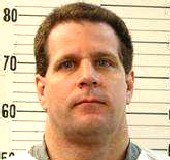
John D. Hall
Murderer Brian Kevin Rosenfeld
Murderer · USA · 1985
Brian Kevin Rosenfeld Brian Kevin Rosenfeld was sentenced to three concurrent l…
23 victims
Brian Kevin Rosenfeld
Murderer · USA · 1985
Brian Kevin Rosenfeld Brian Kevin Rosenfeld was sentenced to three concurrent l…
23 victims
 Russell Ellwood
Murderer · USA · 1991
Russell Ellwood was a former taxi driver. Authorities suspected him of killing…
20 victims
Russell Ellwood
Murderer · USA · 1991
Russell Ellwood was a former taxi driver. Authorities suspected him of killing…
20 victims
 Robert Martines Perez
Murderer · USA · 1994
Name: Robert Martines Perez · Other name used in proceedings: Robert Martinez P…
15 victims
Robert Martines Perez
Murderer · USA · 1994
Name: Robert Martines Perez · Other name used in proceedings: Robert Martinez P…
15 victims
 Billy Frank Vickers
Murderer · USA · 1993
Billy Frank Vickers Vickers was executed by lethal injection in Texas on Januar…
14 victims
Billy Frank Vickers
Murderer · USA · 1993
Billy Frank Vickers Vickers was executed by lethal injection in Texas on Januar…
14 victims
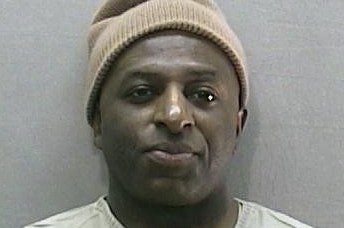 Ambrose Harris
Murderer · USA · 1992
Ambrose Harris was sentenced to death by lethal injection in 1996 after kidnapp…
2 victims
Ambrose Harris
Murderer · USA · 1992
Ambrose Harris was sentenced to death by lethal injection in 1996 after kidnapp…
2 victims
 Henri-Antoine Charrière
Homicide · France · 1930
Henri-Antoine Charrière was born in Ardèche, France. He had two older sisters.…
1 victim
Henri-Antoine Charrière
Homicide · France · 1930
Henri-Antoine Charrière was born in Ardèche, France. He had two older sisters.…
1 victim
 George Marecek
Murderer · USA · 1991
George Marecek was convicted of second-degree murder following a 2001 six-day t…
1 victim
George Marecek
Murderer · USA · 1991
George Marecek was convicted of second-degree murder following a 2001 six-day t…
1 victim
 Darrell Glenn Carr
Murderer · 1991
Darrell Glenn Carr was sentenced to death on March 10, 1993.
1 victim
Darrell Glenn Carr
Murderer · 1991
Darrell Glenn Carr was sentenced to death on March 10, 1993.
1 victim
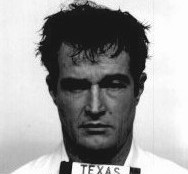 Thomas Andy Barefoot
Murderer · USA · 1978
Thomas Andy Barefoot (offender; also identified as Thomas Barefoot #621) was ex…
1 victim
Thomas Andy Barefoot
Murderer · USA · 1978
Thomas Andy Barefoot (offender; also identified as Thomas Barefoot #621) was ex…
1 victim
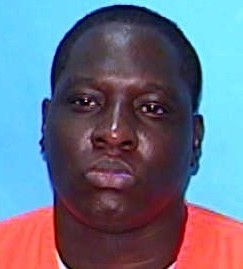 David Lee Thomas
Murderer · USA · 1990
David Lee Thomas was sentenced to death on March 15, 1991 in Twentieth Judicial…
1 victim
David Lee Thomas
Murderer · USA · 1990
David Lee Thomas was sentenced to death on March 15, 1991 in Twentieth Judicial…
1 victim
- Gender
- male
- Country
- USA
- Location
- Madison County, Tennessee, USA
- Date of birth
- August 5, 1964
- Age at first offence
- 30
- Characteristics
- parricide, abuse, alcohol, domestic violence
- Victim profile
- Billie Jo Hall (his estranged wife)
- Method of murder
- Strangulation and drowning
- Date(s) of murder
- July 29, 1994
- Years active
- 1994
- Date of arrest
- Next day
- Status
-
Sentenced to death
Sentenced to death on February 5, 1997
Case overview
John D. Hall was sentenced to death for the murder of his estranged wife, Billie Jo Hall, in February 1997 in Jackson.
The petitioner and the victim were married. The victim had two daughters, Jennifer and Cynthia, from a previous relationship. The couple had two more daughters, Stephanie and Jessica. The youngest, Jessica, suffered from cerebral palsy. In 1994, the victim and the petitioner began having marital problems and were living separately.
Timeline
- July 29, 1994 — On the night of July 29, 1994, the petitioner went to the victim's house to discuss a reconciliation.
- February 5, 1997 — Hall was sentenced to death.
The offence
On the night of July 29, 1994, the petitioner went to the victim's house to discuss a reconciliation. He brought a $ 25.00 money order made out to the victim as a payment toward child support.
Prior to entering the house, the petitioner disconnected the telephone line at the utility box on the outside wall of the house. When the victim answered the door, the petitioner pushed his way into the room where she and the children were watching television. The petitioner told the girls to go to bed. When they did not immediately obey his order, the petitioner tipped over the chair in which the victim was sitting. The petitioner and the victim went back into her bedroom.
The children, who had gone into their bedrooms, could hear "things slamming around" and their parents yelling at each another. When the children tried to enter the room, they found the door blocked. The three oldest children, Jennifer, Cynthia and Stephanie, persisted in their efforts to get into the room and finally succeeded. They attempted to stop the petitioner from hurting their mother. Cynthia jumped on the petitioner's back and bit him. This did not stop the petitioner's attack.
When the victim told the children to go to a neighbor's house, the petitioner told them that if they went for help, "he was going to kill Mama." He also told the victim, a college student, that she would never live to graduate. Cynthia and Stephanie tried to use the telephone to call for help, but they discovered the telephones would not work. At that point, they went to a neighbor's house where they called 9-1-1. Jennifer, the oldest child, was the last to leave the house, carrying her sister Jessica. Before she left, she saw her mother and the petitioner leave the bedroom and go outside. She watched the petitioner drag her mother, "kicking and screaming," to the small pool in the back yard.
Dr. O'Brien Clay Smith, the forensic pathologist who performed the autopsy, testified that the primary cause of death was asphyxia resulting from a combination of manual strangulation and drowning. He could not say with certainty that either strangulation or drowning was the exclusive cause of death.
Evidence supporting strangling as a contributing cause of death included bruising on the left and right sides of the victim's neck, hemorrhaging in the neck muscles around the hyoid bone in the neck, and bleeding in the thyroid gland, which indicated that extensive compression had been applied to the neck.
Evidence supporting drowning as a contributing cause of death was water found in both the victim's stomach and in her bloodstream. Before dying, the victim sustained at least eighty-three separate wounds, including several blows to the head, a fractured nose, multiple lacerations, and bruises and abrasions to the chest, abdomen, genitals, arms, legs and back. Abrasions on the victim's back were consistent with having been dragged across pavement.
Dr. Smith described some of the injuries to the victim's arms, legs and hands as defensive wounds. He characterized the injuries to the neck, face and head as intentional "target" wounds. Except for the physical trauma associated with the strangulation, none of the injuries would have proven fatal.
Chris Dutton, who was confined in a cell next to the petitioner, testified that while both men were incarcerated, the petitioner confided in him about his wife's murder. When describing what happened on the night of the murder, the petitioner told Dutton that he had tried to talk with the victim about reconciling but "all she was interested in was the money." When she refused to consider his plea for reconciliation and demanded that he leave, "his temper got the best of him and he began to strike her."
According to Dutton, the petitioner had determined, even before he arrived at his wife's house, "to make her feel as he did. He wanted her to suffer as he did, feel the helplessness that he was feeling because she took his world away from him." The petitioner told Dutton that he hit his wife in the head until he panicked, threw her in the swimming pool, then re-entered the house, took the car keys, and drove away in the victim's minivan.
On cross-examination, Dutton admitted that the petitioner told him that he was depressed and had been drinking since he telephoned his wife earlier that day. The petitioner also told Dutton that he was very concerned about the welfare of his two daughters, especially Jessica. The petitioner explained that he disconnected the telephone line because when he and his wife argued in the past, she had called the police.
Investigation
The first officer to arrive on the scene was Chief Jerry Bingham of the Henderson County Sheriff's Department. Upon his arrival, he found the victim's body floating face down in the water. He immediately called Emergency Medical Services and a Tennessee Bureau of Investigation (TBI) investigator.
TBI Agent Brian Byrd arrived on the scene shortly after midnight. Agent Byrd entered the house and found the master bedroom in disarray. Bloodstains marked the bed, a counter top, and a wedding dress. The telephones inside the house were off their hooks. A $ 25.00 money order made out to the victim and dated the day of the murder was found inside the house.
No weapons were found. A trail of drag marks and bloodstains led from the master bedroom, out the front door, over the driveway, past the sandbox, and down to the pool in the back yard. The victim's t-shirt was lying beside the pool. Clumps of grass ripped from the ground floated in the blood-tinged water of the pool.
Outside the front door of the house the telephone junction box was opened, and the telephone line was disconnected. The grass and weeds near this box were matted down.
Arrest
At trial, the petitioner was the one referred to as the defendant; he was arrested prior to Dr. Lynn Donna Zager interviewing him several times after his arrest.
Trial
Guilt phase
Two witnesses testified on the petitioner's behalf during the guilt phase of trial.
Dr. Lynn Donna Zager, a clinical psychologist, interviewed the petitioner several times after his arrest. She diagnosed him as depressed and suffering from alcohol dependence. In addition, she noted personality characteristics of paranoia and dependency. In Dr. Zager's opinion, at the time of the killing, the petitioner suffered from depression and alcohol intoxication. These factors were compounded by his personality characteristics and various psycho-social stressors, including a sick child, loss of employment with the resulting financial problems, his impending divorce, and the terminal illness of a brother. Dr. Zager testified that, in her opinion, the petitioner acted in an impulsive manner in killing his wife, rather than pursuant to a preconceived plan.
On cross-examination, Dr. Zager admitted that she based her opinion concerning the petitioner's intoxicated state on statements he made to her and statements of other witnesses who saw him drinking on the day of the murder. She agreed that no one she interviewed remarked on whether the petitioner exhibited any of the typical physical signs of intoxication, such as slurred speech or lack of coordination.
Randy Helms, the petitioner's prior employer, also testified on behalf of the petitioner. Mr. Helms said that before the killing, the petitioner had been severely depressed because of his family problems.
The petitioner attempted to call his sister, Sheryl Arbogast, to testify regarding his state of mind at the time of the murder, but she had no first-hand knowledge of the petitioner's state of mind on the night of the murder. In fact, Ms. Arbogast admitted she had not spoken to the petitioner for several months before the murder. Her testimony regarding the petitioner's state of mind was based on a conversation she had with her brother, Jeff Hall, since deceased, on the day of the murder. The trial court would not permit this hearsay testimony to be admitted before the jury.
At the conclusion of the evidence, the jury found the petitioner guilty of first degree premeditated murder.
Sentencing phase
During the sentencing phase the state recalled Dr. Smith to testify in more detail concerning the extent of the victim's injuries. The state introduced photographs of the injuries taken at the autopsy to illustrate Dr. Smith's testimony. These photographs depicted the numerous external wounds the petitioner inflicted while struggling with the victim.
The petitioner called Dr. Zager and Dr. Joe Mount, a psychological examiner who counseled the petitioner at Riverbend Maximum Security Institution. Both described the petitioner as depressed, remorseful, suicidal, and extremely concerned about his children. Dr. Mount testified that the petitioner had been diagnosed as suffering from an adjustment disorder with mixed emotional features (anxiety and depression) and "substance abuse of dependence by history."
Randy Helms also testified again. He described the petitioner as a good, dependable employee and told how the petitioner had cared for his children when he brought them to work with him. Helms stated that the petitioner loved his wife and children and had hoped to reconcile with the victim.
The petitioner also presented his three sisters and his mother to recount the history of the petitioner and his family. The petitioner was the youngest of seven children. His father, an alcoholic, physically and verbally abused his wife until he died from a heart attack in 1974 when the petitioner was ten. The petitioner's father denied that the petitioner was his son and snubbed the petitioner. The witnesses' descriptions of the fights between the petitioner's parents eerily paralleled the petitioner's final confrontation with his own wife.
All of the petitioner's relatives described him as a good father who loved his children.
Sentencing
Hall was sentenced to death on February 5, 1997.
Appeals
The Court of Criminal Appeals of Tennessee case material referred to the direct appeal in which the supreme court noted facts developed at the petitioner's trial.
Outcome
Hall received a death sentence for the murder of his estranged wife, Billie Jo Hall.
Aftermath
No aftermath details beyond the appellate reference and sentencing date were provided in the available text.
Other details
- Billie Jo Hall was described as a college student.
- The victim had two daughters from a previous relationship: Jennifer and Cynthia; and two more daughters with Hall: Stephanie and Jessica.
- Jessica had cerebral palsy.
- The petitioner disconnected the telephone line at the utility box on the outside wall of the house.
- Cynthia and Stephanie attempted to use the telephone to call for help but discovered the telephones would not work.
- Cynthia jumped on the petitioner's back and bit him during the attack.
- No weapons were found.
Spotted an error, or have more information about this case?