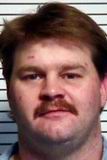
Donald Wackerly
Murderer Russell Ellwood
Murderer · USA · 1991
Russell Ellwood was a former taxi driver. Authorities suspected him of killing…
20 victims
Russell Ellwood
Murderer · USA · 1991
Russell Ellwood was a former taxi driver. Authorities suspected him of killing…
20 victims
 Robert Martines Perez
Murderer · USA · 1994
Name: Robert Martines Perez · Other name used in proceedings: Robert Martinez P…
15 victims
Robert Martines Perez
Murderer · USA · 1994
Name: Robert Martines Perez · Other name used in proceedings: Robert Martinez P…
15 victims
 Billy Frank Vickers
Murderer · USA · 1993
Billy Frank Vickers Vickers was executed by lethal injection in Texas on Januar…
14 victims
Billy Frank Vickers
Murderer · USA · 1993
Billy Frank Vickers Vickers was executed by lethal injection in Texas on Januar…
14 victims
 Christiana Edmunds
Murderer · United Kingdom · 1871
Christiana Edmunds (3 October 1828–1907) was an Englishwoman known as The Choco…
1 victim
Christiana Edmunds
Murderer · United Kingdom · 1871
Christiana Edmunds (3 October 1828–1907) was an Englishwoman known as The Choco…
1 victim
 Ralph E. Davis
Murderer · USA · 1986
Ralph E. Davis was the estranged husband of Susan Davis. · Susan Davis was the…
1 victim
Ralph E. Davis
Murderer · USA · 1986
Ralph E. Davis was the estranged husband of Susan Davis. · Susan Davis was the…
1 victim
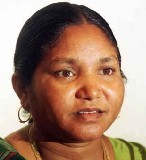 Phoolan Devi
Murderer · India · 1981
Phoolan Devi was shot dead by three masked gunmen outside her Delhi bungalow on…
20 victims
Phoolan Devi
Murderer · India · 1981
Phoolan Devi was shot dead by three masked gunmen outside her Delhi bungalow on…
20 victims
 Cindy Lou Beck
Murderer · USA · 2010
Cindy Lou Beck was 47 at the time of additional charges in Marion County. She w…
2 victims
Cindy Lou Beck
Murderer · USA · 2010
Cindy Lou Beck was 47 at the time of additional charges in Marion County. She w…
2 victims
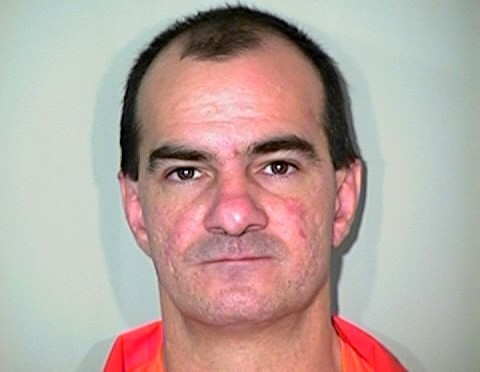 Phillip Bocharski
Murderer · USA · 1995
Phillip Bocharski was convicted in Yavapai County of burglary in the first degr…
1 victim
Phillip Bocharski
Murderer · USA · 1995
Phillip Bocharski was convicted in Yavapai County of burglary in the first degr…
1 victim
- Gender
- male
- Country
- USA
- Location
- Sequoyah County, Oklahoma, USA
- Date of birth
- October 8, 1969
- Age at first offence
- 27
- Characteristics
- robbery, drugs
- Victim profile
- Pan Sayakhoummane (male, 51)
- Method of murder
- Shooting (.22 caliber rifle)
- Date(s) of murder
- September 7, 1996
- Years active
- 1996
- Date of arrest
- 3 months later
- Status
-
Executed
Executed by lethal injection in Oklahoma on October 14, 2010
Case details
Donald Wackerly was executed by lethal injection in Oklahoma on October 14, 2010.
Background
Donald Ray Wackerly ODOC# 264098 was described as a Sequoyah County death row inmate. His birth date was given as 10/08/1969. He converted to Buddhism in 2007.
He was convicted of first-degree murder and first-degree robbery in a case arising from the September 7, 1996, murder of Pan Sayakhoummane, 51, during a robbery. His execution was set by the Oklahoma Court of Criminal Appeals for October 14, 2010.
The offence
On the afternoon of September 7, 1996, Donald Wackerly and his wife Michelle Wackerly drove to a lock and dam area near Muldrow. They were looking for a person to rob and kill. The preceding night, Wackerly told his wife that they needed money and that he was going to do “whatever it took” to get it. As he said this, Wackerly was wearing latex gloves and loading his rifle.
When they drove around the following afternoon, they saw a blue Toyota pickup parked by a levy and an Asian man fishing on the other side of the levy. Wackerly parked his Jeep by the pickup and Michelle got out and walked around to look for other people in the area. Seeing none, she approached Pan Sayakhoummane and spoke with him for about five minutes, then returned to the vehicles. After forty-five minutes, Sayakhoummane returned over the levy carrying his fishing gear.
Wackerly raised the hood of his Jeep and asked if Sayakhoummane had jumper cables to give him a jump. Michelle knelt down behind the Jeep. She heard seven or eight gun shots and a thump. She walked back around the Jeep and saw that Sayakhoummane was in the bed of his pickup and that Wackerly was trying to pull a fishing pole out from under him. She heard Sayakhoummane still trying to breathe. Wackerly drove Sayakhoummane’s truck to another location and drove it into the water. Along the way, Wackerly threw some of Sayakhoummane’s fishing poles into a wooded area. Wackerly kept the reels and a tackle box.
Wackerly drove the victim’s pickup, with Sayakhoummane’s body lying in its bed, into the river, and the truck’s bumper caught on the river bed so the truck remained only partially submerged. Finished with these tasks, Wackerly returned to Michelle and the couple proceeded to a Sonic Drive-In for dinner.
Later that night, Wackerly sifted through the contents of Sayakhoummane’s wallet and cut up identity cards, placed the shredded cards in a ziplock bag, and threw them away. He also threw away the wallet. He stashed the stolen tackle box and fishing reels in a spare room. Eventually, Wackerly sold the reels to a local pawn shop for sixty dollars.
Michelle testified that after they parked by Sayakhoummane’s vehicle and after determining no one else was around, they waited until he returned from fishing. She testified that after hearing seven or eight gunshots, when she stood up, Sayakhoummane was on the ground and Wackerly was trying to pull a fishing pole from underneath the body. She also testified that Wackerly put Sayakhoummane’s body in the back of his pickup, removed the reels from the fishing poles (throwing the poles in a wooded area), took the tackle box, and then drove the pickup into the river.
The jury found the existence of aggravating circumstances that included that the murder was committed for the purpose of avoiding or preventing lawful arrest or prosecution, and that there was a probability that Wackerly would commit criminal acts of violence that would constitute a continuing threat to society.
Investigation
Around 12:30 a.m. on September 8, 1996, Dennis Butler and his nephew Rodney were four-wheeling near a dam on the Arkansas River. They came upon a truck partially submerged in the water and found a body lying in the truck bed. They returned to Rodney’s house and called the sheriff’s department to report what they had seen. Dennis and Rodney escorted law enforcement officers to the truck, where subsequent investigation revealed that Pan Sayakhoummane had been shot and was dead in the bed of the truck.
The investigation led to no suspects until several months later.
In December 1996, Michelle Wackerly, then estranged from Wackerly, met with OSBI agents Franchini and Page along with her attorney. Michelle told the OSBI agents what had happened and took agents to where the murder had occurred. Pursuant to Michelle’s information, agents retrieved fishing reels from Rocky’s Pawn Shop and the owner confirmed that Wackerly had pawned the reels.
Wackerly’s apartment was searched, and the search revealed, among other things, a .22 rifle, a box of ammunition with some bullets missing, some latex gloves, and the victim’s tackle box. Michelle also directed agents to the fishing poles that Wackerly had thrown from the victim’s truck into the woods.
In a subsequent federal habeas discussion, it was stated that agents also searched Wackerly’s apartment and found the victim’s tackle box, a pair of latex gloves, a .22 rifle, and a box of ammunition with some bullets missing, and that the weapon and ammunition were consistent with a bullet removed from Sayakhoummane’s body.
Arrest
Wackerly was not arrested until about three months later. He was arrested after Michelle Wackerly went to the Oklahoma State Bureau of Investigation and described the events surrounding the victim’s murder and the theft of his tackle box and other items that were later pawned.
Michelle was granted immunity from prosecution and testified against Wackerly at his murder trial.
Trial
Charges and verdicts
Wackerly was charged with first-degree murder and robbery.
After a jury trial in the District Court of Sequoyah County before the Honorable John Garrett, the jury convicted Wackerly of first-degree murder and first-degree robbery.
The trial included a first stage and a second stage. As to the count of first-degree murder, the State filed a Bill of Particulars alleging two aggravating circumstances:
- that the murder was committed for the purpose of avoiding or preventing lawful arrest or prosecution; and
- the existence of a probability that Wackerly would commit criminal acts of violence that would constitute a continuing threat to society.
The jury found the existence of each aggravating circumstance and assessed punishment at death on the first-degree murder conviction. The jury assessed punishment at life imprisonment on the first-degree robbery conviction. The trial court sentenced accordingly.
Witness testimony and evidence
Michelle Wackerly testified about statements Wackerly made to her the night before the murder concerning his intent to kill someone and statements made the following day around the time that the murder took place. She testified with immunity as an accomplice.
Curtis Jones testified that Wackerly confessed to him that Wackerly was responsible for the murder: Wackerly told Jones that “he was the one that did it.”
A pawn shop owner testified that Wackerly was the man who pawned fishing reels identified as the reels stolen from Sayakhoummane shortly after he was murdered.
Evidence seized from Wackerly’s apartment included latex gloves, a .22-caliber rifle and ammunition, consistent with a bullet retrieved from Sayakhoummane’s body, and Sayakhoummane’s tackle box.
The jury also heard evidence related to a separate robbery of a convenience store in Webber Falls, Oklahoma, nine days after the murder. Michelle stood guard at the store’s entrance while Wackerly, wearing a hunting mask and carrying a pistol, ordered the cashier to give him money. When the cashier declined, Wackerly held his pistol within inches of the cashier’s forehead and repeated his demand. When the cashier complied, Wackerly heard banging from the back of the store, turned back, pointed his gun at the cashier, shouted “I'll kill both of you,” and sprinted away.
Procedural rulings and appellate issues described in the case record
During trial, certain voir dire proceedings involving peremptory challenges were held in chambers and off the record. Appellant argued that the incomplete record required reversal.
Appellant also argued that the trial court allowed the jury to separate after deliberations commenced, and the appellate court discussed waiver where counsel for both sides was present.
Appellant argued that statements made to his wife were privileged marital communications. The trial court found Michelle Wackerly was an accomplice and instructed that her testimony required corroboration.
The record included discussion of suppression issues regarding the search warrant. It addressed omissions allegedly made in an affidavit, including omissions about varying accounts of the informant’s recollection about the location of the gun, omission of that the informant had given information in exchange for complete immunity from prosecution, and omission of the informant’s veracity not yet being fully established at the time the warrant was issued. The appellate court found these omissions were not material to probable cause. It also addressed seizure of latex gloves under the “plain view” doctrine.
The appellate discussion also included that the jury allowed to separate during a brief break after the case was submitted, and counsel did not object at that time.
Appellant raised issues about whether jurors who might automatically impose death were removed for cause and whether individual voir dire should have been conducted. Appellant also raised issues about ineffective assistance of counsel under Strickland v. Washington.
Sentencing
During the penalty phase, the State argued two statutory aggravating circumstances supported eligibility for death: avoiding lawful arrest or prosecution, and probability of future violent criminal acts posing a continuing threat to society. The State also relied on the evidence presented during the guilt phase and introduced additional evidence to support the second aggravating factor, including the convenience store robbery.
Defense presented mitigation evidence through Sue Spinas, Donna Lomax, and Diana Branham.
Sue Spinas testified that Wackerly performed farm labor for her, that he was a reliable employee, and that she would hire him again.
Donna Lomax testified Wackerly was spoiled by his parents and never disciplined, and that as a result he generally seemed unprepared for life. She testified that when he was fourteen, Wackerly was the driver in a car accident in which his passenger died, and that he was never made to take responsibility for causing someone’s death.
Diana Branham testified that her seven-year-old son had a great relationship with Wackerly.
An Instruction No. 10 informed the jury that evidence had been introduced as mitigating circumstances, listing:
- The defendant did not have any significant history of prior criminal activity.
- The defendant is likely to be rehabilitated.
- The defendant's emotional/family history.
- Don Wackerly loves his family
- Don Wackerly's family loves him.
- Don Wackerly was a steady, reliable employee for Sue Spinas.
- Don Wackerly's execution would have a devastating effect upon his nephew.
The jury was also directed that it “may consider sympathy or sentiment for the defendant in deciding whether to impose the death penalty,” and that it could impose a non-capital punishment even if it found the aggravating circumstances outweighed the mitigating circumstances.
The jury sentenced Wackerly to death for murder and life imprisonment for robbery.
Appeals
Wackerly v. State, 12 P.3d 1 (Okla. Crim. App. 2000) (Direct Appeal) affirmed the convictions and sentence. The judgment and sentence were affirmed after mandatory sentence review, with findings that neither passion, prejudice, nor any other arbitrary factor contributed to sentencing, and that the evidence supported the jury’s finding of the statutory aggravating circumstances.
Wackerly v. Workman, 580 F.3d 1171 (10th Cir. 2009) (Habeas) was an appeal from denial of federal habeas relief. The Court of Appeals held that defense counsel’s allegedly deficient performance during sentencing did not constitute ineffective assistance. The judgment was affirmed.
Outcome
Wackerly’s execution date was set by the Oklahoma Court of Criminal Appeals for October 14, 2010. The execution occurred by lethal injection in Oklahoma on October 14, 2010.
Aftermath
As his execution began, Warden Randy Workman announced, “Let the execution begin.” Wackerly repeatedly recited “om mani padme hum,” described as “a mantra of ultimate compassion.” Two Buddhist monks began chanting as the execution began, and some of Wackerly’s attorneys joined the chant.
Micheal Salem, identified as one of Wackerly’s attorneys, said:
“As I understand Buddhist tradition, the good feeling and good spirit in the heart and mind at the time of death is related to their belief of a good reincarnation,”
A statement attributed to Wackerly’s sisters Donna Lomax and Dianna Davis was issued after the execution:
“We would like to thank our family and friends for their support of us, as well as Donnie, over the years. Their kind words and prayers have helped to sustain us through this very difficult process. We have been blessed beyond measure by the outpouring of love shown to our family. Donnie loved his family dearly and we certainly love him. We will miss our brother very much and pray he is in a better place. The Sayakhoummane family will forever be in our hearts and our prayers.”
Wackerly’s last meal was described as a medium stuffed-crust pizza from Pizza Hut with mushrooms, bell peppers, black olives and jalapenos, a Dr Pepper, coconut cream pie, and a chocolate shake.
A federal judge dismissed a motion seeking to delay the execution to allow a spiritual adviser inside the death chamber during the execution after an agreement with prison officials allowed the adviser to perform several rituals on Wackerly’s corpse after death.
Other details
During trial and appellate discussions, the information alleged Wackerly committed robbery by taking and carrying away from the victim “two fishing reels and an unknown amount of money.”
Wackerly maintained his innocence, including asserting that he was visiting his parents in Fort Smith when Sayakhoummane was killed and that his ex-wife implicated him after he became abusive with her.
The record included mention of Wackerly’s drug habit: Michelle testified with immunity that the day before Sayakhoummane was killed, Wackerly told her he needed money for a drug habit and would do “whatever it took” to get it, as he loaded a .22-caliber rifle, wore latex gloves, and wiped off each bullet before loading it in the chamber.

Spotted an error, or have more information about this case?