
Phoolan Devi
Murderer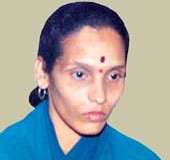 Renuka Shinde
Murderer · India · 1990
Renuka Shinde was sentenced to death on June 29, 2001. The High Court upheld th…
9 victims
Renuka Shinde
Murderer · India · 1990
Renuka Shinde was sentenced to death on June 29, 2001. The High Court upheld th…
9 victims
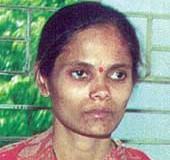 Seema Gavit
Murderer · India · 1990
Seema Mohan Gavit and her sister Renuka Shinde received death sentences. The se…
9 victims
Seema Gavit
Murderer · India · 1990
Seema Mohan Gavit and her sister Renuka Shinde received death sentences. The se…
9 victims
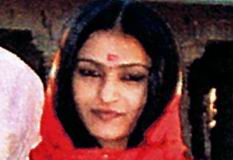 Neah Verma
Murderer · India · 2011
Name: Neah Verma Age: 23 Occupation: beautician / salesgirl for beauty products…
3 victims
Neah Verma
Murderer · India · 2011
Name: Neah Verma Age: 23 Occupation: beautician / salesgirl for beauty products…
3 victims
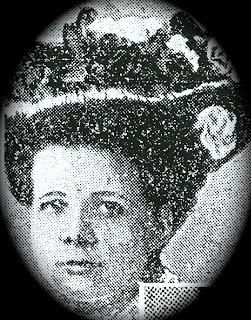 Augusta Fullam
Murderer · India · 1911
Augusta Fullam Augusta Fullam was sentenced to death in 1913. Her sentence was…
2 victims
Augusta Fullam
Murderer · India · 1911
Augusta Fullam Augusta Fullam was sentenced to death in 1913. Her sentence was…
2 victims
 Dhananjoy Chatterjee
Murderer · India · 1990
Dhananjoy Chatterjee was born in Kuludihi, West Bengal, India on August 14, 196…
1 victim
Dhananjoy Chatterjee
Murderer · India · 1990
Dhananjoy Chatterjee was born in Kuludihi, West Bengal, India on August 14, 196…
1 victim
 Umesh Reddy
Murderer · India · 1998
Umesh Reddy was sentenced to death on October 27, 2006. The Karnataka High Cour…
18 victims
Umesh Reddy
Murderer · India · 1998
Umesh Reddy was sentenced to death on October 27, 2006. The Karnataka High Cour…
18 victims
 Geronimo Rene Gutierrez
Murderer · USA · 1999
Geronimo Rene Gutierrez was born on 06/12/1977. He was listed as Hispanic and m…
1 victim
Geronimo Rene Gutierrez
Murderer · USA · 1999
Geronimo Rene Gutierrez was born on 06/12/1977. He was listed as Hispanic and m…
1 victim
 Manuel Machado Alvarez
Murderer · USA · 1987
Manuel Machado Alvarez was tried with co-defendant Belinda Denise Ross. · May 7…
1 victim
Manuel Machado Alvarez
Murderer · USA · 1987
Manuel Machado Alvarez was tried with co-defendant Belinda Denise Ross. · May 7…
1 victim
 John Richard Baltazar
Murderer · USA · 1997
John Richard Baltazar was executed in Texas. · September 27, 1997 — John Baltaz…
1 victim
John Richard Baltazar
Murderer · USA · 1997
John Richard Baltazar was executed in Texas. · September 27, 1997 — John Baltaz…
1 victim
 Miguel Angel Paredes
Murderer · USA · 2000
Miguel Angel Paredes was a Hispanic male who was 19 years old when received on…
3 victims
Miguel Angel Paredes
Murderer · USA · 2000
Miguel Angel Paredes was a Hispanic male who was 19 years old when received on…
3 victims
 Eddie Lee Sexton
Murderer · USA · 1993
November 2, 1994 — Eddie Lee Sexton was sentenced to death. · 1993 — Eddie Lee…
2 victims
Eddie Lee Sexton
Murderer · USA · 1993
November 2, 1994 — Eddie Lee Sexton was sentenced to death. · 1993 — Eddie Lee…
2 victims
 Donnie Edward Johnson
Murderer · USA · 1984
Donnie Edward Johnson was convicted in Tennessee. Connie Johnson was his wife a…
1 victim
Donnie Edward Johnson
Murderer · USA · 1984
Donnie Edward Johnson was convicted in Tennessee. Connie Johnson was his wife a…
1 victim
- Gender
- female
- Country
- India
- Location
- Behmai, District of Kanpur Dehat, Uttar Pradesh, India
- Date of birth
- August 10, 1963
- Age at first offence
- 18
- Characteristics
- abduction, abuse, rape, torture
- Victim profile
- Men (upper-caste villagers)
- Method of murder
- Shooting
- Date(s) of murder
- January 30, 1981
- Years active
- 1981
- Date of arrest
- February 1983
- Status
-
Died in custody
Shot dead by three masked gunmen outside her Delhi bungalow on 25 July 2001
Case record: Phoolan Devi
Status
Phoolan Devi was shot dead by three masked gunmen outside her Delhi bungalow on 25 July 2001.
Background
Phoolan Devi (also spelled Phulan Devi) was born on 10 August 1963 and was popularly known as the “Bandit Queen.” She was an Indian dacoit (bandit) and later a politician.
Phoolan was born into the mallah (boatmen) caste in the small village of Ghura Ka Purwa (also spelled Gorha ka Purwa) in Jalaun District, Uttar Pradesh. She was the fourth child of Devi Din and Moola.
Phoolan’s father owned an acre (0.4 hectare) of land with a huge Neem tree on it. He hoped the valuable timber of the tree would enable him to pay the dowry for his daughters’ marriages. When Phoolan was eleven years old, her grandparents passed away within a short time and her uncle declared himself the head of the family. Her uncle took over the inheritance by deceit, leaving Phoolan’s family to remain in poverty.
Her uncle had a son, Mayadin. He cut down the Neem tree and sold the wood, intending to keep the proceeds for himself. Although her father submitted with mild protest, Phoolan confronted her cousin, taunted him publicly by calling him a thief, and attacked him. With her elder sister, she staged a sit-in on his land. After violence against Phoolan—including knocking her out with a brick—she did not relent.
In an effort to rid himself of Phoolan, Mayadin arranged to have her married to a man named Putti Lal, who lived several hundred miles away. Putti Lal was in his thirties and Phoolan was eleven. Phoolan later claimed in her autobiography that he was a man of “very bad character.” Phoolan’s husband raped and mistreated her, and she ran away several times, but was returned to her husband for severe punishment. She was returned to her village because she was deemed too young to fulfill her duties as a wife. Three years later in 1977, she was returned back to Putti Lal’s home. She protested, and was returned back to her father’s home. In rural areas, a wife leaving her husband was treated as a serious taboo, and Phoolan was marked as a social outcast.
Phoolan continued to challenge her cousin Mayadin, accusing him of thievery. She took him to court for unlawfully holding her father’s land, but lost the case.
In 1979, Mayadin accused Phoolan of stealing small items from his house and arranged for her arrest by the police. During three days in jail, she was beaten and raped by the authorities. She blamed her cousin for the injustice and developed hatred for men who routinely denigrated women. After release, she and her family were further shunned.
The offence
Abduction and abuse leading to dacoity
In 1979, a gang of dacoits abducted Phoolan. Some people also said she was not kidnapped but “walked away from her life.”
The gang leader, Babu Gujjar, wanted to rape her. Phoolan was protected by Vikram Mallah, the second-in-command of the gang, who belonged to Phoolan’s caste. One night when Babu attempted to rape Phoolan, Vikram killed him and assumed gang leadership. Phoolan became Vikram’s second wife.
The gang ransacked the village where Phoolan’s husband lived. Phoolan stabbed her estranged husband and dragged him in front of the villagers. The gang left him lying almost dead by the road, with a note as a warning for older men who married young girls.
Phoolan learned how to use a rifle from Vikram and participated in gang activities across Uttar Pradesh and Madhya Pradesh. The activities included ransacking high-caste villages, kidnapping upper-caste landowners for ransom, and train robberies. After every crime, Phoolan would visit a Durga temple and thank the goddess for protection. The gang hid out in the ravines of Chambal in Dholpur.
Behmai incidents, rape, capture, and escape
Some time later, Shri Ram and Lala Ram, two upper-caste dacoit brothers belonging to the Thakur caste, returned to the gang after the killing of Vikram’s former leader. Shri Ram made sexual advances toward Phoolan, leading to tensions between Shri Ram and Vikram. Vikram made Shri Ram apologize to Phoolan. When the gang ransacked a village, Shri Ram beat and insulted the Mallahs, leading many Mallahs to leave the gang.
When Shri Ram got a dozen Thakurs to join the gang, Vikram suggested the gang be divided into two, but Shri Ram refused. Shortly afterwards, Shri Ram and other Thakur members attempted to kill Phoolan and Vikram, and Vikram managed to escape. Later, Shri Ram and other Thakur members successfully killed Vikram, abducted Phoolan, and locked her up in the Behmai village.
Phoolan was beaten and raped by several men in Behmai. After three weeks, she managed to escape with two other Mallahs from Vikram’s gang, helped by a low-caste villager. She gathered a gang of Mallahs that she led with Man Singh, a member of Vikram’s former gang.
Phoolan’s gang carried out violent robberies in north and central India, mainly targeting upper-caste people. Some people said Phoolan targeted only upper-caste people and shared the loot with lower-caste people, but Indian authorities insisted this was a myth.
Behmai massacre (shooting)
Seventeen months after her escape from Behmai, Phoolan returned to the village to take her revenge. On 14 February 1981, Phoolan and her gang marched into the Behmai village dressed as police officers. The Thakurs in the village were preparing for a wedding.
Phoolan’s gang demanded that her kidnappers be produced, along with all the valuables in the village. Details of what happened were not available, but Phoolan was said to have recognized two men who earlier had sexually assaulted her and murdered her lover.
When Phoolan’s gang failed to find all the kidnappers after an exhaustive search, she ordered her gang members to line up all the upper-caste Thakur men in the village and shoot them. The dacoits opened fire and killed twenty-two Thakur men, most of whom were not involved in her kidnapping or rape.
Later, Phoolan claimed that she herself did not kill anybody in Behmai and that all the killings were carried out by her gang members.
Later narration of the Behmai attack as described through testimony
In a detailed narration of the same event, the hamlet of Behmai was described as having about fifty families, nearly all of whom belonged to the landowning and warrior Thakur caste. A group of about twenty people dressed in police uniforms crossed the Yamuna River and entered the village. The group was led by Phoolan Devi, described as wearing a khaki coat with three silver stars of a deputy superintendent of police, blue jeans, boots with zippers, and carrying a battery-powered megaphone. A Sten gun hung from her shoulder, and bands of ammunition swept across her chest.
Phoolan Devi began to shout through the megaphone: “Listen, you guys! If you love your lives, hand over all of the cash, silver, and gold you have. And listen again! I know that Lala Ram Singh and Sri Ram Singh” — rival dacoits — “are hiding in this village. If you don’t hand them over to me, I will stick my gun into your butts and tear them apart. This is Phoolan Devi speaking. Jai Durga Mata!” (“Victory to Durga the Mother Goddess!”)
After a search of nearly an hour, her men returned to the well and had found no trace of the Ram brothers. The villagers denied having seen the two men. Phoolan then screamed through her megaphone: “You are lying!” “I will teach you to tell the truth!”
She ordered that all the young men in the village be rounded up, and some thirty were dragged to the well. She spat on them and warned them: “Unless you tell me where those bastards are, I will roast you alive.”
The men pleaded with her and swore they had never seen the brothers. They were marched in single file to the river, where they were ordered to kneel with their faces turned to the earth, and gunfire followed. Bursts of gunfire followed and the bodies of the thirty men crumpled; twenty-two were dead. The account described it as the largest dacoit massacre since the founding of modern India.
Investigation and police actions
After the Behmai massacre, there was a massive police manhunt that failed to locate Phoolan Devi.
Police recovered weapons after the 2001 shooting from an abandoned car, including two revolvers, one Webley Scott pistol, and a country-made weapon of .32-bore, along with nine empty and 15 live rounds from the abandoned car.
Arrest, detention, and surrender
Phoolan’s trial was delayed for 11 years, and she served in prison for that period.
In February 1983, Phoolan agreed to surrender to the authorities. She insisted she did not trust the Uttar Pradesh police and would only surrender to the Madhya Pradesh Police. She insisted that she would lay down her arms only before Mahatma Gandhi’s picture and the Hindu goddess Durga, not to the police.
She set four conditions:
- Affirmation of an aversion of death penalty.
- The term for other members should not exceed eight years.
- A plot of land for her reconciliation.
- Her entire family should be escorted by the police to her surrender ceremony.
An unarmed police chief met her at a hiding place in the Chambal ravines. They walked their way to Bhind, where she laid her rifle before the portraits of Gandhi and Goddess Durga. The onlookers included a crowd of around 10,000 people and 300 police and the then chief minister of Madhya Pradesh, Arjun Singh.
Phoolan Devi was charged with 48 crimes, including 30 charges of dacoity (banditry) and kidnapping.
During her detention and trial delay period, she was operated on for ovarian cysts and was given an unnecessary hysterectomy. The doctor of the hospital reportedly said later: “We don’t want Phoolan Devi breeding more Phoolan Devis”.
She was finally released on parole in 1994 after persuasion by Vishambhar Prasad Nishad, the leader of the Nishadha fishermen community. The Government of Uttar Pradesh, led by Mulayam Singh Yadav, withdrew all the cases against her. She spent 11 years in Gwalior Central Jail in Madhya Pradesh and was released without any trial in 1994.
Trial
Phoolan’s trial was delayed for 11 years, and she served in prison during the delay.
After her release and the withdrawal of cases by the Government of Uttar Pradesh led by Mulayam Singh Yadav, the cases were withdrawn.
Sentencing
Phoolan was charged with 48 crimes, including 30 charges of dacoity (banditry) and kidnapping. No specific sentence outcome beyond her prison time and parole release was provided.
Appeals
No appeals were described in the provided information.
Political career
In 1996, Phoolan stood for election to the 11th Lok Sabha, representing the Samajwadi Party, on a platform of helping the poor and oppressed. She was successfully elected in the constituency of Mirzapur in Uttar Pradesh.
She lost her seat in the 1998 election but was reelected in the 1999 election and was a sitting member of parliament when she was assassinated.
Media and autobiography
In 1994, the film Bandit Queen was released and was loosely based on her life up to her 1983 surrender.
She disputed the film’s accuracy and fought to get it banned in India. She threatened to immolate herself outside a theater if the film were not withdrawn. She withdrew her objections after the producer Channel 4 paid her £40,000. The film brought her international recognition.
Author-activist Arundhati Roy wrote a film review entitled “The Great Indian Rape Trick,” questioning the right to “restage the rape of a living woman without her permission,” and charged Shekhar Kapur with exploiting Phoolan Devi and misrepresenting both her life and its meaning.
Phoolan composed her autobiography entitled The Bandit Queen of India: An Indian Woman’s Amazing Journey From Peasant to International Legend with the help of international authors Marie-Therese Cuny and Paul Rambali, despite being illiterate.
Death
On 25 July 2001, Phoolan Devi was shot dead by three masked gunmen outside of her Delhi bungalow.
She was hit five times: three shots to her head and two to her body. The gunmen fled the scene in a Maruti car. She was taken to a nearby hospital but was declared dead.
A hospital account described her being shot around 1:30 p.m. when she had returned after attending the morning session of Parliament. She was walking towards the main gate when three masked men carrying two revolvers and a Webley Scott pistol pumped nine bullets into her, killing her on the spot. Another account described that she sustained at least nine bullet wounds on the head, chest, shoulder and right arm. Her personal security guard, Balinder Singh, was hit in the right chest and right arm. Balinder Singh returned fire from his 9-mm service pistol, despite not carrying his carbine.
After the shooting, the three assailants fled in a green Maruti 800 (CIM 907), and abandoned the car barely 500 metres away on Pandit Pant Marg before boarding a waiting three-wheeler autorickshaw (DL-1R-235). The account also stated that doctors declared her “brought dead.”
A hospital and mortuary timeline was described: she was rushed to Lohia Hospital, kept in the hospital mortuary for “cooling” over four hours while political leaders paid their respects, and then shifted to Lady Hardinge Medical College for post-mortem.
Her sister-in-law, Uma Kashyap, was among people who rushed her to the hospital. Her husband, Umed Singh, and her various relatives and friends also rushed to the hospital.
Suspect and immediate aftermath
The prime person accused of the murder, Sher Singh Rana alias Pankaj, later surrendered himself to the police. Rana allegedly claimed he had murdered Phoolan Devi to take revenge for the 21 upper-caste men she gunned down in the Behmai massacre.
In the immediate aftermath of the murder, the police were accused of incompetence in their handling of the case. It was alleged that a party worker picked up revolvers dumped by the killers and hid them. Three other people staying in her house were accused of knowing about the revolvers. The revolvers then disappeared before the police could conduct a forensic test on them.
Following the shooting, the Samajwadi Party called for a State-wide bandh the next day in protest against her killing, and irate party workers staged a dharna before Raj Bhavan.


Spotted an error, or have more information about this case?