Jonas Whitmore
Murderer Brian Kevin Rosenfeld
Murderer · USA · 1985
Brian Kevin Rosenfeld Brian Kevin Rosenfeld was sentenced to three concurrent l…
23 victims
Brian Kevin Rosenfeld
Murderer · USA · 1985
Brian Kevin Rosenfeld Brian Kevin Rosenfeld was sentenced to three concurrent l…
23 victims
 Yahweh ben Yahweh
Murderer · USA · 1980
Yahweh ben Yahweh was born and legally named Hulon Mitchell Jr. (October 27, 19…
23 victims
Yahweh ben Yahweh
Murderer · USA · 1980
Yahweh ben Yahweh was born and legally named Hulon Mitchell Jr. (October 27, 19…
23 victims
 Russell Ellwood
Murderer · USA · 1991
Russell Ellwood was a former taxi driver. Authorities suspected him of killing…
20 victims
Russell Ellwood
Murderer · USA · 1991
Russell Ellwood was a former taxi driver. Authorities suspected him of killing…
20 victims
 Robert Farquharson
Murderer · Australia · 2005
Robert Donald William Farquharson (born 1969) was an Australian father convicte…
3 victims
Robert Farquharson
Murderer · Australia · 2005
Robert Donald William Farquharson (born 1969) was an Australian father convicte…
3 victims
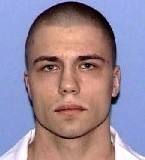 Clinton Lee Young
Murderer · USA
Clinton Lee Young (born July 19, 1983) was convicted of murdering two men in No…
2001 victims
Clinton Lee Young
Murderer · USA
Clinton Lee Young (born July 19, 1983) was convicted of murdering two men in No…
2001 victims
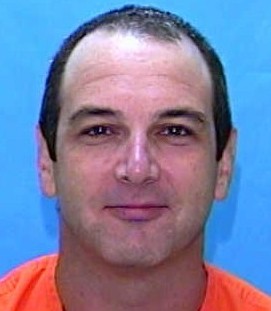 Patrick Charles Hannon
Murderer · USA · 1991
Name: Patrick Charles Hannon Date of birth: 10/24/64 Judicial circuit: Thirteen…
2 victims
Patrick Charles Hannon
Murderer · USA · 1991
Name: Patrick Charles Hannon Date of birth: 10/24/64 Judicial circuit: Thirteen…
2 victims
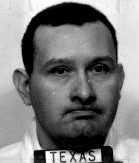 Doil Edward Lane
Homicide · USA · 1980
Doil Edward Lane was sentenced to death in Texas on February 25, 1994. His deat…
2 victims
Doil Edward Lane
Homicide · USA · 1980
Doil Edward Lane was sentenced to death in Texas on February 25, 1994. His deat…
2 victims
- Gender
- male
- Country
- USA
- Location
- Montgomery County, Arkansas, USA
- Date of birth
- 1944
- Age at first offence
- 42
- Characteristics
- robbery
- Victim profile
- Essie Mae Black (female, 62)
- Method of murder
- Stabbing with knife
- Date(s) of murder
- August 14, 1986
- Years active
- 1986
- Date of arrest
- —
- Status
-
Executed
Executed by lethal injection in Arkansas on May 11, 1994
Case record: Jonas Whitmore
Background
Jonas Whitmore was convicted in Arkansas state court of capital murder in the death of a sixty-two-year-old woman, Essie Mae Black, committed on August 14, 1986. Whitmore was a drifter convicted of killing a woman who fed him milk and cookies. He was sentenced by the jury to death by lethal injection.
The Arkansas Supreme Court affirmed Whitmore’s conviction and sentence on direct appeal (Whitmore v. State, 296 Ark. 308, 756 S.W.2d 890 (1988)). The state supreme court also denied his request to proceed under Rule 37 of the Arkansas Rules of Criminal Procedure (Whitmore v. State, 299 Ark. 55, 771 S.W.2d 266 (1989)).
Whitmore later filed a petition for writ of habeas corpus pursuant to 28 U.S.C. § 2254, which was denied by the district court (834 F.Supp. 1105).
On May 12, 1994, a report stated that last-minute efforts by lawyers to block the execution failed and that Whitmore was executed on schedule. He was declared dead at 8:08 P.M.
The offence
On August 14, 1986, Whitmore testified that he was looking for property to rent in Mount Ida, Arkansas, and stopped at the house of Clara Stanley to ask about rental property. Mrs. Stanley testified likewise and added that it was at approximately 2:45 p.m. that day when Whitmore came up to the fence surrounding her yard to speak with her.
Whitmore testified that he then went to Mrs. Black’s house to ask about rental property. Mrs. Black invited him inside and made phone calls for him regarding rental property. The victim gave him milk and cookies before she was stabbed 10 times. Her throat was cut, and an “X” was sliced into her right cheek.
A neighbor testified that a car resembling Whitmore’s vehicle left the victim’s home at approximately 3:35 p.m.
Mrs. Black was found dead with at least six stab wounds in her front and three in her back (some of which were to depths of nine and a half inches), with her throat cut, and with an “X” carved into the right side of her face. One hundred and fifty dollars was missing from her purse and one hundred and twenty-six dollars was missing from a kitchen drawer.
Whitmore testified that he then drove down the highway following a car driven by another woman. He testified that when that car turned off the highway onto another road, he did also. Whitmore stated that he passed the woman on that road, but then stopped and motioned for her to pass him. Mrs. Johnson was the driver of the other car and she testified to the same facts.
Whitmore testified that he stopped because he wanted to pull off the road and go into a wooded area to discard his bloody clothing. He testified that he tore out the labels from his suit and then left the suit behind a tree. He testified that he washed his hands and tried to wash the blood off the knife he was carrying with him. Unable to clean the knife, Whitmore stated that he threw the knife away.
Whitmore’s clothing and a knife stained with blood of the same type as the victim’s were found in the wooded area. The labels had been removed from the clothes but were found in the same general area. From the labels, the suit was traced to Montgomery, Alabama, where eyewitnesses testified that the suit had been donated to Whitmore. Whitmore testified likewise.
Whitmore testified that he purchased a “fancy card” for his wife and a carton of cigarettes with a one-hundred-dollar bill and that he later purchased gas with another one-hundred-dollar bill.
At the guilt phase, the state presented evidence that over two hundred dollars had been stolen from Mrs. Black by Whitmore and that because there was no blood on her purse or the drawer that had contained some of the money, Whitmore must have first stolen the money and then murdered her.
At the penalty phase, the jury found beyond a reasonable doubt that Whitmore committed the murder “for the purpose of avoiding or preventing an arrest or effecting an escape from custody.” The jury further found the two “aggravating circumstances outweighed beyond a reasonable doubt any mitigating circumstances” and that the “aggravating circumstances justif[ied] beyond a reasonable doubt a sentence of death.”
Investigation
Evidence was presented that Whitmore had given three detailed statements to the police similar to the testimony he gave at trial.
In preparing for trial, the attorneys indicated that because Mr. Humphrey was located closer to Whitmore, he had more contact with Whitmore than Mr. Kirkpatrick did.
Arrest
No separate arrest event was stated beyond the described later events referenced in the case.
Trial
People involved
- Jonas Whitmore testified at trial.
- Essie Mae Black was the victim.
- Clara Stanley testified for the defense’s context of rental-property inquiries.
- A neighbor testified regarding a car leaving the victim’s home.
- Mrs. Johnson testified regarding driving and the road incident.
- Dr. Chambers was referenced as the independent examiner during the habeas portion.
- Gordon Lee Humphrey, Jr. and Neal Kirkpatrick represented Whitmore.
Guilt phase testimony and physical evidence
Whitmore testified that he walked to the car with blood all over him and that he remembered his hand moving “up and down” as he told Mrs. Black, “don’t mom, don’t.”
Whitmore also testified that he had experienced a “flashback” of childhood sexual abuse while in Mrs. Black’s house. He explained that both his mother and his aunt, Theomae Throne (whom Whitmore referred to as “Aunt Kiki”), had sexually abused him as a child and that certain events would trigger flashbacks of that abuse. Whitmore testified that Mrs. Black resembled his mother and that he had a “flashback.”
Whitmore testified that he drove after Mrs. Johnson’s car, stopped to discard clothing, tore out labels from his suit and left it behind a tree, washed his hands, tried to wash the blood off the knife, and then threw the knife away.
Whitmore’s clothing and a knife stained with blood of the same type as the victim’s were found in the wooded area, and the suit labels were traced to Montgomery, Alabama.
The state presented evidence that the victim was missing money: $150 from her purse and $126 from a kitchen drawer.
The jury found beyond a reasonable doubt that Whitmore committed a previous felony “an element of which was the use or threat of violence to another person or creating a substantial risk of death or serious physical injury to another person.”
During the guilt phase, the state presented evidence that Whitmore must have first stolen the money and then murdered her.
Penalty phase
On the jury’s penalty verdict form, the jury was presented the option of finding mitigating circumstances, including (1) that the murder was committed while Whitmore was under “extreme mental or emotional disturbance”; (2) that the murder was committed while he was under “unusual pressures or influences”; (3) that the murder was committed while his capacity “to appreciate the wrongfulness of his conduct or to conform his conduct to the requirements of law was impaired as a result of mental disease or defect”; or (4) any other factor that the jury specified in writing.
The evidence presented included Whitmore’s “flashback” claim regarding sexual abuse as a child, and testimony that counsel elicited concerning medical problems, medication, and his mental state on and off the medication.
The jury rejected the mitigating circumstances.
Whitmore was the only witness to testify in the penalty phase for the defense. Whitmore admitted his guilt but did not show remorse.
During the penalty phase, the state presented evidence of a twenty-three-year-old conviction for attempted robbery. Whitmore’s attorneys attempted to minimize it by eliciting testimony from Whitmore explaining that he was only eighteen at the time, that he had just been drafted into the United States Army and was drinking with a friend. Whitmore testified that after a cab ride, he and his friend did not pay the fare, and that Whitmore hit the cabdriver over the head with a Coca Cola bottle. On cross-examination, the prosecutor asked Whitmore if it was true that he “hit the driver over the head with a sixteen ounce Royal Crown bottle and then ran?” Whitmore answered, “No sir. It was not a Royal Crown bottle. It was a Coca Cola bottle.”
Attorney Humphrey testified that the jury lost favor with Whitmore at that point and that it “cost.”
Sentencing
Whitmore was sentenced by the jury to death by lethal injection.
The jury found beyond a reasonable doubt that:
- Whitmore committed the murder “for the purpose of avoiding or preventing an arrest or effecting an escape from custody,” and
- the “aggravating circumstances outweigh[ed] beyond a reasonable doubt any mitigating circumstances,” and
- the “aggravating circumstances justif[ied] beyond a reasonable doubt a sentence of death.”
Appeals
Direct appeal and postconviction
State, 296 Ark. 308, 756 S.W.2d 890 (1988)).
The Arkansas Supreme Court also denied his request to proceed under Rule 37 (Whitmore v. State, 299 Ark. 55, 771 S.W.2d 266 (1989)).
Federal habeas corpus proceedings
Whitmore filed a petition for writ of habeas corpus under 28 U.S.C. § 2254, which the district court denied in a thorough 51-page opinion (834 F.Supp. 1105).
Whitmore appealed to the United States Court of Appeals, Eighth Circuit. The case listing included:
- Jonas H. WHITMORE, Appellant, v. A.L. LOCKHART, Director, Arkansas Department of Correction, Appellee.
- No. 92-3307.
- Submitted April 12, 1993.
- Decided Oct. 25, 1993.
- Rehearing and Suggestion for Rehearing En Banc Denied Dec. 13, 1993.
The appellate court affirmed the district court’s denial of habeas relief.
Issues raised on appeal
Whitmore raised four general issues that he raised in his § 2254 petition, which included:
- Effective assistance of counsel.
- Unconstitutionality of the Arkansas death penalty scheme on numerous grounds.
- Alleged error in admitting statements allegedly obtained in an unconstitutional manner and evidence of a prior conviction for attempted robbery.
- Mental incompetence and inability to be executed.
Ineffective assistance of counsel—penalty phase (mental evaluations and psychiatric evidence)
Whitmore argued that counsel were ineffective at the penalty phase for failing to introduce evidence of his psychiatric disorder and insanity. The appellate court agreed with the district court.
It was stated that during a prior period of incarceration in California, Whitmore had undergone several mental status examinations and the reports were available to his counsel. Lawyers arranged for examinations at the state hospital and by an independent privately-retained psychologist.
The appellate court described that counsel decided against presenting Whitmore’s mental evaluations to prove insanity because the evaluations indicated that Whitmore did not lack “the capacity to understand the nature and the purpose of the punishment about to be imposed upon him.” The appellate court cited Smith v. Armontrout (857 F.2d 1228, 1230 (8th Cir. 1988)) and Ford v. Wainwright.
Reports indicated that Whitmore had an antisocial personality disorder but was not psychotic, insane, “or any other legally substantial basis to make a specific defense on his part either in the guilt phase or in the penalty phase.” The appellate court referenced “Transcript of Habeas Hearing (Tr. H.H.) at 31.”
Dr. Chambers, the independent examiner, indicated informally to Mr. Kirkpatrick that “in his opinion, that if Whitmore was released, he probably would do it again.” The appellate court referenced “(See id. at 377.)”
The district court found that the lawyers chose not to introduce evidence of the mental examinations for tactical reasons. The appellate court described the decision not to present evidence at the penalty phase as “well within the range of practical choices that are not to be second-guessed,” quoting Laws v. Armontrout.
The appellate court described that counsel decided against presenting prior mental evaluations to avoid questions on cross-examination that would reveal evaluations conducted in response to Whitmore’s violent and bizarre behavior while incarcerated on another felony charge, including that Whitmore “was accused of striking this one or stabbing that one” in prison and that Whitmore “had mutilated himself on occasion.” Those descriptions were attributed to the transcript at “Tr. H.H. at 33” and “id. at 376.”
The attorneys believed that such behavior “wouldn't wash with a western Arkansas jury.” This was attributed to “(Id. at 32.)”
The appellate court noted counsel presented mitigating evidence of “extreme mental or emotional disturbance,” including Whitmore’s flashback testimony and the jury’s rejection of it.
Ineffective assistance of counsel—penalty phase (failure to investigate witnesses about abuse by his father)
Whitmore argued counsel were ineffective at the penalty phase for failing to investigate witnesses who could present testimony of separate mitigating circumstance: physical abuse by his father.
At the habeas hearing, Whitmore submitted evidence that Aunt Kiki, her husband Leonard Junior Throne, and their two sons, Tom and Darrell Throne, would have testified to the “vicious, violent, and prolonged physical abuse [Whitmore] suffered from his father.” This was attributed to “Whitmore, at 1112.”
Counsel did not interview the Thrones in preparation for the penalty phase.
The appellate court described the performance and prejudice analysis under Strickland, citing Burger v. Kemp for the need to determine whether counsel’s performance undermined confidence in the adversarial process.
The appellate court recounted counsel’s preparation five years earlier, including reviewing the case file, prison records, mental evaluations, physical evidence, and locations.
The appellate court recounted that the attorneys prepared for “fifty or sixty” potential witnesses indicated by the state, and that twenty-nine were called at trial. It also described efforts to exclude a twenty-three-year-old attempted robbery conviction because it constituted an aggravating circumstance in the penalty phase.
The appellate court described additional factors including frustrations dealing with Whitmore, including that based upon a story Whitmore told them involving a hitchhiker who Whitmore said was the actual murderer, the attorneys initiated an investigation and Whitmore later recanted the story.
It also described that Whitmore repeatedly ignored counsel’s advice, especially continuing to make statements to the police.
The appellate court described timing issues: it was not until approximately three weeks before trial that Whitmore gave counsel the requested list of potential mitigation witnesses or would talk about mitigation witnesses.
The appellate court listed the mitigation witness lists provided by Whitmore, including multiple entries such as Whitmore’s wife (listed twice), his father, Alpha Newton, Betty Newton, and Judy Newton, James Scott (identified as a Deputy Sheriff in Modesto, California), “Kiki Throne, her husband['s] name is Lernerd [sic] Throne, Tracy Calif.,” Cleo Whitmore or his uncle D.D. Whitmore in Milton Freewater, Oregon, and his ex-wife in Modesto, California. The appellate court also described that counsel asked for better addresses and/or telephone numbers.
The second list again included his wife, his father, Alpha, Betty, and Judy Newton and one other at the same address and telephone number, and James Scott. It additionally included his two daughters with an address and a telephone number; “Bo Crow or his mother in New Diana or New Dain,” Texas and a phone number; Frances or Guy Walker in Milton Freewater, Oregon; the pastor at the Methodist church and three other names of persons in Roundup, Montana; four names of persons in McLain, Mississippi; “Rev. Vicker's” of the Christian Life Center, Montgomery, Alabama; “Dale or Danuals Co” of New Diana, Texas; and a former sergeant of the sheriff’s office in Modesto, California. The list included the statement: “these are the people I want in court for me.”
The appellate court described counsel’s contact attempts with various individuals, including difficulty reaching by phone, returned letters, and that they did not contact Aunt Kiki and her husband because an incomplete address was likely given and because she was the aunt accused of the sexual abuse. The appellate court also described counsel’s views that Aunt Kiki would not have traveled from California to Arkansas on behalf of Whitmore to be accused of sexually assaulting him as a seven- or eight-year-old child, and that another counsel believed Whitmore gave no indication that Aunt Kiki would offer more than denial of the sexual abuse.
The appellate court also stated that although attorneys spoke with Whitmore about Aunt Kiki, Whitmore had given no indication that Whitmore’s father allegedly abused him as a child or that Aunt Kiki or her family had knowledge of the alleged abuse. It further stated that the mental reports they examined had no mention of any abuse by his father.
The appellate court discussed that the attorneys were unaware of the possibility of evidence that Whitmore had been abused by his father and that it was not a case where counsel failed to conduct any investigation into mitigating circumstances.
Prejudice analysis re: potential testimony by Aunt Kiki and her family
The appellate court described prejudice and stated that even though Aunt Kiki and her family would have supported a mitigating circumstance of abuse by Whitmore’s father, their testimony could have negatively impacted Whitmore’s case as well.
The appellate court described that cross-examination could have revealed violent behavior attributed to the abuse, and described a quote from deposition testimony: Darrell Throne stated that he saw Whitmore “rip the head off of a kitten one time and laugh about it while he was doing it.”
The appellate court also described the more significant negative factor: Aunt Kiki’s deposition testimony and anticipated trial testimony included that she would deny Whitmore’s allegation that she sexually abused him. It described that her testimony would have directly contradicted and impeached Whitmore’s own testimony about sexual abuse by his mother and aunt.
The appellate court stated that Mr. Kirkpatrick indicated that because of the contradictions, he probably would not have put Aunt Kiki on the stand even knowing her potential testimony regarding abuse by his father. It further stated that Whitmore wanted to testify about sexual abuse and had “stuck to that part of the story throughout” his police statements, discussions with counsel, and trial testimony.
The appellate court summarized that while Aunt Kiki’s testimony would support mitigating circumstance of abuse by his father, it would have tended to negate the mitigating circumstance of alleged sexual abuse by his mother and aunt, given the strength of the state’s case on the two aggravating circumstances and the negative aspects of Aunt Kiki’s testimony. The appellate court stated that it could not say there was a reasonable probability the sentence in the penalty phase would have been different.
Ineffective assistance during guilt phase (prior convictions and failure to object)
Whitmore argued that counsel were ineffective during the guilt phase for questioning him about prior convictions and failing to object to the prosecutor’s questions about a prior forgery conviction. The district court found these to be reasonable tactical decisions; the appellate court agreed.
It stated that forgery conviction was admissible under Arkansas Rule of Evidence 609.
Ineffective assistance regarding alleged constitutional defects in death penalty scheme
Whitmore argued that counsel were ineffective for failing to raise four alleged constitutional defects in the Arkansas death penalty scheme. The district court disagreed as the arguments were meritless; the appellate court agreed.
It specifically described the argument that aggravating circumstance for “for the purpose of avoiding or preventing an arrest” was unconstitutional for duplicating an element of the underlying felony and noted that Collins was overruled by Lowenfield v. Phelps. It also described a vagueness and overbreadth challenge and stated agreement with district court that the language was not unconstitutionally vague.
Direct constitutional challenges to Arkansas death penalty scheme
Whitmore also argued that the Arkansas death penalty scheme was itself unconstitutional on additional grounds. The district court found all but one ground procedurally barred, and the appellate court agreed.
It stated that at least three arguments were raised for the first time in pretrial briefs filed with the district court, and no state court saw them.
The one non-barred argument asserted that § 5-4-604(3) allowed a twenty-three-year-old conviction to be used to establish an aggravating circumstance and violated due process. The district court found the statute narrowly limited death-eligible defendants and enabled a principled distinction, citing Lewis v. Jeffers. It found application in this case did not violate the due process clause, citing Hill v. Lockhart and Ark. Code Ann. § 5-4-603(a)(3). The appellate court rejected Whitmore’s conclusory due process challenge.
Evidentiary issues on appeal
Whitmore argued reversible error when the state court admitted:
- statements allegedly obtained in an unconstitutional manner, and
- proof of a prior conviction for attempted robbery.
The district court concluded that Whitmore fully understood his Miranda rights and voluntarily, knowingly, and intelligently chose to waive them, so no error occurred in admission of statements.
For the attempted robbery conviction, the district court found it a matter of interpretation of state law left to the state and that the state trial court and supreme court committed no constitutional due process error.
The appellate court agreed with the district court on both evidentiary issues.
Competency to be executed
Whitmore asserted he was mentally incompetent and therefore could not be executed. The district court rejected the claim, finding the record supported that Whitmore understood he was to be punished by execution and understood why he was being punished.
The district court’s fact-findings were described as not clearly erroneous and supported by the considered opinions of two doctors who examined Whitmore specifically to determine his mental capacity to be executed. It was for the district court to determine which expert to credit.
The appellate court stated that the application of Ford v. Wainwright to the present facts contained no error of law and affirmed the district court’s finding that Whitmore was competent to be executed.
Outcome
The United States Court of Appeals, Eighth Circuit, affirmed the district court’s judgment denying Whitmore’s petition for habeas corpus relief.
Execution details
Whitmore was executed in Arkansas on May 11, 1994 by lethal injection.
Other details
Judge Morris Sheppard Arnold took no part in the consideration or decision of this case.
The case references included:
- “The Honorable Susan Webber Wright, United States District Judge for the Eastern District of Arkansas.”
- Miranda v. Arizona, 384 U.S. 436, 86 S.Ct. 1602, 16 L.Ed.2d 694 (1966).
- The statutory text provided for § 5-4-604(3):
- “Aggravating circumstances shall be limited to the following: (3) The person previously committed another felony, an element of which was the use or threat of violence to another person or the creation of a substantial risk of death or serious physical injury to another person.”
Spotted an error, or have more information about this case?