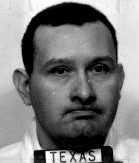
Doil Edward Lane
Homicide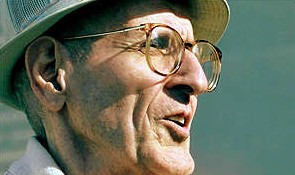 Jack Kevorkian
Homicide · USA · 1990
Jack Kevorkian (born May 26, 1928) was a controversial American pathologist. He…
130 victims
Jack Kevorkian
Homicide · USA · 1990
Jack Kevorkian (born May 26, 1928) was a controversial American pathologist. He…
130 victims
 Edward Charles Allaway
Homicide · USA · 1976
Edward Charles Allaway Edward Charles Allaway was found not guilty by reason of…
7 victims
Edward Charles Allaway
Homicide · USA · 1976
Edward Charles Allaway Edward Charles Allaway was found not guilty by reason of…
7 victims
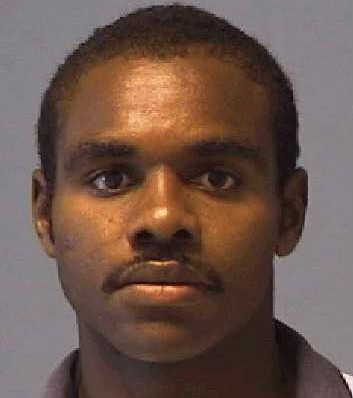 Clinton Bankston
Homicide · USA · 1987
15 August 1987 — Ann Morris (63), her sister Sally Nicholson (59), and Sally’s…
5 victims
Clinton Bankston
Homicide · USA · 1987
15 August 1987 — Ann Morris (63), her sister Sally Nicholson (59), and Sally’s…
5 victims
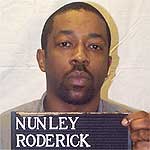 Roderick Nunley
Murderer · USA · 1989
Roderick Nunley was sentenced to death on May 14, 1991. He later appealed the d…
1 victim
Roderick Nunley
Murderer · USA · 1989
Roderick Nunley was sentenced to death on May 14, 1991. He later appealed the d…
1 victim
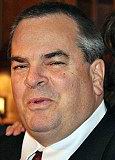 Albert Peterson
Murderer · USA · 2012
Albert Peterson shot dead his wife and two sons hours after going to church bec…
3 victims
Albert Peterson
Murderer · USA · 2012
Albert Peterson shot dead his wife and two sons hours after going to church bec…
3 victims
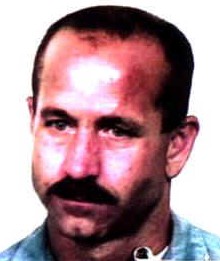 Darrell Keith Rich
Serial killer · USA · 1978
Darrell Keith Rich Darrell Keith Rich was executed by lethal injection in Calif…
4 victims
Darrell Keith Rich
Serial killer · USA · 1978
Darrell Keith Rich Darrell Keith Rich was executed by lethal injection in Calif…
4 victims
 Charles William Yukl
Murderer · USA · 1966
Charles William Yukl was a piano teacher in New York City and also worked in mu…
2 victims
Charles William Yukl
Murderer · USA · 1966
Charles William Yukl was a piano teacher in New York City and also worked in mu…
2 victims
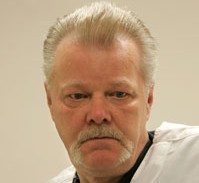 John Spirko
Murderer · USA · 1969
John Spirko John Spirko will not be executed for the 1982 murder of Betty Jane…
2 victims
John Spirko
Murderer · USA · 1969
John Spirko John Spirko will not be executed for the 1982 murder of Betty Jane…
2 victims
- Gender
- male
- Country
- USA
- Location
- Texas/Kansas, USA
- Date of birth
- April 15, 1961
- Age at first offence
- 19
- Characteristics
- rape, mentally retarded
- Victim profile
- Bertha Martinez, 8 / Nancy Shoemaker, 9
- Method of murder
- St abbing with knife / Strangulation
- Date(s) of murder
- March 20, 1980 / July 30, 1990
- Years active
- 1980–1990
- Date of arrest
- —
- Status
-
Life imprisonment
Sentenced to death in Texas on February 25, 1994; commuted to life in prison March 10, 2007
Case record: Doil Edward Lane
Status and outcome
Doil Edward Lane was sentenced to death in Texas on February 25, 1994. His death sentence was commuted to life in prison on March 10, 2007.
Background
Doil Edward Lane lived in Hays County at the time of the murder of 8-year-old Bertha Martinez and later moved to Kansas. Lane was mentally retarded, and doctors believed his brain may have been deprived of oxygen during his birth. His biological father was 74 years old and died shortly after Lane was born. Lane’s mother and her new husband neglected him and later abused him both psychologically and sexually.
Lane was placed in special-education classes at school and consistently did poorly there. Eventually, the state of Kansas removed him from his home and sent him to the Brown School in San Marcos, a residential treatment center for children with developmental disabilities. Testing from his time at the Brown School and later for his appeals showed that his intellectual functioning was significantly impaired; his full scale IQ was 65–67, and his mental and emotional development was that of an 8- to 10-year-old child.
Lane was on death row for more than nine years. He was moved to the Polunsky Unit in Livingston, and later, prison officials moved him to another cellblock away from his best friend, Marion Dudley.
The offence
Lane was convicted in 1994 of murdering 8-year-old Bertha Martinez.
Bertha disappeared March 20, 1980. After a man approached a group of children playing outside Bertha’s San Marcos home and asked whether they had seen a dog, Bertha followed the man on her bicycle. Six days later, searchers found her body in a tin shed in a field blocks from her home. Bertha was sexually assaulted, stabbed, and strangled. Lane’s killer took Bertha’s prescription glasses and her underwear.
Lane was later convicted of murder and sentenced to 40 years in prison in Kansas for killing Nancy Shoemaker.
Nancy Shoemaker, who was 9 years old, disappeared on July 30, 1990 when she went to get soda for a younger brother with an upset stomach. After a massive hunt, her body was found in a wooded area. Nancy had been sexually assaulted and strangled.
Investigation
An anonymous tip and an FBI psychological profile led investigators to Lane, who had a job as a dishwasher.
When authorities searched Lane’s Wichita home, which he sometimes shared with his mother, Murlene Broughton, they found more than 200 pairs of children’s underwear.
Lane confessed to both murders in 1991. In his confession, Lane detailed how his mother’s husband, Woody Broughton, lured Bertha to a park, where Lane and Broughton sodomized her while his mother, Murlene Broughton watched. The three then took the girl to their home, where Woody Broughton stabbed Bertha and forced Lane to strangle her before Murlene Broughton washed the girl’s body.
In another account connected to his confession, Lane stated that his friend Donnie Wacker made him participate in Nancy Shoemaker’s kidnapping and killing.
At trial, defense attorneys argued that Lane’s diminished mental capacity made him vulnerable to suggestion and made it easier for investigators to get him to confess. Lane’s confessions were unusual in a number of ways, including that his statements about what happened changed frequently during questioning, details he recounted were inconsistent with facts already known to police, and there was neither physical evidence nor eyewitness testimony linking Lane to either crime.
Other charged persons
Murlene Broughton and Woody Broughton were charged in connection with Bertha’s murder, but the charges were later dropped. Woody Broughton died in January 1994. When Lane was on trial in Hays County, Murlene Broughton was in a mental health facility in Wichita, Kansas.
Arrest
Lane confessed to the Bertha Martinez murder and the Nancy Shoemaker murder in 1991 after investigators questioned him in Kansas about Nancy Shoemaker’s disappearance.
Trial
A Hays County jury deliberated less than two hours before sentencing Lane to death at the conclusion of his 1994 trial.
In Lane’s 1994 capital murder case, Hays County’s first in more than 20 years, Lane was convicted of murdering Bertha Martinez.
Defense attorneys in both trials argued that Lane’s diminished mental capacity made him vulnerable to suggestion and made it easier for investigators to obtain his confession. Lane’s confessions came during questioning connected to Nancy Shoemaker’s disappearance.
Assistant District Attorney Wesley Mau stated that prosecutors did not object to the ruling that led to the commutation and that it was expected. Mau also stated that since then, no one had received a death sentence in Hays County.
Sentencing
Lane’s 1994 capital murder trial ended with a death sentence.
In Kansas, Lane was later convicted of murder and sentenced to 40 years in prison for killing Nancy Shoemaker.
After his death sentence was commuted, Lane’s death sentence became a life sentence.
Appeals
A 2002 U.S. Supreme Court decision barred the execution of killers who have mental retardation. The commutation in Lane’s case occurred after Texas Governor Rick Perry found that Lane had mental retardation.
The decision in Atkins v. Virginia held that executing prisoners with mental retardation was “cruel and unusual punishment” and therefore prohibited by the Eighth Amendment. The ruling changed capital case procedures, leaving it to individual states to adopt procedures ensuring that no person with mental retardation would be executed.
Lane’s defense lawyers filed a petition for clemency with the Board of Pardons and Paroles after a state District Court found that Lane had mental retardation.
A writ of habeas corpus had been filed on Lane’s behalf in 1998, but the defense lawyers opted to refile it after the 2002 Supreme Court ruling. After a November hearing in Hays County, state District Judge Charles Ramsay found Lane had mental retardation.
Commutation and legal reasoning
Governor Rick Perry commuted Lane’s sentence from death to life imprisonment on Friday, March 10, 2007.
The commutation was based on Perry’s finding that Lane had mental retardation. Bill Allison, a defense attorney and clinical professor of law at the University of Texas, represented Lane along with a team of volunteers since 1997. Allison said: “It’s the right decision from every aspect.”
Ted Royer, a Perry spokesman, said: “The ruling is obviously what is abided by.”
Assistant District Attorney Wesley Mau said: “It was uncontested at the point when it reached the governor’s desk.”
Royer also said: “Violating any of those terms will cause the conditional pardon to be revoked.” Roder said the Board of Pardons and Paroles must submit annual reports to the governor concerning Brown’s supervision, which would assist in determining the length of supervision.
Lane’s commutation was also connected to statements about his understanding of the process. Allison said that a death row warden talked to Lane about the commutation, but the warden later said that Lane, who functions at about a third-grade level, didn’t understand what had happened. Allison said: “This is a grown man, in his 40s, who likes coloring books.”
Aftermath
After commuting Lane’s sentence, Perry pardoned James Douglas Waller and granted a conditional pardon to Tyrone Brown.
James Douglas Waller was originally convicted of aggravated sexual abuse in Dallas County but later exonerated by DNA evidence.
Tyrone Brown was sentenced to life in prison 17 years earlier after smoking marijuana while on probation for taking part in an armed robbery in which no one was hurt. Brown was required to live with his mother, report to a parole officer, find a job, and work with a therapist. Royer said the conditional pardon could be revoked if any terms were violated.
Other details
Placement and prison conditions
Lane said he missed Marion Dudley and had no one to talk to or read and write letters for him after officials moved him away from Dudley. Lane stated that Lane and Dudley were best friends on death row. Lane said Leo Little helped Lane get books from the prison library and that the books were with good pictures so that Lane could look at them, trace the images, and color them in with his pencils.
Lane said his favorite book was The Apple Tree. Lane said: “It has really good pictures.”
Lane said: “It’s hard to talk about.” Lane also said: “I really miss him.” When Lane was sure no guard was watching, he pulled a pencil drawing of his two best friends, Marion Dudley and Leo Little. Lane asked: “Do you want to see a picture I drew?” and complained about his crayons being taken from him when death row was moved from the Ellis Unit in Huntsville.
Lane submitted a questionnaire written in barely legible handwriting. Lane wrote: “You tuck away my clores when you can not hurt no one with a box [of] 24 cloros.”
Lane asked what he might look forward to if removed from death row and said: “But where would they take me?”
Intellectual functioning evidence and sentencing discussion at trial
At trial, Hays County District Attorney Michael Wenk presented Lane’s mental retardation as part of expert opinion regarding whether Lane would be a danger to the community if he were not sentenced to death.
Wenk asked the state’s expert witness to assume “that [Lane] has been diagnosed as borderline or mildly retarded, with an IQ in the range of 70.” Wenk told the jury: “There is no question that there is something wrong with [Lane]. ... He’s mildly retarded; he comes from a dysfunctional family. We’re not disputing that.”
In describing why Lane remained on death row, a statement included that Texas law has not changed to reflect the 2002 U.S. Supreme Court decision and that execution of prisoners with mental retardation was barred.
Clemency proceedings and court interactions
Allison stated that the statutory process required that the trial court forward motions to the Court of Criminal Appeals within a short period of time, but that this had not been done in Lane’s case. Allison said the prosecutor’s office never responded to Lane’s motion. Allison said that last August, Lane’s attorney filed a motion asking the trial court to remove Lane from death row because of his mental retardation.
Michael Wenk declined comment and replied: “pursuant to the Code of Professional Responsibility ... all prosecutors are ethically mandated not to discuss the facts or other substantive matters relevant to ‘ongoing’ criminal prosecutions [emphasis in original].”
Allison said the defense team jumped from the judicial branch to the executive branch when they filed a petition for clemency with the Board of Pardons and Paroles.
Allison also stated: “This is a grown man, in his 40s, who likes coloring books.”
Legal context around Atkins and Texas procedures
The 2003 Texas Legislature passed a bill that would have banned the execution of the mentally retarded. Gov. Rick Perry called the bill unnecessary and vetoed it, saying: “We do not execute mentally retarded murderers today.”
The 2002 Supreme Court in Atkins v. Virginia held that executing prisoners with mental retardation was prohibited by the Eighth Amendment. The decision described the bar as being based on evolving standards of decency and noted that no other Western democracy allows execution of people with mental retardation.
The article also described procedures required by states after Atkins and discussed debate within Texas about how to apply the decision. It described a bill passed in 2001 and vetoed by the governor and described that the legislature did not act to create a procedure for a jury pretrial determination.
Statements and quotations attributed to inmates
Lane said: “It’s hard to talk about.” Lane also said: “I really miss him.” Lane asked: “Do you want to see a picture I drew?” Lane said: “But where would they take me?”
Deat h row inmate reference
The narrative also included a death row inmate named Willie Motton as an example of frustration with life in the Polunsky Unit. It included these quotations: “Anywhere is better than here.” and “Anywhere is better than here.” It also stated Motton’s strong faith helped him survive on death row and he wanted to worship with other inmates.

Spotted an error, or have more information about this case?