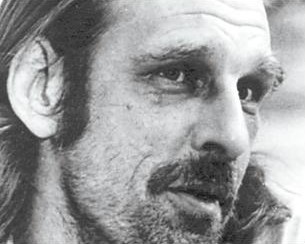
Richard Lee Whitley
Murderer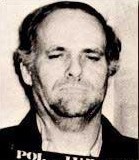 Ervil LeBaron
Murderer · USA · 1972
Ervil Morrell LeBaron (1925 to August 16, 1981) was the leader of a polygamous…
35 victims
Ervil LeBaron
Murderer · USA · 1972
Ervil Morrell LeBaron (1925 to August 16, 1981) was the leader of a polygamous…
35 victims
 Brian Kevin Rosenfeld
Murderer · USA · 1985
Brian Kevin Rosenfeld Brian Kevin Rosenfeld was sentenced to three concurrent l…
23 victims
Brian Kevin Rosenfeld
Murderer · USA · 1985
Brian Kevin Rosenfeld Brian Kevin Rosenfeld was sentenced to three concurrent l…
23 victims
 Marvin Gray
Murderer · USA · 1975
Marvin Gray was convicted killer who claimed responsibility for 23 slayings and…
23 victims
Marvin Gray
Murderer · USA · 1975
Marvin Gray was convicted killer who claimed responsibility for 23 slayings and…
23 victims
 Yahweh ben Yahweh
Murderer · USA · 1980
Yahweh ben Yahweh was born and legally named Hulon Mitchell Jr. (October 27, 19…
23 victims
Yahweh ben Yahweh
Murderer · USA · 1980
Yahweh ben Yahweh was born and legally named Hulon Mitchell Jr. (October 27, 19…
23 victims
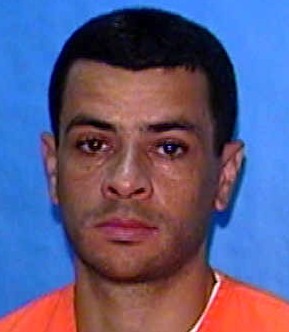 Rory Conde
Serial killer · USA · 1994
Rory Conde was convicted in Florida of the first-degree murder of Rhonda Dunn a…
6 victims
Rory Conde
Serial killer · USA · 1994
Rory Conde was convicted in Florida of the first-degree murder of Rhonda Dunn a…
6 victims
 Michael Swango
Serial killer · USA · 1981
Michael Swango (Joseph Michael Swango) was a physician and American serial kill…
60 victims
Michael Swango
Serial killer · USA · 1981
Michael Swango (Joseph Michael Swango) was a physician and American serial kill…
60 victims
 Dayva Cross
Murderer · USA · 1999
Dayva Michael Cross was sentenced to death for the stabbing deaths of his wife,…
3 victims
Dayva Cross
Murderer · USA · 1999
Dayva Michael Cross was sentenced to death for the stabbing deaths of his wife,…
3 victims
 Lovelle Mixon
Murderer · USA · 2009
Lovelle Mixon was a convicted felon who was wanted on a no-bail warrant for a p…
4 victims
Lovelle Mixon
Murderer · USA · 2009
Lovelle Mixon was a convicted felon who was wanted on a no-bail warrant for a p…
4 victims
- Gender
- male
- Country
- USA
- Location
- Fairfax County, Virginia, USA
- Date of birth
- 1946
- Age at first offence
- 34
- Characteristics
- rape, robbery
- Victim profile
- Phoebe Parsons, 63 ( his next door neighbor )
- Method of murder
- St abbing with pocket knife
- Date(s) of murder
- July 25, 1980
- Years active
- 1980
- Date of arrest
- —
- Status
-
Executed
Executed by electrocution in Virginia on July 6, 1987
Case record: Richard Lee Whitley
Timeline
- July 25, 1980 — Richard Lee Whitley killed Phoebe Parsons, age 63, in her home in Fairfax County, Virginia; he strangled her with his hands and with a rope, cut her throat with a pocket knife, sexually abused her with two umbrellas, and robbed her of various items.
- July 6, 1987 — Whitley was executed by electrocution in Virginia.
- July 7, 1987 — The New York Times reported on Whitley’s execution.
- April 8, 1986 — The United States Court of Appeals, Fourth Circuit, heard argument in Whitley’s appeal.
- October 6, 1986 — The United States Court of Appeals, Fourth Circuit, decided Whitley’s appeal.
- 1982 — The Virginia Supreme Court affirmed both Whitley’s conviction and the sentence in Whitley v. Commonwealth, 223 Va. 66, 286 S.E.2d 162.
- May 27, 1983 — Whitley filed a petition for a writ of habeas corpus in the Circuit Court of Fairfax County.
- August 27, 1984 — After an evidentiary hearing on certain issues, the circuit court dismissed Whitley’s petition for a writ of habeas corpus in its entirety.
- April 16, 1985 — The Virginia Supreme Court refused Whitley’s petition for appeal in Whitley v. Bass, No. 84-1767.
- November 12, 1985 — The United States Supreme Court denied Whitley’s petition for a writ of certiorari.
- November 27, 1985 — Whitley filed a petition for a writ of habeas corpus in the U.S. District Court for the Eastern District of Virginia.
- December 12, 1985 — This court considered Whitley’s application for a certificate of probable cause to appeal and for a stay of execution, and both were granted.
- December 16, 1985 — Whitley’s scheduled execution date was stated as December 16, 1985.
- 2010 — (No such fact appears in the provided text.)
Background
Richard Lee Whitley visited his next door neighbor, Phoebe Parsons, age 63, in the Pimmit Hills section of the county on July 25, 1980. Parsons had previously hired Whitley to do repair work around her three bedroom house.
Whitley and Parsons discussed the recent separation from Whitley’s wife before Whitley attacked her.
At the time of his execution, Whitley was 41 years old. In court appeals in the six years since Whitley’s conviction, he was depicted as mentally and emotionally disturbed and the product of a troubled childhood. The only explanation Whitley offered for the slaying of Parsons was that his wife had left him and he had gone on a two-week binge of drugs and alcohol.
The offence
On July 25, 1980, Whitley brutally attacked Phoebe Parsons in her home in Fairfax County, Virginia.
Whitley first strangled Mrs. Parsons with his hands, and then with a rope. Whitley then cut her throat with his pocket knife. While the victim was near death, or immediately thereafter, Whitley sexually abused her with two umbrellas.
The evidence also showed that Whitley robbed Mrs. Parsons of various items. The court record additionally stated that Whitley stripped his victim naked and proceeded to ransack the house of valuables.
Investigation
Whitley fled in Parsons’ car.
Whitley was arrested several months later in Tampa, Florida, where he admitted to committing the murder.
Arrest
Whitley was arrested several months later in Tampa, Florida.
Trial
In a bifurcated trial in the Circuit Court of Fairfax County, a jury convicted Whitley of capital murder in the commission of a robbery, while armed with a deadly weapon, under VA.CODE Sec. 18.2-31(d) (1982).
The jury fixed Whitley’s punishment at death.
The Virginia Supreme Court affirmed both the conviction and the sentence in Whitley v. Commonwealth, 223 Va. 66, 286 S.E.2d 162.
The United States Supreme Court later denied Whitley’s petition for a writ of certiorari.
Sentencing
In Whitley’s state habeas corpus proceeding, he presented mitigating evidence he claimed his trial counsel could have discovered and presented during the sentencing phase. This included:
- information that Whitley’s trial counsel could have presented through the testimony of Whitley’s employer, Gary Monahan, as to Whitley’s alcohol consumption in the days preceding the murder,
- testimony of Patricia Soberg, Whitley’s sister, as to the tragic circumstances of his childhood,
- psychiatric and like evidence of Whitley’s organic brain dysfunction and his antisocial personality disorder.
During Whitley’s federal habeas proceedings, the issue of ineffective assistance at sentencing was addressed through a Strickland v. Washington framework. The district court found Whitley had met the first part of Strickland and that defense counsel’s failure to investigate potentially mitigating circumstances in Whitley’s background constituted performance outside the wide range of acceptable conduct. The district court also found that the deficiency did not actually prejudice Whitley’s defense.
The appellate court affirmed the lack of prejudice without deciding whether counsel’s performance was outside the wide range of competence expected of counsel in criminal cases.
In the federal appeal, Whitley’s argument emphasized that competent defense counsel could have minimized the negative aspects of testimony from potential mitigation witnesses.
The appellate court weighed potential mitigating evidence against damaging evidence that would have accompanied it. It described that:
- Patricia Soberg would have testified to alleged abuse and neglect suffered in childhood, including allegations that Whitley’s father abandoned the family while Whitley was an infant; that his mother drank heavily; that she beat her children with a belt, sometimes knotted with a buckle; that she left Whitley in the care of his sister from the time he was a small child; that Whitley left school at age 15; that the family was mired in poverty; that Whitley injured his head in a train accident while a child; and that his older brother frequently beat Whitley and exercised an undue criminal influence on him during adolescence.
- The appellate court also stated that the testimony would have included information that was very damaging at sentencing, including information about Whitley’s extensive criminal background that the trial counsel had kept the jury unaware of, prior abuse of elderly women, and Whitley’s alleged rape of his own mother.
- Dr. John D. Follansbee and Dr. T. Richard Saunders testified during Whitley’s state habeas corpus proceeding. Dr. Saunders testified about organic brain dysfunction impairing Whitley’s ability to reason and make judgments, and about Whitley’s antisocial personality disorder and an accentuated inability to control extreme impulses.
- The appellate court stated that Dr. Saunders made repeated references to sadistic behavior patterns, that Whitley approached others in an extraordinarily aggressive, uncontrolled affective state that was exceptionally vicious and hostile, and that he exhibited a pattern of fear-induction and anxiety induction in other people. The court also stated that Dr. Saunders mentioned Whitley’s extensive criminal history, including Whitley’s recent conviction for raping a male hitchhiker, and Whitley’s alleged rape of his mother and alleged sexual misconduct with his eleven-year-old stepdaughter.
- The appellate court concluded the negative aspects of this testimony would have far outweighed any positive mitigating effect.
- The appellate court also stated that Dr. Follansbee’s testimony would have been similarly ineffective, citing that Dr. Follansbee discussed organic brain dysfunction as well as negative comments about personality and background, and that Dr. Follansbee’s report included reference to an incident in prison where Whitley brutally beat another inmate and ended the assault by wedging a broom stick in the inmate’s rectum.
The appellate court reiterated that it was not adopting the district court’s finding that trial counsel’s performance was unreasonably deficient.
Appeals
Virginia direct appeal and state postconviction
Whitley v. Commonwealth was decided in 223 Va. 66, 286 S.E.2d 162 (1982).
The United States Supreme Court denied Whitley’s petition for a writ of certiorari (citation included in the appellate record).
On May 27, 1983, Whitley filed a petition for a writ of habeas corpus in the Circuit Court of Fairfax County.
On August 27, 1984, after an evidentiary hearing on certain issues, the circuit court dismissed the petition for a writ of habeas corpus in its entirety.
Whitley then raised only two issues in the Virginia Supreme Court:
- whether the circuit court erred in dismissing Whitley’s claim that trial counsel failed to conduct adequate voir dire,
- whether the circuit court erred in finding trial counsel was not ineffective during the sentencing phase for failing to investigate and present available mitigation evidence.
On April 16, 1985, the Virginia Supreme Court refused Whitley’s petition for appeal, finding no reversible error, citing Wainwright v. Witt and Strickland v. Washington.
The United States Supreme Court subsequently denied Whitley’s petition for a writ of certiorari on November 12, 1985.
Federal habeas corpus and appeal to the Fourth Circuit
On November 27, 1985, Whitley filed a petition for a writ of habeas corpus in the U.S.
The district court held that the majority of Whitley’s claims were not cognizable because of procedural default, applying Wainwright v. Sykes.
The district court dismissed Whitley’s habeas corpus petition and denied his application for a stay of execution. The district court also refused to grant him a certificate of probable cause to appeal.
On December 12, 1985, the Fourth Circuit granted Whitley’s application for a certificate of probable cause to appeal and for a stay of execution.
In the Fourth Circuit appeal, Whitley raised two principal issues:
- whether trial counsel failed to provide constitutionally effective legal representation at the sentencing phase,
- whether the district court properly ruled that substantive claims not appealed to the Virginia Supreme Court were not cognizable in a federal habeas action under Wainwright v. Sykes.
The Fourth Circuit addressed Whitley’s sentencing-phase ineffective assistance claim first and affirmed the district court’s holding of no prejudice, without deciding whether counsel’s performance was deficient.
The Fourth Circuit then addressed procedural default issues and held that the district court properly concluded the majority of claims were barred from federal review due to procedural defaults either at trial level, on direct appeal, or in state habeas corpus proceedings.
The Fourth Circuit concluded Whitley pointed to no objective factor external to his defense that constituted cause for the procedural defaults.
The Fourth Circuit also concluded that refusal to consider defaulted claims did not present a risk of manifest miscarriage of justice.
The Fourth Circuit affirmed the district court’s judgment.
Outcome
Whitley was executed by electrocution in Virginia on July 6, 1987.
The New York Times report described that:
- Whitley was pronounced dead at 11:07 P.M., five minutes after the first shock was sent through him.
- Seven guards strapped him into the electric chair.
- Whitley had no last words.
- The United States Supreme Court voted 6 to 2 to deny a stay of execution.
- Gov. Gerald L. Baliles refused a plea for clemency “last Friday.”
- The report stated the execution was the 81st in the United States since the Supreme Court restored capital punishment in 1976, and that it was the first execution in Virginia since July 31.
- The report stated that about 30 opponents waited outside the prison in downtown Richmond as the hour approached; they carried candles and occasionally sang songs.
- The report included a telephone interview in which Whitley said:
- "It kind of makes you feel a little funny, you know,"
- The report stated: "We are outraged at the resumption of the death penalty," attributed to the Rev. Joe Ingle of Nashville, Tenn.
- A spokesman for the state Department of Corrections, Wayne Farrar, stated:
- "said Wayne Farrar, a spokesman for the state Department of Corrections."
- (No additional quotation text was provided beyond this fragment.)
Other details
Capital murder offense framing and statutory references
Whitley was convicted of capital murder in the commission of a robbery, while armed with a deadly weapon, under VA.CODE Sec. 18.2-31(d) (1982).
The appellate court described the evidence and procedural posture including that:
- Whitley filed a petition for a writ of certiorari and it was denied.
- Whitley filed multiple habeas corpus petitions in state and federal court.
- The district court considered five claims on the merits and dismissed the remainder as procedurally defaulted.
Named people in the appellate proceedings
- Toni V. Bair, Warden, Mecklenburg Correctional Center (appellee)
- Thomas Kaine (Whitley’s lawyer who filed for a stay with the Supreme Court on Thursday after Virginia Supreme Court and U.S. Court of Appeals for the Fourth Circuit refused to block the execution)
- Gary Monahan (Whitley’s employer; proposed sentencing-phase mitigation witness)
- Patricia Soberg (Whitley’s sister; proposed sentencing-phase mitigation witness)
- Dr. John D. Follansbee (psychiatrist; testified in state habeas)
- Dr. T. Richard Saunders (clinical psychologist; testified in state habeas)
- Officer Jackson (referenced in enumerated claims raised in state habeas)
- Investigator Sutherland (referenced in enumerated claims raised in state habeas)
Enumerated claims and procedural default holdings (federal appeal)
The appellate record included extensive numbering of claims that Whitley raised in his appeal to the Virginia Supreme Court and in his state habeas corpus petition. The Fourth Circuit’s procedural default analysis relied on whether issues were raised at trial, on direct appeal, or in state habeas proceedings and on Virginia Supreme Court Rule 5:21 and Slayton v. Parrigan.
The Fourth Circuit stated that Whitley raised the following claims in his appeal to the Virginia Supreme Court (as numbered in the record): 1 through 13 (including claims about denial of motion to strike, sufficiency of evidence, intent to steal, premeditation, the capital murder count, admission of a photograph of the victim, closing remarks, constitutional challenges to the statute, errors in affirming death sentence, jury instructions including “aggravated battery,” and other issues). The record stated that the Virginia Supreme Court disposed of each on their merits except two issues: improper closing remarks and a jury instruction issue concerning “aggravated battery,” where the court held contemporaneous objection and reply-brief limits applied.
The record also described that Whitley’s state habeas corpus petition included 37 claims, many of which the circuit court found barred under Slayton v. Parrigan, and the circuit court considered only certain claims on their merits after evidentiary hearings on particular allegations of ineffective assistance.
The Fourth Circuit summarized the federal district court’s procedural default determinations for specific claims including: claims 5, 10, 11 (in part), 14, 15, 18, 24, 25, 27-32, and 35.
Quotes and verbatim fragments in the appellate discussion
The appellate record included the following quotation attributed to Dr. T. Richard Saunders in a report dated April 18, 1984:
"[s]adistic treatment of other people and dealing with other people in ways which inspire anxiety or guilt are quite common to [Whitley];"
that Whitley "seems to approach others in an extraordinarily aggressive, uncontrolled affective state that is exceptionally vicious and hostile;"
and that Whitley exhibits "a pattern of fear-induction and anxiety induction in other people, both showing a willingness to respond aggressively and actually doing so when it suits his purpose."
Charges, convictions, and death sentence framing
The record repeatedly described Whitley as under sentence of death for the murder of Phoebe Parsons on July 25, 1980, and it framed the conviction as capital murder in commission of a robbery while armed with a deadly weapon.
Spotted an error, or have more information about this case?