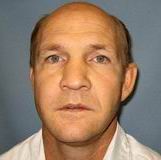
Hernando Williams
Murderer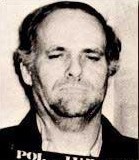 Ervil LeBaron
Murderer · USA · 1972
Ervil Morrell LeBaron (1925 to August 16, 1981) was the leader of a polygamous…
35 victims
Ervil LeBaron
Murderer · USA · 1972
Ervil Morrell LeBaron (1925 to August 16, 1981) was the leader of a polygamous…
35 victims
 Brian Kevin Rosenfeld
Murderer · USA · 1985
Brian Kevin Rosenfeld Brian Kevin Rosenfeld was sentenced to three concurrent l…
23 victims
Brian Kevin Rosenfeld
Murderer · USA · 1985
Brian Kevin Rosenfeld Brian Kevin Rosenfeld was sentenced to three concurrent l…
23 victims
 Marvin Gray
Murderer · USA · 1975
Marvin Gray was convicted killer who claimed responsibility for 23 slayings and…
23 victims
Marvin Gray
Murderer · USA · 1975
Marvin Gray was convicted killer who claimed responsibility for 23 slayings and…
23 victims
 Yahweh ben Yahweh
Murderer · USA · 1980
Yahweh ben Yahweh was born and legally named Hulon Mitchell Jr. (October 27, 19…
23 victims
Yahweh ben Yahweh
Murderer · USA · 1980
Yahweh ben Yahweh was born and legally named Hulon Mitchell Jr. (October 27, 19…
23 victims
 Esmie Tseng
Homicide · USA · 2005
Name: Esmie Tseng Age: 16 at the time of the incident Role: accused Esmie Tseng…
1 victim
Esmie Tseng
Homicide · USA · 2005
Name: Esmie Tseng Age: 16 at the time of the incident Role: accused Esmie Tseng…
1 victim
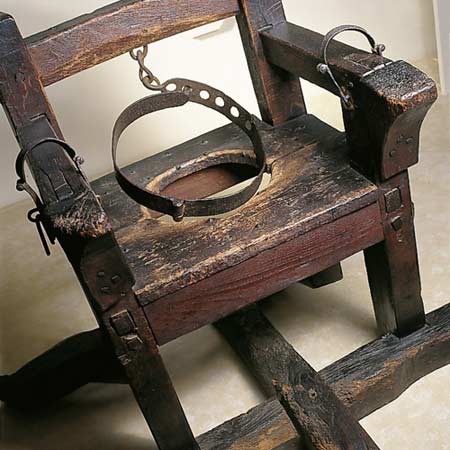 Klaas Annink
Murderer · Netherlands · 1774
Klaas Annink (June 18, 1710 – September 13, 1775), better known as Huttenkloas,…
Klaas Annink
Murderer · Netherlands · 1774
Klaas Annink (June 18, 1710 – September 13, 1775), better known as Huttenkloas,…
 Valerie Pape
Murderer · USA · 2000
Valerie Pape was convicted after pleading guilty in 2002 to second-degree murde…
1 victim
Valerie Pape
Murderer · USA · 2000
Valerie Pape was convicted after pleading guilty in 2002 to second-degree murde…
1 victim
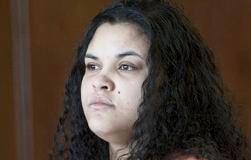 Camia Gamet
Murderer · USA · 2013
Camia Gamet was sentenced to life in prison without parole on April 16, 2014, f…
1 victim
Camia Gamet
Murderer · USA · 2013
Camia Gamet was sentenced to life in prison without parole on April 16, 2014, f…
1 victim
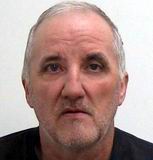 Camille Cleroux
Serial killer · Canada · 1990
Camille Cleroux, 58, pleaded guilty in an Ottawa court to the first-degree murd…
3 victims
Camille Cleroux
Serial killer · Canada · 1990
Camille Cleroux, 58, pleaded guilty in an Ottawa court to the first-degree murd…
3 victims
- Gender
- male
- Country
- USA
- Location
- Cook County, Illinois, USA
- Date of birth
- 1955
- Age at first offence
- 23
- Characteristics
- kidnapping, rape, robbery
- Victim profile
- Linda Goldstone (female, 29)
- Method of murder
- Shooting
- Date(s) of murder
- April 1, 1978
- Years active
- 1978
- Date of arrest
- Same day
- Status
-
Executed
Executed by lethal injection in Illinois on March 25, 1995
Case details
Hernando Williams (c. 1955 – 25 March 1995) was executed by the State of Illinois. He was convicted and sentenced to death in Illinois for the 1978 murder of Linda Goldstone.
Timeline
- 29 March 1978 — Williams kidnapped Linda Goldstone from the Northwestern Memorial Hospital parking lot in Chicago, Illinois.
- 1 April 1978 — Williams released Goldstone from the trunk of his car and later shot her to death.
- 25 March 1995 — Williams was executed by lethal injection in Illinois.
Background
Linda Goldstone was employed at Northwestern Memorial Hospital in Chicago as an instructor in the Lamaze method of childbirth. She was the wife of a physician and the mother of a young boy. She had been on her way to teach a Lamaze class when Williams approached her.
At the time of the kidnapping of Goldstone, Williams was out on bail for kidnapping and rape of another woman. A psychiatrist who examined Williams before trial reported that Williams suffered from "borderline personality disorder with episodic deterioration in reality testing and thought processes with episodic psychotic thinking".
Williams was briefly married to Shirley Coleman, but they were already divorced by the time of the murder.
The offence
Williams approached Goldstone at gunpoint and robbed her. He made her partially disrobe and forced her into the front seat of his car, then drove her with her in the trunk for more than two days.
During the captivity, Williams:
- forced Goldstone into the trunk of his car,
- drove her around for several days, including attending a court hearing in Maywood, Illinois with Goldstone in the trunk,
- visited motels with her and later admitted that he sexually assaulted her,
- picked up relatives while Goldstone remained bound in the trunk, including picking up his sister at work and driving her home,
- picked up his niece at a friend’s house and drove the niece home,
- visited friends and taverns while Goldstone was held.
When Goldstone was still in the trunk at the courthouse, the assistant state's attorney told the judge he was not ready for trial and Williams left the courtroom. When he returned to the court parking lot, he saw some people who appeared to be talking to the trunk of his car. He told those people to get away and left the scene with Goldstone still in the trunk. One of those who had talked to Goldstone while she was in the trunk reported the license plate number to the police, and police did not act on the tip.
Goldstone later ignored Williams’s instructions and ran to the porch of a nearby house for help. The person who came to the door refused to allow her to enter but did call the police. After Williams returned and ordered the victim off the porch, Williams took her to an abandoned garage and shot her twice, leaving her.
There was medical evidence that Goldstone had been beaten once or more during her captivity.
Victim impact statement (verbatim)
During cross-examination, defense counsel requested that probation officer Swies read aloud from the victim impact statement that he had prepared during the presentence interview. The part read was written by Williams’s counsel and indicated that Williams "recognized responsibility for his conduct, was cooperative, and thought he could help others if he were allowed to live by showing through example the consequences of his conduct."
On redirect examination, Swies read the following portion of the victim impact statement, over the objection of Williams:
Personal injury was death. The financial losses are not measurable. The victim, Linda Goldstone, was a 29-year-old mother of a 3-year-old son, the wife of a doctor. The impact that this crime had upon her immediate family, not to mention the parents of this woman, cannot be adequately put into words. The grief and sorrow inflicted upon them by this one man's deed is sufficiently aggravated to justify the death penalty. The loss of this woman to society will go unmeasured in time. She was on her way to teach a course in the Lamaze method of childbirth when her--when Williams abducted her. The irony is apparent. A woman and her husband, an obstetrician, devoted to assisting in giving life. A criminal bent upon taking it away. Tr. 4377.
Investigation and arrest
Police were searching for Williams’s car while the case was ongoing. Goldstone’s husband, Dr. James Goldstone, after learning that his wife had not appeared for class, notified police of her absence.
Officers later obtained a license number for the car and learned that Williams had visited Nettie Jones at her apartment. The police searched the area for the auto without success and periodically watched Williams’s home, but the car was not located.
Williams was arrested at his home that afternoon while he was washing out the trunk of his car. During police interrogation, Williams initially denied having committed the crimes, but after police told him his story did not check out, he gave a detailed confession.
Other named individuals
- Linda Goldstone — victim; a Lamaze childbirth instructor at Northwestern Memorial Hospital in Chicago.
- Dr. James Goldstone — Goldstone’s husband; a physician.
- Shirley Coleman — Williams’s wife at the time briefly; divorced by the time of the murder; mentioned as being councilwoman in the broader narrative surrounding the execution.
- Nettie Jones — person Williams visited during the captivity period; her apartment was linked to the incident.
- Edward Swies — probation officer who conducted the presentence investigation and testified at sentencing.
- James P. Free Jr. — referenced as another person executed together with Williams; committed an unrelated murder.
Trial
Williams pleaded guilty to state charges of murder, aggravated kidnapping, rape, and armed robbery. After the guilty plea, the state requested a capital sentencing hearing.
Capital sentencing structure
Illinois provided for a bifurcated sentencing hearing with an eligibility phase and an aggravation/mitigation phase. The eligibility phase required the state to prove beyond a reasonable doubt at least one statutory aggravating factor.
In Williams’s case, the jury found beyond a reasonable doubt two statutory aggravating factors:
- that Williams murdered Linda Goldstone in the course of three other felonies,
- that Williams murdered an eyewitness to the crimes.
In the aggravation/mitigation phase, Williams testified on his own behalf. The jury unanimously found that there were no mitigating factors sufficient to preclude the imposition of the death sentence, and the court sentenced Williams to death.
Quotes regarding plea voluntariness
Williams later stated in open court that his plea was voluntary and not the product of threats or promises. The trial court asked Williams whether his guilty plea was voluntary at least three times, and each response indicated that his plea was voluntary.
Testimony during sentencing about remorse (verbatim)
Q. When you asked [Williams] about the charge for which he pled guilty of Linda Goldstone, he didn't speak to you about that, did he?
A. He stated to me, "No comment." Tr. 4369.
Swies also testified that the defendant did not express any remorse or feelings of regret.
Later, Swies testified as follows:
Q. Do you understand the question?
A. Yes, I do. He did not express any remorse. Q. Nor did he express any feelings of remorse?
A. No, he did not. Tr. 4368-71.
And:
Q. At any time during your interview while you observed Hernando Williams, did he seem remorseful?
A. No, he did not. Tr. 4378.
Williams also provided extensive testimony at sentencing describing his conduct and his reflections while in custody.
Sentencing
The jury sentenced Williams to death in January 1980. The execution date was set by Illinois authorities, and Williams was executed by lethal injection on 25 March 1995 at the age of 40.
Appeals and collateral review
U.S. Supreme Court
The matter included references to Williams v. Illinois, 466 U.S. 981 (1984), with rehearing denied June 25, 1984.
The Supreme Court records included discussion of petitions for writs of certiorari relating to peremptory challenges to exclude Negro jurors from juries in capital cases, including Williams. Justice MARSHALL, with Justice BRENNAN joining, dissented from denial of certiorari. The dissent included the quoted statement that the petitioners were Negroes and addressed the prosecution’s use of peremptory challenges, the composition of venires, and a discussion of Swain v. Alabama and related matters.
The dissent included the following verbatim passage:
Adhering to my view that the death penalty is under all circumstances cruel and unusual punishment forbidden by the Eighth and Fourteenth Amendments, I would vacate the judgments of the Supreme Court of Illinois and the Appellate Court of Illinois insofar as they left undisturbed the death sentences imposed in these three cases. Gregg v. Georgia, 428 U.S. 153, 231 , 2973 (1976) (MARSHALL, J., dissenting). However, even if I believed that capital punishment were constitutional under certain circumstances, I would vote to grant these petitions because they present a substantial constitutional challenge to the Illinois state's attorneys' practice of using peremptory challenges to exclude Negro jurors from participating in capital cases. Hernando Williams, Wendell Dixon, and Lonnie Yates are Negroes.
The dissent further included discussion and quotations about the “substantial constitutional challenge” and the “graveest and most persistent problems.”
Seventh Circuit — habeas and stay proceedings
Williams filed a petition for a writ of habeas corpus under 28 U.S.C. 2254. The district court denied his petition, 742 F.Supp. 472. On appeal, the Seventh Circuit affirmed the denial of habeas corpus.
In Williams v. Chrans and Hartigan (No. 90-2707), decided October 1, 1991, the Seventh Circuit stated:
- Williams had pleaded guilty to armed robbery, aggravated kidnapping, rape, and murder.
- A jury sentenced him to death.
- The conviction and sentence were affirmed on direct appeal to Illinois state courts.
- A petition for collateral review likewise resulted in no relief.
- The court affirmed the district court’s denial of habeas relief.
The Seventh Circuit addressed multiple contentions, including a claim that Williams’s guilty plea was coerced, constitutional challenges to the Illinois death penalty statute, issues related to peremptory challenges and juror exclusion, victim impact evidence, exclusion of defense evidence, prosecutorial misconduct, and use of Williams’s "no comment" response during the presentence investigation.
The Seventh Circuit also considered Williams’s motion for a stay of execution in a later proceeding (No. 95-1140), where the Illinois Supreme Court had set an execution date of March 22, 1995. The Seventh Circuit denied the relief requested and denied the motion for a stay of execution.
Outcome
Hernando Williams was sentenced to death in January 1980 and was executed by lethal injection in Illinois on March 25, 1995.
The law governing stays of death sentences is described, and the motion for a stay of execution was denied.
Spotted an error, or have more information about this case?