
Laura Rogers
Murderer Miranda Barbour
Murderer · USA · 2013
Miranda Barbour, 19, defendant. · Elytte Barbour, 22, defendant and husband of…
100 victims
Miranda Barbour
Murderer · USA · 2013
Miranda Barbour, 19, defendant. · Elytte Barbour, 22, defendant and husband of…
100 victims
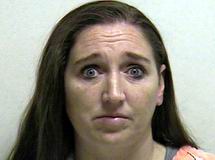 Megan Huntsman
Murderer · USA · 1996
Megan Huntsman was 40 at sentencing. She was a mother of three children who wer…
6 victims
Megan Huntsman
Murderer · USA · 1996
Megan Huntsman was 40 at sentencing. She was a mother of three children who wer…
6 victims
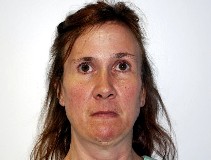 Michele Kalina
Murderer · USA · 1996
Michele Kalina pleaded guilty to murder for one of five infants she initially w…
5 victims
Michele Kalina
Murderer · USA · 1996
Michele Kalina pleaded guilty to murder for one of five infants she initially w…
5 victims
 Tiffany Hall
Murderer · USA · 2006
Tiffany Hall was 24 when she was charged in September 2006. She later entered a…
5 victims
Tiffany Hall
Murderer · USA · 2006
Tiffany Hall was 24 when she was charged in September 2006. She later entered a…
5 victims
 Banita Jacks
Murderer · USA · 2007
Banita Jacks was a Washington, DC resident convicted of murdering her four daug…
4 victims
Banita Jacks
Murderer · USA · 2007
Banita Jacks was a Washington, DC resident convicted of murdering her four daug…
4 victims
 Holly Grigsby
Murderer · USA · 2011
Holly Grigsby was sentenced to life in prison without parole on July 15, 2014.…
4 victims
Holly Grigsby
Murderer · USA · 2011
Holly Grigsby was sentenced to life in prison without parole on July 15, 2014.…
4 victims
 Rebecca Bryan
Murderer · USA · 2011
Rebecca Bryan was convicted of first-degree murder for fatally shooting her hus…
1 victim
Rebecca Bryan
Murderer · USA · 2011
Rebecca Bryan was convicted of first-degree murder for fatally shooting her hus…
1 victim
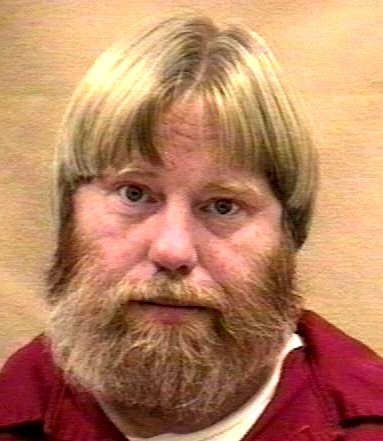 Ernest Paul McCarver
Murderer · USA · 1987
Ernest Paul McCarver was sentenced to death on September 23, 1992. He was also…
1 victim
Ernest Paul McCarver
Murderer · USA · 1987
Ernest Paul McCarver was sentenced to death on September 23, 1992. He was also…
1 victim
 Alexander Tchayka
Spree killer · Russia · 1994
Alexander Tchayka (born in 1974 in Sumy, USSR (now, Ukraine)) was a Russian ser…
4 victims
Alexander Tchayka
Spree killer · Russia · 1994
Alexander Tchayka (born in 1974 in Sumy, USSR (now, Ukraine)) was a Russian ser…
4 victims
 Lino Renzi
Homicide · Italy · 2013
Lino Renzi, aged 45, was ordered to closed psychiatric confinement on July 2013…
1 victim
Lino Renzi
Homicide · Italy · 2013
Lino Renzi, aged 45, was ordered to closed psychiatric confinement on July 2013…
1 victim
 Jeffrey Johnson
Murderer · USA · 2012
Jeffrey Johnson was a 58-year-old clothing designer who had been laid off. Poli…
1 victim
Jeffrey Johnson
Murderer · USA · 2012
Jeffrey Johnson was a 58-year-old clothing designer who had been laid off. Poli…
1 victim
- Gender
- female
- Country
- USA
- Location
- Anne Arundel County, Maryland , USA
- Date of birth
- 1968
- Age at first offence
- 36
- Characteristics
- rape, sexual abuse, domestic violence
- Victim profile
- Walter Rogers, 43 (her husband)
- Method of murder
- Shooting (20-gauge shotgun)
- Date(s) of murder
- April 23, 2004
- Years active
- 2004
- Date of arrest
- 2 days after
- Status
-
Released
Sentenced to 10 years in prison for manslaughter on 9 November 2004; sentence suspended all but the 198 days served; released about 6 p.m. from the Anne Arundel County Detention Center
Case details
Laura Rogers was convicted of manslaughter after the shooting death of her husband, Walter Rogers.
People
- Laura Rogers — defendant; she was 36 at the time of her release from jail and was charged with first-degree murder before pleading guilty to manslaughter.
- Walter Rogers — victim; he was 43 when he was killed.
- Laura Rogers’s 16-year-old daughter — her teenage daughter; she was 16 at the time of the shooting and later gave birth to her stepfather’s baby; her conviction for filing a false police report was vacated.
- Laura Rogers’s young son — child from a previous marriage; he was among those awakened by the gunshot.
- Laura Kiessling — prosecutor; she spoke outside court after the manslaughter plea and sentencing.
- Clarke F. Ahlers — defense attorney for Laura Rogers.
- Judge Paul A. Hackner — Circuit Court judge who sentenced Laura Rogers and discussed battered spouse syndrome.
- Anne Arundel police Lt. Joseph Jordan — an Anne Arundel County police lieutenant who described the investigation.
- Wife’s attorney/defense counsel statements — Clarke F. Ahlers made statements characterizing the victim and the abuse.
Timeline
- April 23, 2004 — Laura Rogers bought the shotgun at a Wal-Mart; she later watched a videotape of Walter Rogers’s sex acts with her daughter; Walter Rogers was securing his tools and preparing for a trip; Laura Rogers shot Walter Rogers.
- Saturday in April 2004 — Police responded to a 911 call placed from the Rogers’ home in Laurel at 7 AM; Walter Rogers was found with a gunshot wound to the upper body and was pronounced dead at the scene.
- April 27, 2004 — Anne Arundel County police charged a Laurel woman with first-degree murder in the shooting death of her husband; the death initially was reported as a suicide.
- November 9, 2004 — Laura Rogers pleaded guilty to manslaughter; Judge Paul A. Hackner sentenced her to 10 years in prison, suspended all but the 198 days served; he told her, "You'll be released sometime this afternoon."
- Tuesday, about 6 p.m. — Laura Rogers was released from the Anne Arundel County Detention Center.
The offence
Laura Rogers recalled reaching under the bed where her husband slept, groping for the shotgun, and firing it early in the morning. She remembered carrying the 20-gauge into the living room after ignoring the television for hours, snapping it open, and slipping a shell into its chamber. She then returned to the bedroom and saw Walter Rogers asleep on his right side. She did not remember holding the shotgun less than a foot from his face, aiming it toward his left eye, or pulling the trigger. She remembered hearing the gun go off, running, and saying, "What the hell have I done?"
After the shooting, she awoke her daughter and her young son and ushered them back into their beds, telling them she did not know what had happened. She then summoned police to their secluded apartment in Laurel, which was in the back of an office building on a dead-end road in an industrial park in western Anne Arundel County.
Laura Rogers told police that she had recently learned her husband had been sexually abusing a juvenile female. She also told police that she had recently learned the abuse and that it appeared to be connected to the shooting.
Investigation
Police responded to a 911 call placed from the Rogers’ home in the 8200 block of Main Street in Laurel at 7 AM Saturday and found Walter Rogers suffering from a gunshot wound to the upper body. His death initially was reported to police as a suicide, and family members believed Walter Rogers had shot himself with the shotgun. Officers were skeptical that it was a suicide.
Anne Arundel police Lt. Joseph Jordan described that the original officers thought something was amiss, so they contacted the homicide unit. Detectives took over the investigation, conducted more interviews with Laura Rogers, and filed homicide charges after she gave a statement. Jordan said detectives were suspicious from the time they arrived, and that they never classified it as a suicide.
The firearm used in the shooting had been purchased by Laura Rogers on April 23, the day before her husband was shot. Detectives said that information appeared to be connected to the shooting.
Detectives said they also determined that Laura Rogers purchased the firearm used in the shooting April 23. After Laura Rogers gave police a statement, detectives decided to file homicide charges against her.
Two days later, detectives said they learned of the role of the 16-year-old daughter in connection with the slaying. Laura Rogers’s 16-year-old daughter confessed to the slaying in an effort to protect her mother. Detectives realized the daughter could not have been responsible because she did not know how to load the shotgun. Detectives told Laura Rogers what the girl had said, and Laura Rogers quickly admitted that she had pulled the trigger.
Arrest and charges
Laura Rogers was charged with first-degree murder. The initial report of the death to police was that it was a suicide. She was denied bail.
Anne Arundel police said she was charged Monday with first-degree murder after detectives looked further into the circumstances surrounding the death of her husband. The homicide unit took over, and after Laura Rogers gave a statement, detectives decided to file homicide charges.
Trial and plea
Laura Rogers pleaded guilty to manslaughter on November 9, 2004.
She had been charged with first-degree murder, an offense punishable by life in prison, but she pleaded guilty to manslaughter.
During the proceeding, Judge Paul A. Hackner said he was convinced by a diagnosis that Laura Rogers suffered from battered spouse syndrome. He also called Walter Rogers “a horrible human being.” He later reduced the effective time to the 198 days she had already served.
Prosecutors did not oppose the plea outcome. Prosecutors said they agreed to the plea deal partly to spare Laura Rogers’s daughter, then 17, the emotional ordeal of having to testify about the abuse the daughter suffered.
Sentencing
Judge Paul A. Hackner sentenced Laura Rogers to 10 years in prison, the maximum term for the offense of manslaughter. He suspended all but the 198 days she had served.
Hackner told her: "You'll be released sometime this afternoon."
Hackner’s decision included his consideration of battered spouse syndrome and his viewing of a videotape in his chambers. Defense attorney Clarke F. Ahlers described Walter Rogers in court as "a person who took a sick and sadistic pleasure in killing the spirit of other people."
Appeals
No appeal information was provided.
Outcome
Laura Rogers was released about 6 p.m. Tuesday from the Anne Arundel County Detention Center. She had been jailed since her arrest and had served 198 days before her release.
Following her release, Laura Rogers thanked her family and the judge and said she was looking forward to hugging her children for the first time in seven months.
Other details
Abuse and context described in court and by those involved
Hackner called Walter Rogers “a horrible human being” and discussed battered spouse syndrome as the significant factor in his decision.
Prosecutor Laura Kiessling said outside court: "It was the right thing to do." She also said: "This man Walter Rogers was a sociopath who had it coming, and he got what he deserved," attributed to Clarke F. Ahlers.
Clarke F. Ahlers called Walter Rogers: "a person who took a sick and sadistic pleasure in killing the spirit of other people" and said that he "continued to rape the child even in pregnancy."
Kiessling described that Walter Rogers had abused his wife "psychologically and physically" and had terrorized her by, for example, swinging a baseball bat so that it narrowly missed her head.
Kiessling also said that a trial probably would have required that the girl testify against her mother. She added: "It's time for it to be over for her." Kiessling said Walter Rogers had abused the girl for nearly a decade.
Kiessling declined to discuss Walter Rogers’s family or their thoughts about the plea arrangement except to say that "many of them were victims of his abuse as well."
Daughter’s prior proceedings and vacated conviction
The teenage girl previously made such claims and was, in fact, convicted of making false accusations after earlier allegations recanted. Kiessling said the girl had previously made such claims but recanted and was convicted of making false accusations. The teenage girl's conviction was vacated.
Kiessling said that the 16-year-old daughter had been victimized enough and had been victimized enough, and that "many of them were victims of his abuse as well" was said about Walter Rogers’s family.
Purchase of the shotgun and videotape described by Laura Rogers
Laura Rogers said that Walter Rogers had instructed her to buy the shotgun and that he was concerned about thefts in their isolated neighborhood. She described that she believed the father was a boy from the girl’s school.
She said that on the evening of about 9, her 16-year-old daughter told her where to find evidence that her claims of sexual abuse were true, and that there was a videotape in Walter Rogers’s armoire behind his collection of Playboy magazines. Laura Rogers described retrieving the tape, slipping it into a video camera, and watching it on a camcorder screen.
After watching the videotape, Laura Rogers said she went numb and described: "I'm not sure what happened," and "I kind of went into a little shell." She said: "When I saw that videotape, he was never going to harm my daughter again. At that point, I knew that he was doing it, and there was no way for him to convince me otherwise." She added that her daughter had been telling the truth and that her husband had raped her daughter repeatedly, lied about it, had the girl prosecuted, and continued to abuse her.
Laura Rogers said she did not confront Walter Rogers when he came back inside and told her to be sure to pack enough for a week’s trip; she said she felt disgust but told him "Okay."
Autopsy determination
Police initially reported the death as a suicide. After the shooting, an autopsy later found that the death was a homicide, and Laura Rogers admitted that she had pulled the trigger.
Family, housing, and employment details mentioned
Laura Rogers and Walter Rogers met 12 years earlier at a Clint Black concert at Merriweather Post Pavilion in Columbia. Both had been married before. They moved in together into her parents’ home seven months later.
Soon, he proposed kneeling in a Pizza Hut. They were married less than two years after they met. Laura Rogers said: "He always liked to say it was love at first sight," and she said: "I never believed in it. I'd been through one bad marriage, so I was very skeptical. But he knew how to charm me."
She said that in the beginning it was wonderful and they got along wonderful, but that the last six years she lived in terror and fear. She said he became emotionally abusive and controlling, and that the family moved a half-dozen times in a decade, limiting her ability to meet people.
She said she was not permitted to have friends or, most of the time, to work. She said: "I went through a lot of emotional changes, being with him," and: "I mean, physically, yes, [abuse] did happen. It didn't happen numerous times, but, yes, there was some physical abuse. A lot of times, the emotional [abuse] leaves a deeper scar." She also said: "I knew he would never let me, and if I got away, he would find me," and "I lived fearful of harm to me and my children every day."
The family lived in an apartment attached to an office building in a Laurel industrial park. Walter Rogers was a laborer, and she worked as a secretary when her husband permitted it.
Additional statements by Laura Rogers
Laura Rogers said: "As soon as it went off, I laid it on the floor." She said she stepped toward the bedroom door and reached under the bed for the shotgun.
After her release, Laura Rogers said she said "taking a human being's life is something I will have to live with for the rest of my life." She also said she felt she could "breathe again" for the first time in years. She said: "I ask the court to see that I'm able to go home and give these children the love they not only need but that they deserve." She also said: "When I saw this man horribly violating my daughter, I couldn't let it continue," and "I couldn't change the past. But, damn, I could change the future."
Spotted an error, or have more information about this case?