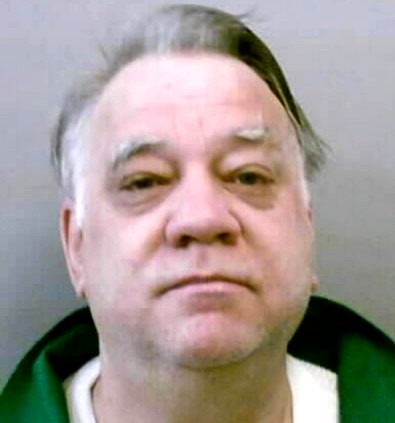
Luke Williams
Murderer Brian Kevin Rosenfeld
Murderer · USA · 1985
Brian Kevin Rosenfeld Brian Kevin Rosenfeld was sentenced to three concurrent l…
23 victims
Brian Kevin Rosenfeld
Murderer · USA · 1985
Brian Kevin Rosenfeld Brian Kevin Rosenfeld was sentenced to three concurrent l…
23 victims
 Russell Ellwood
Murderer · USA · 1991
Russell Ellwood was a former taxi driver. Authorities suspected him of killing…
20 victims
Russell Ellwood
Murderer · USA · 1991
Russell Ellwood was a former taxi driver. Authorities suspected him of killing…
20 victims
 Robert Martines Perez
Murderer · USA · 1994
Name: Robert Martines Perez · Other name used in proceedings: Robert Martinez P…
15 victims
Robert Martines Perez
Murderer · USA · 1994
Name: Robert Martines Perez · Other name used in proceedings: Robert Martinez P…
15 victims
 Billy Frank Vickers
Murderer · USA · 1993
Billy Frank Vickers Vickers was executed by lethal injection in Texas on Januar…
14 victims
Billy Frank Vickers
Murderer · USA · 1993
Billy Frank Vickers Vickers was executed by lethal injection in Texas on Januar…
14 victims
 Robert Moormann
Murderer · USA · 1984
Robert Henry Moormann was convicted in Arizona of the first degree murder of hi…
1 victim
Robert Moormann
Murderer · USA · 1984
Robert Henry Moormann was convicted in Arizona of the first degree murder of hi…
1 victim
 Ferdinand Gamper
Spree killer · Italy · 1996
Ferdinand Gamper was identified as the killer in a series of shootings in Meran…
6 victims
Ferdinand Gamper
Spree killer · Italy · 1996
Ferdinand Gamper was identified as the killer in a series of shootings in Meran…
6 victims
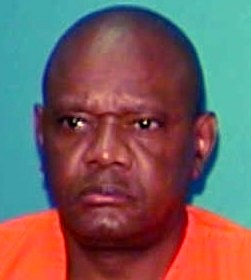 Leroy Pooler
Murderer · USA · 1995
Leroy Pooler (born 01/27/48) was tried in the Fifteenth Judicial Circuit, Palm…
1 victim
Leroy Pooler
Murderer · USA · 1995
Leroy Pooler (born 01/27/48) was tried in the Fifteenth Judicial Circuit, Palm…
1 victim
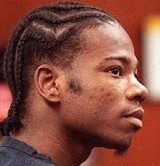 Donte Johnson
Mass murderer · USA · 1998
Donte Johnson was sentenced to death on May 3, 2005 after a jury returned a dea…
4 victims
Donte Johnson
Mass murderer · USA · 1998
Donte Johnson was sentenced to death on May 3, 2005 after a jury returned a dea…
4 victims
- Gender
- male
- Country
- USA
- Location
- Edgefield County, South Carolina, USA
- Date of birth
- August 14, 1952
- Age at first offence
- 39
- Characteristics
- parricide, attempt to collect insurance money
- Victim profile
- Linda Williams, 39 (his wife) and Shaun Williams, 12 (his son)
- Method of murder
- Beating / Strangulation - Burn the bodies
- Date(s) of murder
- June 19, 1991
- Years active
- 1991
- Date of arrest
- —
- Status
-
Executed
Executed by lethal injection in South Carolina on February 20, 2009
Case overview
Luke Williams was convicted of murdering his wife, Linda Williams, and his 12-year-old son, Shaun Williams, and was sentenced to death. He was executed by lethal injection in South Carolina on February 20, 2009.
Timeline
- June 18, 1991 — Linda Williams was last spoken with by telephone at 2:50 p.m.
- June 19, 1991 — The bodies of Linda Williams and Shaun Williams were discovered inside the family van in a forest in Edgefield County, South Carolina, approximately six miles from their home near Augusta, Georgia.
- May 7, 1991 — Williams upgraded existing policies with Allstate Insurance Company to include auto related death benefits in the amounts of $100,000 for Linda and $20,000 for Shaun.
- May 30, 1991 — Williams took out new life insurance policies for Linda and Shaun with State Farm Insurance Company effective May 30, 1991, providing $250,000 death benefit insurance for Linda and $25,000 death benefit insurance for Shaun.
- June 19, 1991 — Williams told a friend that on the day of the homicides, Linda and Shaun were planning to go shopping at Columbia Mall in Columbia, South Carolina.
- February 20, 2009 — Williams was executed by lethal injection in South Carolina.
The offence
Linda Williams and Shaun Williams were found inside the family van in a forest in Edgefield County, South Carolina, approximately six miles from their home near Augusta, Georgia. The front bumper of the van was against a tree, and fire had partially damaged the vehicle. Investigators detected a strong odor of gasoline and found several metal cans containing gasoline inside the van.
Linda Williams was discovered in the driver’s seat, positioned so far back that her feet could not reach the pedals. Shaun Williams was seated in the front passenger seat. Blood was found on a piece of PVC pipe on the van’s floorboard. Linda Williams was dressed in a gray t-shirt, gray sweatpants pulled down to her upper thigh, light pink socks, nylon panties, and she was not wearing a bra or shoes. Shaun Williams was also shoeless and was wearing a t-shirt and sweatpants.
Cause of death and injuries
Linda Williams suffered a black eye, a contusion on the bridge of her nose, contusions on her left forearm, and abrasions on her left shoulder. These injuries were consistent with having been caused by a human fist. The autopsy revealed that Linda Williams’s cause of death was blunt head trauma due to a beating.
Shaun Williams suffered a bruise to his forehead, as well as abrasions to his chin, back, and right side of his neck. His cause of death was asphyxiation due to manual strangulation. Wounds created by the fire were postmortem. Although the deaths occurred within the same time frame, a specific time of death was not determined.
Scene-related observations
The van had been driven into a tree in what police called a botched attempt to stage an accident. Police said the victims were doused with gasoline and set ablaze in the family van, which had been driven into a tree in the Sumter National Forest in Edgefield County.
At approximately 11:00 a.m. on Wednesday, June 19, 1991, the bodies were discovered inside the family van.
A bath towel and Shaun’s tennis shoes with blood stains on them were found at Williams’s home. Williams’s right hand was severely bruised and swollen, and this injury was consistent with having occurred on June 19th.
Investigation
Investigators found several metal cans containing gasoline inside the van. They detected a strong odor of gasoline.
A neighbor testified that on June 19, 1991, a car drove into the driveway at Williams’s home between 1:00 and 2:00 a.m.
Further testimony established that at approximately 7:00 a.m. on June 19, 1991, Linda’s van was not parked in the driveway.
At trial, one friend testified that Linda was short in stature and always positioned the driver’s seat of the van close to the steering wheel. Several friends of Linda testified that she always dressed neatly and would not go out in public dressed in a t-shirt without a bra.
Prior to receiving the autopsy results, Williams informed a friend that Linda had been beaten to death and Shaun had been strangled with a plastic wire wrap similar to wire wrap Shaun had in his bedroom.
When asked if he killed Linda and Shaun, Williams did not respond.
Williams and Linda were experiencing significant marital and financial difficulties. Neighbors and friends stated that they frequently overheard hostile arguments between Williams and Linda.
One neighbor testified that she heard a “loud thump” during one of the arguments.
Williams had declared bankruptcy, and foreclosure proceedings had been initiated against the home.
Linda contacted United Way’s Help Line a few days before her death and was referred to a shelter for battered women. The shelter’s phone number was scrawled on a torn slip of paper, and it was still in her purse when her body was removed from the burned-out van.
Arrest and custody
Williams was arrested the next year after attempting to collect on life insurance policies. Months after the deaths, authorities discovered that Williams had secretly insured his wife and child just weeks before their deaths. It took authorities about a year to arrest Williams, who was free on bond until trial.
A few days before her death, Linda had contacted United Way’s Help Line and was referred to a shelter for battered women. The shelter’s phone number was found in her purse after her body was removed from the burned-out van.
Trial
Court and judge
Williams was tried in the Circuit Court, Edgefield County. Luke N. Brown, Jr. was identified as Special Judge.
Charges and verdict
Williams was convicted of murdering his wife and adopted son. The jury found Williams guilty of murder on both counts.
Venue and jurisdiction arguments
Williams asserted he was entitled to a directed verdict because there was insufficient evidence to establish that the homicides occurred in Edgefield County, South Carolina, and that Edgefield County was without venue and the circuit court lacked jurisdiction. The trial court denied the motion for a directed verdict.
In the conclusion regarding venue, Williams signed insurance documents conceding that his wife and son died in Edgefield County.
Proffered evidence regarding marijuana growers
Williams proffered evidence that there were marijuana manufacturers in the area where the bodies were found who had threatened the lives of a confidential informant and a narcotics agent. He argued this evidence created reasonable doubt. The circuit court excluded the evidence.
Admission of marital discord evidence
Williams argued that details about prior marital difficulties were prejudicial and inadmissible. The court admitted evidence relating to hostility between Williams and Linda.
Williams disputed a telephone conversation he had with his wife concerning a bill. He also disputed a colloquy between the Solicitor and a witness regarding a “loud thump,” and the Solicitor’s subsequent references to it. The evidence did not detail specific marital disputes; it established strained relations through hostile arguments.
The court found that references to “something” knocked over inside the house did not qualify as a detailed description of a marital problem.
The colloquy included the following verbatim exchange:
A. Well, one time I heard a loud thump but I didn't know what it was.
Q. What do you mean by a loud thump?
A. Like something was knocked over.
Q. Coming from inside the house?
A. From inside the house.
Q. Now would this be during the daylight hours or nighttime or what?
A. This was during the day. Well, it wasn't real late. It was somewhere between 5 o'clock in the evenin' time.
Q. A loud thump noise.
Sentencing phase
After the jury found Williams guilty, the jury determined the existence of two statutory aggravating circumstances:
- Williams committed the murders to receive money or a thing of monetary value.
- Two or more persons were murdered.
The circuit court followed the jury’s recommendation and imposed a separate death sentence for each murder.
Evidence of guilt and aggravating factors as discussed on appeal
The appellate decisions described circumstantial evidence supporting conviction and death sentence, including:
- Severe marital and financial difficulties.
- Williams substantially increasing life insurance benefits for Linda and Shaun immediately prior to the homicides and making himself the beneficiary.
- Williams forging Linda’s name on insurance forms.
- No motive for robbery being established.
- Williams not denying killing Linda and Shaun shortly after the homicides.
- Williams knowing details about the homicides prior to receiving autopsy results.
- Williams’s injured hand and Linda’s injuries consistent with having been caused by a human fist.
- A towel and shoes found at Williams’s residence with human blood discovered.
Sentencing
Williams was sentenced to death. The jury found two statutory aggravating circumstances:
- Murder for monetary gain (or a thing of monetary value).
- Murder of two or more persons by one act or pursuant to one scheme or course of conduct.
During the trial sentencing proceedings, Williams was sentenced to death after a separate phase where the jury recommended death sentences and found aggravating circumstances.
Appeals and post-conviction proceedings
Direct appeal
In State v. Williams, 321 S.C. 327, 468 S.E.2d 626 (S.C. 1996), the Supreme Court affirmed Williams’s convictions and sentences. The Supreme Court held that sufficient evidence supported the conviction and imposition of the death penalty, and also addressed:
- Exclusion of evidence regarding marijuana growers in the area.
- Admission of evidence of marital discord.
- Refusal to charge jury on parole minimums.
- Admission of photographs of the bodies.
The Supreme Court concluded that Williams’s convictions and sentences were affirmed.
Post-conviction relief (PCR)
In Williams v. State, 363 S.C. 341, 611 S.E.2d 232 (S.C. 2005), Williams sought post-conviction relief after affirmance of his murder convictions and death sentence. The PCR court granted a new capital sentencing proceeding, but the Supreme Court reversed the PCR order, holding:
- Trial counsel performed deficiently in failing to request instruction at the sentencing phase that the term “life imprisonment” be understood in its plain and ordinary meaning.
- Defendant was not prejudiced by the deficient performance, so counsel was not ineffective. The Supreme Court reversed the PCR order.
Federal habeas
In Williams v. Ozmint, 494 F.3d 478 (4th Cir. 2007), the Fourth Circuit considered a petition for a writ of habeas corpus. The court reversed in part and affirmed in part, concluding that:
- The state supreme court did not unreasonably apply Strickland in determining that Williams was not prejudiced by the lack of a plain meaning instruction.
- The evidence was sufficient to support the convictions and venue in Edgefield County, South Carolina. The Fourth Circuit stated it reversed the habeas relief on the ineffective assistance claim and affirmed the rejection of the sufficiency-of-evidence and venue claims.
Final meal and final words
Williams’s final meal included fried chicken, steak, baked potato with sour cream and butter, a tossed salad, cranberry sauce, peach cobbler, fried turkey, and ketchup. Williams made no final statement.
Execution
Williams was executed by lethal injection in South Carolina on February 20, 2009. He was pronounced dead at 6:13 p.m.
Multiple descriptions of the execution process stated that Williams made no final statement, kept his eyes closed, and did not flinch more than a small facial muscle while the drugs were administered.
Other details
Victims
- Linda Williams was 39 years old.
- Shaun Williams was 12 years old.
Family and background details mentioned
Linda Williams was described as a teacher’s aide for a kindergarten class at Belair Elementary School in Columbia County. Shaun attended Lakeside Middle.
The family lived in the Bridlewood subdivision off Fury’s Ferry Road in Evans.
Dora Azrak identified Linda Williams as her daughter and Shaun Williams as her oldest grandchild.
The narrative described that Shaun had been orphaned during civil war in El Salvador and was adopted by the Williams couple, described as an honor student in the 7th grade at the time of his murder.
Williams’s personal and institutional information listed
- Williams’s age was stated as 56 at the time of execution.
- Williams was described as unemployed at the time of the murders and as receiving workman’s compensation for an on-the-job injury.
- Williams was identified in South Carolina Department of Corrections material as Luke A. Williams, III, with DOC# 4874.
- The listed date of receipt was 11/24/93.
- The listed county was Edgefield.
- The listed race was White.
- The listed date of birth was 08/14/52.
Spotted an error, or have more information about this case?